
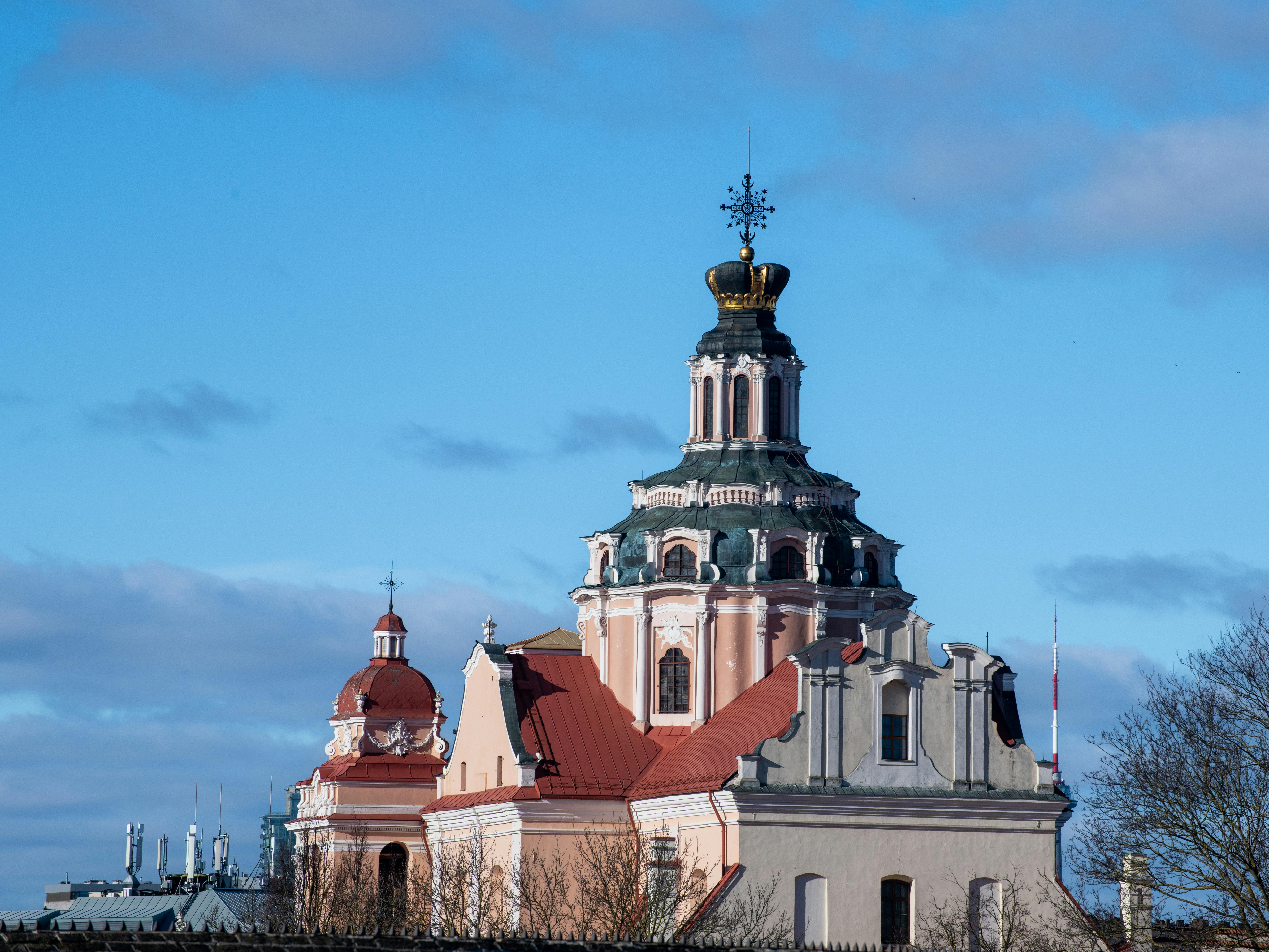
Ornate exterior of Church of St. Casimir in Vilnius under a clear blue sky.
Best Time to Visit · Vilnius

The Best Time to Visit Vilnius: A Season-by-Season Guide

From baroque courtyards under summer sun to snow-dusted Old Town lanes, here is exactly when to plan your trip to Lithuania's capital.

Last updated July 2, 20267 min read

Vilnius is a compact, walkable capital whose UNESCO-listed baroque Old Town rewards visitors in any season, but the experience shifts sharply as the year turns. The city sits well inland in the Baltic, which means genuine four-season weather: warm, long-lit summers, crisp and colorful autumns, cold snowy winters, and a fickle but hopeful spring.

The decision usually comes down to a trade-off between daylight and warmth on one side and crowds and prices on the other. June through August delivers the best weather and the buzz of outdoor cafes and festivals, but it is also the busiest and priciest window. The shoulder months of May and September offer nearly as much charm with thinner crowds and softer rates.

Winter is genuinely cold and dark, yet it has real appeal for anyone drawn to Christmas markets, snowy cobblestones, and cheap hotel deals. Understanding what each season actually feels like on the ground is the key to picking your window.

Quick answer

The best time to visit Vilnius is late May through September, when temperatures are mild to warm (18-24C / 64-75F), daylight stretches past 10pm in midsummer, and the city's festival calendar is at its fullest. For the best balance of good weather, thinner crowds, and lower prices, aim for May or September.

At a glance

The short version

Best overall
June to early September, when warm days, long daylight, and outdoor dining make the Old Town and its riverside parks feel their best.
Cheapest time
November to March (excluding the Christmas period), when flights and hotels drop to their lowest and the city is quiet.
Fewest crowds
Late autumn (October to November) and early spring (March to April), when you'll have museums, cafes, and cobbled lanes largely to yourself.
Best weather
July and August, the warmest and driest-feeling months, with average highs of 22-24C (72-75F) and long, bright evenings.
Best for festivals
June to August for the culture-packed summer season, plus early March for the beloved Kaziuko mugė (St. Casimir's Fair) craft market.
Best for a Christmas market
Late November to early January, when Cathedral Square hosts one of Europe's most photogenic Christmas trees and markets.
Season by season

Through the year

SpringMarch to May
Weather Cold and variable early, warming steadily. March highs sit around 4-7C (39-45F); by May highs reach 16-19C (61-66F). Expect showers, lingering chill, and rapidly lengthening days.
Crowds Low in March and April, picking up in May as the weather turns and the first tour groups arrive.
Prices Low to mid. March and April are among the cheapest months; rates climb toward late May.

Spring is a quietly rewarding time as the city thaws, parks green up, and outdoor terraces reopen. Early spring can still feel wintry and gray, but May is one of the sweetest windows of the year, with mild days and few crowds. Ideal for budget-minded travelers who want good weather without summer prices.

SummerJune to August
Weather Warm and bright, with highs of 20-24C (68-75F) and occasional hot spells above 28C (82F). Daylight is remarkable, with midsummer twilight lasting until nearly 11pm. Afternoon thunderstorms are common but brief.
Crowds Peak season. The Old Town, Uzupis, and Gediminas Tower are at their busiest, especially July and August.
Prices Highest of the year. Book flights and central hotels well ahead for the best rates.

This is Vilnius at its liveliest: riverside beaches on the Neris, packed cafe terraces, open-air concerts, and festivals nearly every weekend. The weather is the most reliable of the year, though it is neither the cheapest nor the quietest time. Best for first-time visitors and anyone who wants maximum daylight and energy.

AutumnSeptember to November
Weather September stays pleasant with highs near 16-18C (61-64F); by November highs drop to 3-6C (37-43F). Foliage peaks in October, and rain and gray skies increase as the season progresses.
Crowds Moderate in September, dropping sharply through October and November.
Prices Mid in September, falling to low by November.

Early autumn is a superb shoulder season, with warm-enough days, golden parks (Vingis and Bernardine Gardens are stunning), and relaxed crowds. As November arrives it gets cold, damp, and dark, better suited to museum-hopping and cozy cafes. September is the standout month for value and atmosphere.

WinterDecember to February
Weather Cold and often snowy, with highs around -1 to 2C (30-36F) and frequent sub-zero nights dipping below -10C (14F). Daylight is short, with sunset before 4pm in December.
Crowds Low overall, with a spike around the Christmas market and New Year.
Prices Lowest of the year, apart from the festive weeks in late December.

Winter turns the baroque Old Town into a snow-globe scene, and the Cathedral Square Christmas tree draws visitors from across the region. It is genuinely cold and dark, so pack serious layers, but hotels are cheap and the city feels intimate. Best for Christmas-market lovers, photographers, and budget travelers who don't mind the chill.

On the calendar

Notable events & festivals

Kaziuko mugė / St. Casimir's Fair (early March)Lithuania's largest and oldest craft fair fills the Old Town with hundreds of stalls selling handmade goods, verba (decorative dried-flower bundles), and traditional food. A beloved rite that marks the coming of spring.
Vilnius Street Music Day (mid-May)One day when musicians of every style take to squares, courtyards, and street corners across the city for free, turning the whole center into an open-air stage.
Culture Night / Kulturos naktis (mid-June)A single evening when galleries, courtyards, and cultural venues open late with concerts, installations, and performances throughout the Old Town.
Christopher Summer Festival (July to August)A long-running classical and choral music festival with concerts in churches and historic venues across the city all summer.
Capital Days / Sostines dienos (late August/early September)Vilnius's big city birthday celebration, with street stages, markets, art, and family events spread across the center over a weekend.
Vilnius Christmas Market (late November to early January)Cathedral Square hosts an ornate, much-photographed Christmas tree surrounded by wooden stalls of mulled wine, crafts, and Lithuanian treats.
When to avoid

If you dislike cold and darkness, skip late November through February, when daylight is short and temperatures often stay below freezing. July and August bring the highest prices and the thickest crowds, so budget travelers should avoid peak summer. Early spring (mid-March) can be a slushy, gray in-between period once the winter markets have closed but before things green up.

Got your dates? Build the trip around them.

We'll plan a custom Vilnius itinerary tuned to your travel month and pace.

Generate itinerary

Frequently asked questions

What is the cheapest time to visit Vilnius?
The cheapest months are November through March, excluding the Christmas and New Year period, when both flights and hotels are at their lowest. Early spring (March and April) also offers strong value before the summer season pushes prices up.
Is Vilnius worth visiting in winter?
Yes, if you don't mind the cold. The baroque Old Town looks magical under snow, the Cathedral Square Christmas market is a highlight, and hotel prices are the lowest of the year. Just pack warm layers, as temperatures often stay below freezing and daylight is short.
How many days do you need in Vilnius?
Two to three days is enough to see the Old Town, Gediminas Tower, Uzupis, and the main museums at a relaxed pace. Add a day or two if you want to take day trips to Trakai Castle or the Kernave archaeological site.
What is the best month to visit Vilnius for good weather?
July offers the most reliable warm weather, with average highs around 23-24C (73-75F) and long daylight. June and August are nearly as good, while May and September offer mild conditions with fewer crowds.
When is Trakai Castle best to visit from Vilnius?
Trakai is best from late spring to early autumn (May to September), when you can walk the lakeside, take a boat, and enjoy the island castle in warm weather. It's an easy 30-minute train or drive from Vilnius and doable as a half-day trip.

Vilnius is a rare capital that rewards visitors year-round, so the right time really depends on what you want: long bright evenings and festivals in summer, quiet golden light and good value in September, or snowy squares and Christmas markets in December. Pick your window, book central Old Town lodging early for the peak months, and leave a day for Trakai Castle. Whenever you go, this compact baroque city is easy to fall for.

Plan with MagicTrips

Build your own Vilnius trip

Tell us how many days, your budget, and what you're into. We'll turn it into a custom, day-by-day Vilnius itinerary.

Ready to book your stay?

Hotels
Homes

Traveling somewhere else?

Generate a custom itinerary