
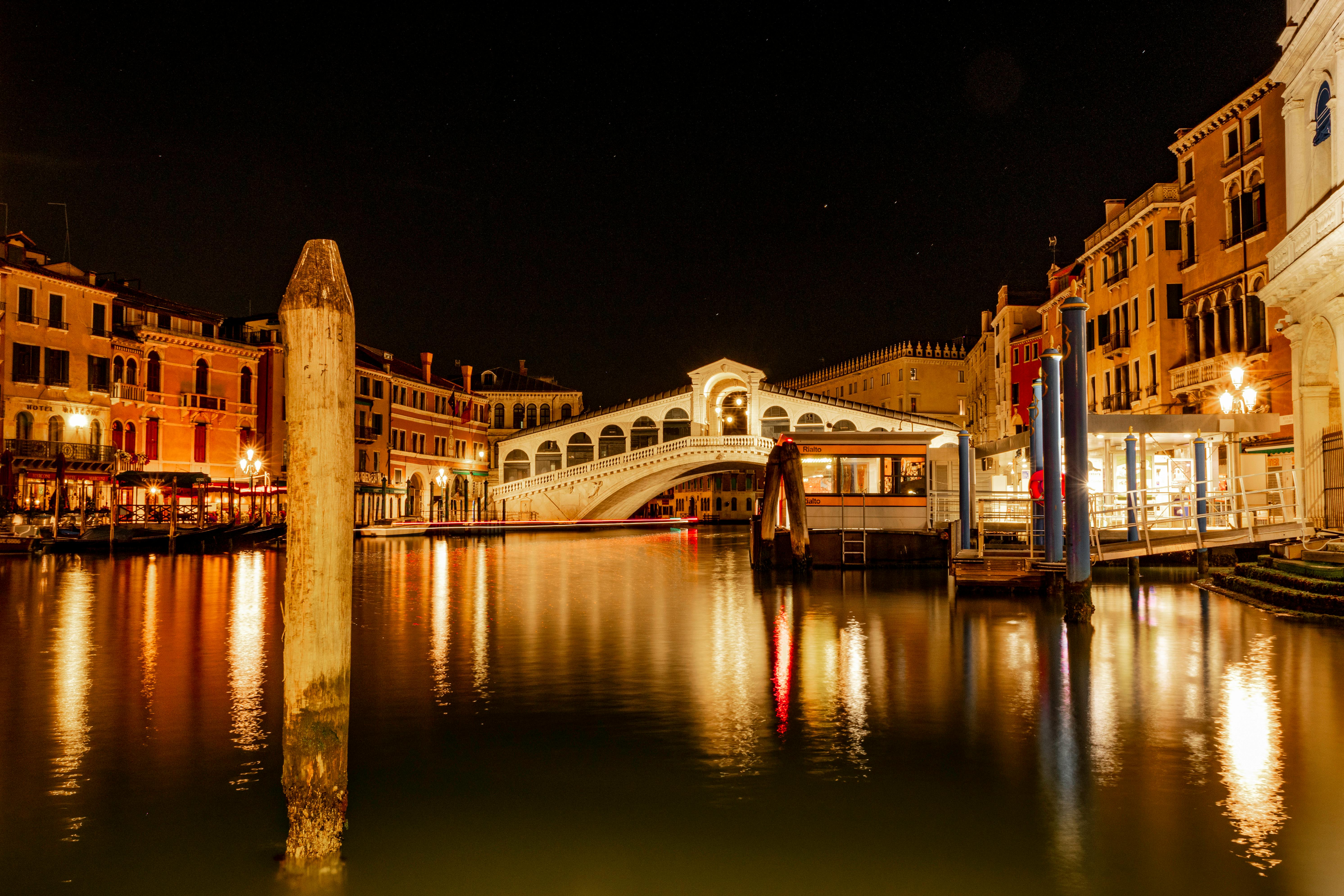
Stunning night view of the illuminated Rialto Bridge in Venice, Italy, reflecting on the canal.
Best Time to Visit · Venice

The Best Time to Visit Venice: A Season-by-Season Guide

From misty winter mornings to Carnival masks and summer canal traffic, here is exactly when to go to Venice and when to stay away.

Last updated July 2, 20268 min read

Venice is a city built for slow discovery, and the season you choose shapes everything: whether St Mark's Square is a sea of tour groups or a quiet expanse at dawn, whether you glide through misty canals or crawl behind selfie sticks on the Rialto Bridge. The city has no beaches of its own to worry about (the Lido aside), so the real levers are heat, humidity, crowds, price, and the strange seasonal quirk of acqua alta, the high tides that periodically flood low-lying areas.

Broadly, Venice runs on three moods. Spring and early autumn are the sweet spot: mild, walkable, and full of light, but busy and not cheap. Summer is hot, humid, mosquito-prone, and packed, though the festival calendar peaks. Winter is cool, atmospheric, and by far the cheapest and quietest window, punctuated by the spectacle of Carnival.

Because Venice is compact and entirely walkable (plus vaporetto water buses), you do not need perfect weather to enjoy it. What you are really optimizing for is elbow room and value, and on both counts the shoulder months and deep winter win handily over July and August.

Quick answer

The best time to visit Venice is April to May and late September to October, when temperatures are mild (15-23C / 59-73F), the light is beautiful, and crowds and prices sit below the summer peak. For the fewest crowds and lowest prices, visit in November, January, or February (skipping Carnival), while May and June offer the most reliable warm, dry weather.

At a glance

The short version

Best overall
Late April to May and late September to October. Comfortable temperatures, long daylight, and the shoulder-season balance of manageable crowds and good weather before or after the summer crush.
Cheapest time
November (excluding the tail of high season) through February, minus Carnival week. Hotel rates can drop 40-60% from summer, and flights to Venice Marco Polo are at their lowest.
Fewest crowds
Mid-November to mid-March outside Carnival and Christmas/New Year. You can have quiet campos and near-empty churches, especially on weekday mornings.
Best weather
May, June, and September. Warm, mostly dry days (20-27C / 68-81F) with low rainfall and pleasant evenings for canal-side dinners.
Best for Carnival
February, roughly two weeks before Lent. Masked balls, costumed crowds in St Mark's Square, and a magical if pricey and crowded atmosphere.
Best for art lovers
The Venice Biennale years (Art Biennale runs the odd-numbered years, roughly May to November; Architecture in even years). Visit in May or October for the exhibitions without peak summer heat.
Season by season

Through the year

SpringMarch to May
Weather Cool and warming: March around 6-14C (43-57F), May a pleasant 13-23C (55-73F). Spring can be showery, and early season mornings are crisp, but by May days are reliably mild and bright.
Crowds Rising steadily. March is still quiet, Easter brings a sharp spike, and by May crowds are heavy, especially weekends and around the Biennale opening.
Prices Mid to high, climbing through the season. Easter and May bridge holidays push hotel rates up sharply; early March is still relatively affordable.

Spring is arguably Venice at its best, with soft light, blooming gardens on the outer islands, and comfortable walking weather. The downside is that everyone else knows it too, so May feels busy and expensive. Ideal for travelers who want mild days and are willing to pay a bit more for them.

SummerJune to August
Weather Hot and humid: highs of 27-31C (81-88F), muggy nights, and frequent afternoon thunderstorms. Mosquitoes are active near the water, and the canals can carry a stronger smell at low tide.
Crowds Peak. July and August bring the largest crowds, with cruise-adjacent day-trippers, tour groups, and long queues at St Mark's Basilica and the Doge's Palace.
Prices Highest of the year for hotels, though some locals leave in August and a few restaurants close. Book accommodation well ahead.

Summer is the festival-rich but least comfortable season, hot, sticky, and crowded, with St Mark's Square baking under the midday sun. It works if you want the Film Festival, Redentore fireworks, and long evenings, and if you plan sightseeing for early morning and late day. Not the season for anyone chasing tranquility.

AutumnSeptember to November
Weather September is warm and lovely (16-25C / 61-77F), October mild (11-19C / 52-66F), and November cool and damp (6-13C / 43-55F) with the season's first acqua alta events. Rainfall increases through the period.
Crowds September stays busy, October eases, and November is genuinely quiet aside from occasional conference or event bumps. A clear downward slope in visitor numbers.
Prices High in September, dropping through October into the low rates of November. Late autumn is one of the best value windows of the year.

Early autumn rivals spring for the best all-round experience, with warm days and thinning September crowds. By late October and November the city turns moody and atmospheric, cheaper and calmer, though you trade good weather for the risk of rain and flooding. Great for photographers and travelers who like Venice melancholic and uncrowded.

WinterDecember to February
Weather Cold and often foggy: 1-8C (34-46F), occasional freezing mornings, damp air, and the highest chance of acqua alta. Snow is rare but possible; misty canals are common and beautiful.
Crowds Lowest of the year outside the spikes of Christmas, New Year, and Carnival (late January into February). Weekday mornings can feel like you have the city to yourself.
Prices Cheapest, except during Carnival and the holidays when rates jump. Bargain hotel deals are common in early December and late January.

Winter Venice is atmospheric, affordable, and quiet, all fog, lantern light, and empty campos, ideal for travelers who prioritize solitude and value over sunshine. The tradeoffs are cold, damp days, shorter opening hours, and the real possibility of flooded walkways. Pack waterproof boots and layers, and consider timing around (or away from) Carnival depending on your taste for spectacle.

On the calendar

Notable events & festivals

Carnival of Venice (February)Venice's signature spectacle, roughly two weeks before Lent, with elaborate masks and costumes, masked balls, and crowds filling St Mark's Square. In 2027 it centers on February; check exact dates as they shift yearly with Easter.
Venice Biennale (roughly May to November)One of the world's most important art and architecture exhibitions, alternating disciplines by year (Art in odd years, Architecture in even). Pavilions spread across the Giardini, the Arsenale, and venues citywide.
Festa del Redentore (third weekend of July)A beloved local festival marking deliverance from the 1576 plague, with a pontoon bridge across the Giudecca Canal and a huge Saturday-night fireworks display over the lagoon.
Venice Film Festival (late August to early September)The oldest film festival in the world, held on the Lido, drawing stars, premieres, and film crowds. Book Lido and central hotels far in advance.
Festa della Madonna della Salute (November 21)A deeply local pilgrimage across a temporary pontoon bridge to the Salute basilica to give thanks for the end of the 1630 plague, one of the most authentic Venetian traditions.
Regata Storica (first Sunday of September)A historic regatta with a costumed boat procession down the Grand Canal followed by competitive rowing races, a colorful window into Venice's maritime past.
When to avoid

Avoid July and August if you dislike heat, humidity, mosquitoes, and dense crowds, as St Mark's Square becomes uncomfortable at midday and prices peak. Be cautious of late October through December for acqua alta, the seasonal high tides that can flood low-lying areas like St Mark's Square (check tide forecasts and pack waterproof boots). Carnival week and the Christmas/New Year period bring the winter crowd and price spikes, so skip them if you came for quiet.

Got your dates? Build the trip around them.

We'll plan a custom Venice itinerary tuned to your travel month and pace.

Generate itinerary

Frequently asked questions

What is the cheapest month to visit Venice?
November and January (outside the Christmas/New Year and Carnival spikes) are the cheapest, with hotel rates often 40-60% below the summer peak and the lowest flight prices of the year. Early December can also offer strong deals.
Is Venice worth visiting in winter?
Yes. Winter Venice is quiet, atmospheric, and affordable, with fog-shrouded canals and near-empty squares, plus the spectacle of Carnival in February. Expect cold, damp days (1-8C / 34-46F) and a real chance of acqua alta flooding, so pack layers and waterproof footwear.
How many days do you need in Venice?
Two to three full days is enough to see the main sights (St Mark's Basilica, the Doge's Palace, the Rialto, and a wander through quieter districts) and to take a boat to Murano and Burano. Add a day if you want to slow down or attend a festival or the Biennale.
When is acqua alta season in Venice?
Acqua alta, the periodic high tides that flood low-lying areas, is most common from October to January, peaking around November and December. Flooding is usually short-lived and predictable via tide forecasts, and raised walkways are set up in worst-hit zones like St Mark's Square.
What is the best month to visit Venice for good weather without the crowds?
Late September and early October offer the best combination: warm, mostly dry days (16-25C / 61-77F) with crowds noticeably thinner than the summer and spring peaks. Early March is a cooler but quieter and cheaper alternative.

Venice rewards timing more than almost any other city: the same canals feel utterly different in a foggy January dawn versus a sweltering August afternoon. Pick the shoulder months for the best balance, deep winter for solitude and savings, or a festival window if you want the spectacle. Whenever you go, book early, plan your sightseeing around the crowds, and leave time to simply get lost.

Plan with MagicTrips

Build your own Venice trip

Tell us how many days, your budget, and what you're into. We'll turn it into a custom, day-by-day Venice itinerary.

Ready to book your stay?

Hotels
Homes

Traveling somewhere else?

Generate a custom itinerary