
The Best Time to Visit Singapore: A Month-by-Month Guide

Singapore is hot, humid, and switched-on all year, so timing comes down to rain, crowds, prices, and the events calendar rather than seasons in the usual sense.
Last updated June 25, 2026
The Best Time to Visit Singapore: A Month-by-Month Guide
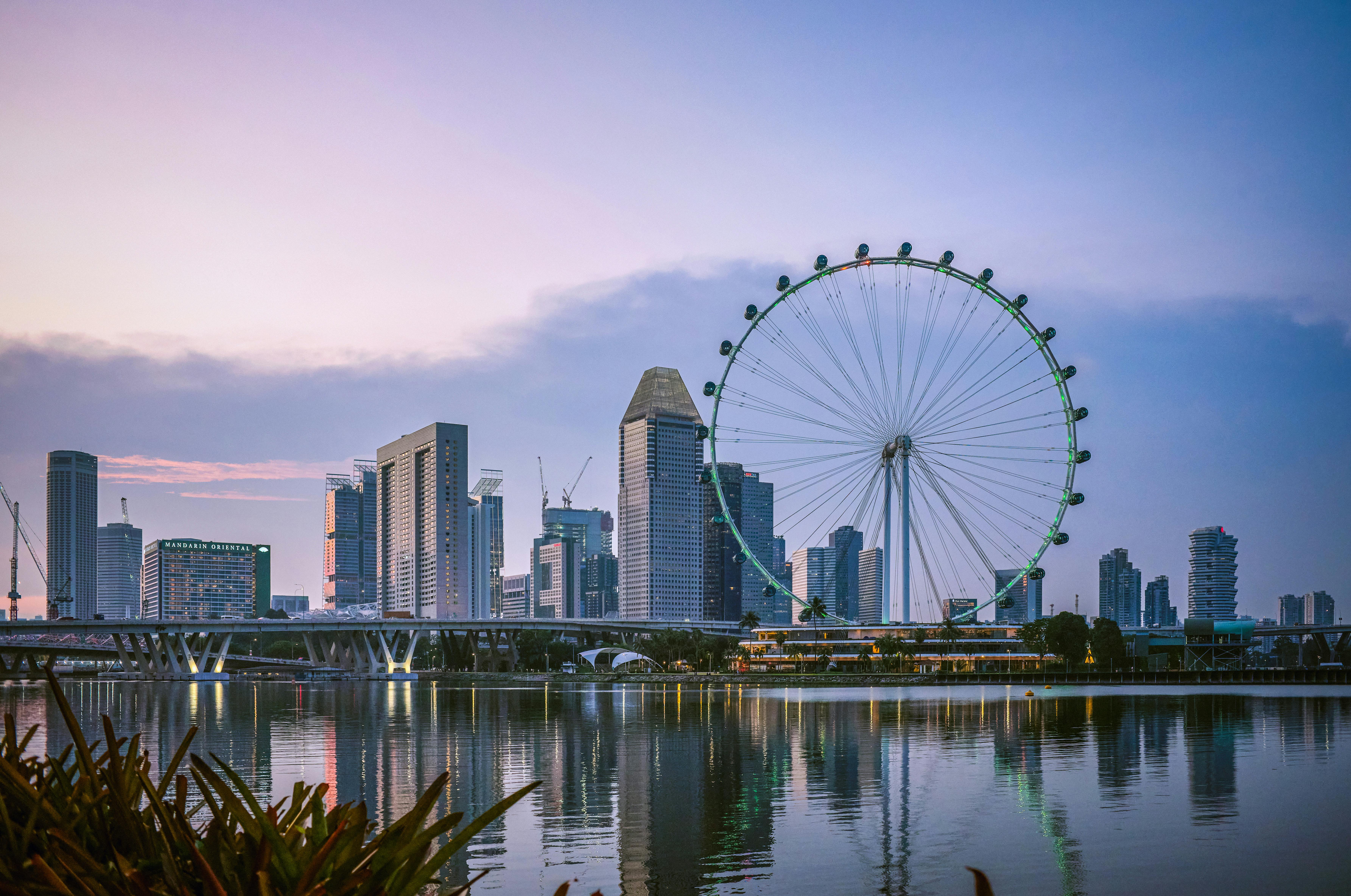
Captivating view of Singapore skyline with iconic Ferris wheel during sunset over Marina Bay. · Calvin Seng

Singapore sits roughly one degree north of the equator, which means it has no spring, summer, autumn, or winter. Daytime temperatures hover between 26C and 32C (79F to 90F) every single month, humidity rarely drops below 70 percent, and the sun sets around 7pm year-round. What actually changes is the rain, and to a lesser degree the crowds and prices that track school holidays and the events calendar.

The year is loosely split by two monsoons. The Northeast Monsoon (December to early March) brings the heaviest, most prolonged downpours, peaking in November and December. The Southwest Monsoon (June to September) delivers shorter, sharper afternoon storms. Between them sit two inter-monsoon windows that tend to be the most settled, with February usually the driest month of all.

Because the weather is broadly similar whenever you go (expect heat, humidity, and at least the chance of a tropical downpour), smart timing in Singapore is really about dodging the wettest weeks, avoiding the price spikes around Chinese New Year and the Grand Prix, and deciding whether you want a marquee event or a quieter, cheaper city.

Quick Answer

The best time to visit Singapore is February to April, when rainfall eases off, humidity is marginally lower, and the city enjoys its most reliable stretch of sunshine. February is typically the driest month. Expect heat and humidity whenever you go, and book well ahead if your trip coincides with Chinese New Year or the September Formula 1 night race.

At a Glance

Best overallFebruary to April. This inter-monsoon and early dry stretch brings the least rain and the most usable sunshine, ideal for Gardens by the Bay, Sentosa, and walking the city before the midday heat builds.
Cheapest timeLate January (outside Chinese New Year), early February, and November. Avoiding school holidays and major events drops hotel rates noticeably, and airfares from most regions soften in these shoulder weeks.
Fewest crowdsMid-February through April and the first half of November. Attractions like Universal Studios and the Singapore Zoo are far more comfortable outside the June to July school-holiday surge and the December peak.
Best weatherFebruary and early March. It is the driest, sunniest window of the year, though still hot at around 31C (88F) by day with high humidity.
Best for festivals and nightlifeSeptember, for the Formula 1 Singapore Grand Prix night race, paired with major concerts and a buzzing Marina Bay. Book flights and hotels months in advance, as prices climb sharply.
Best for foodies and cultureLate January to February for Chinese New Year, when Chinatown lights up, or the May to June Ramadan and Hari Raya season in Kampong Glam for outstanding bazaar food.

Season by Season

Northeast Monsoon (December to early March)

Weather Hot and very wet early on, easing later. Highs around 30C (86F), lows near 24C (75F). November and December are the rainiest months; rain tapers off into the dry, sunnier stretch of February.
Crowds High over the December holidays and again around Chinese New Year (which falls in late January or February). Mid-February to early March is quieter.
Prices Peak prices in late December and over Chinese New Year, when many regional travelers visit. Rates dip in the last weeks of January and through February.

A season of two halves: soggy, storm-heavy December gives way to Singapore's driest, brightest weeks in February. The festive end of the year is atmospheric but pricey and wet, while February rewards visitors with the most reliable weather of the entire year. Best for those who can travel after Chinese New Year.

First Inter-Monsoon (April to May)

Weather The hottest and most humid stretch. Highs of 31C to 33C (88F to 91F), high humidity, and frequent short, intense afternoon thunderstorms. April is often the warmest month.
Crowds Moderate. A genuine shoulder period between the festive peak and the June school holidays.
Prices Mid-range, with good value on hotels outside any event weekends.

Expect sticky, sweaty days punctuated by dramatic afternoon storms that usually clear quickly. Mornings are good for sightseeing before the heat peaks. A solid choice for travelers who want fewer crowds and decent prices and do not mind the humidity.

Southwest Monsoon (June to September)

Weather Hot with frequent afternoon and early-evening thunderstorms. Highs around 31C (88F), lows near 25C (77F). Generally less total rain than the Northeast Monsoon, but watch for occasional regional haze.
Crowds Busy in June and July during school holidays, then easing in August. September spikes around the Grand Prix.
Prices Higher in June to July and sharply higher over the F1 weekend in September. August is comparatively calmer.

Storms tend to roll in during the afternoon and pass, leaving the rest of the day usable. This is event season, capped by the Formula 1 night race in September. Best for travelers chasing the Grand Prix or those happy to plan around afternoon downpours, but book early for September.

Second Inter-Monsoon (October to November)

Weather Increasingly wet as the year ends. Highs around 30C to 31C (86F to 88F), high humidity, and rising rainfall, with November among the wettest months.
Crowds Lower in October and early November, building toward the December holidays. Deepavali brings festive energy to Little India.
Prices Low to mid-range in early November, climbing as December approaches.

A transitional, progressively rainier period. Early November can be a quiet, good-value time if you accept the risk of heavy showers, while late November starts to feel busy ahead of the festive season. Suits flexible, budget-minded travelers who pack a rain plan.

Notable Events & Festivals

Chinese New Year (late January or February) Singapore's biggest celebration, with Chinatown lit up in lanterns, the River Hongbao fair, and the Chingay street parade. Some smaller shops and eateries close for a few days, and hotels fill up.
Hari Raya Puasa and Ramadan bazaars (timing shifts yearly) During Ramadan, the Geylang Serai and Kampong Glam areas host atmospheric night bazaars with superb Malay food, culminating in the Hari Raya Puasa celebration marking the end of fasting.
Great Singapore Sale (roughly June to August) A months-long retail event with discounts across malls and on Orchard Road, timed to the mid-year tourist season and school holidays.
National Day (9 August) Singapore's independence celebration brings a spectacular parade, military and aerial displays, and fireworks over Marina Bay. The city is festive and busy.
Formula 1 Singapore Grand Prix (September) The marquee event of the year: a Formula 1 night race on the Marina Bay street circuit paired with major international concerts. Hotels and flights book out months ahead and prices peak.
Deepavali (October or November) The Hindu Festival of Lights transforms Little India with elaborate decorations, light installations, and street markets in the weeks leading up to the celebration.
When to Avoid

If sunshine matters, avoid November and December, the wettest months with prolonged, sometimes all-day downpours. Avoid the Chinese New Year week and the September Grand Prix weekend if you want lower prices and smaller crowds, as both drive hotel rates up steeply. Heat and humidity are constant year-round, so there is no genuinely cool season to wait for.

Frequently asked questions

What is the cheapest month to visit Singapore?
Late January (outside Chinese New Year), February, and early November tend to be the cheapest, with softer hotel rates and airfares once you steer clear of school holidays and major events. February also happens to be the driest month, making it strong value.
What is the driest time of year in Singapore?
February is typically the driest month, and the February to April window overall sees the least rain and the most sunshine. Even then, brief showers are always possible given Singapore's equatorial climate.
Is Singapore worth visiting during the rainy season?
Yes. Even in the wettest months the rain often comes as intense bursts that clear within an hour or two, and Singapore has abundant indoor attractions, covered walkways, and air-conditioned malls. Just build flexibility into your plans and carry a compact umbrella.
How many days do you need in Singapore?
Three to four full days is enough to cover the main highlights: Marina Bay and Gardens by the Bay, the cultural quarters of Chinatown, Little India, and Kampong Glam, a hawker-centre food crawl, and a day on Sentosa. Add a day or two if you want to slow down or use Singapore as a base.
When is the Singapore Grand Prix and should I plan around it?
The Formula 1 Singapore Grand Prix is held at night on the Marina Bay street circuit in September. If you want to attend, book flights and hotels months ahead; if you do not, consider visiting at another time, as that weekend brings the year's highest prices and biggest crowds.

Singapore is a year-round destination where the real planning decision is rain, crowds, and price rather than temperature. Aim for February to April for the best weather and value, or build your trip around a headline event like Chinese New Year or the September Grand Prix. Whenever you go, pack light, plan for the heat, and keep an umbrella handy.

Ready to book your trip?

Search Hotels
Search Homes

Traveling somewhere else?

Generate a custom itinerary