
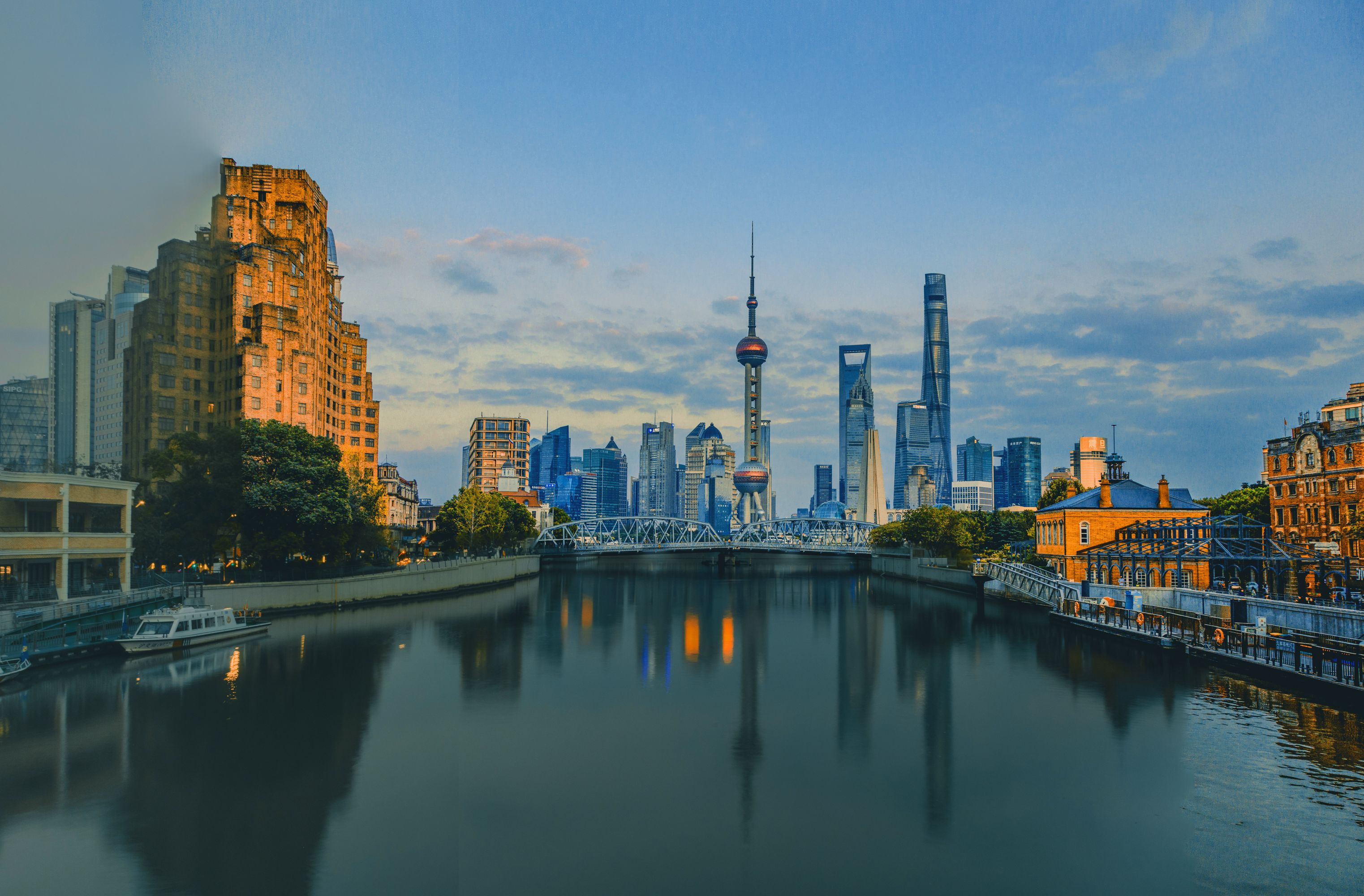
Scenic view of the Shanghai skyline at sunset with the iconic Oriental Pearl Tower reflected in the Huangpu River.
Best Time to Visit · Shanghai

The Best Time to Visit Shanghai: A Season-by-Season Guide

From cherry blossoms along the Bund to autumn skies over the Huangpu, here is when to time your trip to China's most cosmopolitan city.

Last updated June 26, 20267 min read

Shanghai sits on the Yangtze River Delta where the East China Sea meets the mainland, and that coastal position gives it a humid subtropical climate of four distinct but lopsided seasons. The two pleasant ones, spring and autumn, are short and prized; the two harsh ones, a hot, drenched summer and a damp, bone-chilling winter, are long and test your patience. Knowing which is which is the difference between a great trip and a sweaty, gray one.

What drives the decision in Shanghai is less about temperature alone and more about the overlap of weather, humidity, and Chinese public holidays. The city largely shrugs off the rhythms of Western tourism, so the busiest, priciest windows track domestic travel: Chinese New Year, the Labour Day break in early May, and the National Day Golden Week in early October. Hit those and you share the Bund with millions; dodge them and the same sights feel calm.

For most travelers the sweet spots are clear. Late March through mid-May and late September through early November deliver mild air, manageable crowds outside the holiday spikes, and the clearest skies of the year. The rest of this guide breaks down exactly what to expect month by month.

Quick answer

The best time to visit Shanghai is spring (late March to mid-May) and autumn (late September to early November), when temperatures are mild, humidity is bearable, and skies are at their clearest. Avoid the brief but intense Labour Day (early May) and National Day Golden Week (early October) holidays, when domestic crowds and prices surge.

At a glance

The short version

Best overall
October. Autumn brings dry, sunny days around 18 to 25C (64 to 77F), low humidity, and the year's best light over the Huangpu River. Just skip the National Day Golden Week (October 1 to 7).
Cheapest time
Late winter, especially February (outside Chinese New Year) into early March. Hotel and flight prices fall to their annual lows when the cold and damp keep tourists away.
Fewest crowds
Midweek in winter (December to February, excluding Chinese New Year). Museums, gardens, and the Bund are at their quietest, though you will brave raw, damp cold.
Best weather
Late September to early November and April. Warm but not humid days, cool nights, and reliable blue skies make these the most comfortable stretches of the year.
Best for cherry blossoms
Late March to early April. Gucun Park, Century Park, and the riverside walks along the Bund and Pudong erupt in pink and white blossom for roughly two weeks.
Best for a festive city
Late January to February for Chinese New Year, when temple fairs, lanterns at Yuyuan Garden, and citywide decorations transform Shanghai, despite the cold.
Season by season

Through the year

SpringMarch to May
Weather Mild and warming, from around 10 to 18C (50 to 64F) in March to 18 to 26C (64 to 79F) by May. Showers are frequent, and humidity builds toward late May.
Crowds Moderate, rising into a sharp spike around the Labour Day holiday in early May. Cherry blossom season in late March and early April draws domestic day-trippers to parks.
Prices Mid-range, with a steep jump for the May 1 to 5 Labour Day break when hotels fill and rates climb.

Spring is one of Shanghai's two prime windows, with blossoming parks, comfortable walking weather, and the clearest air before summer haze. Pack layers and an umbrella for unpredictable showers. Time your visit for April or late March rather than the crowded, pricey early-May holiday.

SummerJune to August
Weather Hot, humid, and wet. Temperatures run 28 to 35C (82 to 95F) with high humidity, and the plum rain (meiyu) season soaks June into early July. July and August bring peak heat plus occasional typhoons.
Crowds High during the July and August school holidays, when domestic family travel peaks, though the heat thins outdoor sightseeing.
Prices High in July and August, easing slightly during the rainy stretch of June.

Summer is the season to approach with caution: oppressive humidity, heavy downpours, and the risk of typhoons make outdoor days draining. The upside is the city's air-conditioned refuges, malls, museums, and rooftop bars, plus long daylight hours. It suits travelers on a fixed schedule who can plan indoor mornings and evening strolls when the heat eases.

AutumnSeptember to November
Weather The most pleasant season. September can still be warm and humid, but October and November settle into 14 to 25C (57 to 77F) with low humidity and abundant sunshine.
Crowds Very high during National Day Golden Week (October 1 to 7), then comfortably moderate for the rest of October and November.
Prices Peak during Golden Week, then mid-range. Late October and November offer good value alongside great weather.

Autumn is widely considered the best time to be in Shanghai, with crisp blue skies, golden plane trees in the former French Concession, and ideal temperatures for walking the Bund. The only real pitfall is National Day Golden Week, when crowds and prices peak. Visit just after, in mid-to-late October, for the sweet spot of weather and calm.

WinterDecember to February
Weather Cold, damp, and gray, typically 2 to 9C (36 to 48F). Snow is rare but the high humidity and lack of indoor heating in older buildings make it feel rawer than the numbers suggest.
Crowds Lowest of the year, apart from a sharp spike around Chinese New Year (late January or February), when domestic travel surges.
Prices Lowest of the year, with the notable exception of the Chinese New Year period when rates jump.

Winter is bleak on weather but rewarding on price and quiet, with the Bund, gardens, and museums at their least crowded. Bundle up properly, as the damp cold cuts deep. Chinese New Year is a fascinating, festive exception worth experiencing if you can handle the crowds and book ahead.

On the calendar

Notable events & festivals

Chinese New Year (late January or February 2026: February 17)The biggest holiday of the year, marked by lantern displays at Yuyuan Garden, temple fairs at Longhua, fireworks restrictions in the center, and a citywide festive mood. Expect surging domestic crowds and many small businesses closed.
Shanghai International Cherry Blossom Festival (late March to early April)Centered on Gucun Park in the north, with thousands of cherry trees blooming. Century Park and riverside promenades also put on a strong show for roughly two weeks.
Labour Day Holiday (May 1 to 5)A major domestic travel break that packs the Bund, Yuyuan, and Disneyland. Great atmosphere but heavy crowds and higher prices; book accommodation well in advance.
Dragon Boat Festival (early June 2026: June 19)A traditional holiday with dragon boat races and sticky rice dumplings (zongzi). A good cultural window just before the plum rains set in.
Shanghai International Film Festival (mid-June)One of Asia's leading film festivals, bringing screenings, premieres, and industry events to cinemas across the city for around ten days.
National Day Golden Week (October 1 to 7)A week-long national holiday and the busiest travel period of autumn. The weather is superb but landmarks are mobbed and prices peak, so plan around it if you can.
When to avoid

Avoid the peak of summer (July and early August) for its sapping heat, humidity around 35C (95F), and typhoon risk, and steer clear of the plum rain stretch of mid-June to early July if you want dry days. For crowds and cost, dodge the three domestic holiday spikes: Chinese New Year, Labour Day (early May), and National Day Golden Week (October 1 to 7).

Got your dates? Build the trip around them.

We'll plan a custom Shanghai itinerary tuned to your travel month and pace.

Generate itinerary

Frequently asked questions

What is the cheapest month to visit Shanghai?
February (outside the Chinese New Year period) and early March are generally the cheapest, with the lowest flight and hotel prices of the year because the cold, damp weather deters tourists.
Is Shanghai worth visiting in winter?
Yes, if you do not mind raw, damp cold around 2 to 9C (36 to 48F). Winter brings the year's smallest crowds and lowest prices, and Chinese New Year adds spectacular lantern displays and festive energy, though many small businesses close during the holiday.
How many days do you need in Shanghai?
Three to four days is enough to cover the highlights, including the Bund, Pudong skyline, Yuyuan Garden, the former French Concession, and a museum or two. Add a day or two if you want to take a side trip to a nearby water town like Zhujiajiao or Suzhou.
When is the best weather in Shanghai?
Late September through early November and the month of April offer the most comfortable weather, with mild temperatures, low humidity, and the clearest skies. October is often singled out as the single best month.
What is the rainiest time in Shanghai?
The plum rain (meiyu) season from mid-June to early July is the wettest and most humid stretch, bringing persistent drizzle and downpours. Summer overall is rainy, with occasional typhoons in August and September.

Shanghai rewards travelers who time it well: aim for the clear, mild weeks of April or October and you will catch the city at its most photogenic and walkable. Sidestep the three big domestic holidays, pack layers for the damp shoulder seasons, and you are set for one of Asia's most dynamic urban escapes. Start mapping your dates and the rest falls into place.

Plan with MagicTrips

Build your own Shanghai trip

Tell us how many days, your budget, and what you're into. We'll turn it into a custom, day-by-day Shanghai itinerary.

Ready to book your stay?

Hotels
Homes

Traveling somewhere else?

Generate a custom itinerary