
The Best Time to Visit Saranda: A Season-by-Season Guide to Albania's Riviera Jewel

From quiet, sun-warmed shoulder months to the wild swimming of high summer, here is exactly when to plan your trip to Saranda on the Albanian Ionian coast.
Last updated June 22, 2026
The Best Time to Visit Saranda: A Season-by-Season Guide to Albania's Riviera Jewel
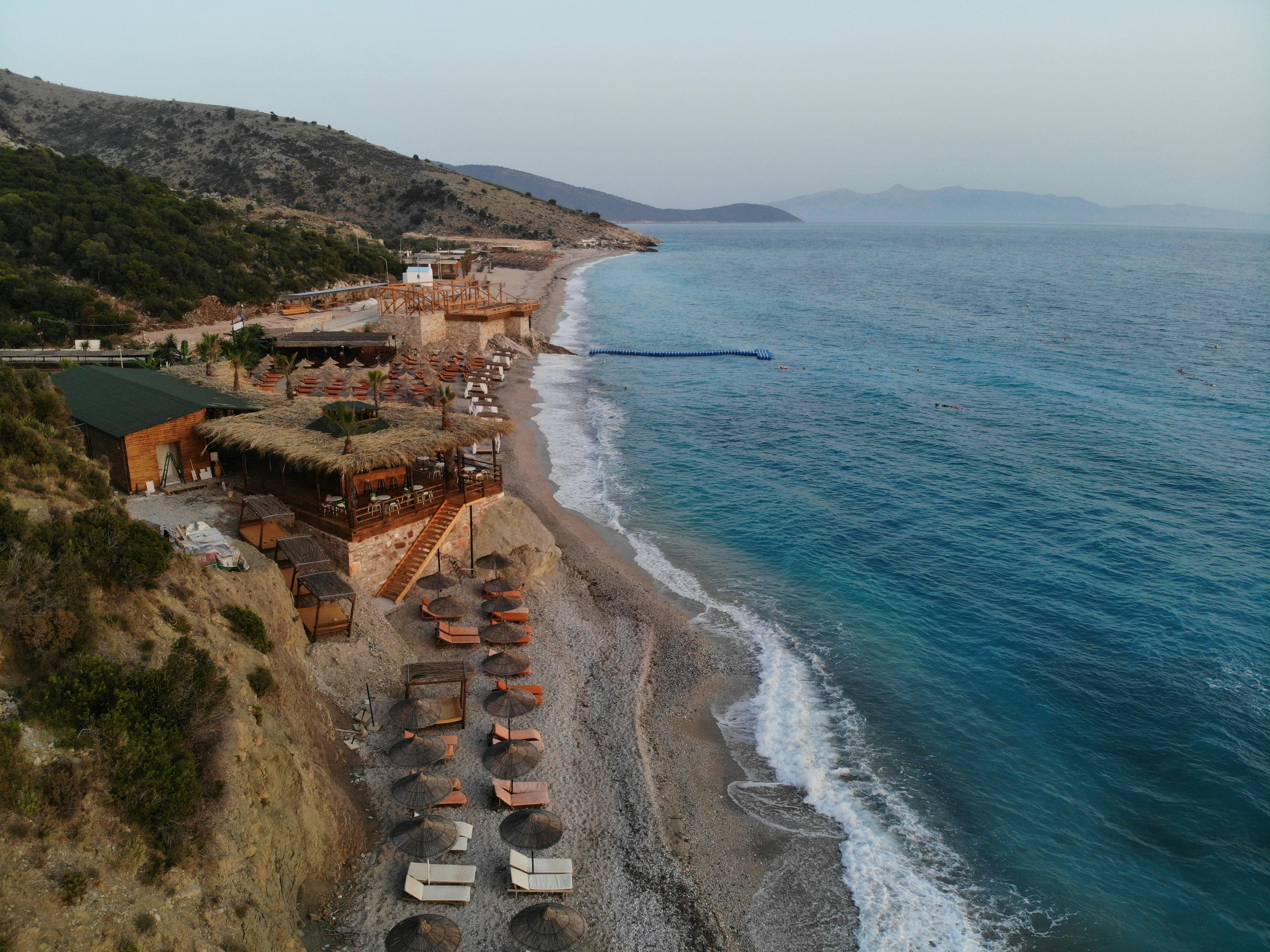
Stunning aerial shot of a serene beach resort in Albania, featuring turquoise waters and scenic coastline. · Adriano Ribeiro Da Cruz

Saranda sits at the southern tip of the Albanian Riviera, looking across a narrow channel of the Ionian Sea toward the Greek island of Corfu. Its calendar is driven almost entirely by sun and sea: this is a Mediterranean beach town that wakes up in late spring, roars through July and August, and dozes through a mild, rainy winter. Deciding when to go really comes down to how much heat, crowding, and price you are willing to trade for warm swimming water.

The headline tension is simple. High summer delivers reliable 30C-plus days, calm turquoise water, and the full circus of beach clubs and ferries, but it also brings the highest prices and shoulder-to-shoulder beaches at nearby Ksamil. The shoulder months on either side, May to June and September to early October, keep the sea warm and the skies blue while cutting both the crowds and the cost.

Saranda also makes a brilliant base for more than sunbathing. The UNESCO-listed ruins of Butrint, the cold spring of the Blue Eye, and Lekuresi Castle above town reward travelers who come when the heat is gentler. Below you will find the best windows for every kind of trip, an honest season-by-season breakdown, and the weeks worth avoiding.

Quick Answer

The best time to visit Saranda is from mid-May to late June and again in September, when daytime temperatures sit around 24-29C (75-84F), the Ionian Sea is warm enough to swim, and prices and crowds are far below the July-August peak. For guaranteed hot, beach-perfect weather choose July and August; for the cheapest, quietest trip aim for May or October.

At a Glance

Best overallSeptember. The sea is at its warmest after a summer of sunshine, days are still 26-29C (79-84F), and the August crowds have largely cleared, giving you classic Riviera weather without the chaos.
Cheapest timeNovember to March. Accommodation drops to its lowest rates and flights into nearby Corfu or Tirana are cheap, though many beach businesses close. Late October and early May are the cheapest months that still feel lively.
Fewest crowdsApril and October. The town is calm, Butrint and the Blue Eye are near-empty, and you can walk the promenade without weaving through crowds, though sea swimming is bracing in April.
Best weatherLate June and September. Long, dry, sunny days around 27-30C (81-86F) with low humidity and warm water, the sweet spot before and after the searing midsummer peak.
Best for beachesJuly and August. Sea temperatures reach 25-26C (77-79F), Ksamil and Pulebardha are in full swing, and every beach club, lounger, and boat trip is operating, at the cost of peak crowds and prices.
Best for sightseeing and hikingMay and October. Comfortable temperatures make Butrint, Lekuresi Castle, and the Blue Eye a pleasure rather than an endurance test, and the surrounding hills are green in spring.

Season by Season

Spring (April to mid-June)

Weather Warming steadily from around 18C (64F) in April to 27C (81F) by June. April and May see occasional rain showers; June is mostly dry. Sea temperature climbs from a chilly 16C (61F) in April to a swimmable 23C (73F) by mid-June.
Crowds Low in April and May, building noticeably from late May into June. Easter and the early-June weekends bring the first real visitors.
Prices Low to mid. Hotel rates are well below summer, and the best value falls in April and early May before the season ramps up.

Spring is the connoisseur's choice: hillsides are green, wildflowers line the road to Butrint, and you can sightsee in shorts without melting. Early April water is too cold for most swimmers, but by June the sea is warm and the town is humming without being overwhelmed. Ideal for sightseers, hikers, and anyone who wants beaches and ruins to themselves.

Summer (late June to August)

Weather Hot and reliably dry, with highs of 30-34C (86-93F) and warm nights around 22-24C (72-75F). Rain is rare. Sea temperature peaks at 25-26C (77-79F) in August.
Crowds Peak. July and August are the busiest weeks of the year, with Ksamil's tiny beaches packed and the promenade full into the night. The first half of August coincides with Albanian, Italian, and Kosovar holidays.
Prices Highest. Accommodation can double or triple versus spring, and the best-value rooms sell out weeks ahead, especially for early August.

This is Saranda at full volume: sun-drenched, lively, and built for swimming, boat trips, and late dinners by the water. The trade-off is heat, congestion, and the steepest prices, plus midday beaches so crowded you may struggle to find a spot. Best for committed sun-seekers and travelers who thrive on a buzzing atmosphere; book everything in advance.

Autumn (September to October)

Weather September stays summery at 26-30C (79-86F) with the sea still at a warm 24-25C (75-77F). October cools to 20-24C (68-75F) and rain becomes more frequent toward the end of the month.
Crowds September is pleasantly busy but well off the peak; October is quiet, with the season winding down by mid-month.
Prices Mid in September, falling to low by late October as businesses begin to close.

September is arguably the finest month of all: the water is at its warmest, the light turns golden, and the frenzy of August fades. October is gentler still and excellent for sightseeing, though some beach clubs and boat operators shut up shop in the second half. Great for couples, late-season swimmers, and travelers who want warmth without crowds.

Winter (November to March)

Weather Mild but wet by Mediterranean standards, with highs of 12-16C (54-61F) and cool nights around 6-9C (43-48F). This is the rainiest stretch, and the sea is too cold for swimming at 14-16C (57-61F).
Crowds Very low. Saranda becomes a sleepy local town, with much of its tourist infrastructure closed.
Prices Lowest of the year for the hotels that stay open, though dining and activity options shrink considerably.

Winter strips Saranda back to a quiet seaside town where you can walk the empty waterfront and visit Butrint in near solitude. Many restaurants, hotels, and boat services close, the weather is changeable, and there is no beach scene to speak of. Suited only to budget travelers, digital nomads, or those wanting an off-grid, ruins-focused trip.

Notable Events & Festivals

Orthodox and Catholic Easter (April) Easter brings the first meaningful visitor wave of the year, with local celebrations and busier weekends. Dates shift annually, so check the calendar before booking spring travel.
Summer Day / Dita e Veres (mid-March) A nationwide Albanian spring festival marking the end of winter, celebrated with sweets and outdoor gatherings. It is a lively cultural moment even though Saranda itself is still in its quiet season.
Saranda summer concerts and beach events (July to August) Through high summer the waterfront and beach clubs host open-air music nights, DJ sets, and impromptu festivals. Exact lineups vary year to year and are mostly announced locally and online close to the dates.
Albanian Independence and Liberation Days (late November) November 28 and 29 are national holidays marked with flags, music, and patriotic celebrations across the country, a rare burst of activity in Saranda's quiet off-season.
When to Avoid

Avoid the first two weeks of August if you dislike crowds and high prices, when Ksamil and central Saranda are at their most congested and rooms are scarce and expensive. November to March is best skipped for a beach or seaside-buzz trip, as the water is too cold to swim, rain is frequent, and much of the town's tourist infrastructure is closed.

Frequently Asked Questions

What is the cheapest month to visit Saranda?
The cheapest months are November through March, when hotel rates bottom out, but many beach businesses are closed. For the cheapest trip that still feels lively, target late October or early May, when prices are low yet restaurants and ferries are still running.
Is Saranda worth visiting in winter?
Saranda in winter is mild but quiet, with daytime temperatures around 12-16C (54-61F), frequent rain, and no swimming. It suits budget travelers or those focused on Butrint and the surrounding history, but anyone wanting beaches and nightlife should come between May and September.
When is the sea warmest in Saranda?
The Ionian Sea around Saranda is warmest in August and September, reaching about 25-26C (77-79F). September often feels best because the water has absorbed a full summer of heat while the air and crowds have eased.
How many days do you need in Saranda?
Three to four days is enough to enjoy Saranda's beaches, take a day trip to Ksamil and Butrint, and visit the Blue Eye and Lekuresi Castle. Add a couple more days if you want to relax on the beach at a slower pace or explore further along the Albanian Riviera.
Is September a good time to visit Saranda?
September is one of the best times to visit Saranda. The sea is at its warmest, temperatures are a comfortable 26-30C (79-86F), prices have dropped from the August peak, and the heaviest summer crowds have gone.

Whether you come for the warm September sea, the quiet sightseeing of spring, or the full beach-club energy of midsummer, Saranda rewards a little timing. Pin down your priorities (warm water, low prices, or empty beaches), pick your window, and book early for anything in July or August. The Ionian coast will be waiting.

Ready to book your trip?

Search Hotels
Search Homes

Traveling somewhere else?

Generate a custom itinerary