
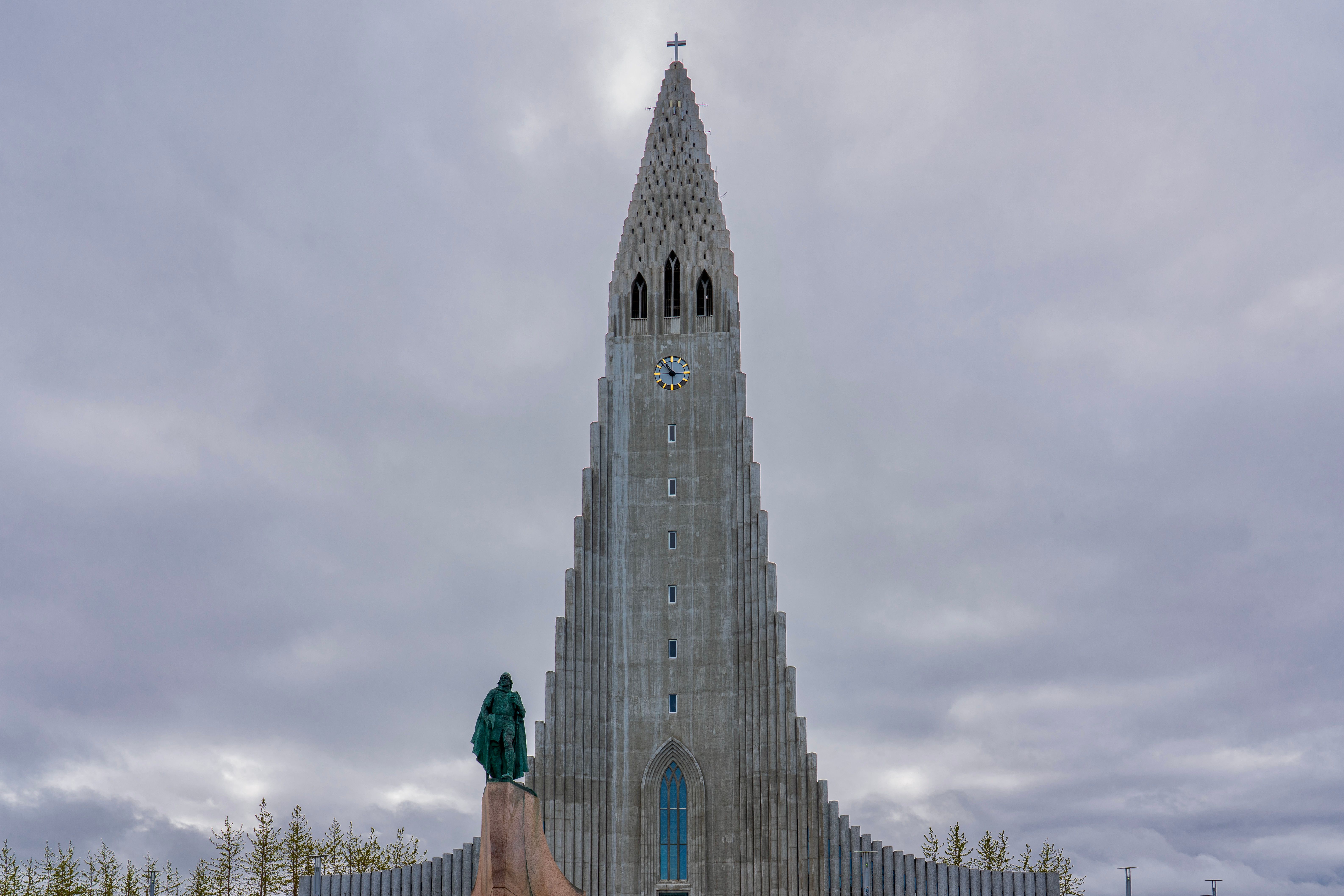
Dramatic view of Hallgrímskirkja church against cloudy skies in Reykjavik.
Best Time to Visit · Reykjavík

The Best Time to Visit Reykjavík: A Month-by-Month Guide

From the midnight sun of high summer to winter's northern lights, here is exactly when to visit Iceland's capital and why.

Last updated June 27, 20267 min read

Reykjavík sits just south of the Arctic Circle, and that latitude shapes everything about a trip here. Daylight swings from around four hours in late December to nearly 24 hours in late June, and the experience of the city changes completely with it. The weather, famously, is less about the calendar season and more about the hour: locals like to say if you don't like the weather, wait five minutes.

The decision really comes down to a trade-off between light and crowds. Summer brings the midnight sun, the warmest temperatures, accessible highland roads, and puffins, but also the highest prices and the biggest crowds. Winter delivers the northern lights, cozy geothermal soaks, and lower prices outside the holidays, at the cost of short days and unpredictable conditions.

The shoulder seasons (roughly September to October and April to May) are the sweet spot for many travelers, balancing reasonable daylight, thinner crowds, softer prices, and a real chance at the aurora. Below is how each season actually feels, plus the best windows for specific trips.

Quick answer

The best time to visit Reykjavík is June to August for the midnight sun, warmest weather, and full access to the country, though it is also the busiest and priciest. For the northern lights and lower prices, visit between late September and March. The shoulder months of May and September offer the best balance of decent weather, fewer crowds, and moderate costs.

At a glance

The short version

Best overall
June to early September. Long daylight (up to 21+ hours in June), the mildest temperatures, ferries and highland buses running, and the widest range of day trips from the city.
Cheapest time
January to March (excluding the holiday week) and late October to early December. Flights and hotels drop well below summer rates, often 30-50% cheaper than July.
Fewest crowds
November and early December, plus late April. The summer rush is gone, downtown feels local again, and tours have availability without booking far ahead.
Best weather
July, the warmest and driest month, with average highs around 13-15C (55-59F) and the most settled conditions of the year.
Best for northern lights
September to mid-April, when nights are dark enough. October, February, and March tend to combine longer dark hours with relatively clearer, more stable skies.
Best for the midnight sun
Mid-June to early July. Around the summer solstice (June 21) the sun barely sets, with twilight lasting through the night for surreal late-evening sightseeing.
Season by season

Through the year

SpringApril to May
Weather Cool and changeable. Highs climb from about 6C (43F) in April to 10C (50F) in May, with overnight lows near freezing early on. Wind and rain showers are common, and snow can still fall in April.
Crowds Low to moderate. April is quiet; crowds build through May as the summer season approaches but stay well below peak.
Prices Mid. Better value than summer, with rising hotel rates as May progresses. April is one of the better-value months.

Spring is an underrated window: days lengthen quickly, prices are reasonable, and you still have a shot at the aurora in early April. The trade-off is unsettled weather and some highland roads still closed. It suits travelers who want fewer crowds and a mix of late-winter and early-summer experiences.

SummerJune to August
Weather Mild and the driest stretch of the year. Average highs of 12-15C (54-59F), lows around 8-10C (46-50F). June brings the midnight sun, with near-constant daylight around the solstice.
Crowds Peak. This is by far the busiest period, with downtown, the Golden Circle, and popular day trips at their fullest.
Prices High. Flights and hotels hit their annual peak; book accommodation and rental cars well in advance.

Summer is the most reliable time to visit, with the warmest weather, endless daylight for sightseeing, puffins along the coast, and full access to the interior. The downsides are crowds and cost, and the lack of true darkness means no northern lights. Ideal for first-timers and anyone combining the city with a wider Iceland road trip.

AutumnSeptember to October
Weather Cooling and increasingly wet and windy. Highs of about 10C (50F) in September dropping to 6C (43F) in October; lows near 2-5C (36-41F). Daylight shortens noticeably.
Crowds Moderate in September, dropping to low by late October. Summer crowds thin out quickly after early September.
Prices Mid, easing toward low. September still carries some summer pricing; October is markedly cheaper.

Autumn is a favorite shoulder season: the aurora returns as nights darken, prices soften, and the landscape takes on fall color. Weather grows stormier and some tours wind down, but you get a strong balance of value, decent daylight, and northern lights potential. Great for photographers and aurora hunters who still want manageable conditions.

WinterNovember to March
Weather Cold, dark, and windy, but milder than its latitude suggests thanks to the Gulf Stream. Highs around 1-4C (34-39F), lows often below freezing. December daylight is only about 4-5 hours. Ice, snow, and storms are common.
Crowds Low overall, with a sharp spike around Christmas and New Year. November and January-February are the quietest.
Prices Low outside the holidays, which are the most expensive winter dates. January and February offer the best deals of the year.

Winter is the season for northern lights, geothermal pools steaming in the cold, and a festive Reykjavík over the holidays. Short days and volatile weather limit how much you can do, and some excursions are weather-dependent. Best for aurora seekers, budget travelers, and anyone who wants a cozy, atmospheric city break.

On the calendar

Notable events & festivals

Reykjavík New Year's Eve (December 31)One of the world's wildest New Year celebrations, with citywide community bonfires and a chaotic, near-anarchic display of fireworks set off by residents across the city. Bring layers and expect crowds at the best vantage points.
Winter Lights Festival (early February)A four-day festival brightening the darkest time of year with light installations, museum nights, and the Pool Night event when geothermal pools stay open late. A good reason to visit deep winter.
Reykjavík Arts Festival (late May to early June)A long-running cultural festival spanning music, theater, dance, and visual art across venues citywide, marking the start of the lively summer season.
Secret Solstice / midnight sun events (mid to late June)Around the summer solstice the city hosts music and outdoor events under near-constant daylight. Even without a formal festival, late-night hikes and tours under the midnight sun are a highlight.
Menningarnótt / Culture Night (late August)Reykjavík's biggest single-day celebration, with free concerts, street performances, art events, and a fireworks finale, drawing huge crowds downtown to mark the end of summer.
Iceland Airwaves (early November)An acclaimed music festival showcasing Icelandic and international artists in venues around the city, and a major draw in the early-winter low season.
When to avoid

If you want to maximize daylight and outdoor activities, avoid late November through January, when there are only about 4-5 hours of daylight and frequent storms can cancel tours. If you are on a budget or dislike crowds, skip July and the Christmas-New Year week, the most expensive and busiest dates of the year. Note that severe winter storms can close roads and disrupt plans with little notice in any winter month.

Got your dates? Build the trip around them.

We'll plan a custom Reykjavík itinerary tuned to your travel month and pace.

Generate itinerary

Frequently asked questions

What is the cheapest month to visit Reykjavík?
January and February are typically the cheapest, with flights and hotels well below summer rates (often 30-50% lower). Late October and November are also good value. Avoid the Christmas and New Year week, which is the priciest part of winter.
When is the best time to see the northern lights in Reykjavík?
The aurora season runs from roughly September to mid-April, when nights are dark enough. For the best odds, aim for September-October or February-March, which balance long dark hours with relatively clearer skies, and head away from city lights on clear nights.
Is Reykjavík worth visiting in winter?
Yes, if you prioritize northern lights, lower prices, fewer crowds, and a cozy atmosphere with geothermal pools and festive holiday events. The trade-offs are short days (around 4-5 hours in December) and unpredictable weather that can cancel tours, so build flexibility into your plans.
How many days do you need in Reykjavík?
Two to three days is enough to see the city itself, including Hallgrímskirkja, the harbor, museums, and the Blue Lagoon. Most travelers use Reykjavík as a base for day trips like the Golden Circle and South Coast, so adding two or three more days lets you explore the surrounding region.
What is the warmest month in Reykjavík?
July is the warmest month, with average highs around 13-15C (55-59F) and the driest, most settled weather of the year. Even so, temperatures rarely climb much above the mid-teens Celsius, so pack layers and a waterproof jacket year-round.

Reykjavík rewards travelers in every season, so the real question is what you want to come home with: the endless daylight and full access of summer, or the aurora and quiet value of winter. Decide which light you are chasing, build in a little flexibility for the weather, and book early if your trip lands between June and August.

Plan with MagicTrips

Build your own Reykjavík trip

Tell us how many days, your budget, and what you're into. We'll turn it into a custom, day-by-day Reykjavík itinerary.

Ready to book your stay?

Hotels
Homes

Traveling somewhere else?

Generate a custom itinerary