
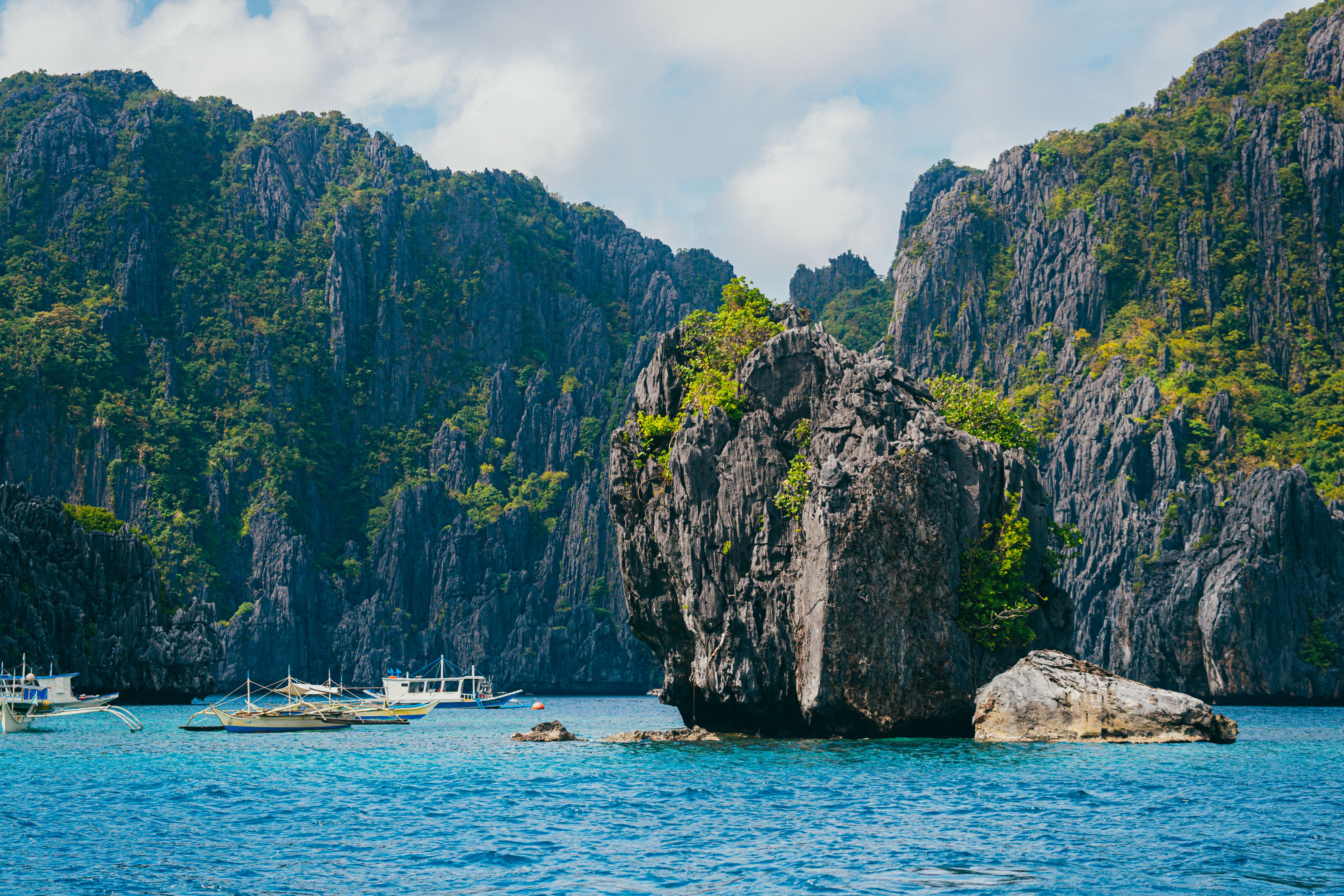
Palawan runs as a long, thin island province in the western Philippines, a chain of karst cliffs, turquoise lagoons, and reef-fringed islets that stretch from Coron in the north to the beaches south of Puerto Princesa. Because it sits closer to the equator, there are really only two seasons that matter: the dry season and the wet season, and knowing which one you are booking into changes everything about your trip.
The dry months from roughly December to May are when the island lives up to the postcards, with calm seas ideal for island-hopping in El Nido and wreck diving in Coron. The wet season from June to October brings the southwest monsoon (habagat), heavier rain, and choppier water, though it is also cheaper, greener, and far less crowded.
Weather, crowds, and price all pull in different directions here. The most reliable weather overlaps with the busiest and priciest weeks, while the quietest, cheapest travel comes with a real gamble on rain. This guide breaks down exactly what to expect so you can pick the window that fits your priorities.
The best time to visit Palawan is the dry season from late November to May, with January to April offering the calmest seas, sunniest skies, and best island-hopping conditions. March and April are the peak for reliable weather, while the wet season (June to October) is cheaper and quieter but brings frequent rain and rougher water.
Planning a trip to Palawan?
The short version
Through the year
This is the most comfortable stretch weather-wise, with warm days, cooler nights, and mostly reliable sun. The trade-off is holiday crowds and premium pricing. Book flights, resorts, and tours well in advance if you travel over the festive period.
The gold standard for island-hopping and diving thanks to the calmest water and clearest skies. The heat can be intense midday, so plan boat trips early and carry sun protection. This is peak season, so expect company at the marquee lagoons and beaches.
Landscapes are lush and green, and quieter beaches make for a more relaxed trip if you can accept unpredictable weather. Island-hopping tours still run on calmer days but can be cancelled when the sea is rough. Good value for flexible travelers who do not mind rain.
This is the biggest gamble on weather, with a real risk of tour cancellations and disrupted ferries when storms pass. Palawan sits south of the main typhoon belt so it is often spared the worst, but plan buffer days. By late November the weather usually stabilizes and the dry season begins.
Notable events & festivals
Avoid September and October if reliable weather matters, as these are the wettest, stormiest months with the highest risk of tropical storms, cancelled island-hopping tours, and disrupted ferries, particularly around Coron in the north. If you must travel then, build in buffer days and stay flexible.
Got your dates? Build the trip around them.
We'll plan a custom Palawan itinerary tuned to your travel month and pace.
Frequently asked questions
What is the cheapest month to visit Palawan?
Is Palawan worth visiting in the rainy season?
How many days do you need in Palawan?
When is the best time for island-hopping in El Nido?
Does Palawan get hit by typhoons?
Palawan rewards travelers who match their trip to the season: come between February and April for the calmest seas and surest sun, or gamble on the wet-season months for lower prices and empty lagoons. Whichever window you choose, book El Nido and Coron boats and inter-island transfers early, and you will be set for one of Southeast Asia's most spectacular island runs.
Build your own Palawan trip
Tell us how many days, your budget, and what you're into. We'll turn it into a custom, day-by-day Palawan itinerary.