
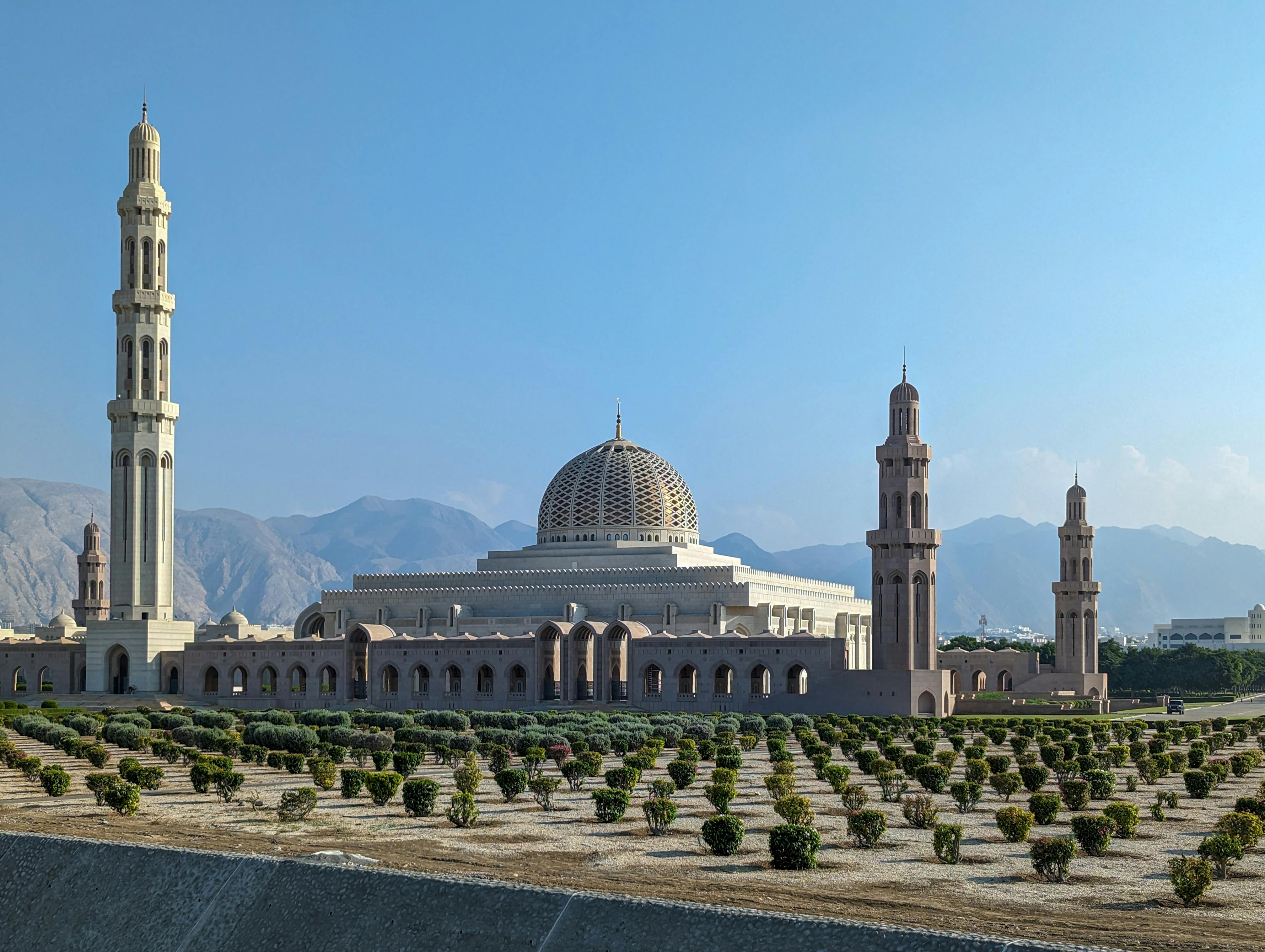
Sultan Qaboos Grand Mosque with its striking minarets against a clear blue sky in Muscat, Oman.
Best Time to Visit · Muscat

The Best Time to Visit Muscat: A Season-by-Season Guide

Oman's coastal capital is a winter sun destination at its core. Here is exactly when to go for warm-but-bearable weather, lower prices, and the city's signature wadis and beaches.

Last updated June 27, 20267 min read

Muscat is a hot-desert capital wrapped around the Gulf of Oman, hemmed in by the jagged Al Hajar mountains. That geography drives the whole calendar: summers are punishingly hot and humid, while the cooler months from late autumn through early spring turn the city into one of the Arabian Peninsula's most comfortable destinations. The decision of when to go comes down almost entirely to heat tolerance.

Unlike tropical destinations, Muscat has no real monsoon (the famous khareef rains fall on Salalah, far to the south, not here). Instead you trade between a long, brutally hot summer and a short, glorious winter when daytime temperatures sit in the mid-20s Celsius, the sea is swimmable, and wadis and mountain roads are at their best.

Prices and crowds follow the weather closely. The November-to-March window is high season, when European sun-seekers and Gulf weekenders fill the resorts. Shoulder months like October and April offer a sweet spot of warm weather and softer rates, while the deep summer is the cheapest time to come if you can handle 40C-plus heat.

Quick answer

The best time to visit Muscat is from November to March, when daytime temperatures are a pleasant 24 to 30C (75 to 86F), humidity is low, and the sea and wadis are ideal for swimming. October and April are warmer shoulder months with thinner crowds and better prices, while June to August is best avoided due to extreme heat above 40C (104F).

At a glance

The short version

Best overall
December to February, when daytime highs of 24 to 26C (75 to 79F), low humidity, and warm evenings make sightseeing, beaches, and mountain trips all comfortable at once.
Cheapest time
June to August. Flights and resort rates drop sharply during the searing summer, so if you can tolerate 40C-plus heat and stick to air-conditioned spaces and early-morning outings, this is the bargain window.
Fewest crowds
May and September, the bookends of summer. The heat keeps tourist numbers low while conditions are still slightly more bearable than peak July, and resorts are quiet and discounted.
Best weather
January and February deliver the most reliably pleasant days: sunny, dry, mid-20s Celsius by day and cool enough for a light layer at night.
Best for beaches and swimming
November to April, when sea temperatures are comfortable and the air is warm without being oppressive. The Qurum and Bandar Jissah coastlines are at their best.
Best for wadis and hiking
December to March, when cooler air makes trekking in the Al Hajar mountains and exploring wadis like Wadi Shab and Wadi Bani Khalid genuinely enjoyable rather than dangerous.
Season by season

Through the year

Winter / High seasonNovember to March
Weather Daytime highs of 24 to 30C (75 to 86F), dropping to 17 to 22C (63 to 72F) at night. Low humidity, abundant sunshine, and only occasional brief rain.
Crowds Peak season. European winter-sun travelers, cruise passengers, and Gulf visitors fill resorts, especially around Christmas, New Year, and February half-term.
Prices Highest of the year. Book resorts and flights well ahead for December and January, when rates and occupancy peak.

This is Muscat at its finest: warm, dry days perfect for the Grand Mosque, the Mutrah Corniche, beaches, and wadi trips, with comfortable evenings for dining out. The trade-off is higher prices and busier sites. Ideal for first-time visitors and anyone wanting to combine city, coast, and mountains.

Spring shoulderApril to May
Weather Highs climb from around 33C (91F) in April to 39C (102F) by late May, with nights of 24 to 28C (75 to 82F). Humidity begins to build along the coast.
Crowds Thinning quickly as the heat rises. April still sees some tourists; by May the city feels noticeably quieter.
Prices Mid to low, falling through the season. April offers good value with still-manageable weather.

April is an underrated window: warm enough for the beach, not yet unbearable, and cheaper than peak winter. By May the heat starts to dominate and outdoor activity is best confined to early mornings. Good for budget-conscious travelers who don't mind warmth.

Summer / Low seasonJune to September
Weather Highs of 38 to 43C (100 to 109F), rarely dipping below 30C (86F) at night, with high coastal humidity that makes it feel even hotter.
Crowds Lowest of the year. Many tourists stay away, and the city is dominated by residents and the occasional bargain-hunter.
Prices Cheapest by far. Resorts slash rates and flights are at their lowest, but you pay in comfort.

This is survival-mode tourism: pool, air conditioning, indoor malls, and excursions only at dawn or dusk. The heat and humidity are genuinely punishing and outdoor sightseeing is limited. Suits only those chasing the lowest prices or stopping over briefly.

Autumn shoulderOctober
Weather Highs easing from the high 30s early in the month to around 33C (91F) by late October, with warm nights around 25C (77F). Humidity gradually decreasing.
Crowds Building toward high season but still relatively light, especially early in the month.
Prices Mid-range and rising. Late October sees rates begin climbing toward winter peaks.

October is the turning point when Muscat becomes pleasant again. Late in the month the weather settles into something close to ideal, while prices and crowds have not yet caught up. A smart choice for travelers who want good conditions without peak costs.

On the calendar

Notable events & festivals

Muscat Festival (January to February)The city's flagship winter celebration, with heritage villages, craft markets, live performances, and family attractions spread across parks and venues. Dates shift yearly, so check the official program before booking.
National Day (18 November)Oman marks its national day with flags, decorations, fireworks, and public celebrations across Muscat. Expect a festive atmosphere and busy public spaces around the date.
Eid al-Fitr (mid-March 2026, approximate)Marking the end of Ramadan, Eid brings family gatherings, special meals, and a celebratory mood. Dates follow the lunar calendar and shift roughly 11 days earlier each year.
Ramadan (begins around mid-February 2026)During the holy month, daytime eating and drinking in public is restricted and many cafes adjust hours, though hotels cater to tourists. Evenings come alive with iftar feasts. A culturally rich but logistically different time to visit.
Muscat Eat Food Festival (typically November)A popular open-air food festival showcasing Omani and international cuisine, food trucks, and live music, usually held as the cooler season begins.
When to avoid

Avoid June through August unless you specifically want the lowest prices. Daytime temperatures regularly exceed 40C (104F) with heavy coastal humidity, making outdoor sightseeing, wadis, and hiking unpleasant or unsafe in the midday hours. If you visit during Ramadan (starting around mid-February 2026), be aware that public eating and drinking during daylight is restricted and some venues operate reduced hours.

Got your dates? Build the trip around them.

We'll plan a custom Muscat itinerary tuned to your travel month and pace.

Generate itinerary

Frequently asked questions

What is the cheapest month to visit Muscat?
July and August are the cheapest months, when extreme summer heat keeps tourist numbers low and resorts and airlines drop their prices significantly. You will trade comfort for cost, as daytime temperatures routinely top 40C (104F).
Is Muscat worth visiting in summer?
Muscat is still visitable in summer if you focus on pools, air-conditioned malls, indoor attractions, and early-morning or evening outings, and the prices are the lowest of the year. However, the combination of 40C-plus heat and high humidity makes daytime sightseeing and wadi trips genuinely difficult, so most travelers prefer the cooler months.
How many days do you need in Muscat?
Three to four days is enough to see the Sultan Qaboos Grand Mosque, the Mutrah Souq and Corniche, the Royal Opera House, and nearby beaches. Add two or three more days if you want to explore wadis, the mountains, or take a desert or coastal excursion.
What is the best month for beaches and swimming in Muscat?
November through April offers the best beach conditions, with warm but comfortable air temperatures and pleasant sea temperatures. Midwinter (December to February) is ideal for combining beach time with sightseeing and mountain trips.
Does it ever rain in Muscat?
Rain is rare and irregular in Muscat, with most of the limited annual precipitation falling between December and April in brief, occasionally heavy bursts. Unlike Salalah in the south, Muscat does not experience the khareef monsoon season.

For most travelers, the choice is simple: come to Muscat between November and March for the warm, dry, swimmable weather the city is built around, or gamble on the shoulder months of October and April for similar conditions at gentler prices. Whichever window you pick, lock in resorts early for the winter peak and plan your wadi and mountain adventures for the cooler hours. Start mapping out your trip now and Muscat's coastline, souqs, and mountains will do the rest.

Plan with MagicTrips

Build your own Muscat trip

Tell us how many days, your budget, and what you're into. We'll turn it into a custom, day-by-day Muscat itinerary.

Ready to book your stay?

Hotels
Homes

Traveling somewhere else?

Generate a custom itinerary