
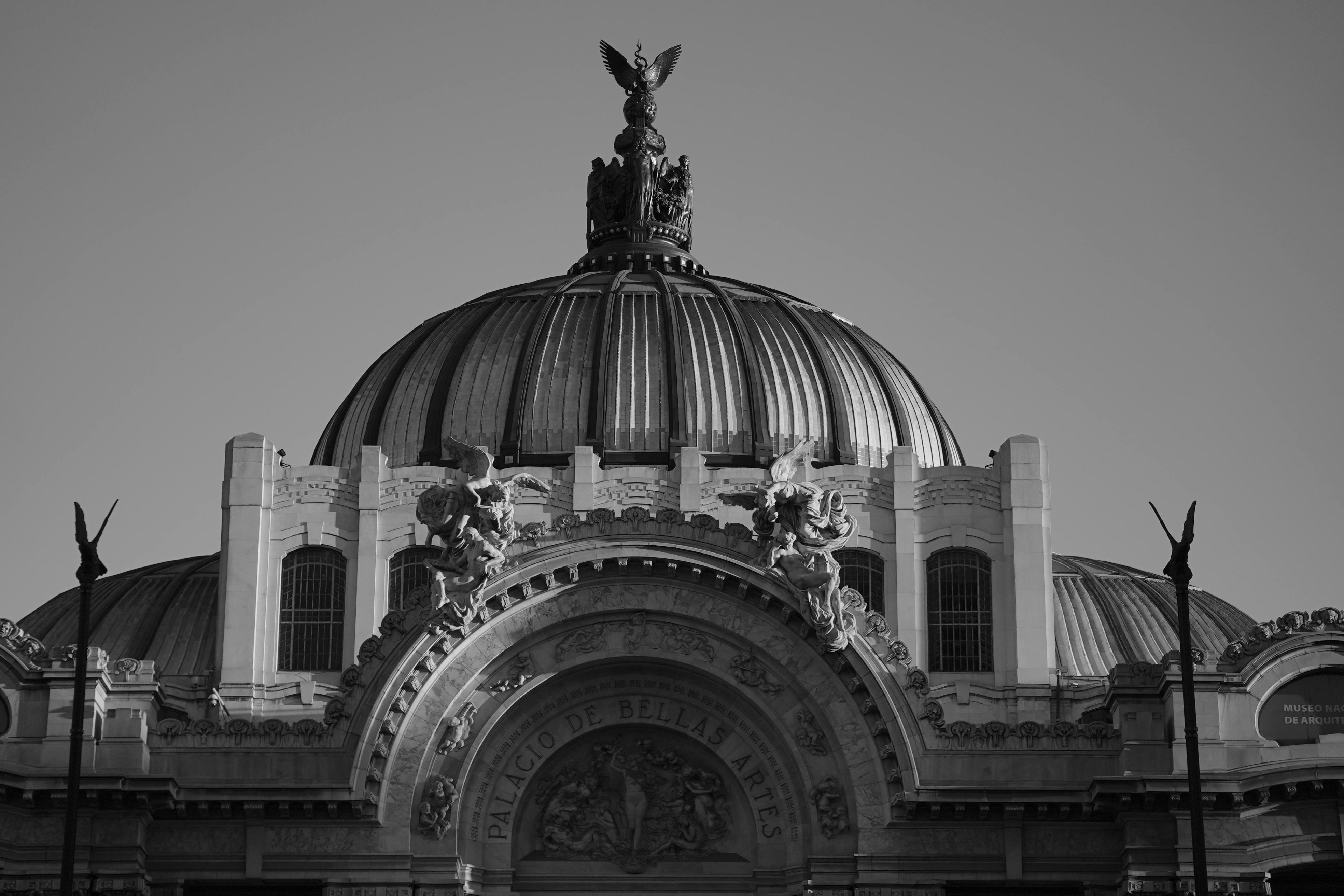
Black and white photo of the iconic Palacio de Bellas Artes dome in Mexico City.
Best Time to Visit · Mexico City

The Best Time to Visit Mexico City: A Season-by-Season Guide

From jacaranda season to Day of the Dead, here is exactly when to go to Mexico City for the best weather, the lowest prices, and the biggest festivals.

Last updated July 13, 20267 min read

Sitting at 2,240 meters (7,350 feet) on a high central plateau, Mexico City breaks the usual rules for a place this far south. It never gets truly hot or truly cold: think eternal spring, with mild days year-round and cool nights that call for a jacket. What actually shapes your trip is rain, not temperature. The year splits neatly into a dry season (roughly November to April) and a wet season (roughly May to October), and knowing which one you are landing in matters far more than the month itself.

The dry season delivers clear, sunny mornings and comfortable afternoons, which is why spring is the classic window, especially late March when the city's jacaranda trees erupt in purple. The wet season is not a washout: rain usually arrives as a heavy late-afternoon or evening downpour that clears the air and empties the streets for a couple of hours, leaving mornings bright and the parks lush and green.

Two cultural bookends drive demand: Day of the Dead at the start of November and Mexican Independence celebrations in mid-September. Both are spectacular and both push hotel prices up, so timing your visit is a balance of weather, crowds, and just how much festivity you want. Here is how the year breaks down.

Quick answer

The best time to visit Mexico City is March to May, the dry season, when days are warm (around 25-27C / 77-81F), skies are clear, and the jacaranda trees bloom purple across the city in late March and April. For the famous Day of the Dead celebrations, aim for late October to early November, but expect higher prices and bigger crowds.

At a glance

The short version

Best overall
March to May. The tail of the dry season brings warm, sunny days, blooming jacarandas, and long stretches of blue sky before the rains arrive.
Cheapest time
Late May through July (excluding holiday weeks) and September. These wet-season months see the lowest hotel rates and flight deals, and afternoon showers rarely wreck a full day.
Fewest crowds
September and early October, plus January. Outside the Independence and Day of the Dead peaks, museums, restaurants, and neighborhoods like Roma and Condesa are noticeably calmer.
Best weather
March and April. Reliably dry, sunny, and warm in the day (25-27C / 77-81F), with almost no rain and comfortable evenings.
Best for Day of the Dead
Late October to November 2. The city stages a huge parade, and altars (ofrendas) fill Zocalo and cemeteries. Book several months ahead as this is peak season.
Best for jacaranda blooms
Mid-March to mid-April, when thousands of jacaranda trees turn streets, parks, and plazas lavender-purple across the city.
Season by season

Through the year

Dry season, cool monthsNovember to February
Weather Warm, sunny days of 20-23C (68-73F) and cool nights that can drop to 6-8C (43-46F). Rain is rare and skies are usually clear, though December and January mornings feel crisp.
Crowds High around Day of the Dead (early November) and the Christmas-New Year period; quieter in mid-January and February.
Prices High during holidays (late October to early November, and mid-December to early January), mid-range otherwise.

This is the driest, clearest stretch of the year, ideal for sightseeing if you do not mind bundling up after sunset. The Day of the Dead and Christmas seasons bring dazzling decorations and energy but also the year's steepest prices. Come in late January or February for near-perfect weather and thinner crowds.

Dry season, warm monthsMarch to May
Weather The warmest, most consistently sunny period, with daytime highs of 25-27C (77-81F) and mild nights around 11-13C (52-55F). May can feel hot and a touch hazy before the rains break.
Crowds Busy around Semana Santa (Easter week), when many locals travel; otherwise moderate.
Prices Mid to high, peaking during Holy Week; good value in early March and mid-May.

Peak spring is the sweet spot for weather and the season of the jacaranda blooms in late March and April. Days are warm and dry, perfect for exploring Chapultepec, Coyoacan, and the pyramids of Teotihuacan. The one caveat is Semana Santa, when the city partly empties of locals but hotels near attractions fill with visitors.

Wet seasonJune to September
Weather Warm days of 22-24C (72-75F) with high humidity and near-daily late-afternoon or evening thunderstorms. Mornings are usually bright; the rain typically clears within a couple of hours.
Crowds Low for most of the summer, spiking around Mexican Independence (September 15-16).
Prices Lowest of the year outside the Independence weekend, with strong hotel and flight deals.

Do not write off the rainy season: mornings are green and glorious, parks are lush, and the daily downpour is easy to plan around. This is the best-value window and the quietest for major sights. Pack a compact umbrella and schedule outdoor plans for the first half of the day.

Late wet seasonOctober
Weather Rain begins to taper off, with pleasant days around 22C (72F) and cooler, drier evenings toward month's end.
Crowds Building steadily as Day of the Dead approaches; the final days of October are busy.
Prices Mid-range early in the month, rising sharply into the Day of the Dead period.

October is a transitional month that blends the value and green landscapes of the wet season with increasingly reliable weather. It is a smart pick if you want fewer crowds while still catching the run-up to Day of the Dead. Book early if your dates touch the final days of the month.

On the calendar

Notable events & festivals

Day of the Dead / Dia de Muertos (late October to November 2)The city's signature celebration, with a large costumed parade along Paseo de la Reforma, elaborate altars in the Zocalo, and candlelit cemetery vigils. Xochimilco and Mixquic are especially atmospheric.
Jacaranda season (mid-March to mid-April)Not a formal festival but a citywide spectacle as jacaranda trees bloom purple across avenues, plazas, and parks, at their best in Roma, Condesa, and San Angel.
Semana Santa / Holy Week (March or April, dates vary)The week before Easter is a major national holiday. Many businesses close and locals travel, while Iztapalapa hosts a famous Passion Play reenactment.
Mexican Independence Day / El Grito (September 15-16)The Zocalo fills for the president's Grito de Dolores on the night of September 15, followed by fireworks and a military parade on the 16th. Expect crowds and street closures downtown.
Cinco de Mayo (May 5)Marked more with civic ceremony than parties in the capital, though it adds a festive note to early May travel.
Feast of Our Lady of Guadalupe (December 12)Millions of pilgrims converge on the Basilica of Guadalupe in the north of the city, one of the most important religious events in the Americas.
When to avoid

There is no truly bad time, but skip mid-December to early January and the Day of the Dead week if you want lower prices and smaller crowds. Semana Santa (Holy Week) sees many businesses shut. If you cannot tolerate rain, avoid the peak of the wet season (June to August), when afternoon storms are near-daily, and note that air quality can dip during the dry, still months of late winter and spring.

Got your dates? Build the trip around them.

We'll plan a custom Mexico City itinerary tuned to your travel month and pace.

Generate itinerary

Frequently asked questions

What is the cheapest month to visit Mexico City?
The cheapest months are during the wet season, roughly late May through July and September, when hotel rates and airfares drop. Avoid the Independence weekend in mid-September and any dates near Day of the Dead, when prices climb.
Is Mexico City worth visiting in the rainy season?
Yes. Rain typically falls as a short, heavy late-afternoon or evening storm, leaving bright mornings, lush green parks, lower prices, and thinner crowds. Just plan outdoor activities for earlier in the day and carry a compact umbrella.
When is Day of the Dead in Mexico City?
Day of the Dead peaks on November 1 and 2, with the large parade usually held on a weekend in late October or early November. Book flights and hotels several months ahead, as it is the busiest and most expensive week of the year.
How many days do you need in Mexico City?
Four to five days lets you cover the historic center, Chapultepec and its museums, Coyoacan and Roma-Condesa, plus a day trip to the Teotihuacan pyramids. A week gives you room to add Xochimilco, more museums, and a slower pace.
Does Mexico City get cold?
It never gets truly cold, but at 2,240 meters (7,350 feet) the nights are cool year-round. Winter evenings from December to February can drop to 6-8C (43-46F), so pack a jacket even when days are warm and sunny.

Whenever you go, Mexico City rewards you with world-class food, art, and history under famously mild skies. Aim for spring if you want jacarandas and sun, the wet season if you want value and calm, or late October if Day of the Dead is on your list. Pick your window, book ahead for the festivals, and start planning.

Plan with MagicTrips

Build your own Mexico City trip

Tell us how many days, your budget, and what you're into. We'll turn it into a custom, day-by-day Mexico City itinerary.

Ready to book your stay?

Hotels
Homes

Traveling somewhere else?

Generate a custom itinerary