
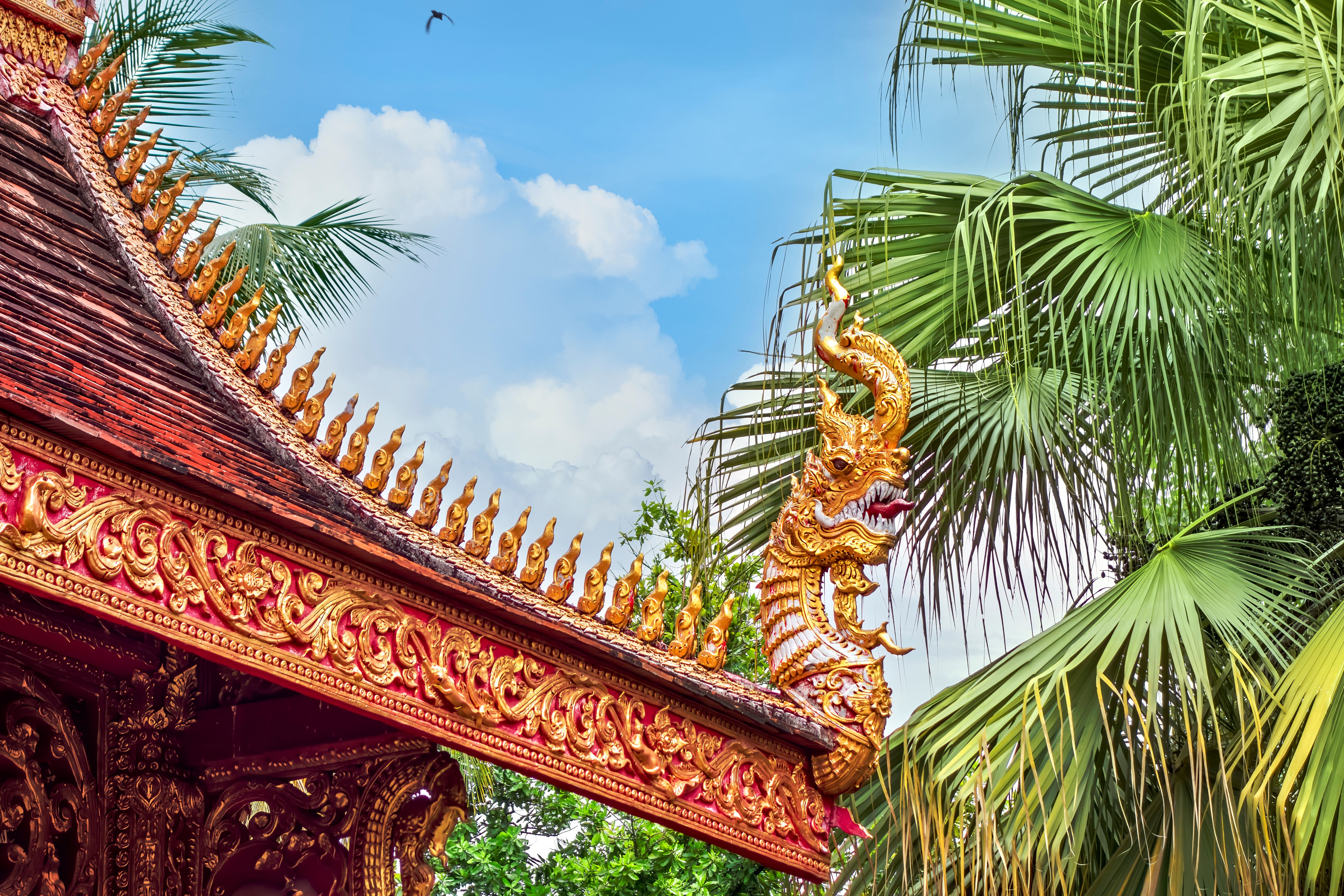
Close-up of a dragon sculpture at Wat Phra That Lampang Luang surrounded by palm trees.
Best Time to Visit · Luang Prabang

The Best Time to Visit Luang Prabang: A Season-by-Season Guide

From the cool, golden dry season to the lush green monsoon, here is when to time your trip to this riverside UNESCO town in northern Laos.

Last updated July 9, 20267 min read

Luang Prabang sits at the meeting of the Mekong and Nam Khan rivers, ringed by forested mountains and stacked with gilded temples, French-colonial shophouses, and a daily procession of saffron-robed monks. Its weather runs on a tropical monsoon rhythm: a cool, dry, clear stretch that draws the crowds, a punishing hot season, and a green, rain-washed monsoon that empties the streets and drops prices.

The decision usually comes down to three things: comfort (temperatures and rain), the sky (haze from agricultural burning can wreck the views in March), and how much you mind sharing the night market with tour groups. There is no single season that wins on every count, so the right time depends on whether you prioritize blue skies, thin crowds, or a cheaper bill.

Because Luang Prabang is compact and easily walked, weather matters more here than in a sprawling city. A rainy afternoon or a heat-hammered noon genuinely changes the day, while the cool, dry months make the temples, waterfalls, and river cruises effortless.

Quick answer

The best time to visit Luang Prabang is November to February, the cool dry season, when days are warm and sunny (around 28C/82F), nights are pleasantly cool, the rivers are still high, and the skies are clear. This is peak season, so book ahead. Avoid March and April, when agricultural burning fills the valley with smoke and temperatures spike.

At a glance

The short version

Best overall
November to February. Dry, sunny days, cool evenings, lush post-monsoon greenery, and clean air make this the ideal window for temples, waterfalls, and river trips.
Cheapest time
May to September (the rainy season). Guesthouse rates and flight prices drop noticeably, and you can negotiate on rooms, especially in June and September.
Fewest crowds
June to September. Monsoon rains keep tour groups away, so temples and the morning alms round feel calm and uncrowded, and the countryside is at its greenest.
Best weather
December and January. The clearest skies, lowest humidity, and coolest, most comfortable temperatures of the year, though nights can dip to around 15C/59F.
Best for waterfalls
August to November. Kuang Si and Tad Sae falls are at their fullest and most turquoise after the rains, with November offering full flow plus dry-season access.
Best for festivals
April for Boun Pi Mai (Lao New Year), a raucous, water-soaked celebration, or October/November for the Boat Racing Festival and the candlelit end of Buddhist Lent.
Season by season

Through the year

Cool dry seasonNovember to February
Weather Warm, sunny days around 25 to 30C (77 to 86F) with low humidity; nights are cool, dropping to 14 to 17C (57 to 63F), and December and January mornings can feel genuinely chilly. Very little rain.
Crowds Peak season. December and January bring the heaviest visitor numbers, especially around Christmas, New Year, and Chinese New Year (which falls in mid-February 2026).
Prices High. Hotels charge top rates and the best places sell out weeks ahead; flights into Luang Prabang are at their priciest.

This is Luang Prabang at its most postcard-perfect: clear skies, comfortable temperatures, and green hills left over from the rains. The trade-off is crowds at the night market, the alms giving, and Kuang Si Falls. Book accommodation and river cruises well in advance and bring a light jacket for the evenings.

Hot seasonMarch to May
Weather Hot and increasingly humid, with daytime highs of 33 to 38C (91 to 100F) and little rain until pre-monsoon storms arrive in late April and May. March and early April often bring heavy smoke haze from slash-and-burn farming.
Crowds Moderate and falling. Numbers thin after February, though Lao New Year in mid-April draws domestic and regional visitors.
Prices Mid to lower. Rates ease from the peak, with deals available outside the New Year holiday.

The least comfortable stretch. Beyond the heat, the burning season (roughly mid-March to mid-April) can blanket the valley in smoke, hiding the mountains and irritating eyes and lungs. The upside is the Boun Pi Mai water festival in April and cheaper rooms, but sensitive travelers should think twice about March.

Rainy seasonJune to September
Weather Hot and humid with frequent afternoon and evening downpours; highs of 30 to 33C (86 to 91F). Rain usually comes in short, heavy bursts rather than all-day drizzle, and August is the wettest month.
Crowds Low. This is the quietest time of year, with calm temples and easy last-minute bookings.
Prices Lowest. The best value on hotels and flights, and room rates are often negotiable.

The countryside is emerald green, waterfalls thunder, and the town feels peaceful and local. Mornings are often clear enough for sightseeing before the afternoon rain, and a good umbrella solves most problems. Ideal for budget travelers and anyone wanting Luang Prabang without the tour buses, if you can accept the humidity and occasional muddy trails.

Post-monsoon shoulderOctober to early November
Weather Warm days around 28 to 31C (82 to 88F), decreasing rain, and freshening air as the humidity drops. October can still see showers; November settles into clear, dry conditions.
Crowds Building but manageable. A sweet spot before the December peak.
Prices Mid. Rising toward high season but still reasonable, especially in October.

Arguably the smartest time to go: the landscape is at its lushest, waterfalls are full, the air has cleared, and crowds have not yet arrived in force. Late October and early November also bring the boat races and the luminous end of Buddhist Lent.

On the calendar

Notable events & festivals

Boun Ok Phansa & Boat Racing Festival (October)The end of Buddhist Lent is marked by candlelit processions, floating banana-leaf offerings launched onto the Mekong at dusk, and colorful longboat races on the river. Dates follow the lunar calendar, typically mid-October.
Boun Pi Mai, Lao New Year (13 to 16 April)The biggest and rowdiest celebration of the year, with three-plus days of water throwing in the streets, temple rituals, sand stupa building on the riverbanks, and processions. Expect the town to be busy and very wet.
Boun Khao Phansa, start of Buddhist Lent (July)The beginning of the three-month rains retreat sees candlelight ceremonies and merit-making at the temples, a quieter, more spiritual counterpoint to the year's louder festivals.
That Luang & almsgiving traditions (year-round mornings)The daily tak bat, when monks collect alms at dawn, happens every day but is most atmospheric in the cool, clear season. Observe respectfully and quietly rather than treating it as a photo op.
Hmong New Year (late November to December)Celebrated in the hill communities around Luang Prabang after the harvest, featuring traditional dress, ball-tossing courtship games, and music. Timing varies by village.
When to avoid

Avoid mid-March to mid-April if clean air and mountain views matter to you: agricultural burning across northern Laos and neighboring regions frequently fills the valley with thick haze, and it coincides with the year's highest temperatures. If you do visit then, time it for Lao New Year in mid-April for the festival payoff.

Got your dates? Build the trip around them.

We'll plan a custom Luang Prabang itinerary tuned to your travel month and pace.

Generate itinerary

Frequently asked questions

What is the cheapest month to visit Luang Prabang?
The cheapest months are during the rainy season, roughly June to September, with June and September offering the best mix of low prices and manageable rain. Hotel and flight prices are at their lowest and rooms are often negotiable.
Is Luang Prabang worth visiting in the rainy season?
Yes. Rain usually falls in short afternoon bursts rather than all day, the landscape is lush and green, waterfalls are at their fullest, and crowds and prices are at their lowest. Bring an umbrella and plan sightseeing for the mornings.
How many days do you need in Luang Prabang?
Three to four days is ideal. That allows time for the temples and the dawn almsgiving, a day trip to Kuang Si Falls, a Mekong river cruise to the Pak Ou caves, and a slow evening or two at the night market.
When is the best time to see Kuang Si Falls?
For the fullest, most powerful flow visit from August to November after the monsoon rains, though the water can look muddy at peak rain. For the classic turquoise pools with easy dry-season access, October and November are the sweet spot.
What is the burning season in Luang Prabang and when is it?
The burning season is the period of slash-and-burn agriculture, roughly mid-March to mid-April, when smoke haze settles over the valley, reducing visibility and air quality. Travelers sensitive to smoke should avoid these weeks.

Luang Prabang rewards good timing more than most places: choose November to February for flawless skies and cool evenings, or the green rainy season for peace and value. Whichever window suits you, book your riverfront room and Kuang Si day trip early in high season, and start planning around the festival or weather that matters most to you.

Plan with MagicTrips

Build your own Luang Prabang trip

Tell us how many days, your budget, and what you're into. We'll turn it into a custom, day-by-day Luang Prabang itinerary.

Ready to book your stay?

Hotels
Homes

Traveling somewhere else?

Generate a custom itinerary