
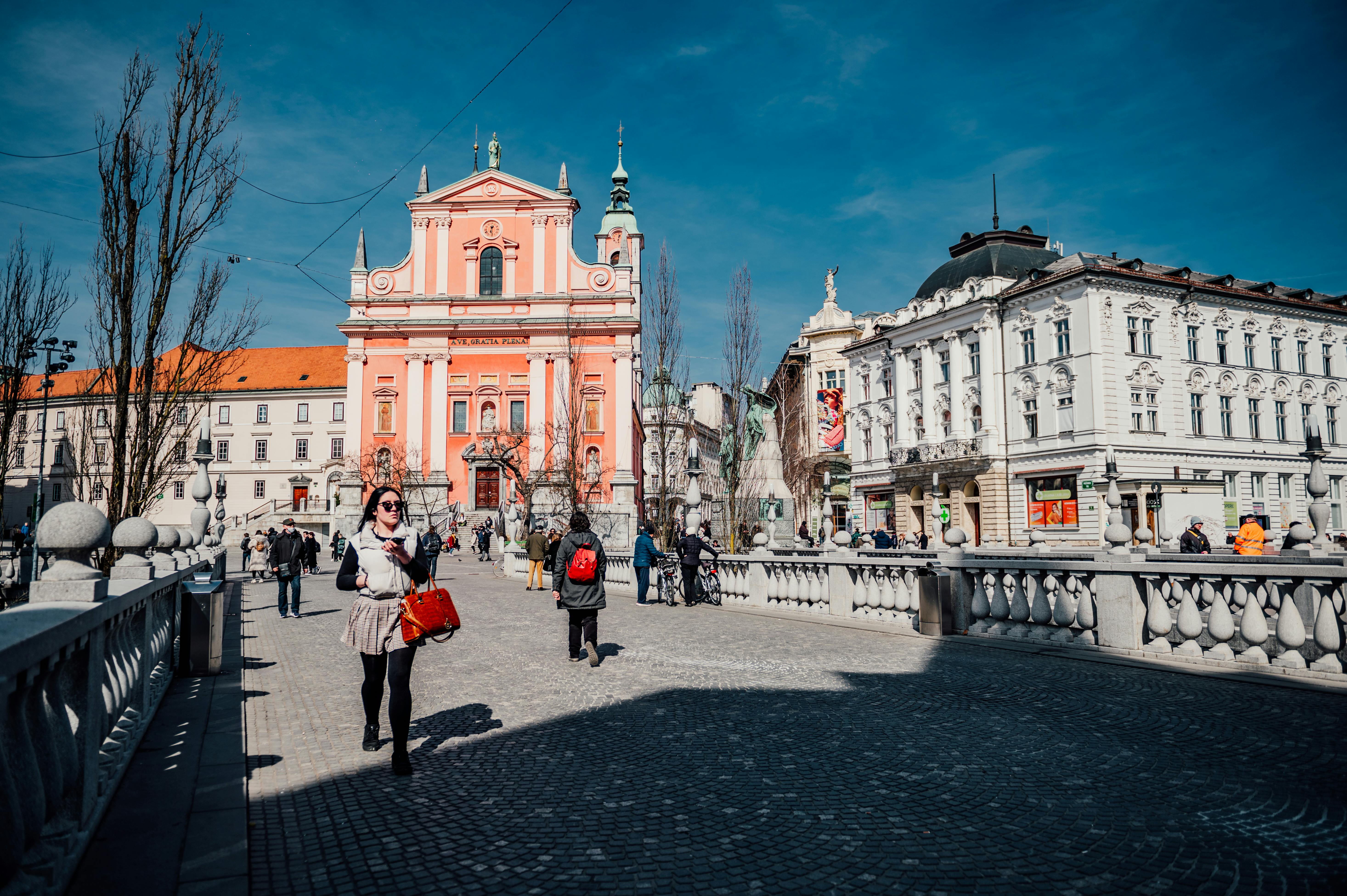
Ljubljana wears every season well. Compact enough to cross on foot in twenty minutes, with a car-free old town hugging the emerald Ljubljanica river, it shifts character as the calendar turns: cafe terraces in summer, plane trees turning gold in autumn, and a famously pretty Christmas market when the temperatures drop. The city sits in a basin between the Alps and the Adriatic, so it gets warm, humid summers and cold, sometimes foggy winters.
When to come depends on what you want. Late spring and early autumn deliver the best balance of mild weather, manageable crowds, and a packed events calendar. High summer brings the warmest weather and the liveliest riverside scene but also day-trippers and humidity. Winter is quiet and atmospheric, peaking with the December lights, while January and February are the cheapest and emptiest months.
Because Ljubljana is small and never overwhelmed the way Prague or Dubrovnik can be, even the busy months feel relaxed. That makes it an easy city to visit almost any time, and a great base for day trips to Lake Bled, the Postojna Cave, and the Adriatic coast.
The best time to visit Ljubljana is May, June, and September, when temperatures are a comfortable 18 to 25C (64 to 77F), the riverside terraces are buzzing, and the heaviest summer crowds and humidity have eased. December is the standout for the Christmas market and festive lights, while January and February are the cheapest and quietest months.
Planning a trip to Ljubljana?
The short version
Through the year
Spring is one of the loveliest and most underrated times to visit, as the riverside trees green up and terraces reopen. April can still be damp and changeable, but by mid-May the city is in full bloom and the cafe scene is alive. Ideal for travelers who want pleasant weather and value without summer crowds.
Summer is the liveliest season, with packed riverside bars, open-air dining late into the evening, and the marquee Ljubljana Festival of music and theatre. The downside is humidity, the occasional heatwave, and the busiest streets of the year. Best for those who want energy, long days, and a full events calendar, and who can handle warm, sticky afternoons.
September is arguably the sweet spot of the year: warm, sunny, and far calmer than August. October brings golden plane trees and crisp, atmospheric days, while November turns grey and foggy but cheap and quiet. Great for foodies (this is harvest and wine season) and anyone after a relaxed, photogenic city break.
December transforms Ljubljana with festive lights strung along the river and a charming Christmas market with mulled wine and street food. After the holidays, the city empties out into a peaceful, budget-friendly low season, though cold, fog, and short days are the trade-off. Suits Christmas-market seekers in December and bargain hunters in January and February.
Notable events & festivals
If you dislike heat and humidity, skip the peak of July and August, when muggy afternoons and the year's biggest crowds coincide. November and January can be persistently grey, foggy, and cold, so avoid them if you want sunshine, though they are the cheapest and quietest times.
Got your dates? Build the trip around them.
We'll plan a custom Ljubljana itinerary tuned to your travel month and pace.
Frequently asked questions
What is the cheapest month to visit Ljubljana?
Is Ljubljana worth visiting in winter?
How many days do you need in Ljubljana?
What is the best month for good weather in Ljubljana?
When is the Ljubljana Christmas market open?
Whether you come for golden September terraces, the buzz of the summer festival season, or the glow of the December market, Ljubljana rewards almost any timing with its easy, walkable charm. Pick your window, pencil in a day trip to Lake Bled, and you have the makings of one of Europe's most relaxed city breaks.
Build your own Ljubljana trip
Tell us how many days, your budget, and what you're into. We'll turn it into a custom, day-by-day Ljubljana itinerary.