
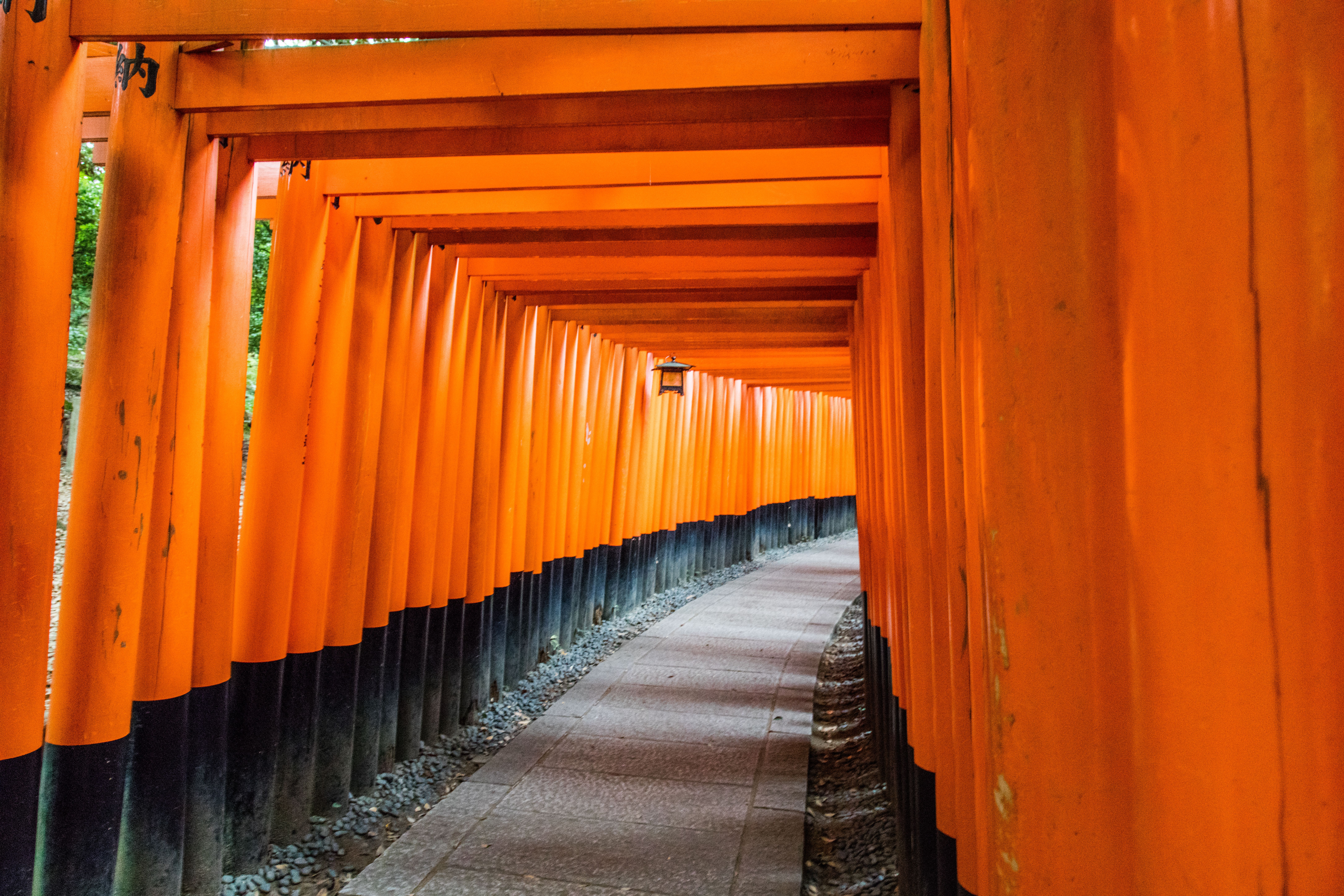
Explore the iconic orange torii gates of Fushimi Inari Shrine in Kyoto, Japan, showcasing traditional Japanese architecture.
Best Time to Visit · Kyoto

The Best Time to Visit Kyoto: A Season-by-Season Guide

From cherry blossoms in April to fiery autumn maples in November, here is exactly when to plan your Kyoto trip for weather, crowds, and cost.

Last updated July 2, 20268 min read

Kyoto rewards travelers who time their visit well. The former imperial capital packs more than 1,600 temples, 400 shrines, and 17 UNESCO World Heritage sites into a compact valley ringed by wooded mountains, and the character of the place shifts dramatically with the seasons. The same temple garden that glows with pink blossom in April blazes crimson in November and sits under a dusting of snow in January.

Two forces drive the decision: the weather (Kyoto's basin traps humid, sticky heat in summer and gets genuinely cold in winter) and the crowds (cherry blossom and autumn foliage season bring huge domestic and international demand, pushing hotel prices to their annual peaks). The trick is balancing the postcard scenery of spring and autumn against the calmer, cheaper, and more comfortable shoulder months.

This guide breaks down what Kyoto is actually like in each season, when the famous blossoms and maples peak, which festivals are worth planning around, and when to stay away.

Quick answer

The best time to visit Kyoto is spring (late March to mid-April) for cherry blossoms and autumn (mid-to-late November) for fall foliage, when the temples and gardens are at their most beautiful and the weather is mild. These are also the busiest and priciest windows, so for fewer crowds and lower costs, visit in early June or late September to early October.

At a glance

The short version

Best overall
Late March to mid-April and November. Spring cherry blossoms and autumn maples are Kyoto at its most spectacular, with comfortable temperatures around 10-20C (50-68F). Book accommodation months ahead.
Cheapest time
Late January through February, and mid-June. Winter is the low season with the best hotel deals, while June before the summer holidays offers value despite the rain.
Fewest crowds
Weekdays in December (before New Year) and February. Temples are quiet, you can photograph famous spots almost empty, and you just need to bundle up.
Best weather
Late April to May and October. Warm, dry days of 18-25C (64-77F), low humidity, and clear skies make these the most pleasant months for temple-hopping and hiking.
Best for cherry blossoms
Late March to the first week of April. Peak bloom (mankai) in central Kyoto usually falls around April 1-7, though timing shifts a week either way each year.
Best for autumn foliage
Mid-to-late November. Kyoto's maples typically peak between November 18 and December 5, later than most of Japan, with temples like Tofuku-ji and Eikando running evening illuminations.
Season by season

Through the year

SpringMarch to May
Weather Cool early spring warming steadily: March averages 5-14C (41-57F), April 8-19C (46-66F), and May 14-25C (57-77F). Occasional rain but many bright, mild days.
Crowds Very high during cherry blossom season (late March to mid-April), among the busiest weeks of the year. Golden Week (roughly April 29 to May 5) is another major peak. Late May is calmer.
Prices Peak pricing during blossom season and Golden Week, with hotels booked out and rates at their highest. Prices ease noticeably in mid-to-late May.

This is Kyoto at its most iconic, with cherry trees framing temples along the Philosopher's Path, Maruyama Park, and the Kamo River. The flip side is intense crowds and steep prices during peak bloom, so book early and start sightseeing at dawn. Late May offers gorgeous fresh greenery with far fewer people.

SummerJune to August
Weather Hot and humid. June brings the rainy season (tsuyu) with 18-28C (64-82F); July and August are the hottest, often 24-35C (75-95F) with high humidity and occasional days above 37C (99F).
Crowds Moderate in June, then building for July's Gion Matsuri and the August Obon holiday period. The heat keeps some casual tourists away, but major festivals draw big domestic crowds.
Prices Mid-range, dipping in the rainy weeks of June and rising around Gion Matsuri and mid-August Obon.

Summer is atmospheric but physically demanding: the basin's humidity is relentless and midday temple visits can be draining. It is also festival season, headlined by the month-long Gion Matsuri in July. Come for the events and lush moss gardens, but plan indoor breaks, hydrate constantly, and sightsee early or late.

AutumnSeptember to November
Weather September is still warm and can be humid (20-30C / 68-86F) with typhoon risk; October cools to a pleasant 14-23C (57-73F); November is crisp at 7-17C (45-63F) with clear skies.
Crowds September is moderate, October busier, and mid-to-late November extremely crowded for the fall foliage, rivaling cherry blossom season for peak demand.
Prices Rising through the season to a peak during the November foliage weeks, when hotels sell out and rates spike. Early-to-mid September is comparatively good value.

Autumn is arguably Kyoto's finest season, with dry weather and maples turning brilliant red and gold across temple grounds. The foliage peaks unusually late (mid-to-late November) so evening illuminations at Tofuku-ji, Eikando, and Kiyomizu-dera are a highlight. Expect serious crowds at the marquee spots and book far in advance.

WinterDecember to February
Weather Cold but rarely severe: 1-9C (34-48F) on average, with occasional snow that dusts temple roofs and gardens beautifully. Crisp, often clear days.
Crowds The lowest of the year outside the New Year holiday (roughly December 29 to January 3), when locals visit shrines. Famous sites are blissfully quiet through January and February.
Prices The cheapest season for flights and hotels, apart from the New Year spike. Excellent value and easy availability.

Winter is Kyoto's secret season: bare gardens, still air, and the chance to have Kinkaku-ji or the bamboo grove nearly to yourself, especially on a snowy morning. You will need warm layers and daylight is short, but the tranquility and low prices are a genuine reward. Ideal for travelers who prize calm over blossoms.

On the calendar

Notable events & festivals

Gion Matsuri (all July)Kyoto's most famous festival, dating back over 1,000 years, centered on the Yasaka Shrine. The highlights are the grand float processions (Yamaboko Junko) on July 17 and 24, preceded by lively evening street parties.
Aoi Matsuri (May 15)One of Kyoto's three great festivals, featuring a procession of around 500 people in Heian-period aristocratic dress walking from the Imperial Palace to the Kamo shrines.
Cherry Blossom Season (late March to mid-April)Not a single event but a citywide spectacle, with evening illuminations (yozakura) at Maruyama Park, the Okazaki canal, and along the Kamo River. Peak bloom usually falls in the first week of April.
Jidai Matsuri (October 22)The Festival of the Ages, a costume procession tracing 1,000 years of Japanese history from the Imperial Palace to Heian Shrine, marking the city's founding.
Autumn Foliage Illuminations (mid-to-late November)Temples including Eikando, Tofuku-ji, Kodai-ji, and Kiyomizu-dera light up their maple gardens after dark. The color typically peaks between November 18 and early December.
Gozan no Okuribi (August 16)Giant bonfires in the shape of characters and symbols are lit on five mountains around the city to send off ancestral spirits at the close of Obon, visible from viewpoints across Kyoto.
When to avoid

Avoid the peak of cherry blossom season and the mid-to-late November foliage weeks if you dislike crowds, as major temples become shoulder-to-shoulder and prices peak. Golden Week (late April to early May) and the New Year period (December 29 to January 3) see domestic travel surge and many small businesses close. If heat and humidity bother you, skip late July and August, when temperatures push past 35C (95F).

Got your dates? Build the trip around them.

We'll plan a custom Kyoto itinerary tuned to your travel month and pace.

Generate itinerary

Frequently asked questions

What is the cheapest month to visit Kyoto?
January and February are the cheapest months, with the lowest hotel rates and flight prices of the year (outside the New Year holiday). June, during the rainy season, is another good-value window before the summer festivals begin.
When do the cherry blossoms bloom in Kyoto?
Cherry blossoms in central Kyoto usually reach peak bloom (mankai) in the first week of April, roughly April 1 to 7, though the timing can shift by a week or more depending on the year's weather. Late March is often already impressive.
Is Kyoto worth visiting in winter?
Yes. Winter brings the fewest crowds, the lowest prices, and the chance to see famous temples and the Arashiyama bamboo grove almost empty, occasionally dusted with snow. You will need warm clothing and daylight is short, but the calm atmosphere is a major draw.
How many days do you need in Kyoto?
Three to four full days lets you cover the essential temples and districts (Higashiyama, Arashiyama, Fushimi Inari, and Kinkaku-ji) at a comfortable pace. Two days is enough for the highlights if you are short on time, while a week allows day trips to Nara and Osaka.
When is the best time to see autumn colors in Kyoto?
Kyoto's maples peak later than most of Japan, typically between November 18 and early December. Mid-to-late November is the sweet spot, when temples such as Tofuku-ji and Eikando run evening foliage illuminations.

Whether you come for the fleeting pink of April, the fiery maples of November, or the hushed calm of a snowy January morning, Kyoto rewards a trip built around its seasons. Pin down your dates, book accommodation early for the spring and autumn peaks, and start planning the temple gardens, festivals, and quiet backstreets that make this city unforgettable.

Plan with MagicTrips

Build your own Kyoto trip

Tell us how many days, your budget, and what you're into. We'll turn it into a custom, day-by-day Kyoto itinerary.

Ready to book your stay?

Hotels
Homes

Traveling somewhere else?

Generate a custom itinerary