
The Best Time to Visit Dushanbe: A Month-by-Month Guide

Tajikistan's leafy capital is best in the mild bookends of spring and autumn, when the mountains are clear and the city's gardens are in full color.
Last updated June 22, 2026
The Best Time to Visit Dushanbe: A Month-by-Month Guide
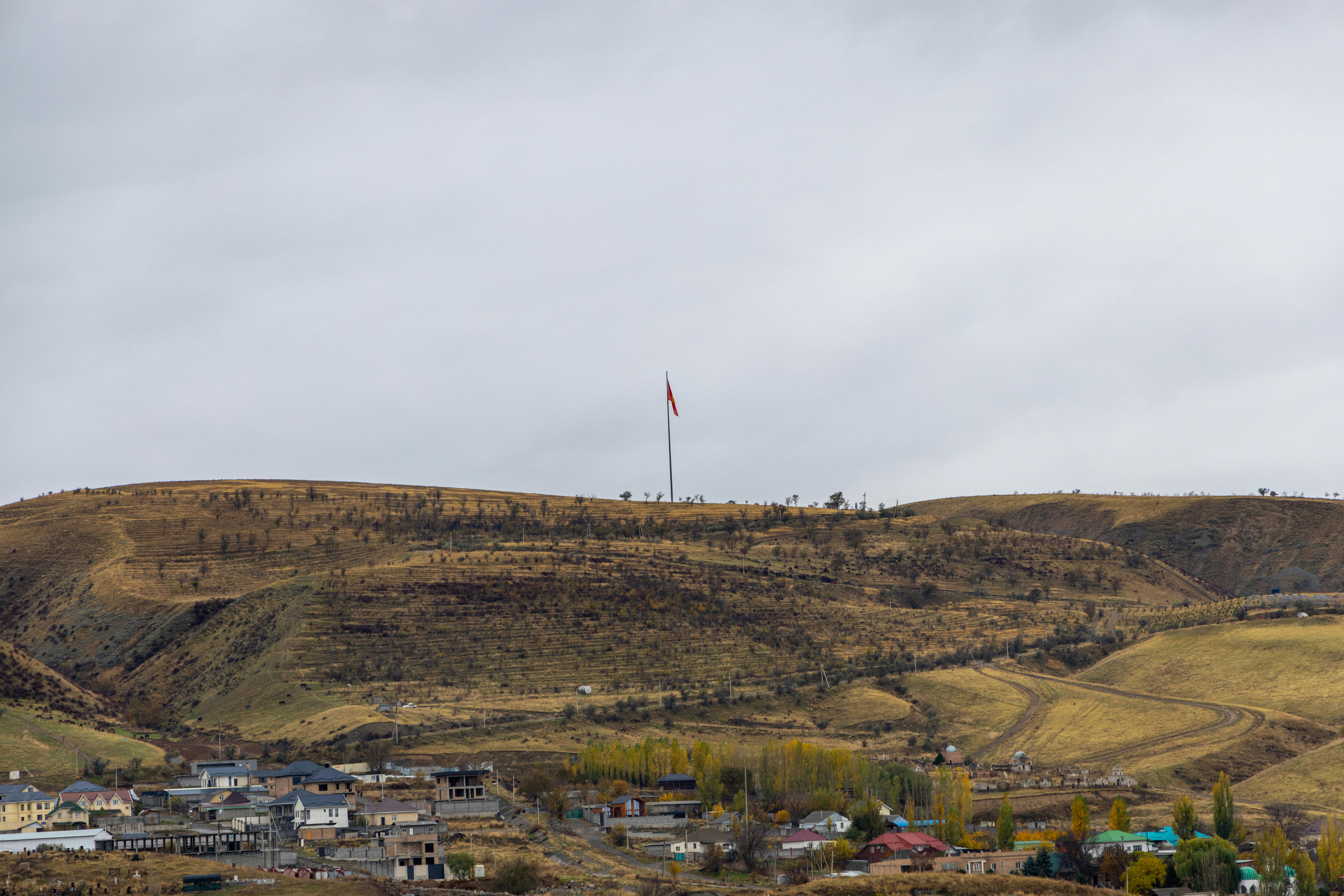
A scenic view of a hillside village with a prominent flagpole on a cloudy day. · Collab Media

Dushanbe sits in a wide valley at around 800 meters, ringed by the Hisor and Pamir-Alay ranges, and its weather follows a classic continental rhythm: hot, dry summers and cool, damp winters with a short, brilliant spring and a long, golden autumn. The city is famously green, threaded with plane-tree avenues and fountains, which makes the timing of your visit matter as much for comfort as for scenery.

For most travelers the decision comes down to three things: heat (July and August routinely top 35C/95F), the mountain season (high passes and the Pamir Highway are only reliably open roughly June through September), and crowds and prices, which barely fluctuate here compared with major capitals. Dushanbe is rarely crowded, so your real constraints are climate and whether you want to pair the city with high-altitude travel.

Spring and autumn deliver the sweet spot: warm days, cool nights, clear mountain views, and either blossom or harvest in the surrounding valleys. If your trip is also a launchpad for the Pamirs or the Fann Mountains, you will lean later into summer despite the city heat.

Quick Answer

The best time to visit Dushanbe is spring (April to early June) and autumn (September to October), when daytime temperatures sit around a comfortable 20-28C (68-82F), the air is clear, and the city's parks and gardens look their best. Visit in summer only if you are heading into the Pamir or Fann Mountains, which are most accessible from June to September.

Planning a trip to Dushanbe?

At a Glance

Best overallMid-April to early June and September to October. Mild, dry, and clear, with green or golden landscapes and easy day trips to the surrounding mountains.
Cheapest timeNovember to February. Winter sees the lowest demand on the few international flights and city hotels, though deals are modest because Dushanbe is inexpensive year-round.
Fewest crowdsLate autumn and winter (November to February). Dushanbe is never busy, but the cold-season lull means empty teahouses, museums, and bazaars.
Best weatherMay and September. Reliable sunshine, daytime highs around 24-28C (75-82F), and cool, comfortable nights without summer's punishing heat.
Best for mountain tripsJuly to September. This is when the high passes, the Pamir Highway, and the Fann Mountain lakes are reliably open and snow-free, with Dushanbe as your supply base.
Best for festivalsAround March 21 for Navruz, the spring new-year celebration, when the city fills with music, food stalls, and traditional games.

Season by Season

Spring (March to May)

Weather Cool to warm and the wettest stretch of the year. March highs near 14C (57F) climb to about 26C (79F) by May; nights stay cool. Expect rain showers, especially in March and April.
Crowds Low to moderate. Navruz around March 21 brings the year's biggest domestic crowds and festive energy, then things quiet again.
Prices Low to mid. Hotel rates are modest and flights are reasonable outside the Navruz holiday week.

Spring is when Dushanbe turns lush, with green hills, blossoming fruit trees, and full rivers. The downside is unsettled, sometimes muddy weather early on and lingering snow on high passes. Late April and May are ideal for city sightseeing and lower-altitude valley walks.

Summer (June to August)

Weather Hot and very dry. Highs commonly reach 33-37C (91-99F) in July and August, with intense sun and warm nights around 20C (68F). Rain is rare.
Crowds Moderate. This is peak season for trekkers and overlanders using Dushanbe as a gateway to the Pamirs, though the city itself stays uncrowded.
Prices Mid. The busiest window for adventure travelers nudges guesthouse and driver costs up, especially for Pamir Highway logistics.

In the city, summer means seeking shade under the plane trees and timing sightseeing for early morning and evening. But this is the only reliable window for high-mountain travel: the Pamir Highway, Iskanderkul, and the Fann Mountain lakes are at their best. Suits travelers whose real goal is the mountains, not the capital.

Autumn (September to October)

Weather Warm, dry, and stable, cooling steadily. September highs around 30C (86F) ease to the low 20s C (low 70s F) by late October, with crisp, clear nights.
Crowds Low to moderate. A short tail of mountain travelers in September, then a calm, pleasant city.
Prices Low to mid. Good value, with the mountain-season premium fading by October.

Autumn may be the finest all-round time to visit: warm days, low humidity, harvest produce in the bazaars, and excellent mountain visibility before the first snows. September still allows higher-altitude trips, while October is ideal for relaxed city exploring. A strong choice for almost any traveler.

Winter (November to February)

Weather Cold and damp. Highs hover around 6-10C (43-50F), nights dip below freezing, and December through February bring rain, occasional snow, and gray skies.
Crowds Lowest of the year. The city is quiet and largely the preserve of locals.
Prices Lowest. The best deals on the limited flights and hotels, though savings are modest given Dushanbe's already low costs.

Winter in Dushanbe is low-key and atmospheric, with snow dusting the mountains and steaming teahouses. Mountain roads and high passes are closed or risky, so this is a city-only season. Best for budget travelers who want quiet, cultural sightseeing and do not mind cold, short days.

Notable Events & Festivals

Navruz (around March 21) The Persian-rooted spring new year is Tajikistan's biggest celebration, with public festivities, traditional music, sumalak (a sprouted-wheat dish), buzkashi games, and decorated public squares.
International Women's Day (March 8) Widely observed across Tajikistan with flowers, gatherings, and a festive, gift-giving mood in the city.
Independence Day (September 9) National holiday marked with parades, concerts, and fireworks, with the largest events centered on Dushanbe's main squares.
Mehrgon harvest festival (autumn) A traditional autumn celebration of the harvest featuring abundant local produce, crafts, and food markets.
Eid al-Fitr and Eid al-Adha (dates shift yearly) The two major Islamic holidays follow the lunar calendar and bring family gatherings, feasting, and a relaxed, communal atmosphere; some businesses close briefly.
When to Avoid

Skip July and August if you want a comfortable city stay: midday heat regularly exceeds 35C (95F) and there is little respite outside air-conditioned spaces. Avoid December through February for any mountain plans, as high passes and the Pamir Highway are closed or hazardous with snow. The Navruz holiday week around March 21 can mean booked transport and higher prices.

Frequently Asked Questions

What is the cheapest time to visit Dushanbe?
November through February is the cheapest, with the lowest demand on flights and hotels. That said, Dushanbe is inexpensive year-round, so seasonal savings are modest compared with the difference in weather.
Is Dushanbe worth visiting in winter?
Yes, if you want a quiet, low-cost city break focused on museums, teahouses, bazaars, and architecture. Just know that mountain roads and high passes are closed, days are short, and the weather is cold and often gray.
When is the best time for the Pamir Highway from Dushanbe?
July to September is the reliable window, when high passes are snow-free and weather is most stable. June and early October are possible but riskier at altitude, and the route is effectively closed in winter.
How many days do you need in Dushanbe?
Two to three days is enough to see the city itself, including Rudaki Avenue, the National Museum, the bazaars, and Botanical Garden. Allow more time if you plan day trips to nearby valleys or are using Dushanbe as a base for the Fann or Pamir Mountains.
What is the hottest month in Dushanbe?
July is the hottest, with average highs around 36-37C (97-99F) and very dry, sunny conditions. August is nearly as hot, so plan sightseeing for early morning or evening.

Dushanbe rewards travelers who time the weather right: come in May or September for clear skies, mild days, and easy access to the mountains beyond. Decide first whether the city alone is your goal or whether the Pamirs are calling, then pick your window and book early for the limited flights into Tajikistan.

Ready to book your trip?

Search Hotels
Search Homes

Traveling somewhere else?

Generate a custom itinerary