
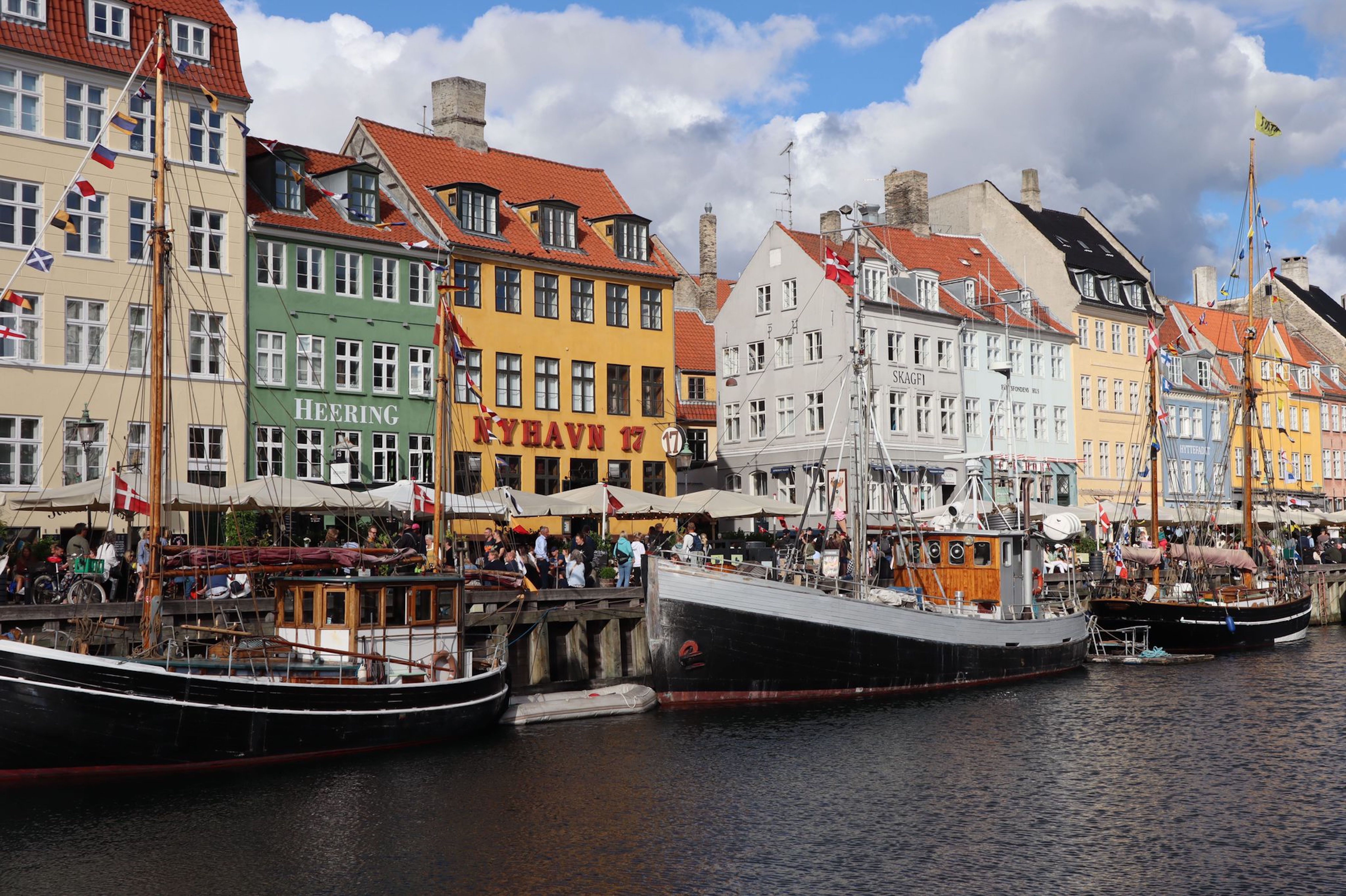
Copenhagen is a city built for daylight, and how much of it you get shapes everything. In June the sun is up for roughly 17 and a half hours and the harbor swims, the parks fill, and the whole city seems to live outdoors. In December it barely clears the rooftops for seven hours, but the dark is met with candles, mulled wine (glogg), and a particular Danish talent for cozy interiors.
The decision usually comes down to a trade-off: warmth and long evenings (summer) versus lower prices and a calmer, more local feel (winter and shoulder months). Copenhagen never gets truly hot, and rain is possible in any month, so packing layers and a waterproof shell is non-negotiable regardless of when you come.
Prices and crowds track the weather closely. Peak season runs mid-June through August, plus the festive weeks around Christmas. Spring and early autumn deliver the best balance of decent weather, manageable crowds, and softer hotel rates.
The best time to visit Copenhagen is from May to early September, when days are long, the weather is mildest, and outdoor life is in full swing. For the ideal balance of pleasant weather and thinner crowds, target May to mid-June or September; for the lowest prices, come in January to March.
Planning a trip to Copenhagen?
The short version
Through the year
Spring is Copenhagen waking up: cafe tables return to the streets, parks turn green, and Tivoli reopens in early April. May in particular is one of the loveliest times to visit, with long light and gardens in bloom but without peak crowds. Pack layers and a rain jacket.
This is Copenhagen at full tilt: harbor baths open, canal tours run all day, and locals picnic in the parks until late. The atmosphere is hard to beat, but you pay for it in crowds and rates. Ideal for first-timers who want the city at its liveliest and warmest.
September is an underrated month: still mild, far calmer than summer, and golden in the parks. As autumn deepens, the city turns inward toward cozy cafes and museums, and rain becomes a regular companion. Great for travelers who want culture, food, and lower prices over beach-style weather.
December is pure hygge: Tivoli's Christmas market, glogg, and twinkling lights make the early dark feel magical. After New Year the city is quiet, cold, and cheap, suited to travelers who want museums, design shops, and candlelit cafes without the crowds. Bring serious warm layers and embrace the indoor culture.
Notable events & festivals
There is no truly bad time, but January and February are cold, dark, and damp, with daylight as short as seven hours, which suits indoor culture more than sightseeing. Late July and early August bring the highest prices and biggest crowds. If you want the festive sparkle skip the period right after New Year, when many seasonal attractions close and the city feels its quietest.
Got your dates? Build the trip around them.
We'll plan a custom Copenhagen itinerary tuned to your travel month and pace.
Frequently asked questions
What is the cheapest month to visit Copenhagen?
Is Copenhagen worth visiting in winter?
How many days do you need in Copenhagen?
When is the best weather in Copenhagen?
When can you see the longest days in Copenhagen?
Whether you come for midsummer light on the canals or candlelit December markets, Copenhagen rewards travelers who pack layers and plan around the daylight. Pick your season, book ahead for summer and Christmas, and let the city's easy bike-friendly rhythm do the rest.
Build your own Copenhagen trip
Tell us how many days, your budget, and what you're into. We'll turn it into a custom, day-by-day Copenhagen itinerary.