
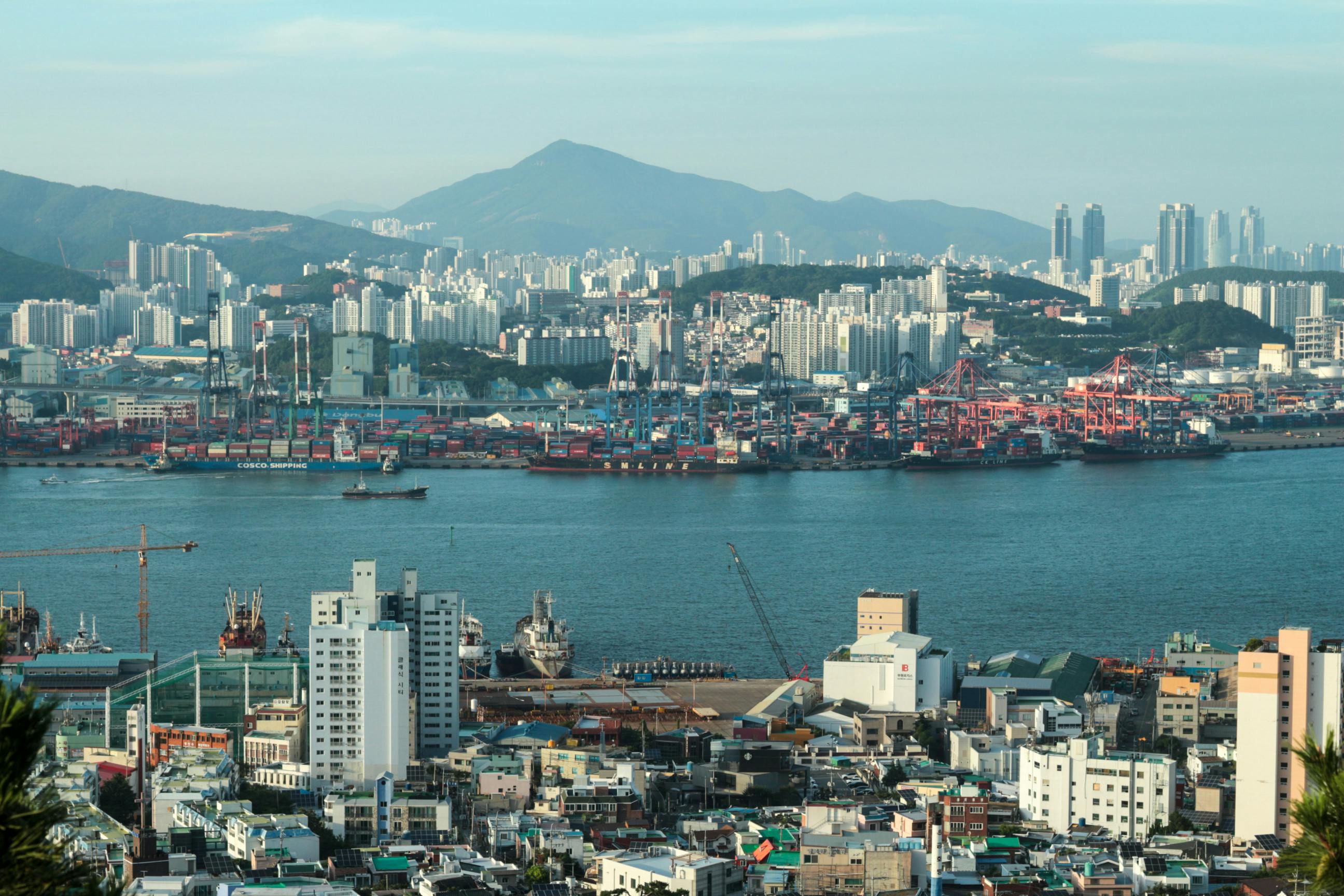
A scenic view of Busan city with skyscrapers and busy harbor under clear skies.
Best Time to Visit · Busan

The Best Time to Visit Busan: A Month-by-Month Guide

South Korea's second city trades cherry blossoms for beaches and blazing autumn skies. Here is exactly when to go.

Last updated July 1, 20267 min read

Busan is a coastal city where mountains tumble into the sea, and the weather here is milder than Seoul's thanks to that maritime setting. Winters rarely bite, summers are hot and humid, and the shoulder seasons of spring and autumn deliver the clear, comfortable days most travelers dream of. Choosing when to go comes down to a trade-off between beach heat, blossom crowds, and the price you are willing to pay.

The city runs on a distinct rhythm: cherry blossoms in early April, packed beaches from July through August, a burst of culture around the international film festival in October, and quiet, cheap, cold-but-sunny days in deep winter. Rain is concentrated in the summer monsoon (jangma) that arrives late June and lingers into July, with typhoon risk hanging over August and September.

If your priority is walking the coastal trails, exploring Gamcheon Culture Village, and eating your way through Jagalchi fish market without breaking a sweat or fighting crowds, the calendar points firmly toward spring and autumn. Below is how each season actually feels, plus the events worth building a trip around.

Quick answer

The best time to visit Busan is spring (April to May) and autumn (late September to early November), when temperatures sit around 15 to 22 C (59 to 72 F), skies are clear, and humidity is low. April brings cherry blossoms, while October offers the city's best weather alongside the Busan International Film Festival.

At a glance

The short version

Best overall
Late September to early November. Warm, dry, sunny days around 18 to 24 C (64 to 75 F), the sea is still swimmable early on, and the city buzzes with the film festival and fireworks.
Cheapest time
December to February (excluding the Lunar New Year holiday). Airfares and hotel rates drop sharply after the autumn peak, and attractions are refreshingly uncrowded.
Fewest crowds
Late November and January. The autumn tourists have gone and the cold keeps day-trippers away, so you get Gamcheon and the temples almost to yourself.
Best weather
October. Consistently clear skies, low humidity, and comfortable temperatures around 20 C (68 F) make it the single most pleasant month to explore on foot.
Best for cherry blossoms
Early April. Blossoms peak around the first week, with Dalmaji Hill, Oncheoncheon Stream, and nearby Jinhae (a short trip away) putting on the biggest show.
Best for beaches
Mid-July to late August. Haeundae and Gwangalli are in full swing with warm water around 24 to 26 C (75 to 79 F), though this is also the hottest, most crowded stretch.
Season by season

Through the year

SpringMarch to May
Weather Cool early, warming steadily: March averages 5 to 14 C (41 to 57 F), rising to 14 to 23 C (57 to 73 F) by May. Low humidity and generally clear, with occasional spring showers.
Crowds Moderate, spiking sharply during cherry blossom season in early April and the May holidays. Weekends at blossom spots get busy.
Prices Mid-range, climbing around blossom peak and Children's Day (early May). Book ahead for early April.

Spring is arguably Busan at its prettiest, with cherry blossoms lining Dalmaji Hill and coastal walks in perfect hiking weather. The sea is still too cold for swimming, but the temples, markets, and viewpoints shine. Ideal for sightseers and photographers who want comfort over beach time.

SummerJune to August
Weather Hot and humid with the jangma monsoon arriving late June into July. July and August average 24 to 30 C (75 to 86 F) but feel hotter; heavy rain and typhoon risk peak in August. Sea temperatures reach 24 to 26 C (75 to 79 F).
Crowds Peak. Domestic tourists flood the beaches in late July and August, and Haeundae and Gwangalli are packed day and night.
Prices Highest of the year, especially beachfront hotels in August. Rates can double near the coast.

This is beach season, when the coast comes alive with swimmers, festivals, and late-night crowds along Gwangalli's neon-lit sand. The flip side is oppressive humidity, monsoon downpours, and the year's steepest prices. Best for beach lovers who do not mind heat and can dodge the rain.

AutumnSeptember to November
Weather The sweet spot: September still warm at 20 to 27 C (68 to 81 F) with lingering typhoon risk, cooling to a crisp 8 to 18 C (46 to 64 F) by November. Clear skies and low humidity dominate October and November.
Crowds Busy but manageable, peaking during the film festival in early October. November thins out noticeably.
Prices Mid to high in October around the festival, easing through November.

Autumn delivers Busan's finest weather and its cultural high point, the Busan International Film Festival. Days are bright and comfortable, the sea stays swimmable into September, and the mountains behind the city glow with foliage by late November. The all-round best time to visit for most travelers.

WinterDecember to February
Weather Mild for Korea but cold by coastal standards: 1 to 10 C (34 to 50 F), with January the coldest. Dry, sunny, and windy along the water; snow is rare.
Crowds Lowest of the year, aside from the Lunar New Year holiday (dates vary, late January or February).
Prices Cheapest season for flights and hotels, with widely available discounts outside the holiday.

Winter is quiet, bright, and budget-friendly, with plenty of blue-sky days for temple visits, market food, and coastal walks bundled up. The beaches are empty and the sea too cold for swimming, but hot spring resorts, seafood, and easy sightseeing make it a rewarding low-season pick for budget travelers.

On the calendar

Notable events & festivals

Cherry Blossom Season (late March to early April)Blossoms peak in the first week of April along Dalmaji Hill, Oncheoncheon Stream, and Namcheon-dong, with the nearby city of Jinhae hosting Korea's most famous cherry blossom festival a short trip away.
Busan Sea Festival (early August)A week-long summer celebration across Haeundae, Gwangalli, and other beaches, with concerts, water sports, and beachside events at the height of the swimming season.
Busan International Film Festival (early October)Asia's premier film festival draws stars, premieres, and crowds to the Busan Cinema Center for around ten days, transforming the city into a cultural hub.
Busan Fireworks Festival (late October or early November)One of Korea's largest fireworks displays lights up Gwangalli Beach and the Gwangan Bridge, drawing huge crowds for the spectacular over-water show.
Jagalchi Cultural Tourism Festival (October)A celebration at Korea's largest seafood market, with fresh catch, cooking events, and a lively atmosphere around Jagalchi's famous stalls.
When to avoid

Skip late June through July if you dislike heavy rain, as the jangma monsoon brings persistent downpours and sticky humidity. August carries the highest typhoon risk and the worst crowds and prices. Also avoid the Lunar New Year holiday (late January or February) when many businesses close and domestic travel spikes.

Got your dates? Build the trip around them.

We'll plan a custom Busan itinerary tuned to your travel month and pace.

Generate itinerary

Frequently asked questions

What is the cheapest month to visit Busan?
January is typically the cheapest month to visit Busan, with the lowest flight and hotel prices of the year and very few crowds, provided you avoid the Lunar New Year holiday. December and February are similarly affordable.
Is Busan worth visiting in winter?
Yes. Busan winters are mild and sunny by Korean standards (1 to 10 C / 34 to 50 F), and you get empty attractions, cheap prices, excellent seafood, and hot spring resorts. The beaches are too cold for swimming, but sightseeing and coastal walks are very pleasant.
When can you swim at the beaches in Busan?
The official beach season runs from July to August, when sea temperatures reach 24 to 26 C (75 to 79 F) and lifeguards are on duty. September water stays warm enough for a swim, but facilities wind down after the summer peak.
How many days do you need in Busan?
Three to four days is ideal for Busan, enough to cover Haeundae and Gwangalli beaches, Gamcheon Culture Village, Jagalchi Market, Beomeosa Temple, and the coastal walks without rushing. Add a day if you want a trip to nearby Gyeongju.
When do the cherry blossoms bloom in Busan?
Cherry blossoms in Busan usually peak in the first week of April, slightly earlier than Seoul thanks to the milder coastal climate. Dalmaji Hill and Oncheoncheon Stream are top viewing spots, with nearby Jinhae hosting the region's biggest blossom festival.

Whether you come for April's blossoms, August's beach buzz, or October's clear skies and film-festival energy, Busan rewards a well-timed visit. Pick your season, book early for the spring and autumn peaks, and get ready for a city where mountains, sea, and street food collide.

Plan with MagicTrips

Build your own Busan trip

Tell us how many days, your budget, and what you're into. We'll turn it into a custom, day-by-day Busan itinerary.

Ready to book your stay?

Hotels
Homes

Traveling somewhere else?

Generate a custom itinerary