
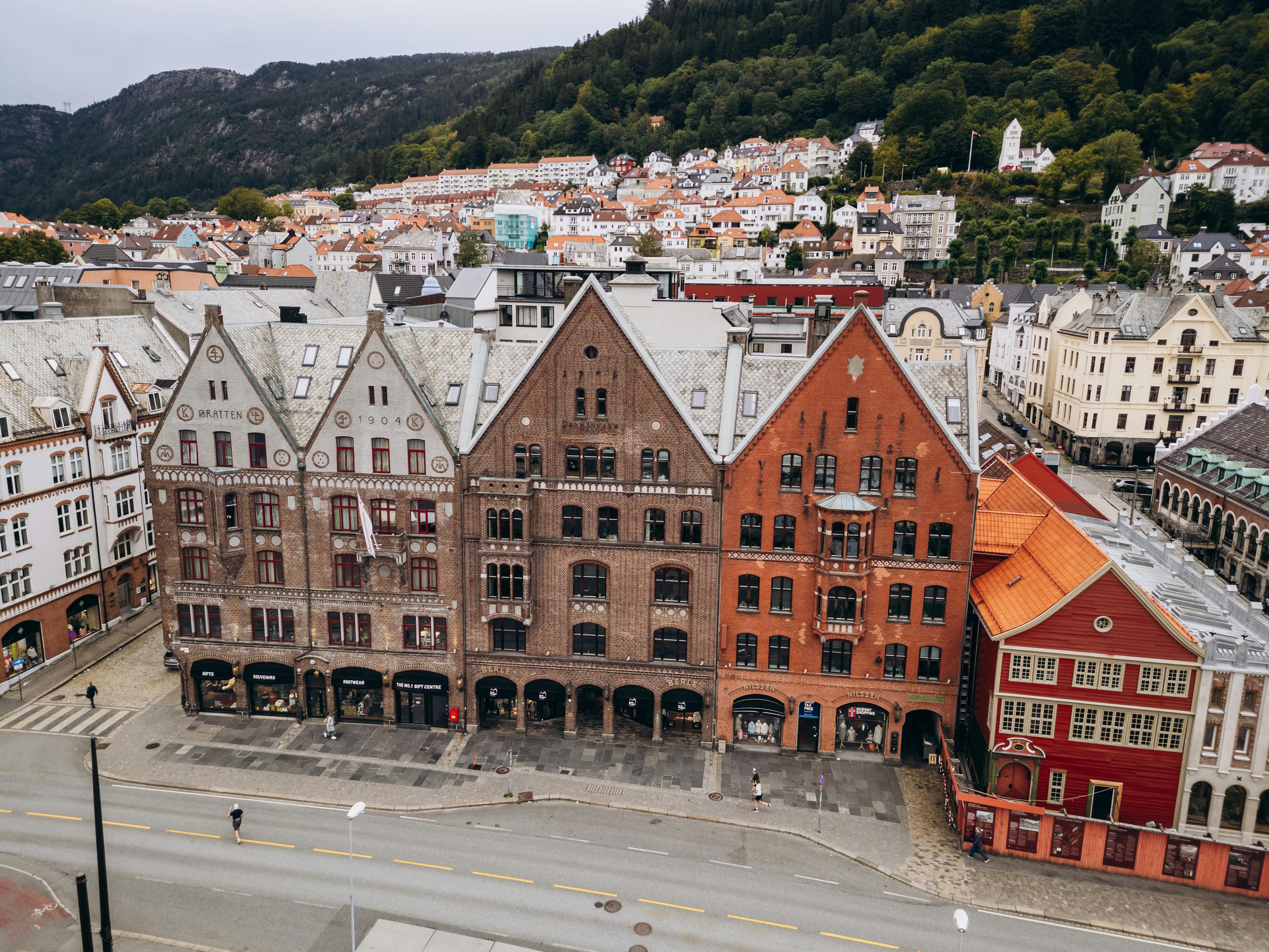
Bergen sits on Norway's west coast, ringed by seven mountains and open to the North Atlantic, which means the weather here is famously changeable. This is one of Europe's rainiest cities, with roughly 240 days of precipitation a year, so timing a visit is less about avoiding rain entirely (you cannot) and more about maximizing daylight, mild temperatures, and access to the fjords.
The decision usually comes down to three factors: how much daylight you want, how many crowds and cruise passengers you can tolerate, and your budget. Summer delivers up to 19 hours of daylight and the fullest schedule of fjord cruises and tours, but it also brings the highest prices and packed streets around Bryggen. Winter is dark and wet at sea level but opens up snow-covered mountains just minutes from the center.
For most travelers the sweet spot is late spring through early autumn, when the Bergen Railway, fjord ferries, and mountain funiculars all run on full schedules and the surrounding scenery is at its greenest.
The best time to visit Bergen is from late May to early September, when days are long (up to 19 hours of daylight in June), temperatures reach 16 to 20C (61 to 68F), and all fjord cruises and mountain excursions run at full frequency. For fewer crowds and lower prices, aim for May or September.
Planning a trip to Bergen?
The short version
Through the year
Spring is Bergen at its freshest, with orchards blooming in nearby Hardanger and waterfalls at full force from snowmelt. Weather is unpredictable and you will need waterproofs, but the balance of thinner crowds and lengthening light makes late May a smart, less expensive alternative to peak summer.
This is prime time for good reason: long days, lively harbor life, and full access to fjord cruises, the Fløibanen funicular, and day trips on the Bergen Railway. The trade-offs are crowds and cost, and you should still pack a rain jacket, but the sheer length of daylight makes summer the most rewarding window for first-timers.
Early September keeps much of summer's daylight and tour availability while the crowds ease, making it a favorite of repeat visitors. By late autumn the rain and dark set in, and while the city is atmospheric under lamplight, many fjord excursions run on reduced schedules or pause.
Winter Bergen is dark, damp, and quiet, but it has its charms: festive lights along Bryggen, cozy cafes, and easy access to snow via the Ulriken cable car or a short trip to Voss. It suits budget travelers and those who want a moody, local city break rather than fjord cruising, which is largely off-season.
Notable events & festivals
If your trip centers on fjord cruises and mountain excursions, avoid November through February, when daylight is minimal, rain and sleet are frequent, and many tours run reduced schedules or pause entirely. If you dislike crowds and high prices, skip mid-July and August, when cruise traffic and hotel rates both peak.
Got your dates? Build the trip around them.
We'll plan a custom Bergen itinerary tuned to your travel month and pace.
Frequently asked questions
What is the cheapest month to visit Bergen?
Is Bergen worth visiting in winter?
How many days do you need in Bergen?
Does it always rain in Bergen?
When is the best time for fjord tours from Bergen?
Bergen rewards travelers who come prepared for its weather rather than fighting it. Pick summer for endless daylight and full fjord access, or a shoulder month like May or September for the best mix of value and calm, pack a good rain jacket either way, and start booking your fjord cruises and mountain tickets early.
Build your own Bergen trip
Tell us how many days, your budget, and what you're into. We'll turn it into a custom, day-by-day Bergen itinerary.