
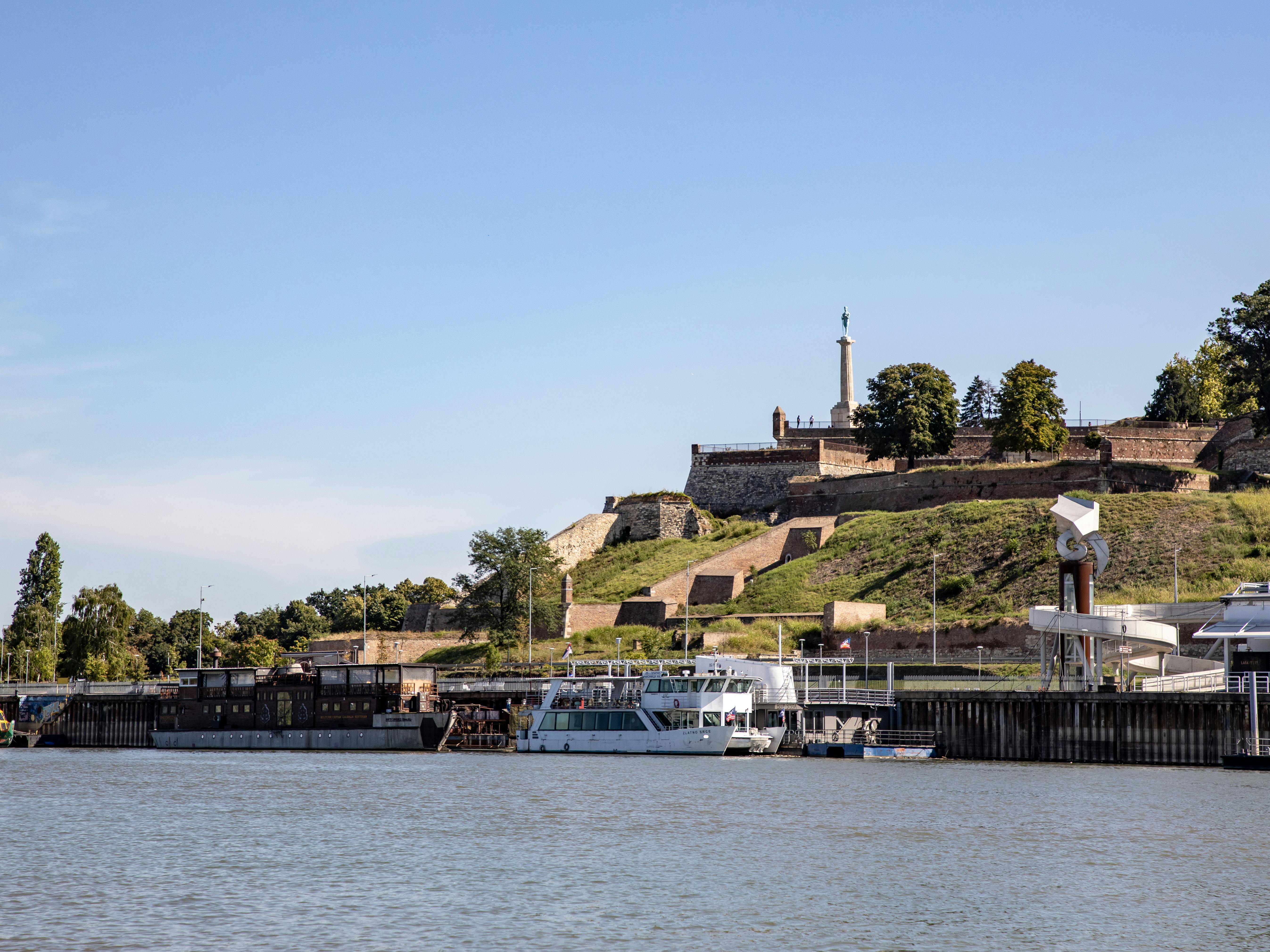
Belgrade sits where the Sava meets the Danube, a city that has been fought over, flattened, and rebuilt more times than almost any capital in Europe. That resilience shows in its mood: brutalist blocks and Habsburg facades, bohemian Skadarlija, and a river-barge nightlife scene that runs until dawn. The weather here is firmly continental, meaning hot summers, cold winters, and two genuinely pleasant shoulder seasons that most travelers overlook.
Deciding when to go comes down to what you want. Summer delivers long days, packed river clubs (splavovi), and the region's biggest music festivals, but July and August can be uncomfortably hot. Winter is cheap and atmospheric but grey and cold. Spring and autumn hit the sweet spot: mild temperatures, thinner crowds, and hotel rates well below peak.
Belgrade is also one of Europe's better-value city breaks. Prices run lower than nearly any EU capital, so the season you choose affects the experience more than your budget. Below is a practical breakdown to help you pick the right window.
The best time to visit Belgrade is late spring (May and June) and early autumn (September and October), when temperatures are a comfortable 18-26C (64-79F), crowds are manageable, and hotel prices sit below summer peaks. July and August are hottest and best for river nightlife and festivals, while winter is cheapest but cold and grey.
Planning a trip to Belgrade?
The short version
Through the year
Spring is arguably the finest time to see Belgrade, as parks green up, cafe terraces reopen, and the light turns golden over the rivers. Early spring can still be raw and wet, so May is the safest bet. Ideal for sightseeing, walking tours, and travelers who dislike heat and crowds.
Summer is Belgrade at its loudest and most social, with the splavovi pumping, Ada Ciganlija lake beach packed, and the whole city living outdoors after dark. The downside is the heat, which can make midday sightseeing draining. Best for nightlife lovers, festival-goers, and anyone who thrives in a party atmosphere.
Early autumn rivals spring for comfort, with warm days, crisp evenings, and the fortress framed by turning leaves. As November arrives the weather greys over and the city retreats indoors to its coffee houses and kafanas. September and October suit sightseers and food lovers; November suits budget travelers who don't mind the chill.
Winter is bleak on the weather front but atmospheric and cheap, with steamy kafanas, hearty food, and a lively holiday season stretching to the Orthodox New Year in mid-January. Days are short and outdoor time limited. Best for budget travelers, culture seekers, and anyone drawn to a cozy, local-feeling city break.
Notable events & festivals
Skip mid-July and August if you dislike heat, as temperatures regularly hit the mid-30s C (mid-90s F) and the city can feel airless. If you want low prices and quiet, avoid the New Year to Orthodox Christmas holiday window (late December to January 7), when rates jump and many local businesses keep reduced hours.
Got your dates? Build the trip around them.
We'll plan a custom Belgrade itinerary tuned to your travel month and pace.
Frequently asked questions
What is the cheapest month to visit Belgrade?
Is Belgrade worth visiting in winter?
How many days do you need in Belgrade?
When is the best time to visit Belgrade for good weather?
When is Belgrade's nightlife at its peak?
Belgrade is a year-round city, but May, June, and September give you the best balance of warm weather, fair prices, and room to breathe. Pick your window, book a central room while rates are still low, and let the rivers set the pace.
Build your own Belgrade trip
Tell us how many days, your budget, and what you're into. We'll turn it into a custom, day-by-day Belgrade itinerary.