
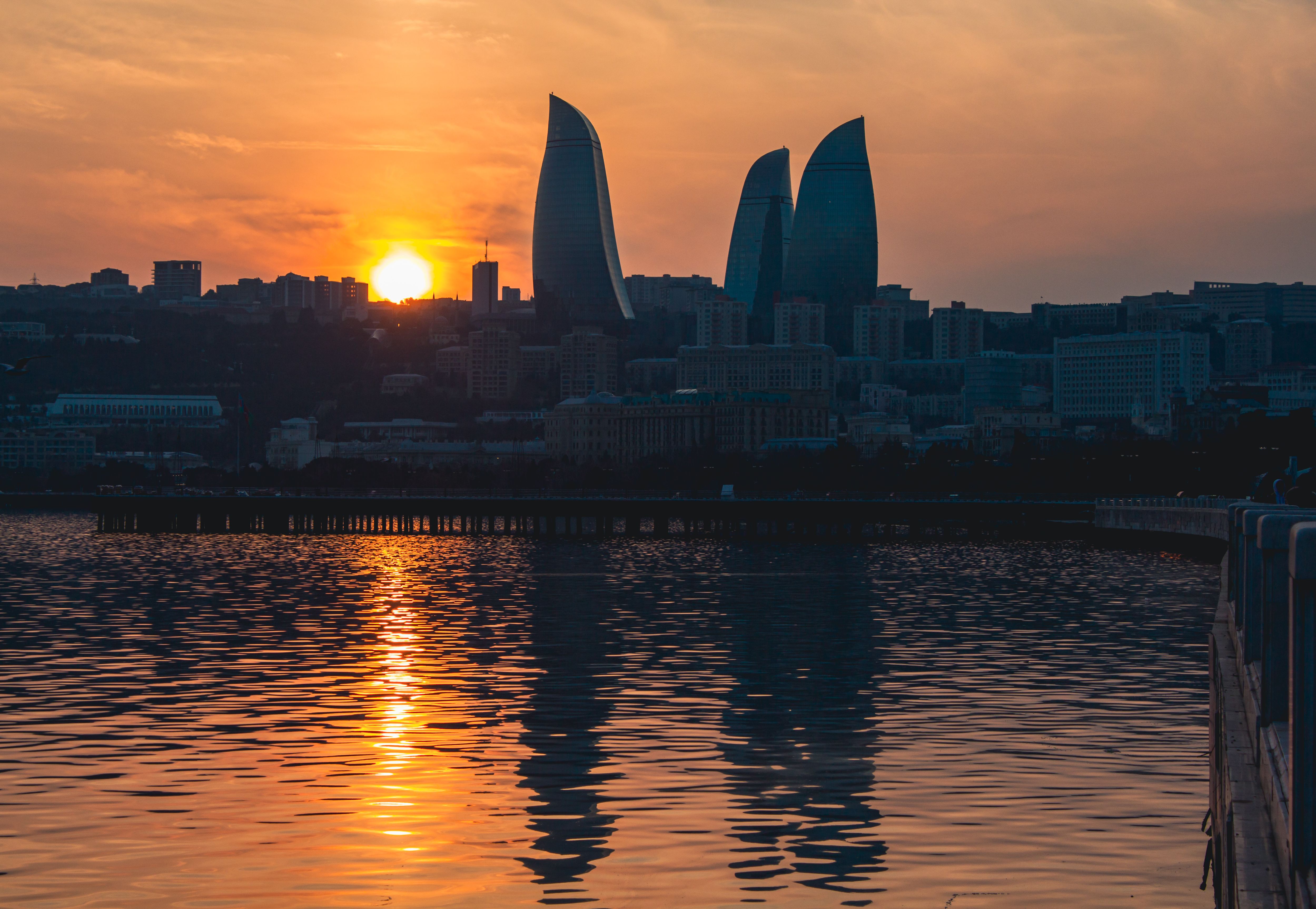
Silhouette of Baku's Flame Towers against a stunning sunset backdrop reflecting in the Caspian Sea.
Best Time to Visit · Baku

The Best Time to Visit Baku: A Season-by-Season Guide

From mild Caspian springs to the roar of the Azerbaijan Grand Prix, here is when to time your trip to Azerbaijan's wind-blown capital.

Last updated June 28, 20267 min read

Baku sits on a peninsula jutting into the Caspian Sea, and that location shapes everything about its climate. The city is famously windy (its name is often traced to a Persian phrase meaning 'pounded by wind'), which keeps summers from feeling as brutal as the thermometer suggests and makes winters feel sharper than the numbers imply. The result is a semi-arid climate with hot, dry summers, short cool winters, and two genuinely pleasant shoulder seasons.

For most travelers the decision comes down to balancing heat against crowds and price. Spring and autumn deliver the most comfortable sightseeing weather for wandering the medieval Old City (Icherisheher), strolling the seaside Boulevard, and taking day trips to the mud volcanoes and Gobustan petroglyphs. Summer brings heat and humidity along with the headline event of the year, the Formula 1 Azerbaijan Grand Prix, which sends hotel prices soaring. Winter is quiet and inexpensive but blustery.

Baku is an affordable city by European standards year-round, but timing still matters: a hotel room during the Grand Prix can cost three to four times its off-season rate, while a wet February afternoon might be the cheapest urban break in the Caucasus.

Quick answer

The best time to visit Baku is spring (April to June) and autumn (September to October), when daytime temperatures sit around 20 to 28C (68 to 82F), skies are mostly clear, and crowds and prices are moderate. Avoid July and August if you dislike heat and humidity, and book far ahead if your trip coincides with the Formula 1 Grand Prix.

At a glance

The short version

Best overall
May and September. Warm, dry days around 24 to 28C (75 to 82F), comfortable evenings, and the Caspian warm enough for a dip without the crush and cost of high summer.
Cheapest time
December to February. Off-season hotel rates fall sharply and flights are at their lowest, especially outside the New Year holiday week.
Fewest crowds
Late November and February. The Old City and museums are quiet, restaurant tables are easy, and you get the place largely to yourself, albeit in cool, windy weather.
Best weather
Late April to early June and late September to mid-October, with reliable sunshine, low rainfall, and temperatures ideal for walking the city and exploring Gobustan.
Best for the Formula 1 Grand Prix
September, when the Azerbaijan Grand Prix street circuit takes over the seafront. Electric atmosphere, but book accommodation months in advance and expect peak prices.
Best for swimming and beaches
July and August, when the Caspian reaches around 25 to 27C (77 to 81F) and beach clubs north of the city at Bilgah and Nardaran are in full swing, if you can handle the heat.
Season by season

Through the year

SpringMarch to May
Weather Cool early on, warming quickly: March averages 8 to 14C (46 to 57F), rising to 18 to 25C (64 to 77F) by May. March and April see the year's heaviest (still modest) rainfall and gusty winds; May is reliably dry and pleasant.
Crowds Building from low to moderate. Novruz in late March brings domestic activity, and late spring sees the start of the international tourist season, but it never feels packed.
Prices Mid-range and good value. Hotel rates climb from winter lows but stay reasonable except around the Novruz holiday.

Spring is arguably the finest time to be in Baku once April settles in. The parks and the Boulevard turn green, the weather is made for walking, and the major sights are uncrowded. Early March can still be raw and windy, so pack layers.

SummerJune to August
Weather Hot and increasingly humid. Highs of 30 to 35C (86 to 95F) are normal, occasionally pushing higher, with very little rain. The persistent Caspian wind takes the edge off, and nights stay warm at 22 to 26C (72 to 79F).
Crowds Peak season, driven by Gulf and regional tourists escaping even hotter home climates, plus beachgoers. Crowds spike further during the Grand Prix.
Prices High, and at their absolute peak during the Formula 1 weekend when hotels can run three to four times normal rates.

Summer suits sun-seekers and beach lovers who want the Caspian at its warmest and the city at its liveliest. The trade-off is heat, humidity, and crowds. Midday sightseeing can be draining, so plan indoor museums for the afternoon and save walking for mornings and evenings.

AutumnSeptember to November
Weather A gradual cool-down. September stays warm at 24 to 28C (75 to 82F), October eases to 18 to 22C (64 to 72F), and November cools to 10 to 15C (50 to 59F) with rising winds and the first real rain.
Crowds Moderate, spiking sharply for the September Grand Prix and tapering to low by late November.
Prices Mid-range overall, but premium during the Grand Prix weekend. Late autumn offers some of the best value of the year.

Early autumn rivals spring for the best all-round conditions: warm seas, clear skies, and comfortable temperatures. September's Grand Prix energizes the city for those who want it. By November the weather turns cooler and breezier, but prices and crowds drop accordingly.

WinterDecember to February
Weather Cool, windy, and damp rather than deeply cold. Highs of 6 to 10C (43 to 50F) and lows near 2 to 4C (36 to 39F). Snow is rare and rarely settles, but the wind makes it feel colder, and February is the wettest stretch alongside March.
Crowds Lowest of the year apart from a brief New Year surge. Major sights are quiet and easy.
Prices Lowest of the year, with the cheapest flights and hotel rates outside the holiday week.

Winter is for budget travelers and those who prefer a city without queues. The Old City's caravanserais, museums, and tea houses are atmospheric in the cold, and prices are unbeatable. Just pack a windproof coat and expect grey, blustery days.

On the calendar

Notable events & festivals

Novruz Bayram (around March 20 to 21)The Persian-rooted spring new year and Azerbaijan's most important celebration, marked with bonfires, sweets like shekerbura and pakhlava, public festivities, and several days of national holiday.
Formula 1 Azerbaijan Grand Prix (September)The marquee event: F1 cars tear through a street circuit along the seafront Boulevard and past the Old City walls. It draws international crowds and sends hotel prices to their annual peak, so book months ahead.
Baku Jazz Festival (October)A long-running festival bringing international and Azerbaijani musicians to venues across the city, a highlight of the autumn cultural calendar.
Republic Day (May 28)A national holiday marking the founding of the Azerbaijan Democratic Republic in 1918, with official ceremonies and a festive mood in the capital.
New Year (December 31 to January 1)Baku dresses up with lights and fireworks over the bay, and the brief holiday window is the one time winter hotel demand and prices rise.
When to avoid

Skip July and August if you are sensitive to heat and humidity, as midday temperatures regularly hit 33 to 35C (91 to 95F). If you are not attending the race, avoid the Formula 1 Grand Prix weekend in September, when hotels triple in price, road closures snarl the city center, and accommodation sells out far in advance.

Got your dates? Build the trip around them.

We'll plan a custom Baku itinerary tuned to your travel month and pace.

Generate itinerary

Frequently asked questions

What is the cheapest month to visit Baku?
January and February are the cheapest, with the lowest flight and hotel prices of the year (outside the New Year holiday week). The weather is cool and windy but rarely freezing.
Is Baku worth visiting in winter?
Yes, if you prioritize low prices and small crowds over warm weather. Winter days are cool, windy, and sometimes wet, but the Old City, museums, and tea houses are atmospheric and you will have the major sights largely to yourself.
How many days do you need in Baku?
Three to four days is ideal: one to two days for the Old City, Flame Towers, Heydar Aliyev Center, and the seafront Boulevard, plus a day trip to the Gobustan petroglyphs and mud volcanoes. Add a day if you want to explore Absheron's fire temple and beaches.
When is the Caspian Sea warm enough for swimming in Baku?
From late June through August the Caspian reaches roughly 25 to 27C (77 to 81F), warm enough for comfortable swimming at the beach resorts north of the city around Bilgah and Nardaran.
When is the Formula 1 Azerbaijan Grand Prix held?
The race is typically held in September on the Baku City Circuit, a street track along the seafront and past the Old City. Confirm exact dates on the official F1 calendar and book accommodation several months in advance.

Whether you come for the calm, golden weather of May and September, the budget quiet of winter, or the adrenaline of race weekend, Baku rewards a little timing. Decide what matters most (mild days, low prices, or the buzz of an event), then lock in your dates and start planning your Caspian city break.

Plan with MagicTrips

Build your own Baku trip

Tell us how many days, your budget, and what you're into. We'll turn it into a custom, day-by-day Baku itinerary.

Ready to book your stay?

Hotels
Homes

Traveling somewhere else?

Generate a custom itinerary