
The 9 Most Beautiful Small Towns in Spain

From whitewashed Andalusian villages clinging to gorges to candy-colored fishing harbors on the Atlantic, these are the small Spanish towns worth crossing the country for.
Last updated June 22, 2026
The 9 Most Beautiful Small Towns in Spain
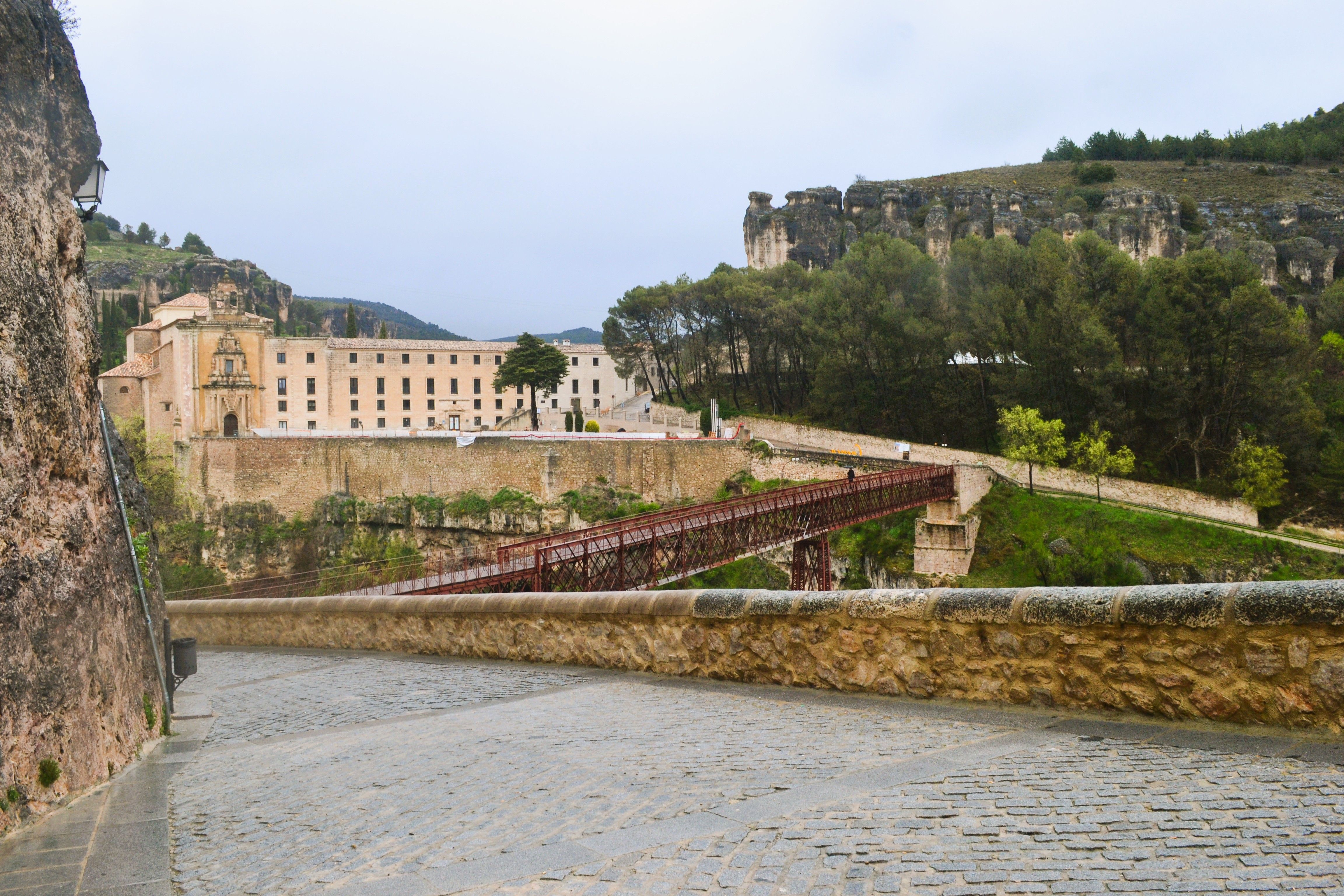
Scenic view of the historic monastery and bridge in Cuenca, Castilla-La Mancha, Spain. · Yoan Martínez Diaz

Spain's big cities get the headlines, but the country's soul lives in its small towns: hill villages where geraniums spill from wrought-iron balconies, fishing ports stacked above the surf, and stone-walled medieval centers that have barely changed in 500 years. Many of them carry the official 'Pueblos mas bonitos de Espana' badge, but the real test is simpler, the way a single street stops you mid-stride.

These nine towns span the whole peninsula, from the sugar-cube villages of Andalusia to the Atlantic harbors of Asturias and the medieval lanes of Catalonia and Aragon. We have ranked them with an eye to sheer beauty plus how rewarding they are to actually visit: places to eat well, walk slowly, and stay overnight after the day-trippers leave.

Use this list to build a road trip or to add a memorable detour to a city break. Each entry tells you what makes it special, what to see and eat, and how to reach it from the nearest hub city.

1
Ronda
RondaMalaga province, Andalusia, about 1.5 hours from Malaga Google
Split dramatically across a 100-meter gorge, Ronda is the postcard of inland Andalusia. The Puente Nuevo, an 18th-century stone bridge spanning the El Tajo chasm, is the unmissable sight, best seen from the viewpoints along the Camino de los Molinos at the bottom. Beyond the bridge, the old Moorish quarter winds past the Casa del Rey Moro gardens and one of Spain's oldest bullrings, the elegant Plaza de Toros. Come for sunset, when the cliffs glow gold and the crowds thin, and stay for a dinner of rabo de toro (oxtail stew) on a terrace over the valley.
  • Puente Nuevo and the El Tajo gorge viewpoints
  • Plaza de Toros, one of Spain's oldest bullrings
  • Arab Baths and the old Moorish quarter
  • Rabo de toro with a glass of local Ronda wine
Best for: first-time visitors and dramatic scenery
Getting there: About a 1.5-hour drive from Malaga; a scenic regional train also runs from Malaga and Granada (roughly 2 hours).
2
Cadaques
CadaquesCosta Brava, Catalonia, about 2.5 hours from Barcelona Google
Reached by a winding road over the Cap de Creus headland, Cadaques is a whitewashed fishing village that drew Salvador Dali, Picasso, and Lorca. Its tight lanes climb to the hilltop church of Santa Maria, while the bay is lined with fishing boats and seafood terraces. Walk 20 minutes to nearby Portlligat to tour the Salvador Dali House, the surrealist's lifelong home with its egg-topped roof and mirror-still cove. The light here is extraordinary, which is exactly why the painters came.
  • Salvador Dali House-Museum in Portlligat
  • Church of Santa Maria above the bay
  • Seafood and suquet de peix on the waterfront
  • Cap de Creus natural park walks
Best for: art lovers and slow seaside days
Getting there: About a 2.5-hour drive from Barcelona; the last stretch over the mountain is slow but spectacular. Buses run via Figueres.
3
Albarracin
AlbarracinTeruel province, Aragon, about 2.5 hours from Valencia Google
Often called Spain's prettiest village, Albarracin rises in tiers of pink-ochre houses above the Guadalaviar river, ringed by ancient walls that climb the surrounding hills. The town is almost absurdly photogenic, with overhanging timber-framed homes, a cathedral, and lanes so narrow neighbors can nearly shake hands across them. Hike up to the medieval walls for the full view, then duck into the surrounding pine forest to see the prehistoric rock-art shelters. There is little to 'do' here in the checklist sense, and that is the point.
  • The hilltop medieval walls and watchtowers
  • Pink-hued old town and the cathedral
  • Prehistoric rock paintings in the nearby Pinares de Rodeno
  • Local jamon de Teruel
Best for: photographers and a quiet overnight
Getting there: About 2.5 hours by car from Valencia or 3.5 hours from Madrid; a car is essential as public transport is limited.
4
Cudillero
CudilleroAsturias, about 1 hour from Oviedo Google
Tumbling down a steep ravine to a tiny harbor, Cudillero is an amphitheater of brightly painted fishermen's houses on the green Asturian coast. Boats bob in the small port while terraces serve the day's catch, and steep stairways and miradores reward anyone willing to climb for the view back down over the rooftops. This is northern Spain at its most cinematic: cooler, lusher, and far less touristed than the south. Pair it with a plate of fresh sardines and a bottle of Asturian sidra poured from on high.
  • The painted houses cascading to the harbor
  • Mirador de la Garita-Cimadevilla viewpoint
  • Fresh seafood and cider in the port
  • Nearby Playa del Silencio, one of Spain's most beautiful beaches
Best for: coastal scenery and seafood
Getting there: About 1 hour by car from Oviedo or Gijon; regional trains and buses also connect, though a car helps for the coast.
5
Setenil de las Bodegas
Setenil de las BodegasCadiz province, Andalusia, about 20 minutes from Ronda Google
Setenil is the village that lives inside a rock: its whitewashed houses are built directly under and into the overhanging cliffs of a river gorge, so entire streets are roofed by stone. The most famous lanes, Calle Cuevas del Sol and Calle Cuevas de la Sombra, are lined with bars tucked beneath the overhang, perfect for an afternoon of tapas. Climb to the Mirador El Carmen or the old Moorish keep for the layered view over the rooftops. It pairs beautifully with Ronda for a single Andalusian day.
  • Calle Cuevas del Sol, the street under the rock
  • Cliffside tapas bars and local chorizo
  • The Nazari keep (Torreon del Homenaje)
  • Mirador El Carmen viewpoint
Best for: a quirky half-day and tapas crawls
Getting there: About 20 minutes by car from Ronda; easiest visited as a detour on a Ronda trip from Malaga or Seville.
6
Frigiliana
FrigilianaMalaga province, Andalusia, about 1 hour from Malaga Google
Hovering in the hills above Nerja on the Costa del Sol, Frigiliana is the archetypal Andalusian white village: a maze of cobbled lanes, bldue-and-white tiled steps, and flower-draped balconies, with the Mediterranean glinting below. The old Moorish quarter, the Barribarto, is a tangle of postcard corners, and the town's mosaic panels recount its Morisco history. It feels far from the coastal resorts despite being minutes away. Time your visit for the late afternoon, when the white walls turn amber and the heat eases.
  • The cobbled Barribarto Moorish quarter
  • Ceramic tile panels telling the town's history
  • Local miel de cana (sugarcane honey)
  • Views over the coast toward Nerja
Best for: Costa del Sol day-trippers and walkers
Getting there: About 1 hour by car from Malaga; buses run from Nerja, which is reachable by coach from Malaga.
7
Besalu
BesaluGirona province, Catalonia, about 1.5 hours from Barcelona Google
Approached across an 11th-century fortified Romanesque bridge with a zigzag of arches and a gate tower, Besalu is one of Catalonia's best-preserved medieval towns. Inside the walls you will find arcaded squares, the Romanesque church of Sant Pere, and a rare medieval Jewish mikve (ritual bath), a reminder of the once-thriving Jewish community here. It is compact enough to wander in an hour but rewards a slower lunch in a stone-walled restaurant. Combine it with Girona or the volcanic Garrotxa region for a full day.
  • The fortified Romanesque bridge
  • Medieval Jewish quarter and mikve
  • Monastery church of Sant Pere
  • Catalan country cooking in the old town
Best for: history lovers and a Girona pairing
Getting there: About 1.5 hours by car from Barcelona, or via Girona (40 minutes by car from there). Buses connect from Girona.
8
Santillana del Mar
Santillana del MarCantabria, about 30 minutes from Santander Google
Famous for the local joke that it has neither a saint, nor flat land, nor sea, Santillana del Mar is nonetheless a near-perfect medieval ensemble of honey-stone mansions, cobbled streets, and the Romanesque Colegiata de Santa Juliana. Noble coats of arms still adorn the facades, and the whole center is pedestrianized and beautifully kept. Just outside town lies the Altamira museum, home to a replica of the prehistoric cave paintings (the original cave is closed to protect the art). It makes an easy and rewarding stop on Spain's green northern coast.
  • Colegiata de Santa Juliana, a Romanesque gem
  • The Museum of Altamira and its painted-cave replica
  • Cobbled streets of stone manor houses
  • Local quesada pasiega (cheesecake) and sobaos
Best for: medieval architecture and families
Getting there: About 30 minutes by car from Santander; regional buses also run from Santander.
9
Vejer de la Frontera
Vejer de la FronteraCadiz province, Andalusia, about 1 hour from Cadiz Google
Crowning a hill above the Atlantic coast of the Costa de la Luz, Vejer is a tumble of brilliant-white houses, hidden patios, and Moorish lanes that reward aimless wandering. It has quietly become one of Andalusia's best food towns, with excellent tapas, retinto beef, and the bluefin tuna of nearby Barbate and Zahara. Climb to the castle and the Plaza de Espana with its tiled fountain, then catch the sunset from the windmills on the ridge. The beaches of Trafalgar and El Palmar are a short drive away.
  • The white old town and Moorish arch gateways
  • Castle and Plaza de Espana
  • Almadraba bluefin tuna and retinto beef
  • Sunset over the windmills and the Atlantic
Best for: foodies and beach-and-village combinations
Getting there: About 1 hour by car from Cadiz or 2 hours from Seville; a car is the easiest way to reach it and the nearby beaches.

Good to Know

Rent a car Many of Spain's prettiest villages sit off the rail network, especially in Andalusia, Aragon, and the north. A car gives you the freedom to chain several together and to catch the best light at dawn and dusk.
When to go Spring (April-June) and early autumn (September-October) are ideal: warm, far less crowded than peak August, and comfortable for walking the hilly lanes. Andalusian villages can be punishingly hot in midsummer.
Stay overnight Most of these towns are day-trip favorites, so they empty by early evening. Booking a night lets you have the streets almost to yourself and is when the villages are at their most magical.
Pace your meals the Spanish way Lunch runs roughly 2-4pm and dinner rarely starts before 8:30pm. Plan a long midday meal and a late stroll rather than fighting the local rhythm.

Spain's beauty is concentrated in places like these, where the scale is human and a single square can hold an entire afternoon. String two or three together on a regional loop, leave room to linger over lunch, and let the small towns set the pace. Pick a corner of the country, rent a car, and start with the village that stops you mid-stride.

Ready to book your trip?

Search Hotels
Search Homes

Traveling somewhere else?

Generate a custom itinerary