
The 9 Most Beautiful Small Towns in Portugal (Beyond Lisbon and Porto)

Walled medieval villages, whitewashed hill towns, and riverside gems where Portugal feels gloriously unhurried.
Last updated June 22, 2026
The 9 Most Beautiful Small Towns in Portugal (Beyond Lisbon and Porto)
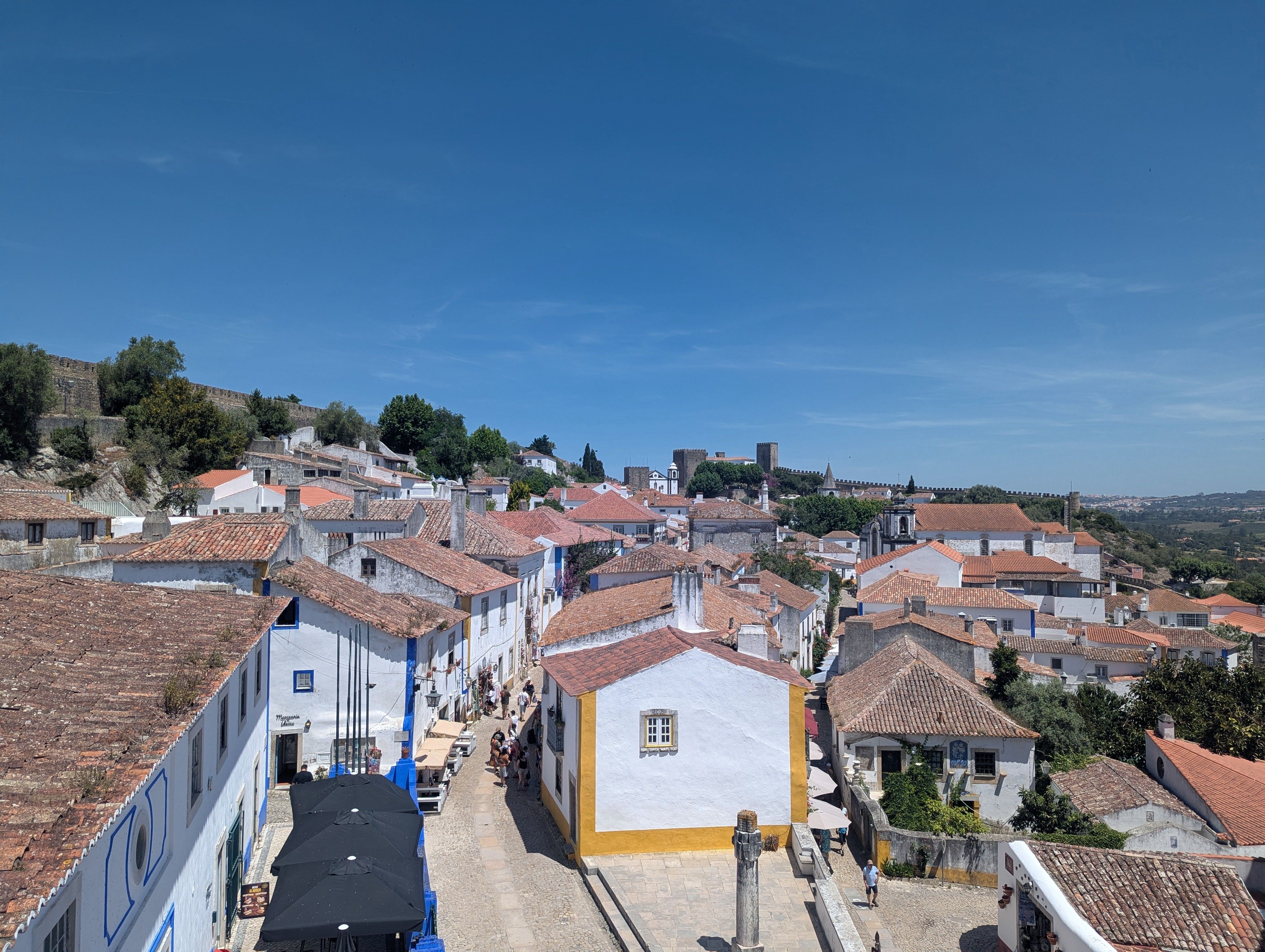
A picturesque view of the historical village of Óbidos, featuring traditional white houses with red tile roofs. · Shahidul Khan

Portugal rewards anyone willing to leave the obvious behind. Past Lisbon's trams and Porto's riverfront lies a country of walled hilltop villages, cobbled lanes draped in bougainvillea, and whitewashed houses trimmed in cobalt and ochre. These are places where the loudest sound is church bells and the local pastry shop still uses a recipe from a convent.

This list ranks nine of the most beautiful small towns in Portugal, spread from the Alentejo plains to the Algarve coast and the granite mountains of the interior. Each one is genuinely walkable in an afternoon, photogenic at every turn, and worth the detour for something specific: a castle, a dish, a view, or a wine.

Use it to build a road trip or to pick a single overnight escape. We note how to reach each from the nearest major hub, who it suits best, and exactly what to eat and see once you arrive.

1
Monsanto
MonsantoCentral Portugal, near the Spanish border (about 3.5 hours from Lisbon) Google
Often called the most Portuguese village in Portugal, Monsanto is built into, under, and around colossal granite boulders, with some houses using a single rock as their roof. Steep cobbled lanes climb to a ruined hilltop castle with sweeping views over the Beira plains, and the whole place feels carved from the mountain itself. It is remote and quiet, which is precisely the appeal, and recent fame as a filming location for House of the Dragon has done little to spoil its silence. Come for golden hour, when the granite glows and the wind whistles through the ruins.
  • The boulder houses on Rua do Castelo
  • Castelo de Monsanto and its panoramic ramparts
  • Capela de Sao Miguel, a tiny Romanesque chapel
Best for: photographers and anyone chasing the road less traveled
Getting there: Best reached by car, about 3.5 hours northeast of Lisbon or 2.5 hours from Coimbra; public transport is very limited.
2
Obidos
ObidosOeste region, about 1 hour north of Lisbon Google
Encircled by intact medieval walls you can walk almost entirely, Obidos is a maze of whitewashed houses edged in blue and yellow, spilling with flowers and dotted with bookshops tucked into former churches and cellars. Do not leave without trying ginjinha, the local sour-cherry liqueur served in a small chocolate cup. The town gets busy at midday, so arrive early or stay overnight to have the cobbled Rua Direita to yourself. If you can, time a visit for the medieval festival in summer or the Christmas village in winter.
  • Walking the castle walls
  • Ginjinha de Obidos in a chocolate cup
  • Livraria Santiago, a bookshop inside an old church
Best for: a romantic day trip or easy overnight from Lisbon
Getting there: Roughly 1 hour from Lisbon by car, or a direct Rapida Verde express bus from Campo Grande in about an hour.
3
Monsaraz
MonsarazAlentejo, near the Spanish border (about 1.5 hours from Evora) Google
Perched on a hill above the Alqueva reservoir, Monsaraz is a tiny walled village of whitewashed houses and schist streets that has barely changed in centuries. The castle keep offers one of the great views in the Alentejo, looking out over olive groves, vineyards, and the largest artificial lake in Western Europe. There is almost no traffic, just a handful of restaurants serving Alentejan classics and a designated Dark Sky reserve overhead, making it superb for stargazing. It pairs naturally with a wine tasting at one of the surrounding estates.
  • Sunset from the castle walls over Lake Alqueva
  • Stargazing in the Dark Sky Alqueva reserve
  • Alentejo wine tasting at a nearby adega
Best for: couples, wine lovers, and slow evenings
Getting there: Best by car, about 1.5 hours from Evora or just over 2 hours from Lisbon; no practical train service.
4
Sintra
SintraGreater Lisbon, about 40 minutes west of the capital Google
Set among misty wooded hills, Sintra is a fairytale of palaces, with the candy-colored Pena Palace crowning the ridge and the romantic Quinta da Regaleira hiding spiral initiation wells and grottoes in its gardens. The old town below is a cluster of pastry shops, tiled facades, and the conical chimneys of the National Palace. It is the most visited town on this list, so book palace tickets ahead and start early to beat the crowds and the hillside traffic. Pair it with the dramatic cliffs at Cabo da Roca, mainland Europe's westernmost point, just down the road.
  • Pena Palace and its terraces
  • Quinta da Regaleira's Initiation Well
  • Travesseiros and queijadas from Piriquita bakery
Best for: first-time visitors and palace and garden lovers
Getting there: About 40 minutes from Lisbon by frequent train from Rossio station, or an organized day trip that bundles the palaces.
5
Marvao
MarvaoAlentejo, in the Serra de Sao Mamede (about 2.5 hours from Lisbon) Google
Clinging to a granite crag at over 800 meters, Marvao is a walled eagle's nest of a village with views that stretch deep into Spain. The compact lanes within the ramparts lead to a castle and a small but lovely garden, and the whole place is so quiet you can hear your own footsteps on the stone. Saramago famously wrote that from here you can see the whole world. It is a place to walk the walls slowly, eat well, and stay the night when the day-trippers have gone.
  • Castle ramparts with views into Spain
  • The walled old village at dawn
  • Local chestnut dishes and Alentejo cheeses
Best for: hikers, view-seekers, and a peaceful overnight
Getting there: About 2.5 hours from Lisbon by car; the nearest train station is at Marvao-Beira, with onward connection by taxi.
6
Tavira
TaviraEastern Algarve, about 40 minutes from Faro Google
The most graceful town in the Algarve, Tavira straddles the Gilao River with a Roman-era bridge, a cluster of churches, and tiled merchant houses, all without the high-rise sprawl that mars parts of the coast. From here a quick ferry crosses to Ilha de Tavira, a long sandbar island with some of the region's best uncrowded beaches. The old quarter rewards aimless wandering, ending at the castle gardens for views over the rooftops. It is the place to base yourself for a calmer, more authentic Algarve.
  • The Roman bridge and riverside promenade
  • Ferry to the beaches of Ilha de Tavira
  • Fresh tuna and seafood at the Mercado da Ribeira
Best for: beach lovers who want charm without the crowds
Getting there: About 40 minutes east of Faro by train or car, on the main Algarve rail line.
7
Piodao
PiodaoSerra do Acor, central Portugal (about 1.5 hours from Coimbra) Google
Tumbling down a green mountainside, Piodao is built almost entirely of dark schist, its slate houses stacked so tightly they form a near-perfect amphitheater, broken only by the brilliant white parish church. It is one of Portugal's designated schist villages, and reaching it on winding mountain roads is part of the experience. There is little to do but walk, breathe, and admire the way the whole village seems to grow from the rock. Stay for dinner to try mountain dishes like cabrito assado, roast kid goat.
  • The schist-house amphitheater and white Igreja Matriz
  • Walking the stepped village lanes
  • Roast kid goat at a local tasca
Best for: road-trippers and lovers of remote mountain scenery
Getting there: Best by car, about 1.5 hours from Coimbra along scenic mountain roads; no useful public transport.
8
Castelo de Vide
Castelo de VideAlto Alentejo, near Marvao (about 2.5 hours from Lisbon) Google
Sometimes called the Sintra of the Alentejo for its greenery and springs, Castelo de Vide has one of the best-preserved medieval Jewish quarters in Portugal, a warren of narrow lanes climbing to a hilltop castle. Whitewashed houses with gothic doorways line the Juderia, and a 13th-century synagogue offers a moving glimpse of the town's history. Fountains bubble up across town, and the views over the Serra de Sao Mamede are wide and golden. Combine it easily with nearby Marvao for a perfect Alentejo pairing.
  • The medieval Juderia and ancient synagogue
  • Fonte da Vila, the marble town fountain
  • Castle keep views over the sierra
Best for: history buffs and a quiet, authentic Alentejo stop
Getting there: About 2.5 hours from Lisbon by car; pairs naturally with Marvao, 15 minutes away.
9
Sortelha
SortelhaBeira Interior, near the Serra da Estrela (about 3 hours from Lisbon) Google
One of Portugal's historic fortified villages, Sortelha sits behind intact medieval walls on a granite outcrop, with stone houses, a castle, and ramparts you can walk for dizzying views. Time feels suspended here: there are no souvenir crowds, just rough granite, wildflowers, and the wind. The village is tiny, so an hour or two covers it, but the atmosphere lingers. It is an ideal companion to a Serra da Estrela mountain trip and a stop for hearty interior cooking.
  • Walking the granite castle walls
  • The medieval gate and stone cottages
  • Regional dishes with Serra da Estrela cheese
Best for: anyone who loves untouched medieval atmosphere
Getting there: Best by car, about 3 hours from Lisbon or 1 hour from the Serra da Estrela; public transport is impractical.

Good to Know

Rent a car for the interior The most beautiful villages (Monsanto, Piodao, Sortelha, Monsaraz) sit in the interior with little or no public transport. A car turns a long, awkward journey into an easy scenic drive, and parking is usually just outside the village walls.
Start early or stay overnight Obidos and Sintra fill with day-trippers by late morning. Arriving before 9am or staying the night gives you the cobbled streets nearly to yourself and far better photos.
Book Sintra palaces ahead Pena Palace and Quinta da Regaleira sell timed tickets that often sell out in peak season. Reserve online in advance, and consider a guided day trip to skip queues and parking headaches.
When to go Spring (April to June) and early autumn (September to October) bring warm days, wildflowers, and thinner crowds. Interior villages can be very hot in July and August and chilly in winter at altitude.

From boulder-built Monsanto to riverside Tavira, Portugal's small towns deliver the country at its most photogenic and most human. Pick two or three that fit a region, rent a car, and let the cobbled detours set your pace. Linger for a sunset on the walls and a glass of local wine, and you will understand why these places stay with travelers long after the trip ends.

Ready to book your trip?

Search Hotels
Search Homes

Traveling somewhere else?

Generate a custom itinerary