
The 9 Most Beautiful Small Towns in China for Canals, Courtyards, and Mountain Magic

From mirror-still water towns to walled Ming cities and Tibetan stone villages, these are the small towns in China worth crossing the country for.
Last updated June 22, 2026
The 9 Most Beautiful Small Towns in China for Canals, Courtyards, and Mountain Magic
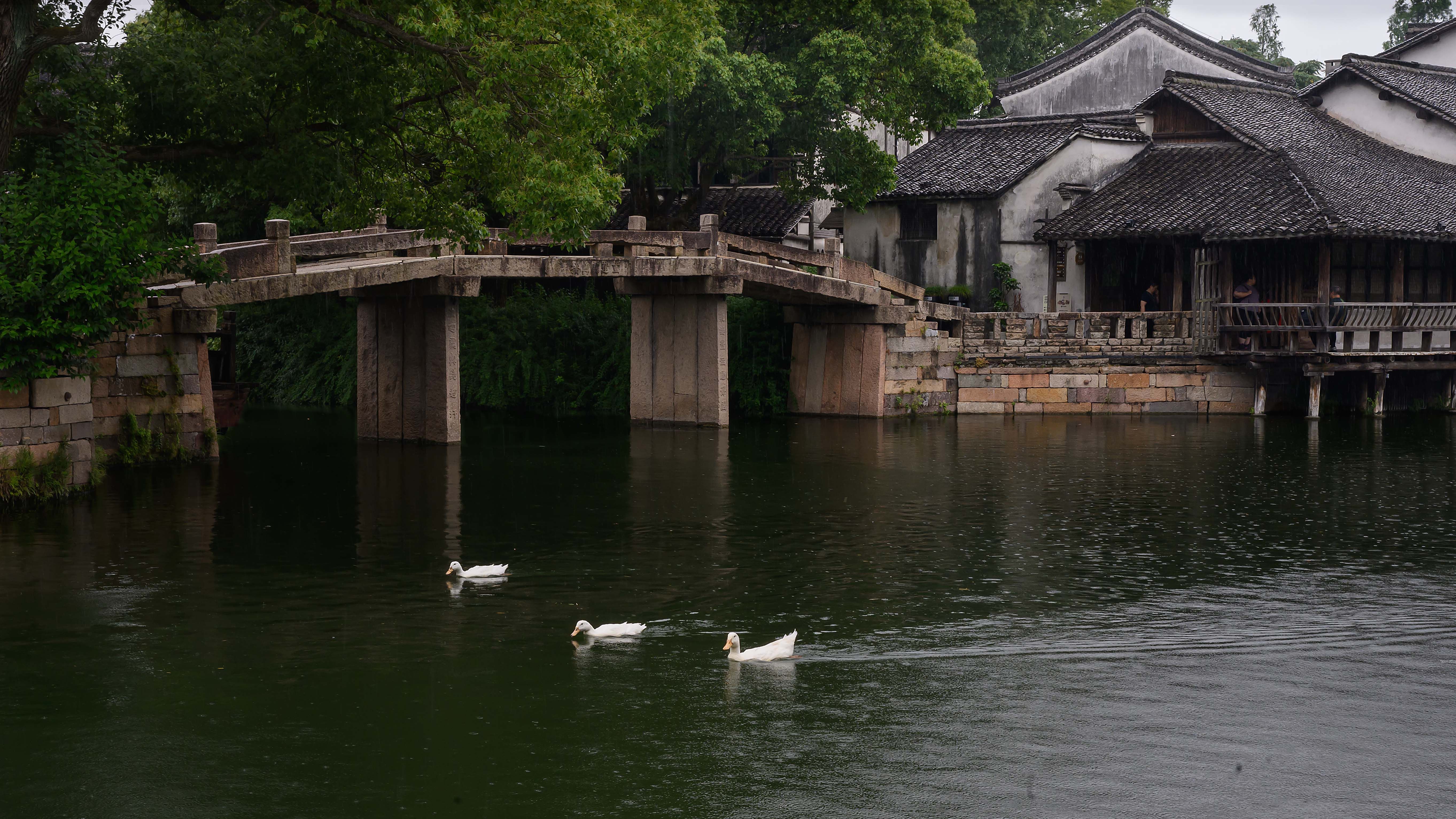
Peaceful scene of ducks swimming under a historic stone bridge by traditional houses. · 海风 张

China's headline sights, the Great Wall, the Forbidden City, Shanghai's skyline, deserve their fame, but the country's quieter pleasures hide in its small towns: villages where whitewashed gables reflect in still ponds, walled cities frozen in Ming-dynasty stone, and canal towns crossed by humpbacked bridges older than most nations.

This list ranks nine of the most beautiful, all real and open as of 2026, spread from the rice terraces of Yunnan to the silk canals of Jiangsu. Each entry tells you what makes it special, what to eat, the vibe, and how to reach it from the nearest major hub.

Use it to build an unhurried itinerary: pair a water town with Shanghai, a walled city with Xi'an, or a Huizhou village with a few days in Anhui's mountains. Slow travel is the whole point here.

1
Hongcun
HongcunYi County, southern Anhui, near Huangshan Google
Hongcun is the picture of classical Huizhou architecture: black-tiled, white-walled houses laid out in the shape of an ox, with a crescent pond (Moon Pond) at its heart that mirrors the gables so perfectly it looks painted. The UNESCO-listed village famously appeared in 'Crouching Tiger, Hidden Dragon', and art students still line the South Lake bridge with easels most mornings. Wander the narrow lanes to find carved wooden courtyard homes like the Chengzhi Hall, then climb to a teahouse for a view over the whole reflective layout. Visit at dawn or after the day-trippers leave to get the mirror water to yourself.
  • Moon Pond reflections at sunrise
  • Chengzhi Hall woodcarvings
  • South Lake stone bridge
Best for: photographers and architecture lovers
Getting there: From Huangshan city it's about a 1-hour drive or bus; high-speed trains reach Huangshan North from Shanghai (about 3 hours) and Hangzhou (about 1.5 hours).
2
Fenghuang Ancient Town
Fenghuang Ancient TownWestern Hunan, near Zhangjiajie Google
Fenghuang ("Phoenix") stacks wooden stilt houses along the green Tuojiang River, their lantern-lit reflections shimmering after dark in one of China's most photographed night scenes. This was the home of writer Shen Congwen, and its Miao and Tujia heritage shows in the silver jewelry, batik cloth, and riverside drum music. Cross the river on the famous stepping stones, browse the old town's cobbled lanes, and try local specialties like blood-duck and sour-fish soup. It earns its crowds, so stay overnight to enjoy the early-morning calm before the tour groups arrive.
  • Tuojiang River stilt houses at night
  • Hongqiao Wind and Rain Bridge
  • Miao silver and batik crafts
  • stepping stones across the river
Best for: atmospheric riverside evenings
Getting there: High-speed trains stop at Fenghuang Ancient City station (about 20 minutes from town); reachable from Zhangjiajie in roughly 1.5 hours by train or bus.
3
Wuzhen
WuzhenNorthern Zhejiang, between Shanghai and Hangzhou Google
Wuzhen is the most polished of the Jiangnan water towns, a thousand-year-old grid of canals, stone bridges, and black-roofed houses that has been carefully restored for visitors. The eastern (Dongzha) and western (Xizha) scenic zones differ in character: Dongzha for workshops and daytime strolling, Xizha for canalside bars, boutique inns, and gorgeous illuminated waterways after dark. Take a wooden boat through the canals, watch indigo cloth drying on tall racks, and sample local sticky rice wine and pork in soy sauce. Xizha at night, with lanterns doubling in the still water, is the reason to come.
  • Xizha canals lit up at night
  • indigo cloth dyeing workshop
  • wooden boat ride
  • shadow-puppet theater
Best for: a romantic overnight near Shanghai
Getting there: About 1 hour by car or bus from Hangzhou, and roughly 1.5 to 2 hours from Shanghai by bus or via Tongxiang high-speed rail station.
4
Pingyao
PingyaoCentral Shanxi, south of Taiyuan Google
Pingyao is the best-preserved walled town in China, a complete Ming-dynasty city ringed by six kilometers of crenellated rammed-earth ramparts you can walk in full. Inside, grid streets of gray-brick courtyard houses, banking halls, and temples survive almost intact; this was the birthplace of China's first draft banks, the precursors of modern finance. Walk the city wall at sunset, visit the Rishengchang draft bank museum, and eat Shanxi staples like knife-cut noodles and beef. It feels genuinely lived-in rather than staged, which sets it apart from the polished water towns.
  • walking the complete city wall
  • Rishengchang draft bank museum
  • Shanxi knife-cut noodles
  • Confucius Temple
Best for: history buffs and slow wanderers
Getting there: High-speed trains reach Pingyao Ancient City station from Xi'an (about 2.5 to 3 hours) and Taiyuan (about 30 minutes).
5
Lijiang Old Town
Lijiang Old TownNorthwest Yunnan, at the foot of Jade Dragon Snow Mountain Google
4.6 · 1,418 reviews
Though Lijiang is a larger city, its UNESCO-listed Dayan old town is a maze of small cobbled lanes, willow-lined canals, and Naxi-style timber houses that feels like a town of its own. Snowmelt streams run beside the streets, wooden bridges cross every few meters, and the snow-capped Jade Dragon Snow Mountain looms on clear days. Climb to Lion Hill for a rooftop panorama, learn about the matrilineal Naxi culture and their Dongba script, and escape the busiest lanes by heading to quieter Shuhe old town nearby. Mornings before the shops open are magical.
  • canals and bridges of Dayan old town
  • Lion Hill panorama
  • Naxi Dongba culture
  • day trip to Jade Dragon Snow Mountain
Best for: culture and mountain scenery
Getting there: Lijiang Sanyi Airport connects to major Chinese cities; high-speed trains link Lijiang to Kunming (about 3 to 3.5 hours) and Dali (under 2 hours).
6
Zhouzhuang
ZhouzhuangJiangsu, between Shanghai and Suzhou Google
Often called the first water town of China, Zhouzhuang is a 900-year-old village threaded by canals where boatmen still pole gondola-like sampans under arched stone bridges. The twin bridges of Shide and Yongan, joined at a right angle, are its signature image, painted by artist Chen Yifei and beloved ever since. Stroll past Ming and Qing merchant houses like the Shen and Zhang residences, and try the local braised pork knuckle known as wansan ti. It is touristy by day but quietly beautiful in the early morning and at dusk.
  • the twin bridges (Shuangqiao)
  • sampan boat ride
  • Shen Residence
  • wansan braised pork
Best for: a classic canal-town day trip
Getting there: About 1 hour by car from Suzhou and roughly 1.5 hours from Shanghai by bus or car.
7
Shaxi
ShaxiJianchuan County, northwest Yunnan, between Dali and Lijiang Google
Shaxi is the rare ancient town that still feels undiscovered, a former staging post on the old Tea Horse Road where caravans once traded tea for Tibetan horses. Its restored Sideng market square, with a wooden theater stage, old temple, and cobbled lanes, is one of the most intact caravan towns left in Asia. Rent a bike to ride out through farmland to the Shibaoshan grottoes, browse the lively Friday market, and stay in a converted courtyard inn for the slow pace. It is the antidote to Lijiang's crowds.
  • Sideng Square and ancient theater stage
  • Friday market
  • Tea Horse Road history
  • Shibaoshan grotto carvings
Best for: travelers seeking quiet and authenticity
Getting there: Roughly a 2-hour drive from either Dali or Lijiang; buses run to Jianchuan, then a short local taxi or minibus to Shaxi.
8
Zhujiajiao
ZhujiajiaoQingpu District, about 1 hour west of central Shanghai Google
Zhujiajiao is the most accessible water town from Shanghai, a 1,700-year-old canal village you can reach in an hour yet feel a world away from the skyscrapers. The graceful five-arched Fangsheng Bridge is its centerpiece, and narrow flagstone lanes are lined with teahouses, snack stalls, and Qing-era shops. Glide the canals by hand-poled boat, visit the quiet Kezhi Garden, and snack on zongzi (sticky rice parcels) sold along the water. It makes an easy half-day escape if Shanghai is your base.
  • Fangsheng Bridge
  • canal boat ride
  • Kezhi Garden
  • riverside zongzi and snacks
Best for: an easy half-day trip from Shanghai
Getting there: About 1 hour from central Shanghai by direct bus from Pu'an Road, by metro plus bus, or by car.
9
Xidi
XidiYi County, southern Anhui, near Hongcun Google
Xidi is Hongcun's quieter UNESCO twin, an exceptionally complete Huizhou village of more than a hundred Ming and Qing courtyard houses arranged along a stone-paved central street. Memorial archways, ornately carved wooden lintels, and brick screen walls show off the wealth of the merchant families who built it. Wander without a map to find peaceful lanes and hidden ancestral halls, and pair it with Hongcun for a perfect two-village day in the Huizhou countryside. It has fewer crowds and a more residential feel than its famous neighbor.
  • Ming and Qing courtyard mansions
  • Huizhou wood and brick carvings
  • the stone memorial archway at the entrance
  • quiet back lanes
Best for: architecture lovers who want fewer crowds
Getting there: About 1 hour by car or bus from Huangshan city, and roughly 15 minutes from Hongcun, so the two are easily combined.

Good to Know

When to go Spring (April to May) and autumn (September to October) bring the best light and mildest weather. Avoid the national holidays around early May and the first week of October, when ancient towns are packed shoulder to shoulder.
Stay overnight Day-trippers leave by late afternoon, so the water towns and walled cities are at their most beautiful early in the morning and after dark. Booking a courtyard inn inside the old town is the single best way to enjoy them.
Getting around China's high-speed rail network makes town-hopping fast and cheap; book seats a few days ahead on the official 12306 app or through an agent. For villages off the rail lines, like Shaxi, factor in a bus plus a short taxi.
Tickets and payments Many ancient towns charge an entrance fee that covers a cluster of houses and gardens. Set up Alipay or WeChat Pay linked to a foreign card before you travel, as cash is rarely used even at small stalls.

China's small towns reward the traveler willing to slow down, whether that means a dawn reflection at Hongcun, lanterns doubling in Wuzhen's canals, or the quiet ramparts of Pingyao at dusk. String two or three together with the high-speed train and you have an itinerary that feels a world apart from the big-city circuit. Pick the region that calls to you and start planning the unhurried trip these places deserve.

Ready to book your trip?

Search Hotels
Search Homes

Traveling somewhere else?

Generate a custom itinerary