
The 8 Most Beautiful Towns in the Italian Alps

From the Dolomites' golden spires to the slopes beneath Mont Blanc, these are the alpine towns worth crossing Italy for.
The 8 Most Beautiful Towns in the Italian Alps
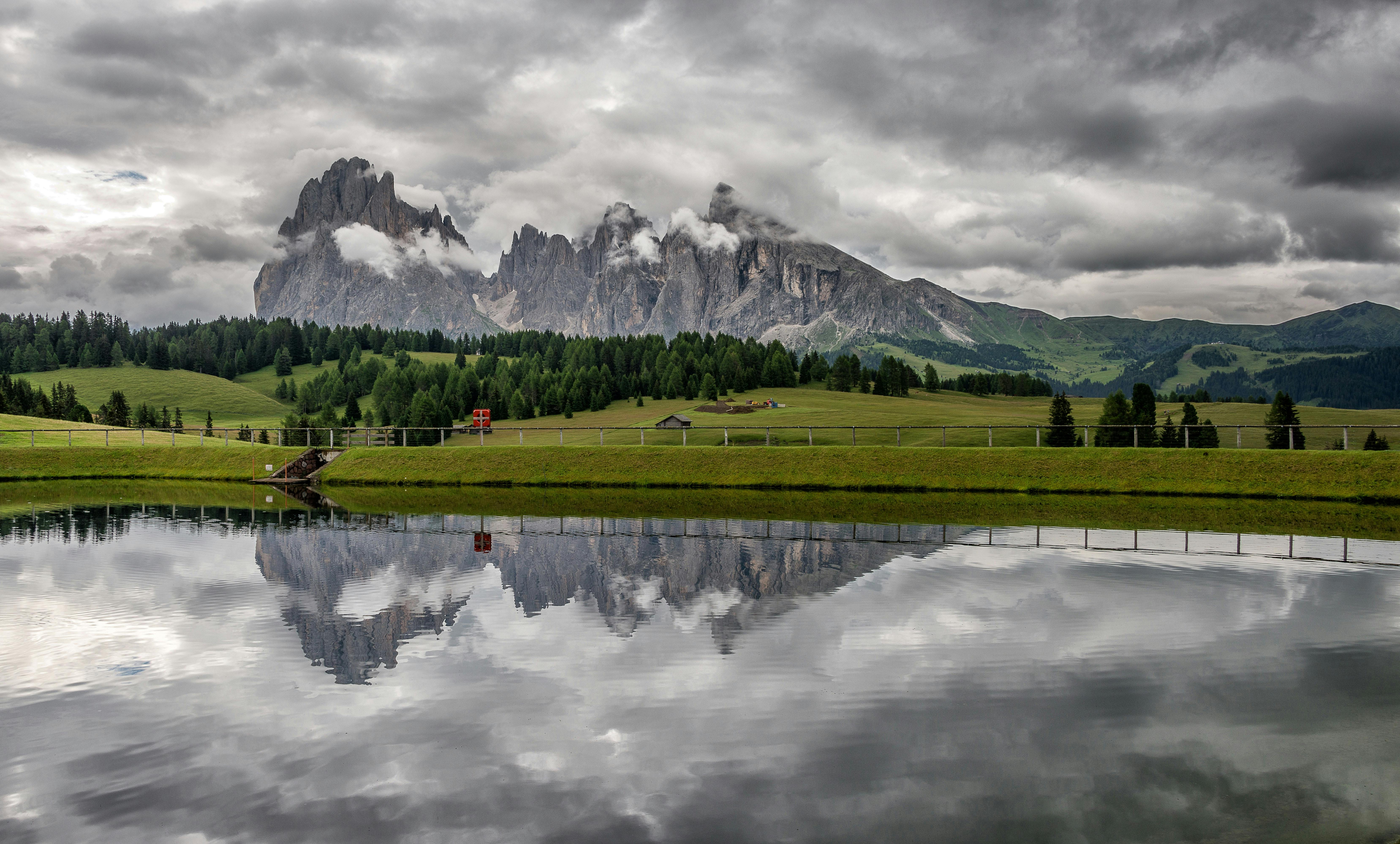
Tranquil lake reflecting the Dolomites in Selva di Val Gardena on a cloudy day. · Krivec Ales

The Italian Alps run in a great arc across the country's northern border, and the towns tucked into their valleys are as varied as the peaks above them. In South Tyrol you hear German over breakfast and eat speck and canederli; in Aosta you switch to French and dig into fonduta; in the Dolomites you crane your neck at pale limestone towers that turn rose-pink at sunset.

This list leans on the towns that combine real beauty with the practical things a traveler needs: walkable old centers, mountain access by cable car or trail, and good food worth lingering over. Some are glossy ski resorts, others are quiet stone-and-fresco villages that most tourists drive straight past.

Use it to build a trip around one valley or to string several together by car. Each entry below tells you what makes the place special, what to eat, who it suits, and how to reach it from the nearest gateway city.

1
Cortina d'Ampezzo
Cortina d'AmpezzoDolomites, Veneto, about 2.5 hours north of Venice Google
Cortina sits in a sun-filled bowl ringed by some of the most famous peaks in the Dolomites: the Tofane, Cristallo, and the jagged Cinque Torri. The pedestrian Corso Italia is lined with boutiques and cafes under the bell tower of the parish church, and the town carries an unmistakable glamour as host of the 2026 Winter Olympics alpine events. Beyond the shopping, the real draw is access: cable cars and chairlifts climb straight from town into hiking and ski terrain, and nearby Lago di Sorapis and the Cinque Torri rock formations are among the most photographed spots in the range. Come for the scenery and the buzz, and stay for the long lunches on sun terraces with the Tofane glowing overhead.
  • Sunset over the Tofane and Cristallo peaks
  • Hiking to the turquoise Lago di Sorapis
  • The Cinque Torri rock towers and WWI open-air museum
  • Aperitivo on Corso Italia
Best for: skiers, hikers, and a touch of alpine glamour
Getting there: About 2.5 hours by car from Venice; Cortina Express and ATVO run direct buses from Venice Mestre and Marco Polo airport (roughly 2.5-3 hours).
2
Ortisei (St. Ulrich)
Ortisei (St. Ulrich)Val Gardena, South Tyrol, about 40 minutes east of Bolzano Google
Ortisei is the storybook heart of Val Gardena, a pedestrian-friendly town of pastel facades, painted wooden balconies, and a woodcarving tradition that goes back centuries. From the center, two lift systems whisk you up: one to the Alpe di Siusi, Europe's largest high-altitude meadow, the other toward the Seceda ridge with its tilted, knife-edge peaks. The local Ladin culture survives in language, food, and craft, and shop windows are full of hand-carved figures. It's an ideal base for hikers who want serious mountains without giving up a comfortable, walkable town to come home to.
  • Cable car to the Alpe di Siusi meadow
  • The dramatic Seceda ridgeline
  • Ladin woodcarving workshops and Val Gardena museum
  • Speck, canederli, and apple strudel in town
Best for: hikers and families wanting a scenic, easy base
Getting there: About 40 minutes by car from Bolzano; SAD buses connect Bolzano and the Val Gardena valley, around 1 to 1.5 hours.
3
Castelrotto (Kastelruth)
Castelrotto (Kastelruth)South Tyrol, about 25 minutes northeast of Bolzano Google
Castelrotto is the kind of South Tyrolean village that makes you stop the car: a frescoed main square, a soaring baroque bell tower, and flower-filled balconies beneath the long ridge of the Sciliar (Schlern) massif. It sits just below the Alpe di Siusi and works as a quieter, more traditional alternative to the bigger resort towns. Wander the cobbled lanes, sample local wines from the surrounding hills, and watch the village fill with traditional dress during summer festivals like the Oswald von Wolkenstein Ritt. The pace is gentle, the views constant, and the food is hearty South Tyrolean comfort.
  • The frescoed central square and bell tower
  • Views of the Sciliar massif
  • Gateway to the Alpe di Siusi
  • Local Alto Adige wines and farm inns
Best for: a peaceful, traditional alpine stay
Getting there: About 25 minutes by car from Bolzano; regular SAD buses run from Bolzano (roughly 45 minutes).
4
Bolzano (Bozen)
Bolzano (Bozen)South Tyrol, about 2 hours north of Verona Google
Bolzano is the cultural capital of South Tyrol and the natural gateway to the Dolomites, a city where Italian and Austrian worlds meet under arcaded streets. The Gothic Walther Square, the medieval Portici arcade, and the daily produce market on Piazza delle Erbe give it real urban energy, while the South Tyrol Museum of Archaeology houses Otzi, the 5,300-year-old Iceman mummy. Three separate cable cars climb from the city to high villages and vineyards, so you can swap espresso for alpine air within minutes. It makes a smart base for travelers who want mountains by day and a proper town by night.
  • Otzi the Iceman at the archaeology museum
  • Piazza delle Erbe market and the arcaded Portici
  • Renon (Ritten) cable car to high pastures
  • Local Lagrein and Gewurztraminer wines
Best for: first-timers wanting a city base with mountain access
Getting there: On the main Verona-Brennero rail line; frequent trains from Verona (about 1.5-2 hours) and Innsbruck.
5
Courmayeur
CourmayeurAosta Valley, at the foot of Mont Blanc, about 1.5 hours northwest of Turin Google
Courmayeur sits directly beneath Mont Blanc, the highest peak in the Alps, and feels closer to Chamonix in spirit than to the Dolomites. The car-free Via Roma is a parade of stone buildings, wine bars, and mountaineering shops, all in the shadow of monumental granite walls. The headline experience is the Skyway Monte Bianco, a rotating cable car that climbs to Punta Helbronner at 3,466 meters for a 360-degree glacier panorama. Add Aosta Valley cooking (fonduta, polenta, and Fontina cheese) and you have one of Italy's most dramatic mountain towns.
  • Skyway Monte Bianco rotating cable car
  • Views of the Mont Blanc massif
  • Car-free Via Roma for dining and shopping
  • Aosta Valley specialties like fonduta and Fontina
Best for: high-mountain scenery and serious alpine atmosphere
Getting there: About 1.5 hours by car from Turin via the A5; SAVDA buses connect Aosta and Courmayeur, with onward connections from Turin and Milan.
6
Bormio
BormioValtellina, Lombardy, about 2.5 hours northeast of Milan Google
Bormio is a thousand-year-old spa town where a medieval core meets one of Italy's great mountain roads. Its old quarter, Combo, is a tangle of stone alleys, frescoed churches, and the slender Kuerc tower, while natural thermal springs that drew the Romans still feed the QC Terme Bagni di Bormio baths. The town sits at the foot of the Stelvio Pass, the famous hairpin climb into Stelvio National Park, and doubles as a respected ski resort in winter. Soak in open-air thermal pools with the peaks above, then wander out for pizzoccheri, the buckwheat pasta of the Valtellina.
  • Thermal baths at Bagni di Bormio
  • The medieval Combo old town
  • Driving or cycling the Stelvio Pass
  • Pizzoccheri and Valtellina reds like Sforzato
Best for: thermal-spa relaxation and epic mountain drives
Getting there: About 2.5-3 hours by car from Milan; trains to Tirano then a bus up the Valtellina (around 1 hour) reach Bormio.
7
Canazei
CanazeiVal di Fassa, Trentino, about 1 hour east of Bolzano Google
Canazei is the lively hub of the Val di Fassa, set deep in the Ladin-speaking heart of the Dolomites and surrounded by the Sella, Marmolada, and Sassolungo groups. Painted houses and geranium-draped balconies line the center, and from town the Belvedere cable car opens directly onto the Sella Ronda ski and hiking circuit. In summer it's a launchpad for the Pordoi and Sella passes and the Viel del Pan trail facing the Marmolada glacier; in winter it anchors one of the Dolomites' best-connected ski areas. It manages to feel both convivial and genuinely surrounded by giants.
  • The Sella Ronda lift circuit
  • Viel del Pan trail with Marmolada views
  • Pordoi Pass cable car to 2,950 meters
  • Ladin cuisine and mountain rifugi
Best for: skiers and hikers wanting Dolomite passes on the doorstep
Getting there: About 1 hour by car from Bolzano via the Val di Fassa; Trentino Trasporti buses run from Bolzano and Trento.
8
Glorenza (Glurns)
Glorenza (Glurns)Val Venosta, South Tyrol, about 1.5 hours west of Bolzano Google
Glorenza is one of the smallest walled towns in the Alps, a near-perfect ring of medieval ramparts, gate towers, and arcaded lanes in the upper Val Venosta. With barely 900 residents inside its 16th-century walls, it feels frozen in time, all stone archways, painted facades, and quiet courtyards far from the resort crowds. The surrounding valley is apple-and-apricot country, with cycle paths along the Adige and views toward the Ortles glaciers and nearby Stelvio National Park. Come here for atmosphere and authenticity rather than lifts and nightlife, perhaps as a day trip paired with the photogenic sunken church tower of Lake Resia just up the road.
  • The intact medieval town walls and gate towers
  • Arcaded lanes and frescoed facades
  • Cycling the Val Venosta apple country
  • The submerged bell tower of Lake Resia nearby
Best for: history lovers and travelers seeking quiet authenticity
Getting there: About 1.5 hours by car from Bolzano up the Val Venosta; reachable by the Vinschgau railway to Mals plus a short local bus.

Good to Know

When to go Mid-June to late September is prime hiking season, with lifts running and trails clear of snow. December to March is for skiing. Late June, when the high passes have reopened, is excellent for both scenery and fewer crowds.
Getting around A rental car gives you the most freedom for the Dolomites and Aosta Valley, where some villages have limited rail service. Where trains do run (Bolzano, Bormio via Tirano), they pair well with the dense regional bus network.
Guest cards and passes Many South Tyrol and Trentino lodgings include free guest cards (such as the Mobilcard or area DolomitiSupersummer cards) that cover buses, some trains, and lift discounts. Ask at check-in before buying tickets.
Two languages, two cuisines In South Tyrol, German is often the first language and the food is Austrian-leaning (speck, canederli, strudel); in the Aosta Valley you'll hear French and eat Fontina and fonduta. A few words of either go a long way.
Book mountain huts ahead If you want to overnight in a rifugio or eat at a popular high-altitude hut in summer, reserve in advance, as the best ones fill quickly in July and August.

The Italian Alps reward travelers who slow down and pick a valley rather than racing through. Whether you choose the pink-lit spires above Cortina, the woodcarvers' lanes of Ortisei, or the walled hush of Glorenza, each of these towns gives you mountains, food, and culture in a single, walkable package. Pick one as a base, add a cable car ride and a long lunch, and let the peaks do the rest.

Ready to book your trip?

Search Hotels
Search Homes

Traveling somewhere else?

Generate a custom itinerary