
The 8 Most Beautiful Small Towns in Vietnam

From lantern-lit riverbanks to misty mountain valleys, these are the small towns and villages that make Vietnam unforgettable.
Last updated June 22, 2026
The 8 Most Beautiful Small Towns in Vietnam
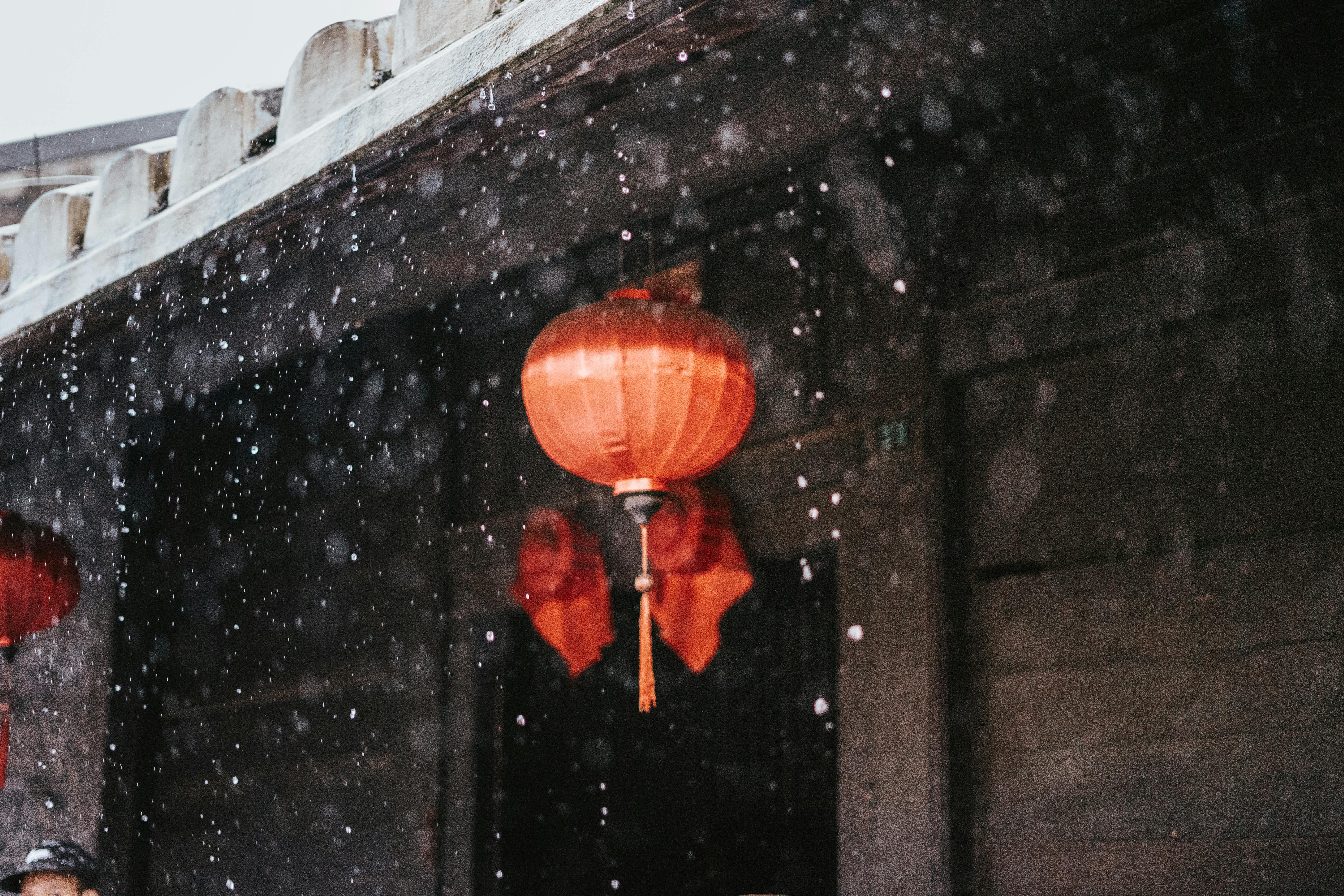
Red lanterns in Hội An, Vietnam with raindrops creating a serene atmosphere. · Dung NH Tia architects

Vietnam's big cities get the headlines, but its soul lives in the small towns: places where rice paddies glow green to the horizon, limestone karsts rise out of rivers, and a single street of tea-colored shophouses can feel like stepping back a century. These are the spots worth slowing down for, ideally with an overnight rather than a rushed day trip.

This list runs roughly best-first, balancing sheer visual drama with the kind of atmosphere that makes you cancel your onward bus. We have spread the picks across the country, from the karst country south of Hanoi to the mountain frontier near the Chinese border and the central coast, so you can string several together on a longer trip.

Each entry includes what makes the place special, the named sights and dishes worth your time, who it suits, and how to get there from the nearest hub city. Use it to build a route, not just to tick boxes.

1
Hoi An
Hoi AnCentral Vietnam, ~45 min from Da Nang Google
Hoi An is the prettiest town in Vietnam and arguably one of the most photogenic in Southeast Asia, a UNESCO-listed former trading port whose Old Town glows after dark with thousands of silk lanterns reflected in the Thu Bon River. The car-free center is a tight grid of ochre merchant houses, the wooden Japanese Covered Bridge, and Chinese assembly halls, best explored on foot or by bicycle at dawn before the crowds. It is also a tailoring capital and a serious food town, with regional specialties you won't find done as well anywhere else. Stay overnight to catch the lanterns and the morning market, and rent a bike out to An Bang Beach or the surrounding rice fields.
  • The Japanese Covered Bridge and lantern-lit Old Town at night
  • Cao lau noodles and white rose dumplings
  • Custom tailoring made in 24-48 hours
  • Cycling to An Bang Beach and the Tra Que herb village
Best for: first-timers, couples, and food lovers
Getting there: Fly into Da Nang, then a 45-minute taxi or shuttle south; many travelers base in Hoi An for several nights.
2
Sapa
SapaNorthwest highlands, ~5-6 hours from Hanoi Google
Sapa sits high in the Hoang Lien Son mountains, a former French hill station surrounded by some of the most spectacular terraced rice valleys on earth. The town itself has grown busy and built-up, but the reason to come is just outside it: trekking down through the paddies to Hmong and Red Dao villages like Lao Chai and Ta Van, often guided by local women who know every path. In late September the terraces turn gold before harvest, while spring brings flooded mirror-like fields. Fanispan, Vietnam's highest peak, looms above and is reachable by cable car for those who want the view without the climb.
  • Terraced rice valleys around Muong Hoa
  • Homestay trekking to Lao Chai and Ta Van villages
  • The Fansipan cable car and summit
  • Saturday hill-tribe market activity
Best for: trekkers and mountain scenery
Getting there: Overnight train or sleeper bus from Hanoi to Lao Cai, then a short transfer up; or a direct 5-6 hour express bus on the new highway.
3
Tam Coc (Ninh Binh)
Tam Coc (Ninh Binh)~1.5-2 hours south of Hanoi Google
4.5 · 17,569 reviews
Often called "Halong Bay on land," the Tam Coc and Trang An landscape around Ninh Binh is a maze of limestone karsts rising straight out of flooded rice fields and slow green rivers. The signature experience is a small rowboat threaded through three river caves, often rowed with the boatperson's feet, past paddies that flush gold in early summer. Climb the 500 steps up Mua Cave viewpoint for the postcard panorama, and visit Hoa Lu, Vietnam's 10th-century capital, nearby. It makes an easy day trip from Hanoi, but an overnight lets you cycle the back roads at sunset.
  • Rowboat trip through the Tam Coc river caves
  • The Mua Cave summit viewpoint
  • Trang An's UNESCO karst boat route
  • Hoa Lu ancient capital temples
Best for: dramatic scenery and easy day trips from Hanoi
Getting there: Train or bus from Hanoi to Ninh Binh in about 2 hours, then a short taxi; widely available as a guided full-day tour.
4
Dong Van
Dong VanHa Giang province, far northern frontier Google
Dong Van is the heart of Vietnam's most jaw-dropping mountain country, a remote town on the Ha Giang Loop where the Dong Van Karst Plateau (a UNESCO Global Geopark) meets the Chinese border. The old quarter has a cluster of century-old stone-and-clay houses and a lively Sunday market drawing Hmong, Tay, and Lo Lo people in full dress. Most travelers arrive by motorbike or as a passenger on the loop, riding the heart-stopping Ma Pi Leng Pass above the turquoise Nho Que River. It is rugged, cold at altitude, and unforgettable.
  • Riding the Ma Pi Leng Pass
  • A boat or kayak on the Nho Que River canyon
  • Dong Van's old stone houses and Sunday market
  • The Lung Cu flag tower at the northernmost point
Best for: adventurers and motorbike road-trippers
Getting there: Bus from Hanoi to Ha Giang city (~6-7 hours), then ride the multi-day loop; easiest as a guided small-group tour with an "easy rider" driver.
5
Phong Nha
Phong NhaQuang Binh province, central Vietnam Google
4.7 · 929 reviews
Phong Nha is a laid-back riverside village that happens to sit beside the greatest concentration of caves on the planet, inside Phong Nha-Ke Bang National Park. Son Doong, the world's largest cave, is here (by permit only), but you don't need it: Paradise Cave and the boat-accessed Phong Nha Cave are spectacular and far easier to reach. Between caving, the town is all jungle-backed rice fields, duck farms, and easygoing riverside bars run by a tight expat-and-local community. Rent a bicycle and ride the Bong Lai valley for buffalo, hammocks, and home-cooked lunches.
  • Paradise Cave's vast stalactite chambers
  • Boat trip into Phong Nha Cave
  • The Dark Cave zipline and mud bath
  • Cycling the Bong Lai valley farms
Best for: caving, nature, and slow travel
Getting there: Train or bus to Dong Hoi, then a 45-minute transfer; overnight trains connect from Hanoi and Hue.
6
Mai ChauHoa Binh province, ~3-4 hours west of Hanoi Google
Mai Chau is a gentle, green valley of White Thai stilt-house villages set among rice paddies and low limestone hills, a far calmer alternative to Sapa and much closer to Hanoi. The pleasure here is simple: cycling flat lanes between villages like Lac and Pom Coong, sleeping in a traditional stilt-house homestay, and watching the valley change color with the rice. Evenings often bring communal dinners with rice wine and Thai dancing. It is the easiest place near the capital to feel genuinely rural without a long journey.
  • Cycling between Lac and Pom Coong villages
  • Stilt-house homestays with home-cooked dinners
  • The valley viewpoint from the Thung Khe Pass
  • Locally woven textiles
Best for: a relaxed overnight close to Hanoi
Getting there: Bus or private car from Hanoi in about 3-4 hours over the scenic Thung Khe Pass.
7
Bac HaLao Cai province, ~3 hours from Sapa Google
Bac Ha is a small highland town famous for its riotous Sunday market, the largest and most colorful in northern Vietnam, where Flower Hmong people in dazzling embroidered dress trade everything from buffalo to brocade. The surrounding hills are gentler and less developed than Sapa, dotted with adobe villages, plum orchards, and the curious French-era Hoang A Tuong Palace. Come Saturday night, stay over, and hit the market early before the tour vans arrive. It rewards travelers who want culture and color over big-name sights.
  • The Sunday Flower Hmong market
  • Hoang A Tuong Palace
  • Plum-blossom valleys in spring
  • Trekking to Ban Pho village
Best for: culture seekers and photographers
Getting there: Bus from Lao Cai (about 2.5 hours) or a combined trip from Sapa; many visit on a Sunday excursion.
8
Cat Ba Town
Cat Ba TownCat Ba Island, off Haiphong in the northeast Google
4.4 · 1,281 reviews
Cat Ba is the largest island in the Halong-Lan Ha Bay area and the gateway to Lan Ha Bay, which delivers the same emerald water and karst towers as Halong with a fraction of the boat traffic. The town strings along a harbor full of floating restaurants and fishing boats, while the island itself holds a national park, jungle trails, and quiet beaches. Use it as a base for an overnight cruise or day boat through Lan Ha's hundreds of islets, with kayaking into hidden lagoons. It is the most scenic place in the north to combine beach, boat, and karst.
  • Kayaking through Lan Ha Bay lagoons
  • Cat Ba National Park trekking
  • Boat trips to less-touristed karst clusters
  • Fresh seafood at the harborfront
Best for: a karst-and-beach base away from the Halong crowds
Getting there: Bus-and-ferry combo from Hanoi (~3.5-4 hours via Haiphong), then boat trips depart from the harbor.

Good to Know

When to go The north (Sapa, Ha Giang, Bac Ha) is best from September to November for golden rice and clear skies, while central towns like Hoi An and Phong Nha are driest from February to August. Avoid the central coast in October-November, when typhoons and flooding peak.
Getting around Vietnam's overnight sleeper buses and trains connect most of these towns cheaply, but for mountain routes like the Ha Giang Loop, hire a guided "easy rider" driver unless you are a confident motorbike rider.
Book ahead Homestays in Mai Chau and Sapa, Ha Giang Loop tours, and Phong Nha's permit caves fill up fast in peak season. Reserve cruises and multi-day loops a week or more in advance.
Money Carry cash in smaller towns and rural markets, where cards are rarely accepted; ATMs exist in Sapa and larger hubs but can be scarce in places like Dong Van.
Pack layers Northern mountain towns get genuinely cold and foggy, especially at night and in winter, while the central coast stays warm year-round, so plan for very different climates on one trip.

Vietnam rewards the traveler who trades a checklist for a slower route, lingering an extra night where the rice fields turn gold or the lanterns flicker on the river. Pick two or three of these towns, link them by train, bus, or a mountain loop, and you will see the country at its most beautiful. Start mapping your route now, and book the homestays and cruises before the season fills up.

Ready to book your trip?

Search Hotels
Search Homes

Traveling somewhere else?

Generate a custom itinerary