
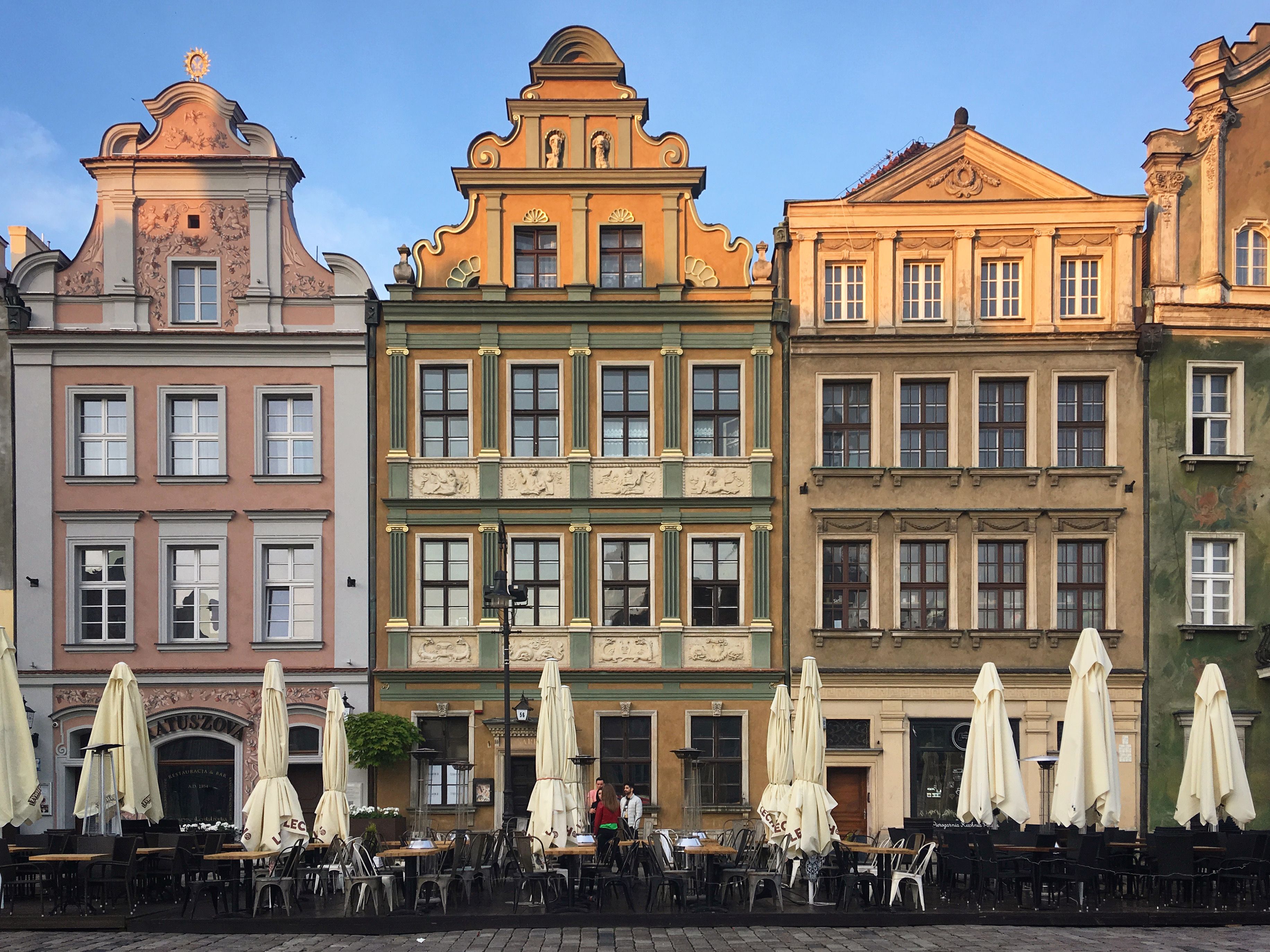
Colorful historic buildings in Old Market Square, Poznań, Poland captured during a sunny day.
List · Poland 8 picks

The 8 Most Beautiful Small Towns in Poland (and How to Reach Them)

From a Renaissance town frozen in the 16th century to a cliff-top artists' colony above the Vistula, these are the Polish small towns worth the detour.

Last updated July 5, 202610 min read
Top pick

Kazimierz Dolny is the best all-rounder for its riverside setting and artist-town charm; choose Zamosc for jaw-dropping Renaissance architecture, or Lanckorona if you want the quickest, quietest escape near Krakow.

Poland's big-hitters (Kraków, Wrocław, Gdańsk) get the headlines, but the country's small towns are where its Renaissance squares, walled medieval cores, and painted timber houses survive with barely a chain store in sight. Many escaped wartime destruction or were painstakingly rebuilt, and several carry UNESCO status for good reason.

This list ranks eight of the prettiest, best-first, weighing architecture, setting, atmosphere, and how rewarding each is to actually visit. Some are easy half-day trips from a major city; others are worth an overnight to catch them empty at dawn.

Every entry includes where it is, how to get there with rough times, and who it suits, so you can slot one into a wider Poland itinerary or build a slow country loop around a few.

Kazimierz Dolny1
Kazimierz Dolny Google
Lublin province, on the Vistula River, southeast Poland
This Renaissance river town has been a magnet for painters and writers for over a century, and it is easy to see why: honey-colored granaries line the Vistula, a sloping market square is anchored by the twin-towered parish church, and wooded hills rise on every side. Climb to the ruined castle and the Three Crosses Hill for the classic view over red rooftops and the river bend. The town is famous for its bread shaped like roosters (kogut) and cats, sold warm from bakeries around the square. Weekends draw crowds, so come midweek or stay overnight to have the cobbles to yourself at dusk.
  • Market square and the twin-towered parish church
  • Three Crosses Hill viewpoint over the Vistula
  • Rooster-shaped kogut bread from local bakeries
  • Renaissance granaries along the riverfront
Best for artists, romantic weekends, riverside walks
Getting there About 2.5 hours by car or bus from Warsaw (around 150 km); roughly 1 hour from Lublin by bus.
Zamosc2
Zamosc Google
Lublin province, southeast Poland
Nicknamed the 'Pearl of the Renaissance,' Zamosc was laid out from scratch in the 1580s by Italian architect Bernardo Morando as an ideal town, and its UNESCO-listed Old Town still follows that perfect grid. The Great Market Square is ringed by pastel arcaded merchant houses and crowned by a town hall with a dramatic fan of pink stairs. Wander the surviving bastion fortifications, the Armenian houses with carved facades, and the cathedral before an ice cream under the arcades. It feels more Italian than Polish, and its relative remoteness keeps mass tourism away.
  • Great Market Square and the arcaded Armenian houses
  • Town hall with its sweeping pink staircase
  • Star-shaped bastion fortifications
  • Zamosc Cathedral
Best for architecture lovers, history buffs, slow strollers
Getting there About 3.5 to 4 hours by car or train from Warsaw; roughly 1.5 hours from Lublin by bus or car.
Sandomierz3
Sandomierz Google
Swietokrzyskie province, on the Vistula, south-central Poland
Perched on a bluff above the Vistula, Sandomierz packs a remarkable amount into a compact Old Town: a Gothic cathedral with Byzantine-style frescoes, a graceful Renaissance town hall, and the 14th-century Opatow Gate you can climb for rooftop views. Below the streets runs an eerie Underground Tourist Route through medieval merchant cellars. The town is beloved in Poland as the setting for the long-running 'Father Matthew' TV series, which adds a gently nostalgic buzz to its squares. It is small enough to see in a day but charming enough to linger.
  • Opatow Gate and its rooftop panorama
  • Underground Tourist Route through merchant cellars
  • Gothic cathedral with medieval frescoes
  • Renaissance market square and town hall
Best for day-trippers, history buffs, families
Getting there About 2 hours by car from Krakow (around 170 km); roughly 3 hours by car or bus from Warsaw.
Chelmno4
Chelmno Google
Kuyavian-Pomeranian province, near Torun, northern Poland
Chelmno bills itself as the 'City of Lovers' thanks to a relic said to be of St. Valentine kept in its parish church, and it leans into the theme every February. Beyond the romance, this is one of Poland's best-preserved medieval towns, still wrapped in nearly complete brick walls and studded with soaring Gothic churches and a fine Renaissance town hall. The regular grid of streets dates to the 13th century and has barely changed. It is refreshingly untouristed, making it a peaceful stop when paired with nearby Torun.
  • Near-complete medieval town walls
  • Renaissance town hall on the market square
  • St. Valentine relic in the parish church
  • Cluster of Gothic brick churches
Best for couples, quiet wanderers, medieval history fans
Getting there About 40 minutes by bus or car from Torun; roughly 3 hours from Warsaw by car.
Zakopane5tours from $44.14
Zakopane Google
Tatra Mountains, southern Poland
Poland's winter capital sits at the foot of the Tatra Mountains and mixes alpine scenery with a distinctive regional culture. The pedestrian Krupowki street bustles with grilled oscypek sheep cheese, highlander music, and craft stalls, while the Gubalowka funicular delivers a panorama of jagged peaks. Architecture fans should seek out the ornate wooden 'Zakopane style' villas and the old wooden church at Koscieliska. Use it as a base for hikes to Morskie Oko lake or a soak in the geothermal thermal baths nearby.
  • Gubalowka funicular and mountain panorama
  • Krupowki street and grilled oscypek cheese
  • Zakopane-style wooden architecture
  • Day hikes to Morskie Oko lake
Best for hikers, mountain lovers, food and folk culture
Getting there About 2 hours by bus or car from Krakow (around 110 km); frequent direct buses run all day.
Paczkow6
Paczkow Google
Opole province, Lower Silesia, southwest Poland
Often called the 'Polish Carcassonne,' little Paczkow is encircled by some of the best-preserved medieval defensive walls in the country, still ringed by 19 of its original towers and gates. Inside, a tidy market square, a fortified Gothic church, and quiet lanes make it feel centuries removed from modern Poland. It sees few foreign visitors, so you can walk the walls and squares in near solitude. Pair it with the nearby castle at Otmuchow or the Klodzko fortress for a full Lower Silesian day.
  • Nearly intact medieval town walls and towers
  • Fortified Gothic Church of St. John
  • Compact market square
  • Easy add-on to Otmuchow and Klodzko
Best for off-the-beaten-path travelers, medieval history fans
Getting there About 1.5 to 2 hours by car or train from Wroclaw (around 100 km).
Frombork7
Frombork Google
Warmia, on the Vistula Lagoon, northern Poland
This tiny cathedral town on the Vistula Lagoon is forever tied to Nicolaus Copernicus, who lived and worked here and is buried in its Gothic cathedral. The fortified Cathedral Hill complex, with its planetarium, tower, and museum, crowns the town and looks out over calm lagoon waters. It is peaceful and low-key, ideal for a reflective half-day and a lagoon-side lunch. The setting, red-brick walls against blue water, is quietly beautiful and rarely crowded.
  • Fortified Cathedral Hill and Copernicus's tomb
  • Copernicus Museum and planetarium
  • Views over the Vistula Lagoon
  • Climb the cathedral bell tower
Best for history and astronomy buffs, quiet days out
Getting there About 1.5 hours by car or train from Gdansk; roughly 1 hour from Elblag.
Lanckorona8
Lanckorona Google
Lesser Poland, near Krakow, southern Poland
One of the closest escapes from Krakow, Lanckorona is a hillside village famous for its rows of 19th-century wooden houses with wide overhanging eaves, arranged around a sloping market square. It has long attracted artists and craftspeople, and its cafes and galleries give it a bohemian, unhurried feel. Walk up to the ruined castle and the surrounding forest paths for views over the Beskid foothills. It is small enough for an afternoon but perfect for a slow coffee and a wander.
  • Sloping square lined with wooden houses
  • Ruined 14th-century castle above the village
  • Artist studios and galleries
  • Forest walks in the Beskid foothills
Best for a quick escape from Krakow, artists, slow travelers
Getting there About 45 minutes to 1 hour by car or bus from Krakow (around 40 km).

Want these spots worked into your trip?

We'll build a custom Poland itinerary around the places you pick.

Generate itinerary
Good to know

Before you go

Getting aroundPoland's small towns are easiest by car, which lets you link several in a loop. Buses (including operators like FlixBus and regional PKS lines) and trains reach most of these towns, but rural connections can be sparse on weekends, so check timetables in advance.
When to goLate spring (May, June) and early autumn (September) bring warm weather and thin crowds. Kazimierz Dolny and Zakopane are busiest on summer weekends and holidays; visit midweek or stay overnight for calmer streets.
MoneyPoland uses the zloty (PLN), not the euro. Cards are widely accepted, but carry some cash for small-town bakeries, market stalls, and rural bus fares.
Pace yourselfMost of these towns are walkable in a half-day, but the joy is in lingering over an ice cream on the square or a lagoon-side lunch. Combine two nearby towns rather than rushing five in a day.

Poland rewards travelers who slow down and head for the small squares: a rooster-shaped loaf in Kazimierz Dolny, pink stairs in Zamosc, oscypek cheese under the Tatras. String two or three of these towns together with a rental car or a few well-timed trains, and you will see a quieter, older Poland the big cities only hint at. Pick your base, plot a loop, and start planning.

Frequently asked questions

Which is the most beautiful small town in Poland?
Kazimierz Dolny is widely considered the prettiest all-rounder for its Vistula riverside setting, Renaissance granaries, and artist-town atmosphere. For pure architecture, Zamosc and its UNESCO-listed Renaissance square are the strongest rival.
Which small Polish town is easiest to visit from Krakow?
Lanckorona is the closest and quickest escape, about 45 minutes to an hour by car or bus. Zakopane (around 2 hours) and Sandomierz (around 2 hours) are also comfortable day trips from Krakow.
Are Poland's small towns worth an overnight stay?
Yes, especially Kazimierz Dolny, Zamosc, and Zakopane, which fill with day-trippers midday but empty out beautifully in the evening and early morning. Staying over lets you photograph the squares and walls without crowds.
Which Polish town has the best-preserved medieval walls?
Paczkow, nicknamed the 'Polish Carcassonne,' has some of the most complete medieval defensive walls in the country, still ringed by numerous towers and gates. Chelmno in the north also retains near-complete walls.
How do I get to Zamosc from Warsaw?
Zamosc is about 3.5 to 4 hours from Warsaw by car or direct train. It sits in the far southeast, so it is best combined with Lublin (about 1.5 hours away) rather than rushed as a single day trip.
Plan with MagicTrips

Build your own Poland trip

Tell us how many days, your budget, and what you're into. We'll turn it into a custom, day-by-day Poland itinerary.

Ready to book your stay?

Hotels
Homes

Traveling somewhere else?

Generate a custom itinerary