
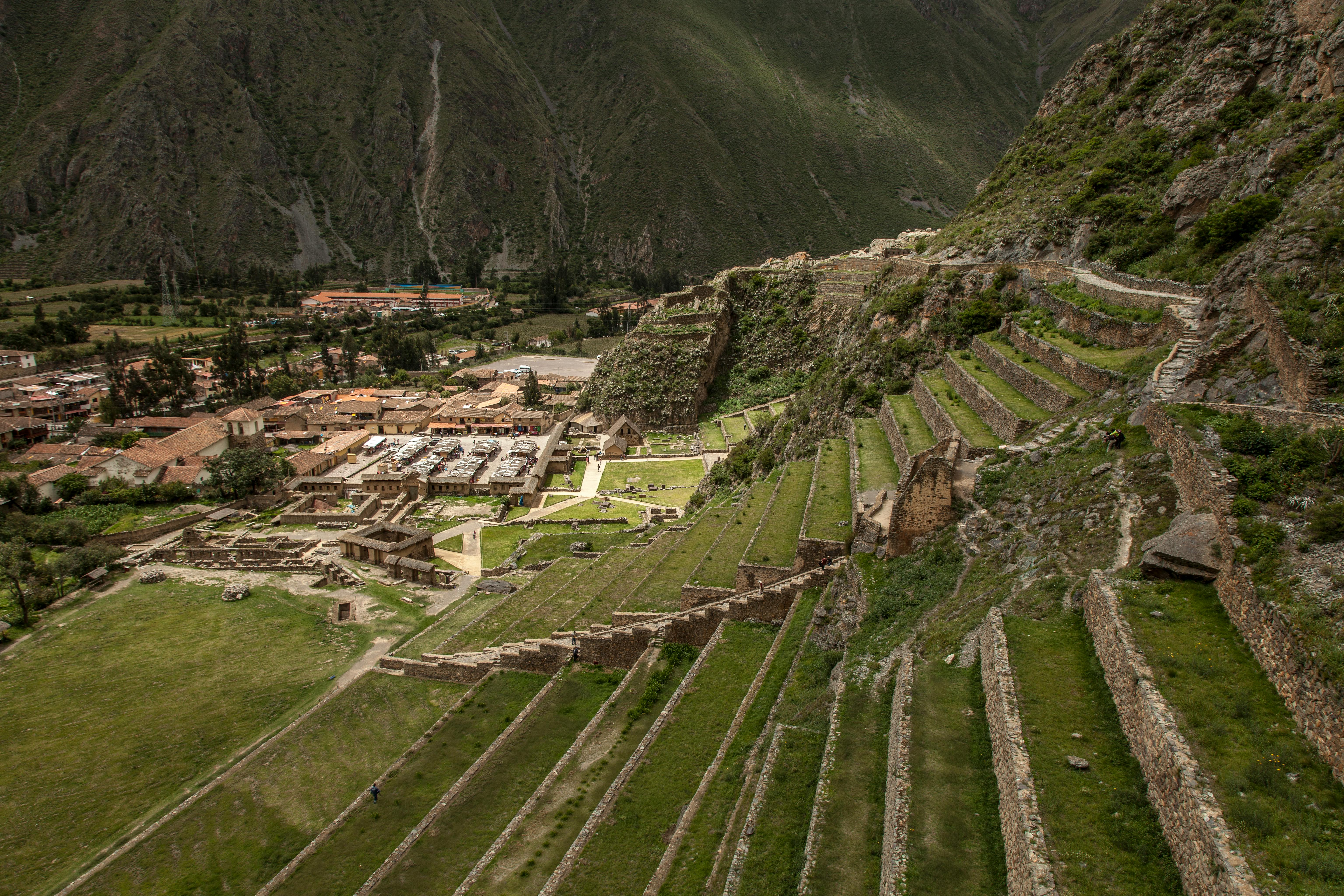
Explore the ancient Incan terraces of Ollantaytambo in Peru, captured in a stunning aerial view.
List · Peru 8 picks

The 8 Most Beautiful Small Towns in Peru (and How to Reach Each One)

Beyond Machu Picchu and Cusco, Peru's small towns hold living Inca streets, a desert oasis, colonial plazas, and cloud-forest markets. Here are the eight most beautiful, ranked, with how to get to each.

Last updated July 2, 202611 min read
Top pick

Ollantaytambo is the best all-rounder, a living Inca town with grand ruins and the train to Machu Picchu; pick Huacachina for pure desert wow on a Lima day trip, or Chachapoyas if you want mountains and ruins without the crowds.

Peru's headline sights are famous for good reason, but its small towns are where the country feels most alive: cobbled Inca lanes still carrying water in their original channels, a palm-ringed lagoon deep in the dunes, and highland plazas ringed by white-stone churches. Each of these places rewards an overnight far more than a rushed photo stop.

This list ranks eight of the most beautiful, spread across the country from the Sacred Valley near Cusco to the northern beaches and the cloud forests of Amazonas. For each you get the standout things to see and eat, the vibe, who it suits, and concrete directions from the nearest hub city.

Distances in Peru are big, so treat the hub cities (Cusco, Lima, Arequipa, Trujillo) as your launch points and build a route around two or three of these towns rather than trying to see them all.

Ollantaytambo1tours from $139
Ollantaytambo Google
Sacred Valley, about 90 minutes from Cusco
Ollantaytambo is the most complete surviving example of Inca town planning, and you feel it the moment you walk its grid of narrow cobbled streets where original stone canals still run with water. Above town, the terraced fortress climbs the hillside to the Temple of the Sun, six enormous pink granite monoliths hauled from a quarry across the valley. It doubles as the main railhead for Machu Picchu, so the town buzzes by day and empties by evening, when the terraces glow and the plaza cafes fill with returning trekkers. Stay overnight to have the ruins almost to yourself at opening.
  • Climbing the terraced fortress to the Temple of the Sun
  • Wandering the original Inca streets of the Qosqo Ausaray quarter
  • Catching the train to Machu Picchu from the station
  • Chicha and fresh trout in a plaza-side restaurant
Best for history lovers and Machu Picchu-bound travelers
Getting there About 90 minutes by colectivo or car from Cusco via Urubamba, or on any Sacred Valley day tour
Písac2
Písac Google
Sacred Valley, about 45 minutes from Cusco
Písac pairs a lively colonial town below with a spectacular Inca complex on the ridge above, where curved agricultural terraces fan across the mountainside and cliff tombs pock the far slope. The town square hosts one of the Andes' best-known artisan markets, busiest on Sunday, Tuesday and Thursday, with alpaca textiles, silver, and stacks of local bread from clay hornos. It has become a magnet for wellness travelers, so you will find good vegetarian cafes and ceremony retreats alongside the traditional stalls. Go early to hike the terraces before the tour buses arrive from Cusco.
  • The tiered Inca terraces and Intihuatana temple above town
  • The artisan and produce market on the main plaza
  • Empanadas from the traditional wood-fired ovens
  • Views over the Urubamba River from the ruins
Best for market shoppers and a gentle first Sacred Valley stop
Getting there About 45 minutes by colectivo from Cusco's Calle Puputi, or on a Sacred Valley tour
Chinchero3
Chinchero Google
Sacred Valley, about 45 minutes from Cusco
Perched at 3,760 meters on the plateau between Cusco and the valley floor, Chinchero is the region's weaving heartland and one of its prettiest highland villages. An adobe colonial church built on Inca foundations sits above a broad plaza, its interior a riot of painted ceilings, and the surrounding terraces drop toward snow peaks on clear days. Women's weaving cooperatives here demonstrate the whole process, from washing raw wool with soapberry root to dyeing with cochineal and native plants. It stays quieter and more traditional than Písac, and the Sunday market feels genuinely local.
  • Live natural-dye weaving demonstrations at a cooperative
  • The colonial church with painted interior on Inca walls
  • The Sunday market and Inca terraces
  • Panoramas toward the Vilcabamba range
Best for textile lovers and photographers
Getting there About 45 minutes by colectivo from Cusco toward Urubamba, or on a Sacred Valley tour
Huacachina4tours from $55
Huacachina Google
Ica region, about 4.5 hours south of Lima
Huacachina is a genuine desert oasis, a natural lagoon fringed with palms and encircled by some of the tallest sand dunes in South America. The whole village wraps around the water in a few hundred meters, so days revolve around climbing a dune for sunset, racing across the sand in a dune buggy, and sandboarding down the slopes. It is touristy and small, but the sight of green water and palms marooned in an endless desert is unlike anywhere else in Peru. Pair it with the Ballestas Islands and a pisco tasting near Ica for a classic day out from Lima.
  • Dune buggy ride and sandboarding at sunset
  • Sunset from the top of the highest dune
  • Paddle boats on the lagoon
  • Pisco tasting at nearby Ica vineyards
Best for adventure seekers and a dramatic Lima day trip
Getting there About 4.5 hours by bus from Lima to Ica, then 10 minutes by taxi, or on a full-day Paracas and Huacachina tour
Chivay5
Chivay Google
Colca Canyon, about 3.5 hours from Arequipa
Chivay is the friendly gateway to the Colca Canyon, one of the world's deepest, and the base for seeing Andean condors ride the morning thermals at the Cruz del Condor lookout. The town itself is a tidy highland grid with a stone church and a busy market, ringed by pre-Inca terraces that still climb the valley walls in green steps. After a day on the rim, soak in the La Calera hot springs just outside town, fed by the volcanic ground. The drive in over the 4,910-meter Patapampa pass, dotted with vicuñas and volcanoes, is half the reward.
  • Condors soaring at Cruz del Condor viewpoint
  • La Calera thermal baths outside town
  • Ancient agricultural terraces of the Colca Valley
  • The high pass and vicuñas on the drive from Arequipa
Best for condor watching and Andean scenery
Getting there About 3.5 hours by bus or car from Arequipa over the Patapampa pass
Chachapoyas6
Chachapoyas Google
Amazonas region, northern Peru
Chachapoyas is a graceful colonial town of whitewashed walls and wooden balconies, and the base for exploring one of Peru's most underrated ancient sites without the crowds of Cusco. Nearby Kuelap is a vast stone citadel of the cloud-people culture, ringed by 20-meter walls and reachable by cable car, while Gocta plunges more than 700 meters as one of the tallest waterfalls in the world. The surrounding cloud forest is lush and green, a complete contrast to the arid highlands further south. Distances from Lima are long, so give the region three or four days to do it justice.
  • The cliff-top citadel of Kuelap by cable car
  • Hiking to the base of Gocta waterfall
  • The sarcophagi of Karajia in their cliff niches
  • The mummies at the Leymebamba museum
Best for off-the-beaten-path travelers and ruins without crowds
Getting there About 1 hour by flight from Lima to Jaén then 3.5 hours by road, or a long overnight bus
Máncora7
Máncora Google
Piura region, far north coast
Máncora is Peru's best-loved beach town, a stretch of warm Pacific water, surf breaks, and sand that stays sunny almost year-round thanks to its position near the equator. Days are for surfing the point break, swimming with sea turtles at nearby Ñuro, and eating just-caught ceviche and grilled fish at beachfront cevicherías. By night the town's bars and beach clubs give it the liveliest scene on the coast, though quieter boutique hotels sit just south toward Vichayito. It is a long haul from Lima, so most people fly to Tumbes or Piura and treat it as a beach reward after the mountains.
  • Surfing the Máncora point break
  • Snorkeling with sea turtles at Ñuro
  • Fresh ceviche and grilled fish on the beach
  • Sunset drinks at a beach bar
Best for surfers, beach lovers, and warm-weather relaxing
Getting there About 1.5 hours by flight from Lima to Tumbes or Piura, then 1 to 2 hours by road
Lampa8
Lampa Google
Puno region, about 1 hour from Juliaca
Nicknamed the Pink City for its rose-colored colonial buildings, Lampa is a quiet altiplano town that few travelers reach despite sitting close to Lake Titicaca. Its extraordinary church, La Inmaculada, holds a full-size replica of Michelangelo's Pietà and an underground crypt lined with bones, an unexpected treasure at nearly 4,000 meters. The streets are calm and photogenic, with stone bridges and a handsome plaza, and locals still craft ceramics and textiles. It makes a rewarding half-day detour if you are traveling between Cusco or Arequipa and Puno.
  • The pink La Inmaculada church and its Pietà replica
  • The bone-lined crypt beneath the church
  • Colonial stone bridge and quiet plaza
  • Local pottery workshops
Best for curious travelers and a quiet altiplano detour
Getting there About 1 hour by car from Juliaca airport, or a detour off the Arequipa to Puno route

Want these spots worked into your trip?

We'll build a custom Peru itinerary around the places you pick.

Generate itinerary
Good to know

Before you go

AltitudeMany of these towns sit above 3,000 meters (Chinchero, Chivay, Lampa). Spend a day or two acclimatizing in a hub like Cusco or Arequipa first, drink coca tea, and take it slow on arrival.
Getting aroundShared colectivos are the cheapest way between Sacred Valley towns from Cusco and run frequently. For long distances, comfortable overnight buses (Cruz del Sur, Oltursa) or short domestic flights save days of travel.
When to goThe dry season (May to September) brings the clearest skies in the highlands and the best condor and mountain views, though it is peak season. Máncora and the north coast are warm and sunny nearly year-round.
Book Machu Picchu aheadIf you base in Ollantaytambo, reserve Machu Picchu entry tickets and the train weeks in advance in high season, as both sell out and entry is by timed slot.
CashSmaller towns and markets often prefer cash in soles, and ATMs can be scarce or out of service. Carry enough for a few days, ideally in small bills for markets and colectivos.

Peru's small towns turn a highlights trip into something richer: an evening in an emptied Ollantaytambo, a sunrise over the Huacachina dunes, or condors circling the Colca rim before breakfast. Pick two or three that fit your route, give each an overnight, and let the country slow down around you. Build them into a Sacred Valley loop or a longer north-and-south journey, and the famous sights become just one chapter of the story.

Frequently asked questions

Which small town in Peru is best for a day trip?
From Cusco, Písac and Ollantaytambo are the easiest and most rewarding day trips, both under 90 minutes away and often combined on a single Sacred Valley tour. From Lima, Huacachina works as a long full-day trip, usually paired with Paracas and the Ballestas Islands.
How do you get to Ollantaytambo from Cusco?
Ollantaytambo is about 90 minutes from Cusco. Take a shared colectivo from Calle Pavitos via Urubamba, hire a private taxi, or visit as part of a Sacred Valley day tour. It is also the main train station for Machu Picchu.
Which is the most beautiful town in the Sacred Valley?
Ollantaytambo is the standout for its intact Inca street grid and dramatic terraced fortress, while Chinchero is the prettiest highland village for weaving and mountain views. Písac wins for its ridge-top ruins and famous artisan market.
Is Huacachina worth visiting?
Yes, if you want a genuine desert oasis experience. The lagoon, palms, and towering dunes are unlike anywhere else in Peru, and dune buggy rides and sandboarding at sunset are the highlights. It is small and touristy, so a single overnight or a day trip from Lima is enough.
What is the least crowded beautiful town in Peru?
Chachapoyas in the northern cloud forest and Lampa near Lake Titicaca see far fewer visitors than the Sacred Valley. Chachapoyas offers the Kuelap citadel and Gocta waterfall without the crowds, while Lampa is a quiet pink-hued colonial town most travelers never reach.
Plan with MagicTrips

Build your own Peru trip

Tell us how many days, your budget, and what you're into. We'll turn it into a custom, day-by-day Peru itinerary.

Ready to book your stay?

Hotels
Homes

Traveling somewhere else?

Generate a custom itinerary