
The 8 Best Small Towns Near Munich for a Bavarian Day Trip

From fairytale castle villages to lakeside retreats and medieval gems, these are the most rewarding small towns within easy reach of Munich.
The 8 Best Small Towns Near Munich for a Bavarian Day Trip
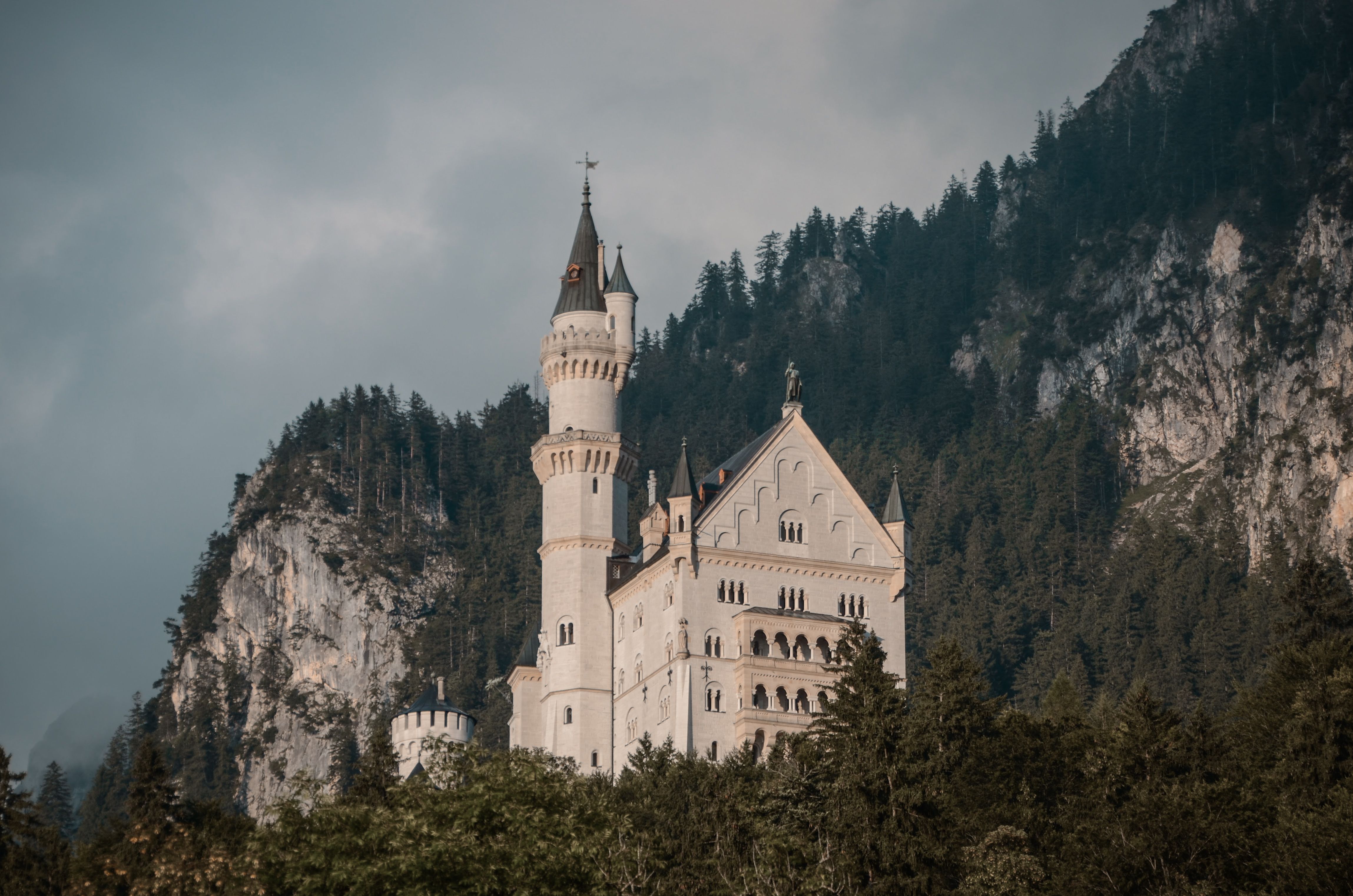
Stunning view of the iconic Neuschwanstein Castle nestled in the Bavarian mountains of Schwangau, Germany. · Adrian Limani

Munich sits at the center of one of the most scenic corners of Europe, with the Alps to the south, lake country on its doorstep, and medieval towns scattered across the rolling Bavarian countryside. You can be standing under a castle, beside a turquoise lake, or in a frescoed market square within two hours of leaving the city.

These eight towns are the ones worth the trip: each is a real, currently-open destination with its own character, whether that is violin-making, painted house facades, or a mountain railway to the highest point in Germany. Several are reachable by Deutsche Bahn regional trains on a Bayern-Ticket, while the more remote ones are easiest by guided coach.

We have ranked them best-first, but your ideal pick depends on what you want: alpine drama, a relaxed lakeside lunch, or a step back into the Middle Ages. Use the getting-there notes and the 'best for' tags to match each town to your day.

1
Fussen
FussenAbout 2 hours southwest of Munich Google
Fussen is the gateway to King Ludwig II's Neuschwanstein, the most photographed castle in Germany, and the neighboring Hohenschwangau. Beyond the castle crowds, the town itself rewards a wander: a pastel old town below the Hohes Schloss, the Lech river running an improbable shade of green, and the baroque St. Mang Basilica. Most visitors race up to the castle and leave, but staying for an evening means a quiet, beautifully set alpine town almost to yourself. It is the classic first day trip from Munich for good reason.
  • Neuschwanstein Castle and the Marienbrucke viewpoint
  • Hohenschwangau Castle, Ludwig's childhood home
  • Fussen old town and the Hohes Schloss
  • A walk along the Lech and Lechfall waterfall
Best for: first-time visitors and castle seekers
Getting there: Direct regional train from Munich Hbf to Fussen (about 2 hours), then bus 73/78 to the castles; or a guided coach day tour
2
Garmisch-Partenkirchen
Garmisch-PartenkirchenAbout 1 hour 20 minutes south of Munich Google
This twin market town at the foot of the Alps is Bavaria's premier mountain resort, and the launch point for the Zugspitze, Germany's highest peak at 2,962 meters. The two halves, Garmisch and Partenkirchen, were merged for the 1936 Winter Olympics, and the old Partenkirchen side keeps painted Lüftlmalerei facades and a pretty main street. Ride the cog railway and cable car to the Zugspitze summit, or take the gentler walk through the dramatic Partnachklamm gorge. It is the best base near Munich for serious alpine scenery without a long drive.
  • Zugspitze summit via cog railway and cable car
  • The Partnachklamm gorge walk
  • Painted houses of historic Partenkirchen
  • Eibsee, a clear alpine lake below the peak
Best for: mountain lovers and hikers
Getting there: Direct regional train from Munich Hbf (about 1 hour 20 minutes); the Zugspitzbahn continues from the station
3
Berchtesgaden
BerchtesgadenAbout 2 hours 15 minutes southeast of Munich Google
Tucked into a far corner of Bavaria against the Austrian border, Berchtesgaden is ringed by some of the country's most dramatic peaks. The headline trip is the boat ride across emerald Königssee to the red-domed St. Bartholomä chapel, where the cliffs throw back a trumpet echo played by the boatman. Above town sits the Kehlsteinhaus (Eagle's Nest), a former Nazi-era lodge now a mountaintop restaurant reached by a thrilling bus road and brass elevator, with sweeping views. The Salzbergwerk salt mine and the documentation center at Obersalzberg round out a full and varied day.
  • Königssee boat trip to St. Bartholomä
  • Eagle's Nest (Kehlsteinhaus) viewpoint
  • Berchtesgaden salt mine
  • Obersalzberg documentation center
Best for: lake and mountain scenery with history
Getting there: Train via Freilassing (about 2.5 hours) or a guided coach day tour that includes the Eagle's Nest
4
Rothenburg ob der Tauber
Rothenburg ob der TauberAbout 3 hours northwest of Munich, on the Romantic Road Google
Rothenburg is the most complete medieval walled town in Germany, a near-perfect ring of towers, gates, and half-timbered houses above the Tauber valley. Walk the covered ramparts, find the much-photographed Plönlein corner where two crooked lanes meet, and climb the Town Hall tower for a view over the rooftops. It is touristy, yes, but earns it: the Käthe Wohlfahrt year-round Christmas shop and a slice of Schneeball pastry are part of the fun. Going as a guided day tour along the Romantic Road makes the distance manageable.
  • The town wall walk and Plönlein corner
  • Käthe Wohlfahrt Christmas Village
  • Town Hall tower climb
  • Schneeball pastry and the Medieval Crime Museum
Best for: history fans and photographers
Getting there: By train it requires changes via Steinach (around 3 hours); easiest as a Romantic Road guided coach tour
5
Oberammergau
OberammergauAbout 1 hour 30 minutes southwest of Munich Google
Oberammergau is famous for two things: the Passion Play staged once a decade by townspeople (a tradition dating to 1634), and its Lüftlmalerei, the elaborate frescoes painted across house fronts depicting fairytales and religious scenes. The town is also a center for woodcarving, with workshops and shops full of intricate pieces. Nearby is Linderhof, the smallest and most lavish of Ludwig II's palaces, set in formal gardens with a gilded fountain and the curious Venus Grotto. It makes a relaxed, low-key stop paired with the castle.
  • Painted Lüftlmalerei house facades
  • Pilatushaus and woodcarving workshops
  • Linderhof Palace and its gardens nearby
  • The Passion Play theater
Best for: art, crafts, and a gentler castle visit
Getting there: Train from Munich via Murnau (about 1 hour 40 minutes); or a coach tour combining it with Neuschwanstein
6
Mittenwald
MittenwaldAbout 1 hour 45 minutes south of Munich Google
Pressed up against the Karwendel range right on the Austrian border, Mittenwald is one of the prettiest and least hectic alpine towns near Munich. It has been a violin-making center since the 17th century, and you can still visit workshops and a dedicated violin museum. The painted main street, with the towering church bell tower and the mountains rising directly behind it, is genuinely striking. Take the Karwendelbahn cable car up to a viewing platform for a panorama, or simply linger over coffee in the quiet old center.
  • Geigenbaumuseum (violin-making museum)
  • Painted houses along Obermarkt
  • Karwendelbahn cable car and viewing platform
  • St. Peter and Paul church and bell tower
Best for: a quieter alpine town and culture
Getting there: Direct regional train from Munich Hbf (about 1 hour 45 minutes)
7
Tegernsee
TegernseeAbout 1 hour south of Munich Google
Tegernsee is the lake that Munich locals escape to, a deep blue body of water framed by green hills and the first ridges of the Alps. The town on its eastern shore centers on a former Benedictine monastery that now houses the Herzogliches Bräustüberl, a vast and beloved beer hall where you carry your own Maß to a long wooden table. Walk or cycle the lakeshore path, take a steamer across to Rottach-Egern, or ride up the Wallberg for the view down over the water. It is the easiest feel-good day trip on this list.
  • Bräustüberl Tegernsee beer hall
  • Lakeshore promenade and a boat crossing
  • Wallberg cable car viewpoint
  • Lake swimming in summer
Best for: a relaxed lakeside day and beer garden lunch
Getting there: Bayerische Oberlandbahn (BRB) direct from Munich Hbf to Tegernsee (about 1 hour)
8
Wasserburg am Inn
Wasserburg am InnAbout 1 hour east of Munich Google
Wasserburg sits inside a tight loop of the Inn river, an old salt-trade town that few visitors think to seek out. Its compact center is a tidy grid of Inn-Salzach style houses with arcaded facades and painted gables, almost completely surrounded by water. Cross the bridge for the classic view of the town wrapped by the river, then wander the car-light lanes, the Gothic Frauenkirche, and the colorful town hall square. It is the kind of unhurried, authentic Bavarian town that makes a good half-day when you want to skip the crowds.
  • The riverside view from the Inn bridge
  • Arcaded Marienplatz and historic town hall
  • Frauenkirche and St. Jakob church
  • Riverside walk around the peninsula
Best for: an off-the-radar, crowd-free wander
Getting there: Train from Munich with a change (about 1 hour to 1 hour 15 minutes), or a short drive east on the A94

Good to Know

Train tickets For regional-train day trips, the Bayern-Ticket covers unlimited travel on regional trains and most local transport across Bavaria for a day, and gets cheaper per person in a group of up to five. It is valid from 9am on weekdays and from midnight on weekends.
When to go Late spring through early autumn is best for the lakes and mountains, with cable cars and lake steamers running full schedules. Winter turns Garmisch and Berchtesgaden into ski towns, and December brings Christmas markets to Rothenburg and beyond.
Book castles ahead Neuschwanstein and Linderhof tickets are timed and sell out, especially in summer. Reserve online in advance or take a guided tour that handles entry, since walk-up tickets are not guaranteed.
Start early The most popular spots (Neuschwanstein, Königssee, Rothenburg) get busy by late morning. An early train or tour departure means thinner crowds and better light for photos.

Munich's real draw is how quickly the city gives way to castles, lakes, and Alps. Pick one or two of these towns, match them to the season, and you have the makings of a perfect Bavarian day out. Sort the train times or book a guided tour, and you could be standing under Neuschwanstein or beside the Königssee by lunchtime tomorrow.

Ready to book your trip?

Search Hotels
Search Homes

Traveling somewhere else?

Generate a custom itinerary