
The 8 Best Small Towns Near Barcelona for a Perfect Day Trip

Medieval stone villages, whitewashed fishing ports, and clifftop coves, all within easy reach of the Catalan capital.
The 8 Best Small Towns Near Barcelona for a Perfect Day Trip
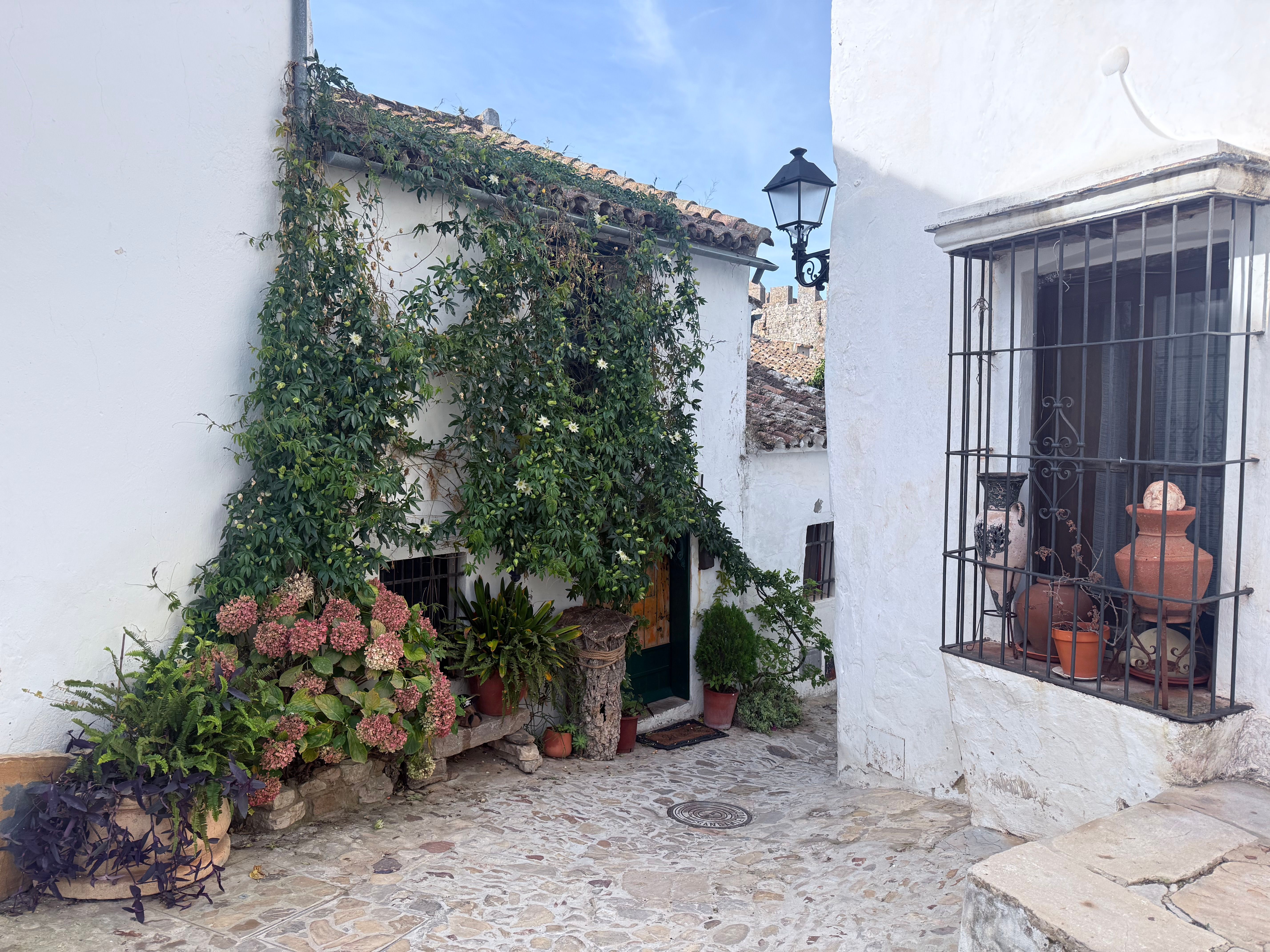
Quaint street in an Andalousian village adorned with plants and whitewashed buildings. · Sandrinne Élan

Barcelona is one of Europe's great cities, but some of Catalonia's best days out happen well beyond its boulevards. Within an hour or two you can trade the crowds of La Rambla for a medieval bridge over a green river, a beach framed by a 12th-century castle, or a fishing village so white it almost hurts to look at in July sun.

These eight towns are all real, reachable by train, bus, or a short drive, and worth far more than a quick photo stop. Some are coastal, some are deep in the hills, and a couple pair beautifully if you have a car and an early start.

Use this list to match the trip to your mood: seafood and Cubist history in Cadaques, dragon legends and stone alleys in Besalu, or an easy beach escape in Sitges that needs nothing more than a train ticket.

1
Sitges
Sitges35 km southwest of Barcelona, on the coast Google
The easiest beach escape from the city, Sitges packs 17 sandy beaches, a palm-lined promenade, and a tight whitewashed old town onto one walkable seafront. The landmark is the Sant Bartomeu i Santa Tecla church, perched above the water on a small rocky point that anchors every postcard. It is famously welcoming and stylish, with a strong LGBTQ+ scene, modernist mansions built by returning Cuban emigrants, and the Bacardi family museum tracing the town's rum-trade roots. Come for a long lunch of grilled fish, an afternoon swim, and a sunset glass of cava on the Passeig Maritim.
  • Sant Bartomeu i Santa Tecla church above the beach
  • Cau Ferrat modernist museum, once Santiago Rusinol's home
  • Xato salad and fresh seafood on the seafront
  • Beach-hopping along the Passeig Maritim
Best for: an easy beach day with no car needed
Getting there: Rodalies R2 Sud train from Passeig de Gracia or Barcelona Sants, about 40 minutes
2
Cadaques
CadaquesCap de Creus, Costa Brava, about 2.5 hours northeast Google
Reached by a winding mountain road that keeps the crowds honest, Cadaques is a cluster of dazzling white houses around a horseshoe bay where Salvador Dali spent his summers. The light here drew Picasso, Magritte, and Duchamp, and you can still feel why on the pebble coves and the slate-paved lanes climbing to the Santa Maria church. The unmissable visit is Dali's house-museum at nearby Portlligat, a warren of fishermen's huts he turned into a surreal home (book ahead, entry is timed). End the day with sea urchins or anchovies at a waterfront table as the bay turns gold.
  • Salvador Dali House-Museum at Portlligat
  • Whitewashed old town and Santa Maria church
  • Cap de Creus natural park headland walks
  • Fresh anchovies and sea urchins by the water
Best for: art lovers and a slow, scenic overnight
Getting there: Best by car, about 2.5 hours; otherwise a Sarfa/Moventis bus from Barcelona Nord via Figueres
3
Besalu
BesaluGarrotxa region, about 1.5 hours north Google
Besalu's showpiece is its fortified Romanesque bridge, a crooked, many-arched stone crossing over the Fluvia river that leads straight into one of Catalonia's best-preserved medieval centers. Inside the walls you will find arcaded squares, the Sant Pere monastery church, and a rare medieval Jewish ritual bath (the miqve) discovered beside the old Jewish quarter. It is small enough to see in a couple of hours but rewards a slow wander and a long lunch. Pair it with the volcanic Garrotxa countryside or the nearby waterfalls if you have a car.
  • The 12th-century fortified bridge
  • Medieval Jewish miqve and old quarter
  • Sant Pere monastery church
  • Arcaded Placa Major for lunch
Best for: history buffs and medieval-village hunters
Getting there: Easiest by car, about 1.5 hours; Teisa bus from Barcelona via Olot
4
Girona
Girona100 km northeast, on the way to the Costa Brava Google
Small enough to feel like a town and grand enough to fill a full day, Girona stacks a maze of medieval lanes above the Onyar river, whose banks are lined with the painted houses that launch a thousand photos. The cathedral's single vast nave and its 90-step staircase featured in Game of Thrones, and the Call is one of Europe's best-preserved Jewish quarters. Walk the intact city walls for rooftop views, then refuel on Catalan cooking; the town is also home to the celebrated El Celler de Can Roca. It pairs naturally with the Costa Brava beaches just east.
  • Painted houses along the Onyar river
  • Girona Cathedral and its monumental staircase
  • The Call, the old Jewish quarter
  • Walking the medieval city walls
Best for: a full day combining history, food, and photos
Getting there: High-speed AVE train from Barcelona Sants in 38 minutes, or Rodalies R11 in about 1 hour 20 minutes
5
Tossa de Mar
Tossa de MarCosta Brava, about 1.5 hours north Google
Tossa is the Costa Brava at its most photogenic: a walled medieval old town, the Vila Vella, tumbles down to a curving sandy bay backed by stone towers. You can walk the ramparts for free, looking down on turquoise water and the fishing boats pulled up on the sand. The town charmed Ava Gardner, who filmed here in the 1950s and is commemorated with a clifftop statue. Spend the morning on the beach, the afternoon exploring the lighthouse and lanes, and lunch on cim i tomba, the local fish stew.
  • Vila Vella walled old town and ramparts
  • Platja Gran beach below the walls
  • Clifftop lighthouse and Ava Gardner statue
  • Cim i tomba fish stew
Best for: beach and castle in one easy trip
Getting there: Sarfa/Moventis bus from Barcelona Nord, about 1 hour 20 minutes; by car about 1.5 hours
6
Begur
BegurBaix Emporda, Costa Brava, about 2 hours northeast Google
Crowned by a ruined hilltop castle, Begur is an elegant inland village that fans out to a string of the Costa Brava's prettiest coves. The old center is full of colonial mansions built by locals who made fortunes in Cuba, their tropical flourishes nicknamed the casas de indianos. From town, narrow roads drop to coves like Sa Tuna and Aiguablava, where clear water laps against pine-covered cliffs. It is a place for unhurried days: a castle climb, a swim, and a long seafood lunch with views.
  • Begur castle ruins and panoramic views
  • Indiano colonial mansions in the old town
  • Coves of Sa Tuna and Aiguablava
  • Coastal cami de ronda walking paths
Best for: a relaxed coastal overnight with a car
Getting there: Best by car, about 2 hours; bus connections via Palafrugell are slow, so driving is far easier
7
Vic
VicOsona region, about 1 hour north Google
Vic is an inland market town built around one of Catalonia's grandest squares, the huge arcaded Placa Major, which fills with one of the region's best food markets on Tuesdays and Saturdays. The town is the heart of Catalan charcuterie, so the thing to do is taste fuet and llonganissa sausages straight from the source. Beyond the square, the Episcopal Museum holds an outstanding collection of Romanesque and Gothic art. It makes an easy, untouristy half-day that shows a more everyday side of Catalonia.
  • The arcaded Placa Major and twice-weekly market
  • Vic's famous fuet and llonganissa sausages
  • Episcopal Museum of medieval art
  • Roman temple remains in the old center
Best for: food lovers wanting an authentic, non-touristy town
Getting there: Rodalies R3 train from Barcelona, about 1 hour 15 minutes
8
Calella de Palafrugell
Calella de PalafrugellBaix Emporda, Costa Brava, about 2 hours northeast Google
A former fishing village turned low-key resort, Calella de Palafrugell keeps the soul that the bigger Costa Brava towns lost: whitewashed houses with arched porticoes (the voltes) line small sand-and-pebble coves where boats still rest on the beach. The seafront walking path links it to the botanical gardens of Cap Roig, which host a famous summer concert series in a clifftop setting. It is quieter and more genteel than Tossa, ideal for swimming, slow lunches, and an evening of habaneras, the Cuban-influenced sea shanties sung here each July. Combine it with hilltop Begur for a full coastal day.
  • Porticoed seafront houses and small coves
  • Cami de ronda walk to Cap Roig gardens
  • Cap Roig botanical garden and summer festival
  • Habanera singing and a glass of cremat
Best for: a calmer, prettier Costa Brava beach day
Getting there: Sarfa/Moventis bus from Barcelona Nord to Palafrugell then a local bus, about 2 hours; easiest by car

Good to Know

Getting around Coastal towns like Sitges, Vic, and Girona are well served by Rodalies and AVE trains from central Barcelona stations, but the smaller Costa Brava villages (Cadaques, Begur, Besalu) are far easier with a rental car, as bus connections are slow and infrequent.
When to go May, June, and September give you warm water and open beach restaurants without August's crowds and traffic. Many small-town museums and some seasonal eateries reduce hours in winter, so check ahead off-season.
Book ahead The Dali House-Museum at Portlligat near Cadaques uses timed entry and sells out, so reserve well in advance. For Girona, a high-speed AVE ticket bought early is cheaper and cuts the trip to under 40 minutes.
Pace yourself Pair nearby towns to save driving: Besalu with the Garrotxa volcanoes, or Begur with Calella de Palafrugell. Don't try to combine a far-north Costa Brava village with a southern beach like Sitges in one day.

From train-easy Sitges to the white lanes of Cadaques, these towns prove that some of Catalonia's best experiences sit just outside Barcelona's limits. Pick one for a relaxed day or string two together with a car, and you will see a slower, saltier, more medieval side of the region. Build a day trip or two into your Barcelona plans and the city becomes just the beginning.

Ready to book your trip?

Search Hotels
Search Homes

Traveling somewhere else?

Generate a custom itinerary