
The 10 Most Beautiful Small Towns in Mexico (Pueblos Mágicos Worth the Trip)

From cobblestone colonial gems in the highlands to lagoon-side towns on the Caribbean, these are the small Mexican towns that reward slowing down.
Last updated June 24, 2026
The 10 Most Beautiful Small Towns in Mexico (Pueblos Mágicos Worth the Trip)
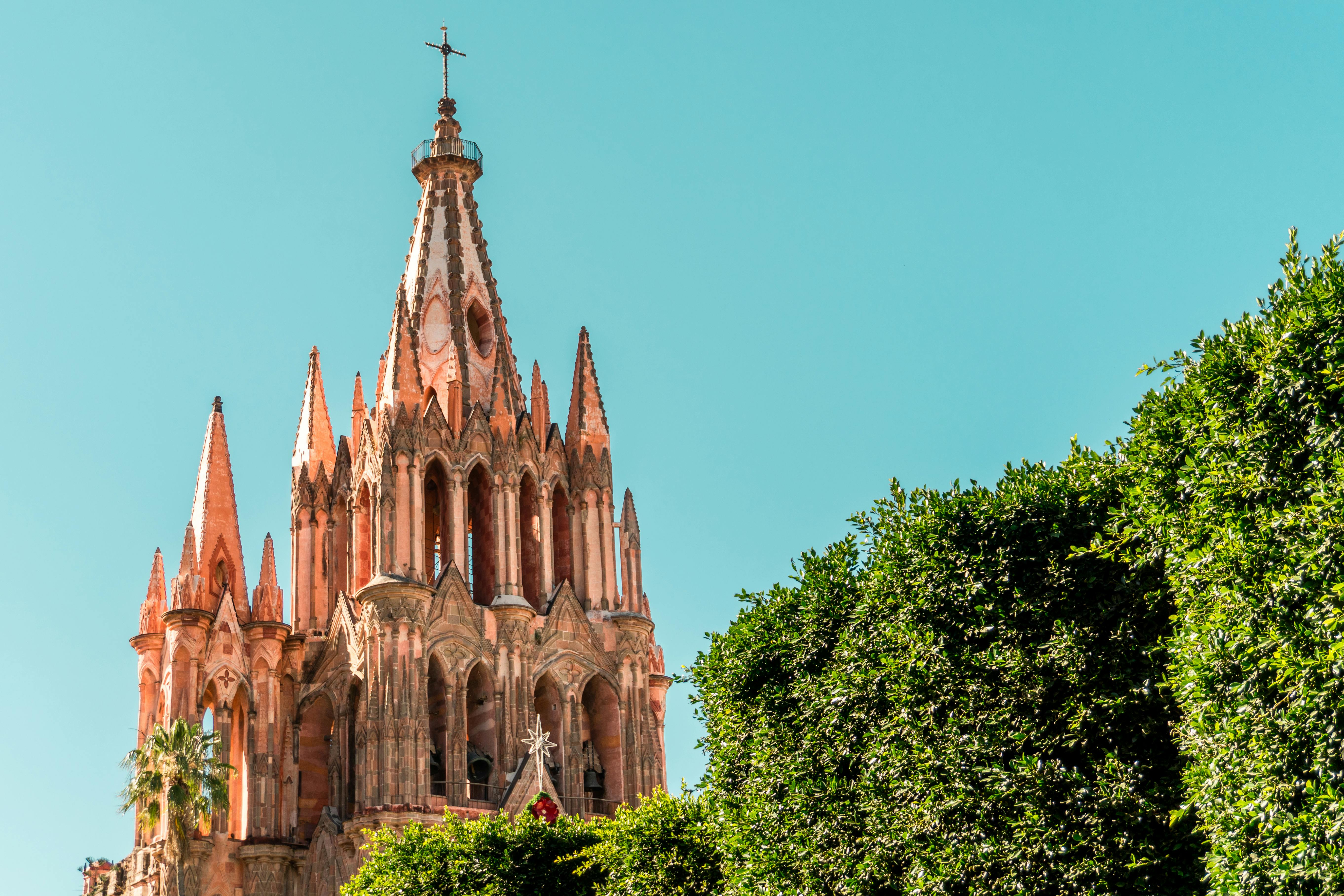
Stunning Gothic Revival church surrounded by lush greenery in San Miguel de Allende, Mexico. · Heber Vazquez

Mexico's big cities and beach resorts get the headlines, but the country's soul lives in its small towns: walled in rose-pink stone, draped in bougainvillea, and built around a shaded plaza where the whole town gathers at dusk. Many carry the federal 'Pueblo Mágico' designation, a label that rewards places with outsized history, architecture, and character.

These ten span the country, from the silver-mining hills of the central highlands to a turquoise lagoon near the Belize border. Some are an easy day trip from a major hub; others deserve a couple of slow nights. We've ordered them roughly best-first, balancing sheer beauty with how rewarding they are to actually visit.

Use this as a menu rather than a checklist. Pick one or two that match your route, give each a full day, and let the late-afternoon light, the markets, and the regional cooking do the rest.

1
San Miguel de Allende
San Miguel de AllendeGuanajuato state, central highlands, ~1.5 hrs from Querétaro Google
Often crowned the most beautiful town in Mexico, San Miguel is a UNESCO-listed colonial showpiece of honey-colored streets climbing toward the neo-Gothic spires of the Parroquia de San Miguel Arcángel, which glow pink at sunset. It has been an artists' and expat magnet for decades, so the gallery scene, rooftop bars, and restaurants punch well above a town this size. Mornings are for wandering the Centro and the Fabrica La Aurora art complex; evenings belong to a mariachi-filled Jardín Principal. It is polished and not cheap, but the light and architecture genuinely live up to the hype.
  • Sunset on the Parroquia from a rooftop bar
  • Fabrica La Aurora galleries and design shops
  • The botanical garden El Charco del Ingenio
  • Street food and mercado tacos off the Jardín
Best for: first-timers, couples, art and food lovers
Getting there: About 1.5 hours by car or bus from Querétaro; roughly 3.5-4 hours by road from Mexico City.
2
Valladolid
ValladolidYucatán, ~2 hrs west of Cancún Google
This unhurried Yucatán town makes the ideal base between Cancún and Chichén Itzá, with pastel facades, the long Calzada de los Frailes leading to the Convent of San Bernardino de Siena, and cenotes you can swim in right in town. Cenote Zací sits a few blocks from the main square, while Suytun and others lie a short drive out. The food is a highlight: order longaniza de Valladolid, lomitos, and a marquesita for dessert. It is calmer and more affordable than the coast, and a perfect launchpad for the great Maya sites.
  • Swimming in Cenote Zací or Cenote Suytun
  • Calzada de los Frailes at golden hour
  • Yucatecan dishes at the main market
  • Day trip to Chichén Itzá
Best for: culture and cenotes, a quieter Yucatán base
Getting there: About 2 hours by car or ADO bus from Cancún; often visited on a day tour combined with Chichén Itzá.
★ 4.7 · 25077 reviews · from $49
3
Taxco
TaxcoGuerrero, ~2.5 hrs southwest of Mexico City Google
Taxco tumbles down a steep hillside in a cascade of whitewashed houses and red-tiled roofs, crowned by the rose-stone churrigueresque facade of Santa Prisca, one of Mexico's most spectacular churches. The town built its fortune on silver, and its winding lanes are still lined with silver workshops and jewelry shops. White VW Beetle taxis squeeze through alleys barely wider than a car, and every turn offers a postcard view over the valley. It is dramatic, walkable, and refreshingly untouristy compared to the highland headliners.
  • The twin-towered Santa Prisca church
  • Silver shopping in family workshops
  • Cable car up to the Montetaxco viewpoint
  • Pozole on a market terrace
Best for: architecture lovers, silver shoppers, day-trippers
Getting there: About 2.5-3 hours by car or first-class bus from Mexico City.
4
Bacalar
BacalarQuintana Roo, ~3.5 hrs south of Cancún Google
Bacalar sits on the 'Lagoon of Seven Colors,' a freshwater lake that shifts through bands of turquoise and deep blue over a white sandy bottom. The small town has a relaxed, sandy-street feel with a 18th-century fort overlooking the water and a string of low-key waterfront spots for swimming. Paddle a kayak out at dawn, float over the cenotes that pock the lagoon, and watch the light change all day. It feels like Tulum did fifteen years ago, before the crowds.
  • Sunrise kayak on the Laguna de Bacalar
  • The Fuerte de San Felipe and pirate history
  • Cenote Cocalitos stromatolites
  • Swimming at the Canal de los Piratas
Best for: slow beach-and-lake days, paddlers, couples
Getting there: About 3.5-4 hours by car or ADO bus from Cancún; closest airport is Chetumal.
5
San Cristóbal de las Casas
San Cristóbal de las CasasChiapas highlands, ~1 hr from Tuxtla Gutiérrez Google
At 2,200 meters in the pine-clad Chiapas highlands, San Cristóbal is a colorful colonial town with a deep Indigenous Tzotzil and Tzeltal presence that gives its markets and crafts unusual richness. Walk the pedestrian Andador and Real de Guadalupe, climb to the Templo de Guadalupe for city views, and browse amber and textiles. The cool climate suits the strong café culture, and the town is the gateway to the Sumidero Canyon and the traditions of nearby San Juan Chamula. It is one of Mexico's most atmospheric and culturally layered small towns.
  • Textile and amber markets
  • Templo de Santo Domingo's baroque facade
  • A boat trip into Sumidero Canyon
  • Chamula's unforgettable church
Best for: culture seekers, market lovers, slow travelers
Getting there: About 1 hour by car from Tuxtla Gutiérrez airport (1.5 hrs by colectivo).
6
Sayulita
SayulitaNayarit, ~45 min north of Puerto Vallarta Google
Sayulita is a barefoot surf town on the Pacific where the streets are strung with papel picado and the buildings are painted every shade of the rainbow. The beach break is forgiving enough for first-time surfers, and the town center hums with taco stands, smoothie bars, and craft shops run by the local Huichol community. It is boho and busy in high season, but the color, the sunsets, and the easygoing energy are hard to resist. Quieter San Pancho is a short hop away for an even mellower afternoon.
  • Beginner surf lessons on the main beach
  • Huichol beadwork and craft galleries
  • Tacos and ceviche on Calle Delfines
  • Sunset drinks above the bay
Best for: surfers, young travelers, beach-town color
Getting there: About 45 minutes to 1 hour by car or bus north of Puerto Vallarta airport.
7
Tepoztlán
TepoztlánMorelos, ~1.5 hrs south of Mexico City Google
Backed by the jagged Tepozteco mountains, this town is a favorite weekend escape from the capital, equal parts cobbled colonial charm and mystical, new-age energy. The big draw is the hike up to the Tepozteco pyramid, a small Aztec temple perched on a cliff with sweeping valley views. Back in town, the weekend market overflows with regional food, and the must-try snack is a tepoznieve (artisanal ice cream in dozens of flavors). It is green, dramatic, and easy to reach for a day or an overnight.
  • Hiking to the cliff-top Tepozteco pyramid
  • Weekend artisan and food market
  • Tepoznieves ice cream
  • The 16th-century Dominican ex-convent
Best for: hikers, weekenders from CDMX, food browsers
Getting there: About 1.5 hours by car or first-class bus from Mexico City.
8
Izamal
IzamalYucatán, ~1 hr east of Mérida Google
Known as the 'Yellow City,' Izamal is painted almost entirely in golden ochre, from its houses to the vast 16th-century Franciscan convent that anchors the town. The effect is mesmerizing, especially in late-afternoon light, and the town hides Maya pyramids right among the colonial streets, including the towering Kinich Kakmó. Climb it for free for views over a sea of yellow walls. Horse-drawn carriages clop through quiet lanes, making it one of the Yucatán's most photogenic and laid-back stops.
  • The yellow Convento de San Antonio de Padua
  • Climbing the Kinich Kakmó pyramid
  • Carriage ride through the centro
  • Yucatecan handicrafts and hammocks
Best for: photographers, a relaxed half-day, history buffs
Getting there: About 1 hour by car from Mérida; reachable by bus or as a day trip.
9
Todos Santos
Todos SantosBaja California Sur, ~1 hr north of Cabo San Lucas Google
A former sugar town turned artists' colony, Todos Santos sits between the desert and the Pacific with a walkable historic core of galleries, design shops, and excellent restaurants. The famous Hotel California anchors the main street, and the surrounding beaches like Cerritos and Los Esterillos draw surfers and whale-watchers in season. It is more refined and creative than party-focused Cabo, with a strong food scene built on local farms and fresh seafood. Sunsets over the empty Pacific beaches are the daily highlight.
  • Galleries and the Hotel California
  • Surfing or beach days at Playa Cerritos
  • Farm-to-table dining downtown
  • Winter gray whale sightings offshore
Best for: art and food lovers, surfers, a calmer Baja base
Getting there: About 1 hour by car north of Cabo San Lucas; roughly 1.5 hours from La Paz.
10
Real de Catorce
Real de CatorceSan Luis Potosí, ~3.5 hrs from San Luis Potosí city Google
This semi-ghost town clings to the high desert mountains at 2,700 meters and is reached through the Ogarrio tunnel, a single-lane 2.3-kilometer passage carved through the rock. Once a booming silver town, it is now a hauntingly beautiful place of cobbled streets, crumbling stone facades, and a famous pilgrimage church. The Wixárika (Huichol) people consider the surrounding Wirikuta desert sacred, and the whole area has an otherworldly, end-of-the-road feel. It is the most remote town on this list and all the more memorable for it.
  • Driving through the Ogarrio tunnel
  • Templo de la Purísima Concepción
  • Jeep rides to desert viewpoints and ghost mines
  • The cobbled, half-ruined streets at dawn
Best for: adventurers, photographers, off-the-beaten-path travelers
Getting there: About 3.5 hours by car from San Luis Potosí city, including the tunnel approach from Matehuala.

Good to Know

When to go October to April brings dry, comfortable weather across most of Mexico. Highland towns like San Cristóbal and Real de Catorce get genuinely cold at night, so pack layers even in 'warm' Mexico.
Getting around Mexico's first-class buses (ADO in the south and east, ETN/Primera Plus in the center) are comfortable, safe, and connect most of these towns. For remote spots like Real de Catorce or Todos Santos, renting a car gives far more freedom.
Book ahead in peak season San Miguel de Allende, Sayulita, and Bacalar fill up around Christmas, Semana Santa, and long weekends (puentes). Reserve hotels and popular restaurants well in advance for those dates.
Money and cards Carry some cash, especially in smaller towns and markets where cards are not always accepted. ATMs are reliable in larger towns but scarce in places like Real de Catorce.
Altitude Several towns sit above 2,000 meters. Take it easy on arrival, hydrate, and ease into hikes like the Tepozteco climb if you've come straight from sea level.

Mexico's small towns are where the country slows down and shows its color, from a pink church at dusk in San Miguel to a seven-shade lagoon in Bacalar. Pick one or two that fit your route, give them more time than you think you need, and let the plazas, markets, and regional cooking pull you in. Wherever you land, these are the places that turn a trip into the kind you keep planning to repeat.

Ready to book your trip?

Search Hotels
Search Homes

Traveling somewhere else?

Generate a custom itinerary