
The 10 Most Beautiful Small Towns in Italy

From cliff-clinging fishing villages to honey-stone hill towns, these are the small Italian places that reward the detour and outshine the big cities.
Last updated June 22, 2026
The 10 Most Beautiful Small Towns in Italy
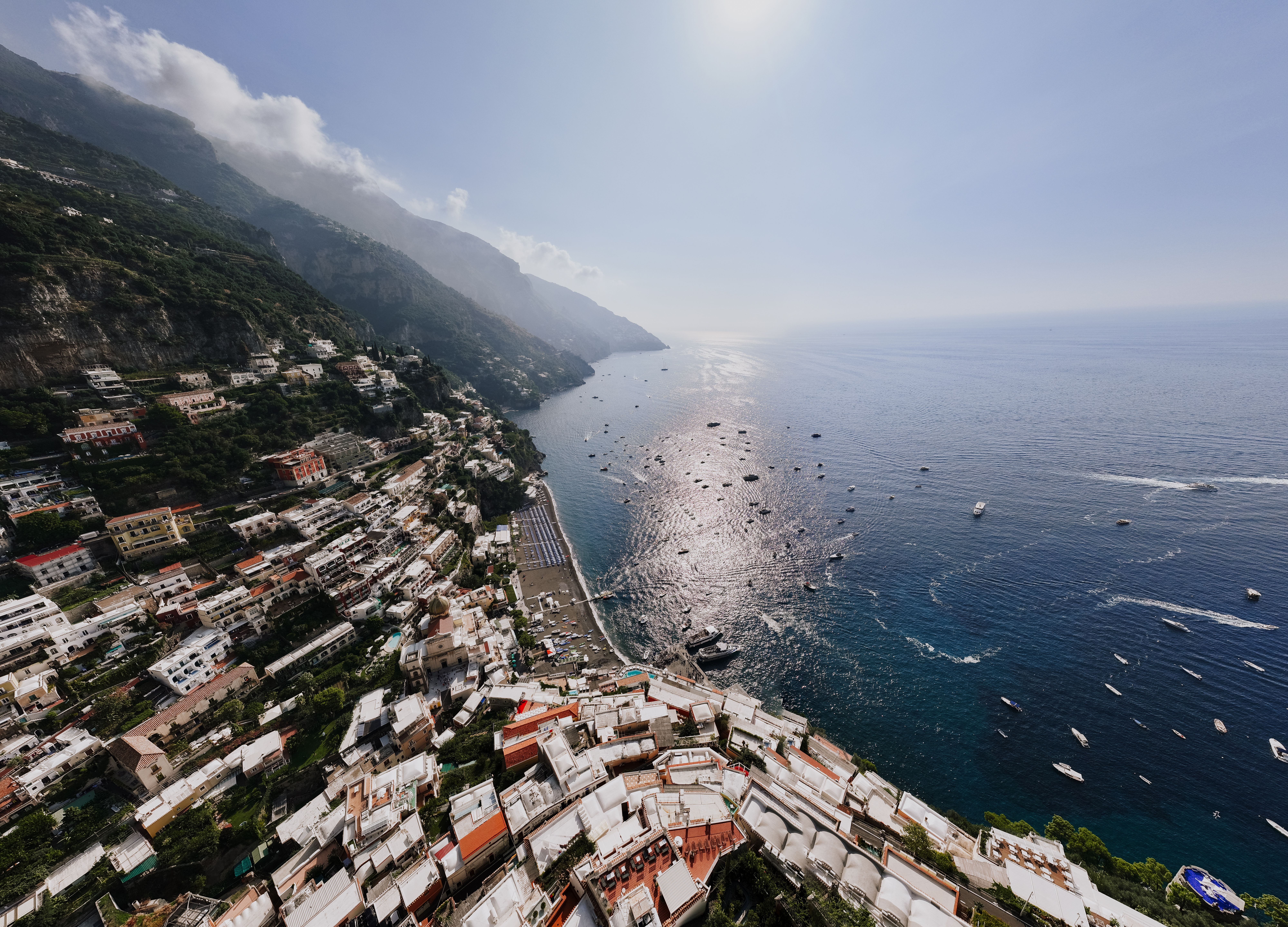
Stunning aerial view of Positano's coastline under sunlight, highlighting its picturesque beauty. · K

Italy's big cities get the headlines, but the country's deepest pleasures often hide in its small towns: a pastel village stacked above the sea, a Tuscan hill town bristling with medieval towers, a lagoon island painted in candy colors. These are the places where you slow down, eat better, and feel the texture of a region rather than just ticking off monuments.

This list ranks ten of the most beautiful small towns across the peninsula, from the Amalfi Coast and the Ligurian Riviera to Puglia, the Veneto lagoon, and the volcanic heartland of central Italy. Each is a real, currently-open town you can visit today, with a strong reason to make the journey.

Use it as a building block for a road trip or a string of day trips: most are reachable by train or a short drive, several pair naturally with a nearby city, and a few are worth an overnight to have them to yourself once the day crowds leave.

1
Positano
PositanoAmalfi Coast, Campania (south of Naples) Google
Positano is the photograph everyone has in their head when they imagine the Amalfi Coast: a cascade of sherbet-colored houses tumbling down a near-vertical hillside to a pebble beach and a turquoise sea. The town is essentially one long, flower-draped staircase, so wear good shoes and accept that you will climb. The reward is boutique-lined lanes, the majolica-tiled dome of Santa Maria Assunta, and aperitivo with a view that justifies every euro. Come early or stay over to enjoy it before the day boats arrive.
  • Spiaggia Grande and the boat ride along the coast
  • The majolica dome of Santa Maria Assunta
  • Sunset aperitivo on a terrace bar
  • Lemon granita and fresh seafood at a beachfront trattoria
Best for: couples and a splurge-worthy coastal escape
Getting there: From Naples, train to Sorrento (about 70 min) then the SITA bus or ferry to Positano; ferries also run from Salerno and Amalfi in season.
2
Vernazza
VernazzaCinque Terre, Liguria Google
Of the five Cinque Terre villages, Vernazza is the most photogenic, with a tiny harbor ringed by tall ochre and pink houses and a stubby medieval castle keeping watch above the water. There are no cars, just stepped alleys, a single small piazza opening onto the sea, and trattorias serving Ligurian classics. Walk in on the cliff trail from Monterosso for the classic overhead view of the harbor, then reward yourself with trofie al pesto and a glass of local white. It is small, busy, and unforgettable.
  • The harbor view from the Monterosso coastal trail
  • Doria Castle and its lookout tower
  • Trofie or trenette al pesto, a Ligurian invention
  • Fresh anchovies and a glass of Cinque Terre DOC white
Best for: hikers and seaside village romance
Getting there: Frequent regional trains link the five villages; from La Spezia or Levanto it is a short ride, and the Cinque Terre train pass covers hops between towns.
3
San Gimignano
San GimignanoTuscany, about 1.5 hours south of Florence Google
San Gimignano rises from the Tuscan hills like a medieval Manhattan, its skyline spiked with stone towers that wealthy families built to outdo one another in the Middle Ages. Fourteen survive, and climbing the tallest, Torre Grossa, gives you a sweep of vineyards and cypress rows in every direction. The center is compact and beautifully preserved, anchored by the triangular Piazza della Cisterna. It is touristy by day, so linger into the evening or arrive early to feel its quiet.
  • The medieval towers and the climb up Torre Grossa
  • Piazza della Cisterna at golden hour
  • World-champion gelato at Gelateria Dondoli
  • A glass of crisp local Vernaccia di San Gimignano
Best for: first-time Tuscany visitors and a classic day trip
Getting there: Easiest as a guided day trip or by car from Florence (about 1.5 hours); by public transport, train to Poggibonsi then a local bus.
4
Alberobello
AlberobelloValle d'Itria, Puglia Google
Alberobello looks like nowhere else in Italy: entire neighborhoods of trulli, conical limestone houses with whitewashed walls and gray stone roofs, packed together on two hillsides. The Rione Monti district has the densest concentration, while Aia Piccola feels more residential and lived-in. Wander the lanes, step inside a trullo to see the corbelled stone ceilings, and pick up local taralli and burrata. It is firmly on the tourist map but still genuinely strange and lovely.
  • The trulli of the Rione Monti district
  • Quieter, residential Aia Piccola
  • Trullo Sovrano, the only two-story trullo
  • Puglian burrata, orecchiette, and almond sweets
Best for: architecture lovers and a Puglia road trip stop
Getting there: From Bari, drive about 1 hour or take the Ferrovie del Sud Est train (around 1.5 hours, with a possible change).
5
Burano
BuranoVenetian Lagoon, about 45 minutes from Venice Google
4.8 · 12,113 reviews
Burano is the antidote to Venice's marble grandeur: a fishing island where every house is painted a different saturated color, supposedly so sailors could find home through the lagoon fog. The effect is dazzling, with bright facades doubled in the canals and laundry strung overhead. It is also the historic center of Venetian lace-making, with a small museum and a leaning bell tower for good measure. Bring a camera and an appetite for risotto di gò, the local fish risotto.
  • The rainbow-painted canal houses
  • Lace shops and the Museo del Merletto
  • The leaning campanile of San Martino
  • Bussolai biscuits and lagoon-fresh seafood
Best for: photographers and a half-day escape from Venice
Getting there: Vaporetto line 12 from Venice's Fondamente Nove (about 45 min), often combined with a stop at Murano.
6
Civita di Bagnoregio
Civita di BagnoregioLazio, about 2 hours north of Rome Google
Civita di Bagnoregio is often called "the dying town" because it sits atop a crumbling pinnacle of volcanic tufa, reachable only by a long pedestrian footbridge. Crossing that bridge to the cliff-top gate is one of the most dramatic arrivals in Italy. The village itself is tiny, with a handful of stone lanes, a small Romanesque church, and views over an eerie landscape of eroded badlands. Almost no one lives here full time, which gives it a hushed, end-of-the-world atmosphere.
  • The footbridge approach and the cliff-top gate
  • Sweeping views over the calanchi badlands
  • The medieval Piazza San Donato
  • Bruschetta and local wine at a tiny osteria
Best for: a memorable detour and dramatic scenery
Getting there: Best by car from Rome (about 2 hours) or Orvieto (about 40 min); by transport, train to Orvieto then a bus to Bagnoregio and a walk to the bridge.
7
Ravello
RavelloAmalfi Coast, Campania Google
High above the coastal crush, Ravello is the Amalfi Coast's refined retreat, a town of gardens, music, and panoramic terraces perched some 350 meters above the sea. The famous Villa Rufolo and Villa Cimbrone open onto cliff-edge belvederes that float over the Gulf of Salerno. It feels calmer and more cultured than the beach towns below, and in summer the Ravello Festival fills the gardens with classical concerts. Come for the views and the breathing room.
  • The Terrace of Infinity at Villa Cimbrone
  • Villa Rufolo's gardens and concert season
  • The Ravello Festival in summer
  • Lemon-scented desserts and a quiet piazza
Best for: garden lovers and a slower, classier coast day
Getting there: From Amalfi town, a SITA bus climbs to Ravello in about 25 minutes; by car the drive up is short but winding.
8
Orvieto
OrvietoUmbria, about 1.5 hours north of Rome Google
Orvieto sits dramatically on a flat-topped volcanic plateau, its skyline dominated by one of Italy's most spectacular Gothic cathedrals. The Duomo's striped facade glitters with gilded mosaics, and inside, Luca Signorelli's apocalyptic frescoes are extraordinary. Beneath your feet lies a honeycomb of Etruscan and medieval caves you can tour, while above ground the streets pour out crisp Orvieto Classico white wine. It is easy to reach yet far less crowded than the Tuscan hill towns.
  • The mosaic-clad facade of the Duomo
  • Signorelli's frescoes in the San Brizio Chapel
  • The Orvieto Underground cave network
  • St. Patrick's Well and local Orvieto Classico wine
Best for: art and wine on an easy day trip from Rome
Getting there: Direct trains from Rome Termini reach Orvieto in about 75-90 minutes; a funicular carries you up to the old town.
9
Pienza
PienzaVal d'Orcia, Tuscany Google
Pienza is the postcard of the Val d'Orcia, a tiny Renaissance town that a 15th-century pope rebuilt as his ideal city, ringed by the rolling golden hills and lone cypresses that define the Tuscan imagination. The compact center is a model of harmonious planning, and a walk along the southern ramparts opens onto one of the great views in Italy. It is also pecorino country, so the air smells of aging sheep's cheese. Pair it with a drive through nearby Montepulciano and Montalcino.
  • The Renaissance Piazza Pio II
  • Val d'Orcia views from the town walls
  • Pecorino di Pienza cheese shops
  • Pici pasta and a glass of nearby Brunello
Best for: scenic drives and food lovers
Getting there: Best by car; from Florence about 1.75 hours, often combined with a Val d'Orcia loop through Montepulciano and Montalcino.
10
Polignano a Mare
Polignano a MareAdriatic coast, Puglia Google
Polignano a Mare is a whitewashed old town balanced on limestone cliffs straight above the Adriatic, with a small cove beach, Lama Monachile, wedged dramatically between the rock walls. The lanes of the centro storico are dotted with poetry painted on steps and walls, balconies hung over the sea, and a couple of terraces with knockout views. Birthplace of singer Domenico Modugno, it has an easy, sun-bleached charm and some of the best gelato in the south. Time a visit for late afternoon when the light turns the cliffs gold.
  • The Lama Monachile cove beach and bridge
  • Cliff-top terraces over the Adriatic
  • The poetry-covered lanes of the old town
  • Inventive gelato and Puglian seafood
Best for: beach-and-old-town combinations and Instagram views
Getting there: From Bari, frequent trains reach Polignano a Mare in about 30-40 minutes; easy by car too.

Good to Know

When to go May, June, September, and early October bring warm weather without peak crowds. July and August are hot and busy, especially on the coasts; many hill towns are quietest in early morning and after the day-trippers leave.
Getting around A rental car unlocks the hill towns of Tuscany, Umbria, and Puglia, but coastal villages like Positano, the Cinque Terre, and Burano are far easier (and cheaper) by train, bus, or ferry, where parking is scarce or banned.
Stay overnight where you can Towns like San Gimignano, Civita, and Vernazza transform once the day crowds thin out. An overnight gives you golden-hour photos, quiet dinners, and a more local pace.
Book ahead in season Reserve cliffside restaurants, popular agriturismi, and the Ravello Festival or Cinque Terre trail passes in advance during summer, when capacity fills quickly.
Wear the right shoes Many of these towns are built on stairs and steep, uneven stone. Comfortable, grippy footwear matters far more than style, particularly in Positano and along the Cinque Terre trails.

Italy's small towns are where the country slows down and shows its character, one harbor, hilltop, or painted lane at a time. Pick two or three that lie along a single region and string them together with a city base, and you will come away with a richer, more memorable trip than any rush between Rome, Florence, and Venice. Start mapping your route now, and let these towns set the pace.

Ready to book your trip?

Search Hotels
Search Homes

Traveling somewhere else?

Generate a custom itinerary