Vibe & first impressions
Split feels alive and lived-in. Diocletian's Palace is not a museum behind ropes but the city center itself, with bars, apartments, and market stalls woven into Roman stone. The Riva promenade buzzes with locals, and the whole place has a relaxed, slightly gritty Mediterranean energy.
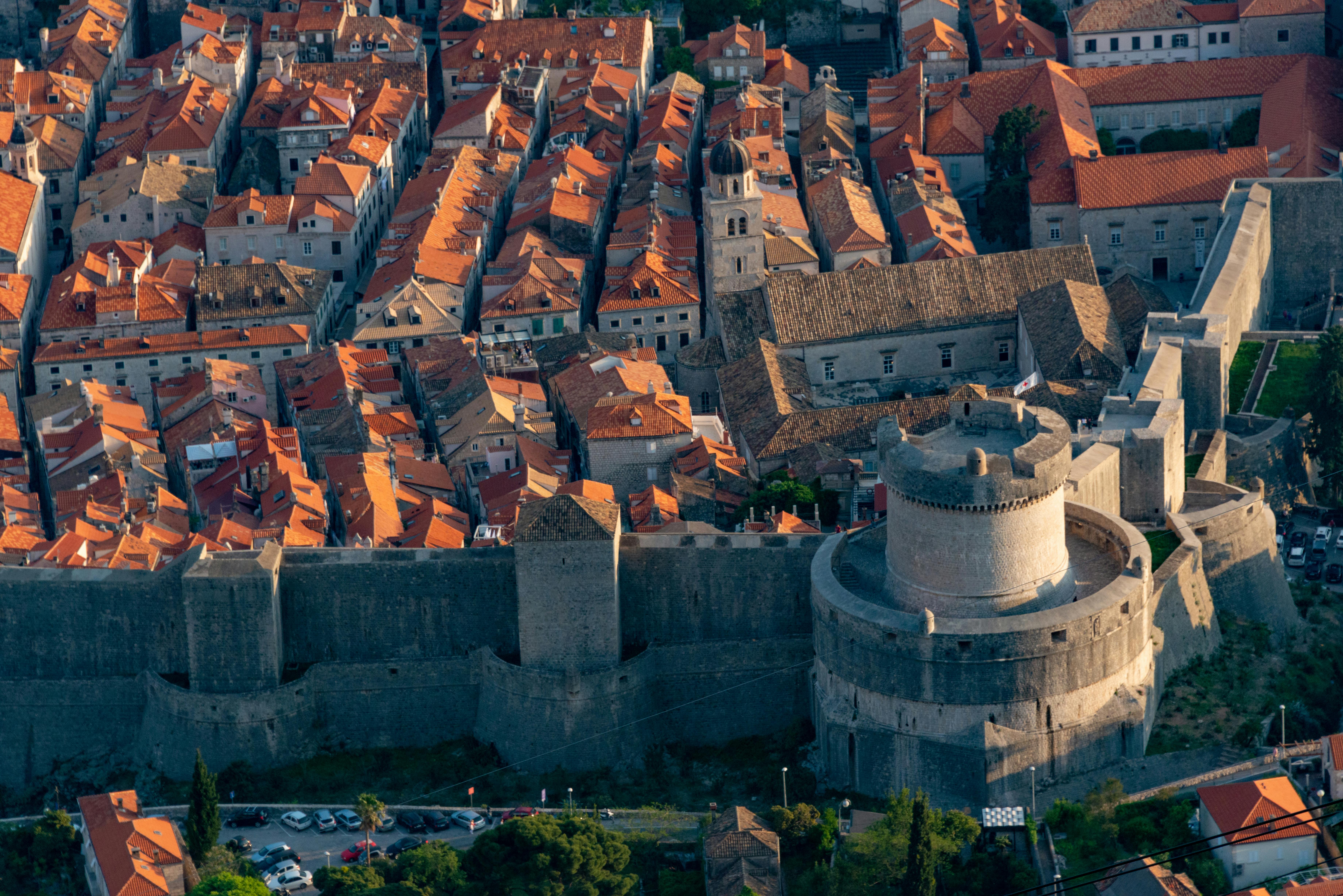
Dubrovnik hits you like a film set, because it often is one. The marbled Stradun, the honey-colored ramparts, and the sea-cliff setting are genuinely breathtaking. But the Old Town is small and heavily touristed, and outside the walls it can feel more like a resort than a real city.
Things to do
Wander Diocletian's Palace, climb the cathedral bell tower (a former mausoleum), and hike or stroll the wooded Marjan hill for views over the bay. Split is also Croatia's best base for island-hopping to Hvar, Brac, and Vis, and for day trips to Krka and Trogir.
The headline act is walking the city walls, a roughly two-kilometer circuit that is one of Europe's great urban walks. Add the cable car up Mount Srd, kayaking around the walls, the Game of Thrones locations, and a boat to Lokrum island. It is spectacular but a tighter, more sightseeing-focused menu.
Beaches
Bacvice, a rare sandy beach, sits walkable from the center and is a local institution for the paddle game picigin. Marjan's pebble coves offer clearer water and pine shade, and the best beaches are a short boat ride away on the islands.
Banje Beach gives you that postcard view of the walls but gets packed and pricey. Lapad and the coves near Babin Kuk are nicer for actual swimming, and Lokrum island has rocky bathing spots. Overall Dubrovnik's in-town swimming is dramatic rather than relaxing.
Food & nightlife
Split has a strong, unpretentious food scene: the green market and fish market feed konobas serving grilled fish and peka. Nightlife is genuine and varied, from Riva cafe-bars to clubs on Bacvice and the wider student-fueled energy of a real city.
Dubrovnik dining is excellent but expensive, with standout fine dining like Restaurant 360 and atmospheric cliff bars (Buza, hacked into the seawall). Nightlife is more about wine bars and lounges than late clubs; it is a refined evening rather than a wild one.
Cost
Noticeably more affordable across the board: accommodation, restaurants, and drinks all run cheaper, and there is more budget and mid-range choice. Your euro stretches considerably further here.
Croatia's priciest city, full stop. Old Town hotels command premium rates, restaurant menus are inflated, and even a coffee with a view costs more. Great value is hard to find inside the walls.
Crowds
Busy in summer, especially around the Palace and Riva, but Split absorbs visitors better because it is a large functioning city. You can always find quieter corners and local life.
The Old Town can become genuinely overwhelmed, particularly when cruise ships dock. Midday in July and August means shoulder-to-shoulder Stradun. Early mornings and evenings after the ships leave are when it shines.
Getting there & around
Split has a major airport, a central train and bus hub, and Croatia's busiest passenger ferry port, making islands and the mainland easy. The compact center is walkable, and it connects fast to Zagreb and the north.
Dubrovnik's airport is well connected seasonally, but the city sits isolated at Croatia's southern tip, with no train and a long coastal drive (crossing briefly into Bosnia or via the Peljesac Bridge) from Split. Once there, the Old Town is car-free and walkable but hilly.
Day trips
Outstanding range: Hvar and Brac islands, Krka waterfalls, the Roman ruins of Salona, medieval Trogir, and the Cetina River for rafting are all within easy reach.
Strong but fewer options: the Elaphiti Islands, the wine country and oysters of the Peljesac peninsula, Cavtat, and cross-border trips to Mostar and Kotor in Montenegro.