Vibe & first impressions
Split feels like a real city that happens to be ancient. Diocletian's Palace isn't a museum behind ropes; it's a maze of cafes, apartments, and shops built into 1,700-year-old walls, with locals' laundry overhead and the Riva promenade buzzing day and night. It's energetic, slightly gritty, and unpretentious.
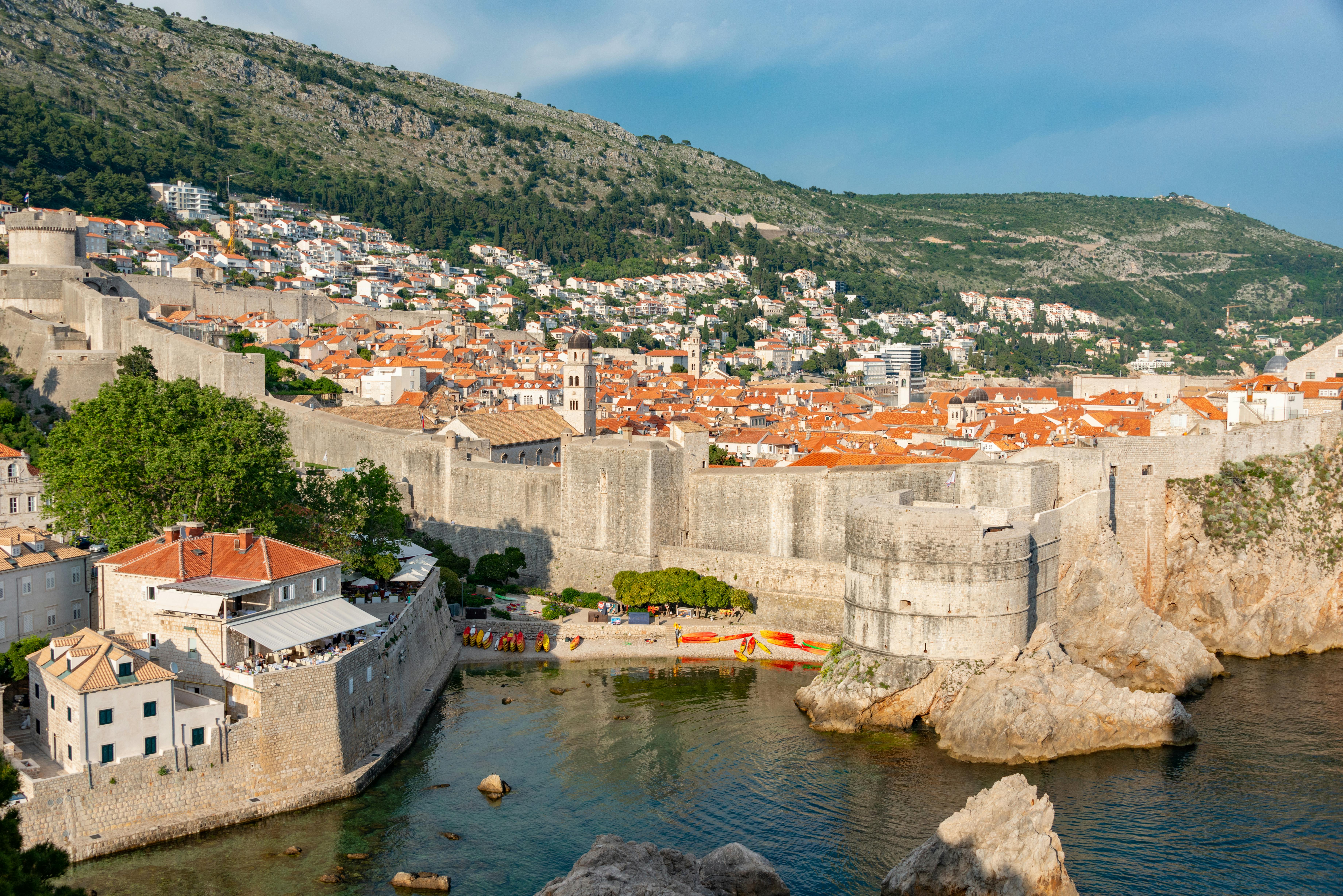
Dubrovnik's walled Old Town is the more cinematic of the two, an immaculate sweep of marble streets, baroque churches, and honey-colored stone framed by the sea. The flip side is that within the walls it can feel like a beautiful stage set, busy with day-trippers and short on everyday local life.
Things to do
Beyond the palace and Jupiter's Temple, climb the Marjan hill for pine-shaded trails and viewpoints, browse the Pazar market, and use Split as a hub: Trogir, Krka waterfalls, and Hvar are all easy. It's a city you can dig into for days.
The headline act is walking the city walls, a stunning (and pricey) loop with constant sea views, plus the Stradun, Rector's Palace, and the cable car up Mount Srd. It's spectacular but compact; many travelers feel they've seen the core in a day or two.
Beaches
Bacvice is the famous in-town sandy beach, shallow and lively, while the Marjan side hides pebbly coves like Kasjuni. Decent, but Split's real beach strategy is to ferry out to the islands.
Banje Beach has the iconic view back to the walls, and Lapad and Babin Kuk offer calmer swimming away from the Old Town. The water is gorgeous, though prime spots get crowded and sunbed prices are steep.
Food & nightlife
Split has a broader, livelier scene: konobas tucked in palace alleys, a buzzing bar quarter in the Veli Varos and Diocletian's cellars area, and genuine late-night energy that locals join. Better value and more variety overall.
Dubrovnik does polished, romantic, and expensive very well, with fine seafood and wine bars like the cliffside Buza carved into the rocks. Nightlife is more subdued and tourist-oriented, and you'll pay top kuna-equivalents in euros for the setting.
Cost
Noticeably more affordable across the board: accommodation, restaurants, and drinks all run cheaper, and you're not constantly paying for views. Good value for a coastal European city.
Croatia's priciest destination, full stop. Old Town dining, the wall walk ticket, and summer hotels command premiums, and parking and taxis add up fast. Budget travelers feel the squeeze.
When to go
May, June, and September are ideal: warm sea, manageable crowds, lower prices. July and August are hot and busy but the city's size absorbs it better.
Shoulder season (late April to June, September to October) is when Dubrovnik shines, before peak summer and cruise-ship days overwhelm the walls. Midsummer middays inside the Old Town can be genuinely unpleasant.
Getting there & around
Split has an international airport, a major ferry port, and frequent bus and catamaran links up and down the coast, making it the better connected base for island-hopping and onward travel. The center is flat and walkable.
Dubrovnik's airport is well served in season but the city sits at the far south, a long drive (crossing a sliver of Bosnia or the new Peljesac Bridge) from the rest of Croatia. The Old Town is pedestrian and hilly, with steep stair-streets.
Day trips
Outstanding: Hvar, Brac (Bol's Zlatni Rat beach), Vis, Krka National Park, and the UNESCO town of Trogir are all within easy reach. Split is arguably the best single base in Dalmatia for exploring.
Excellent in a different way: the island of Lokrum is a short hop, the Elaphiti Islands make a lovely boat day, and Montenegro's Bay of Kotor and Mostar in Bosnia are popular cross-border excursions.
Crowds
Busy in summer but the larger, multi-use city spreads people out; you can always find a quieter alley or hillside.
Can hit saturation, especially when multiple cruise ships dock and the wall walk and Stradun fill shoulder to shoulder. Early mornings and evenings are the escape valve.