
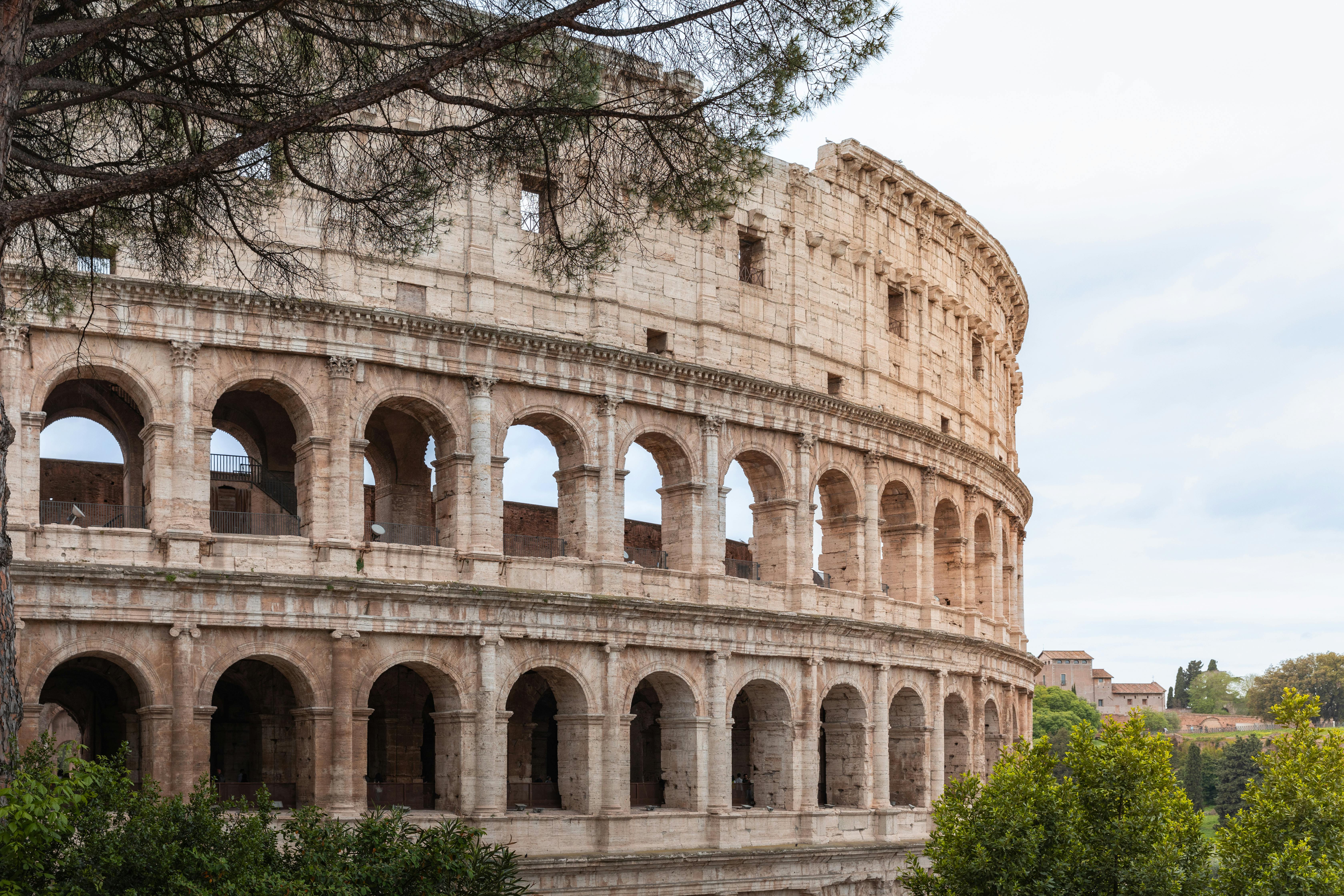
Rome is a city where 2,000 years happen at once. You can lean against a column raised under the emperors, watch nuns cross a baroque piazza, and order an espresso at a marble counter, all within a single block. Nothing here is roped off behind glass; antiquity is simply the floor everyone walks on.
It is also a deeply human city, loud and warm and a little chaotic, run on rhythms of coffee, lunch, passeggiata, and dinner that has not really changed in generations. Romans guard their traditions fiercely, especially at the table, where the four great pasta dishes (carbonara, cacio e pepe, amatriciana, gricia) are treated as sacred texts.
The draws are obvious and worth every bit of the hype: the Colosseum and Forum, the Vatican, the Pantheon, the Trevi Fountain. But the real Rome reveals itself slowly, in a neighborhood trattoria, a quiet church holding a Caravaggio, or an evening spritz in a sun-warmed square.
Spring (April to early June) and autumn (late September to October) are ideal, with mild days, long light, and gardens in bloom or gold. July and August are hot, crowded, and partly shuttered as Romans leave for the coast, though hotel deals appear in August. Winter is cool but rarely freezing, with thinner crowds and atmospheric, mist-softened ruins; Christmas and Easter draw pilgrims and packed churches. Note that 2025 was a Jubilee Holy Year, so expect lingering elevated visitor numbers around the Vatican into 2026.
Most travelers land at Fiumicino (FCO); the Leonardo Express train runs nonstop to Termini in about 32 minutes and beats sitting in traffic. The smaller Ciampino (CIA) mainly serves budget carriers, with shuttle buses to Termini. In the center, walking is by far the best way to get around, supplemented by the metro (lines A and B cross at Termini) and buses and trams. Use official white taxis or the FreeNow app, agree the metered fare, and skip unlicensed drivers loitering at the station.
Neighborhoods & hotels


Skip the research, get a day-by-day Rome plan
Tell us your dates and pace; we'll build the itinerary around these picks.
Best Coffee in Rome
Coffee in Rome is fast, cheap, and taken standing at the bar. Order an espresso (un caffe) and never a cappuccino after 11am if you want to blend in.


Where to Eat Breakfast & Brunch
A Roman breakfast is light: a cornetto and a coffee at the bar. For a sit-down brunch you will mostly look to newer cafes.


Best Restaurants & Trattorias
Roman cooking is bold, simple, and seasonal. Come hungry for pasta, offal, artichokes, and pizza al taglio, and book ahead at the popular places.


Bars & Nightlife
Roman evenings start with an aperitivo and unfold slowly across piazzas and wine bars. Things stay social rather than club-driven.
Top Things to Do & See
Rome's blockbuster sights live up to the billing. Book timed entries and guided access to skip the worst of the lines.


Experiences & Tours
Beyond the monuments, Rome rewards hands-on experiences, from pasta-making to twilight food crawls.


Markets & Shopping
From food markets to artisan workshops, Rome is full of places to browse, taste, and buy.
Day Trips Worth Taking
When you are ready to leave the city, the surrounding region and beyond reward a day out.


Before you visit
Plan-ahead checklist
Rome does not ask to be conquered in a single visit; it asks to be savored, one piazza, plate of pasta, and ancient wonder at a time. Whether you are tossing a coin into the Trevi or lingering over wine as the swifts wheel overhead, the Eternal City has a way of pulling you back. Start planning, book those tickets, and let Rome do the rest.
Top-Rated Places to Eat, See & Stay
Build your own Rome trip
Tell us how many days, your budget, and what you're into. We'll turn it into a custom, day-by-day Rome itinerary.