
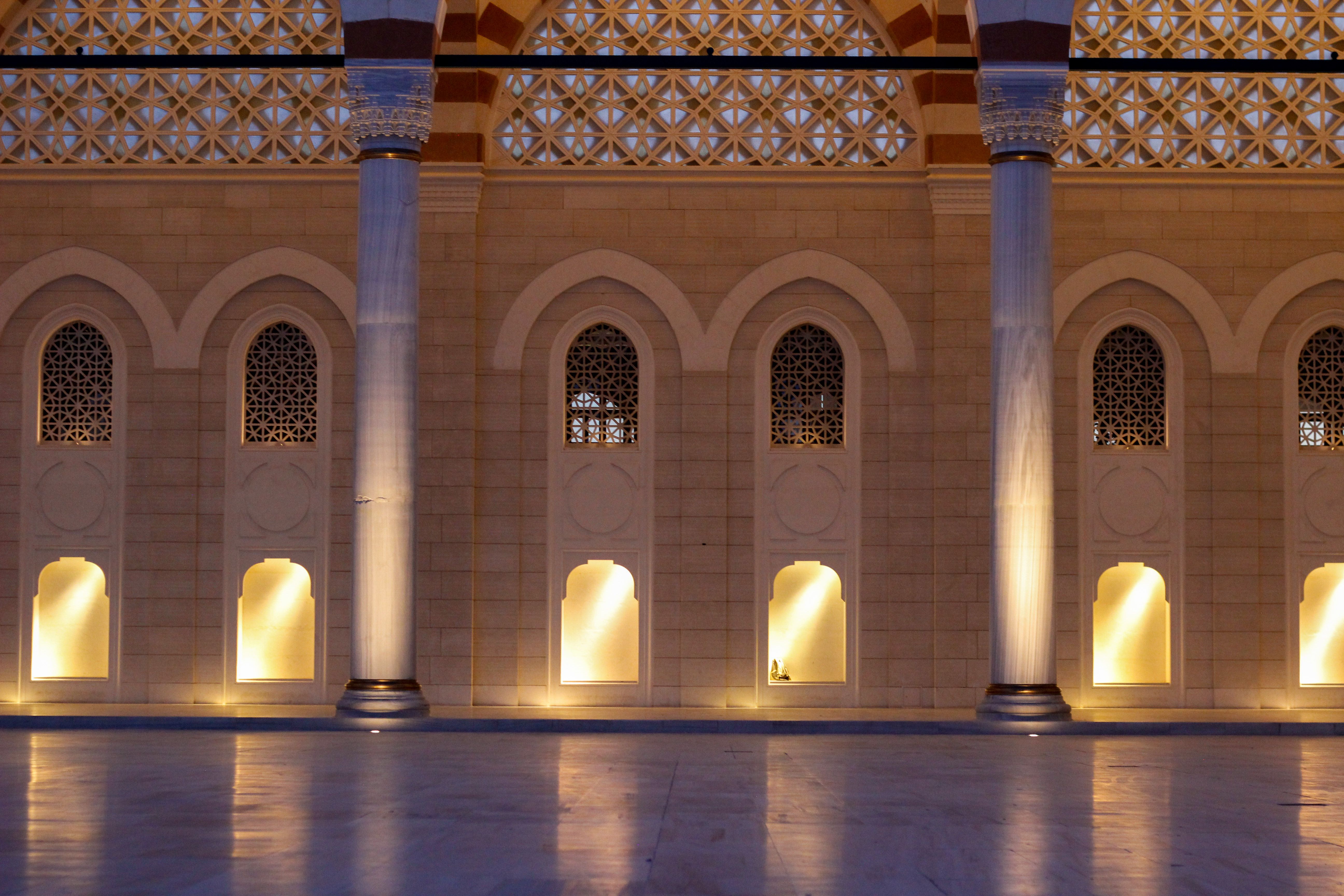
Muscat is the rare Gulf capital that resisted the skyscraper. Royal decree keeps buildings low and white, so the city unfolds as a string of districts wedged between the jagged Hajar Mountains and the Gulf of Oman. The result feels closer to a coastal town than a metropolis, all minarets, forts, and bougainvillea against bare brown rock.
This is a city built on the sea trade in frankincense, dates, and dhows. Portuguese forts still guard the old harbor at Mutrah, where a labyrinthine souq has traded silver and incense for centuries. Modern Oman, shaped largely by the late Sultan Qaboos, layered grand mosques, an opera house, and manicured corniches over that history without erasing it.
Travelers come for the contrast: a morning wandering a marble-and-chandelier mosque, an afternoon swimming in a mountain wadi, and an evening eating grilled kingfish by the water. Omani hospitality is genuine and unhurried, the streets are exceptionally safe, and the wild landscapes that make the country famous all sit within a day's drive.
Visit between October and April, when daytime temperatures are pleasant (low to mid 20s Celsius) and the sea is swimmable. December and January are peak season with the best weather and the highest prices. Summer (June to September) is brutally hot, often above 40 Celsius and humid, though hotel rates plummet. Time a trip around the Muscat Festival (January to February) for cultural events, or Eid holidays for a festive atmosphere, but book well ahead as locals travel then too.
Most visitors arrive at Muscat International Airport (MCT), a modern hub about 30 minutes from the main districts. There is no metro, and public buses are limited, so plan on a car. Ride-hailing through Otaxi and Careem is reliable and cheaper than airport taxis (which rarely use meters, so agree a fare first). Renting a car is the smart move if you want to reach mosques, beaches, and day trips on your own schedule; roads are excellent, well signposted in English, and driving is on the right.
Neighborhoods & hotels


Skip the research, get a day-by-day Muscat plan
Tell us your dates and pace; we'll build the itinerary around these picks.
Top Things to Do in Muscat
The essentials cluster along the coast, easily linked by car or a half-day tour.


Best Coffee in Muscat
Specialty roasters have taken hold alongside the traditional kahwa-and-dates welcome you will get everywhere.


Where to Eat Breakfast and Brunch


Best Restaurants in Muscat
Omani grills, Lebanese mezze, fresh seafood, and excellent South Asian cooking define the table here.


Markets and Shopping


Day Trips Worth Taking
Muscat's greatest asset may be what surrounds it: wadis, deserts, mountains, and reefs, all within a day's reach.


Before you visit
Plan-ahead checklist
Muscat rewards travelers who slow down: an unhurried capital where you can pray your way through a marble mosque at dawn, bargain for frankincense by dusk, and float in a mountain pool in between. With wild deserts and reefs an easy drive away, it is one of the Gulf's most rewarding and genuine destinations. Start mapping your route along the corniche, and Oman will do the rest.
Top-Rated Places to Eat, See & Stay
Explore Muscat
Build your own Muscat trip
Tell us how many days, your budget, and what you're into. We'll turn it into a custom, day-by-day Muscat itinerary.