Vibe & first impressions
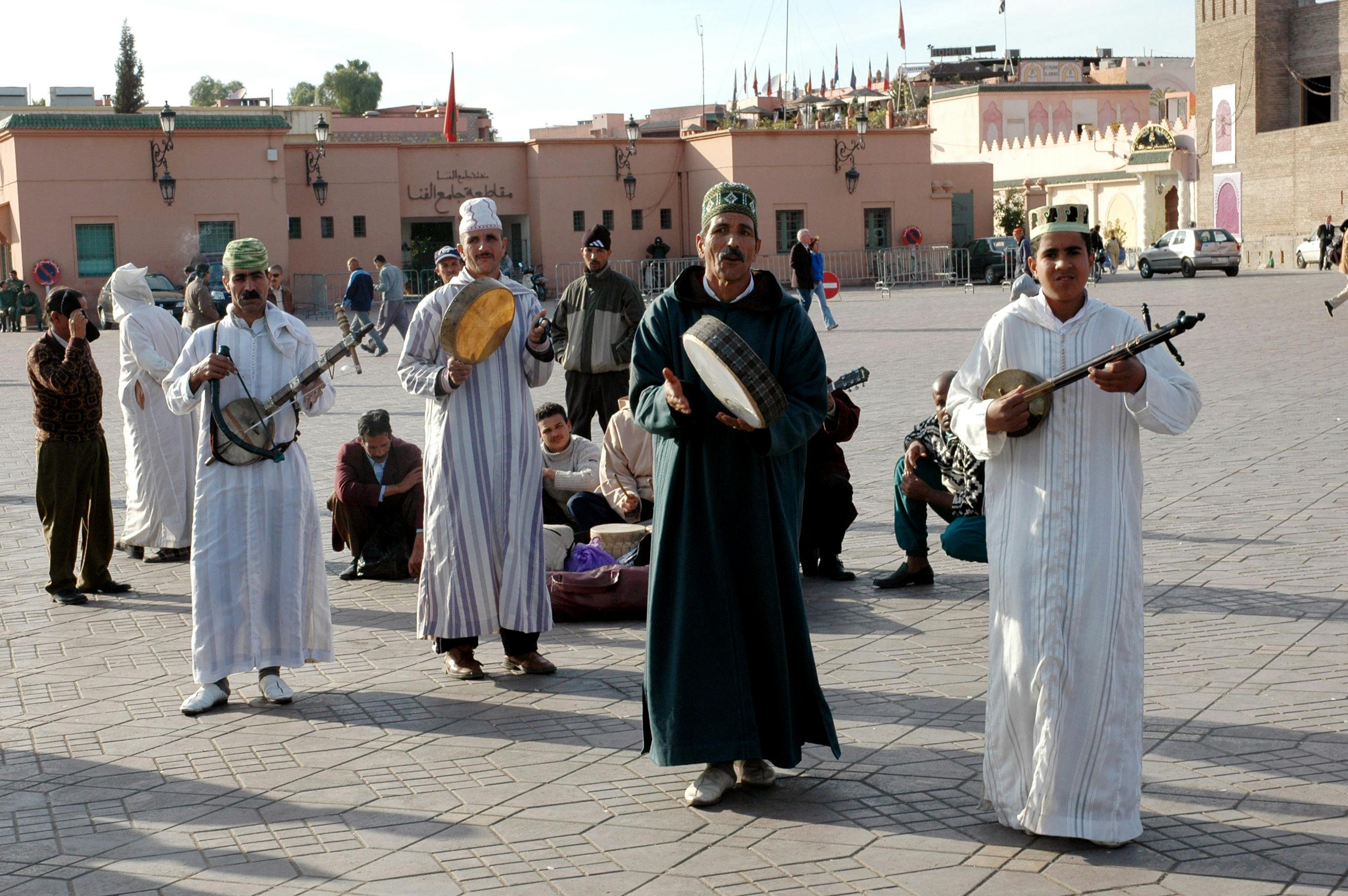
Marrakech hits you like a film set: snake charmers, orange juice carts, and drumming in Jemaa el-Fnaa, lantern-lit alleys, and rooftop bars looking over the Koutoubia minaret. It is glamorous, cosmopolitan, and openly geared toward visitors, which makes it easy and occasionally exhausting.
Fez is more inward and authentic, a working medieval city rather than a stage. The Fes el-Bali medina is a labyrinth of roughly 9,000 lanes where donkeys still haul goods and the call to prayer echoes off centuries-old walls. It rewards patience and feels less curated, but also less immediately dazzling.
The medina & getting lost
Marrakech's medina is large but more navigable, with wider arteries and clearer landmarks. The souks around Rahba Kedima and the Medersa Ben Youssef are dense, but you can usually orient yourself back to Jemaa el-Fnaa.
Fez has the more spectacular and intact medina, a UNESCO maze that is genuinely disorienting and car-free. Highlights include the Bou Inania and Al-Attarine medersas, the Nejjarine fountain, and the green-tiled Al-Qarawiyyin. Expect to get lost; that is the point, and a good guide for the first day pays off.
Things to do & sights
Beyond the souks, Marrakech has serious set-piece attractions: the Bahia Palace, the Saadian Tombs, the tranquil Jardin Majorelle and adjoining Yves Saint Laurent Museum, the Secret Garden, and the Menara gardens. There is enough polish to fill three full days.
Fez is more about atmosphere and craft than blockbuster monuments, though the Chouara tannery, the Royal Palace gates at Dar el-Makhzen, the Marinid Tombs viewpoint, and the medersas are unforgettable. It is a place to watch artisans (brass, leather, ceramics) rather than tick off palaces.
Food & nightlife
Marrakech has Morocco's most developed dining and nightlife scene: rooftop restaurants, stylish riads, cocktail bars in the Hivernage and Gueliz districts, and the smoky food stalls of Jemaa el-Fnaa at night. If you want a night out, this is the clear winner.
Fez is the gastronomic capital for traditional cooking, famous for pastilla, rich tagines, and refined Fassi cuisine, often served in beautiful riad courtyards. Nightlife is minimal and alcohol harder to find; evenings are about long dinners and rooftops, not bars.
Crowds & hassle
Marrakech is busier and more touristed, which means slicker service but also more aggressive touts, henna sellers, and persistent souk vendors. It can feel relentless in peak season around Jemaa el-Fnaa.
Fez sees fewer tourists and feels calmer once you are off the main drag, though guides and faux-guides still hustle near the gates. Overall the pressure is lower and interactions often feel more genuine.
Day trips
Marrakech is Morocco's best launchpad for adventure: the High Atlas and the Berber villages of the Ourika Valley, Imlil and Toubkal, the Agafay desert, the waterfalls at Ouzoud, and the coastal town of Essaouira (about three hours). The Sahara via Ait Ben Haddou and the Dades Gorge is a popular multi-day loop.
Fez's day trips are quieter and more cultural: the Roman ruins at Volubilis, the holy town of Moulay Idriss, and the blue-painted town of Chefchaouen (about four hours). Fez is also the logical starting point for the Sahara route to Merzouga and the cedar forests of Ifrane.
Cost
Marrakech is the pricier of the two, with higher riad rates, more upscale restaurants, and tourist-premium pricing in the souks. It still offers great value compared to Europe, but you pay for the polish.
Fez is generally cheaper, from accommodation to meals to crafts, and bargaining tends to start from a lower base. Your money stretches noticeably further here.
Getting there & around
Marrakech has the busier international airport (Menara) with abundant European budget flights, making it the easier arrival point. The medina is walkable; petits taxis handle the rest.
Fez has its own international airport with fewer connections, so many travelers arrive by the comfortable ONCF train (about a 7-hour ride from Marrakech, or a quick hop from Meknes). Inside, the medina is strictly pedestrian, so you walk everywhere.
When to go
Spring (March to May) and autumn (September to November) are ideal. Marrakech summers are brutally hot, often above 40C, though riad plunge pools help; winters are mild and pleasant.
Fez follows the same spring and autumn sweet spots. It sits at higher elevation, so summers are hot but slightly less extreme, and winter nights can be genuinely cold and damp.