
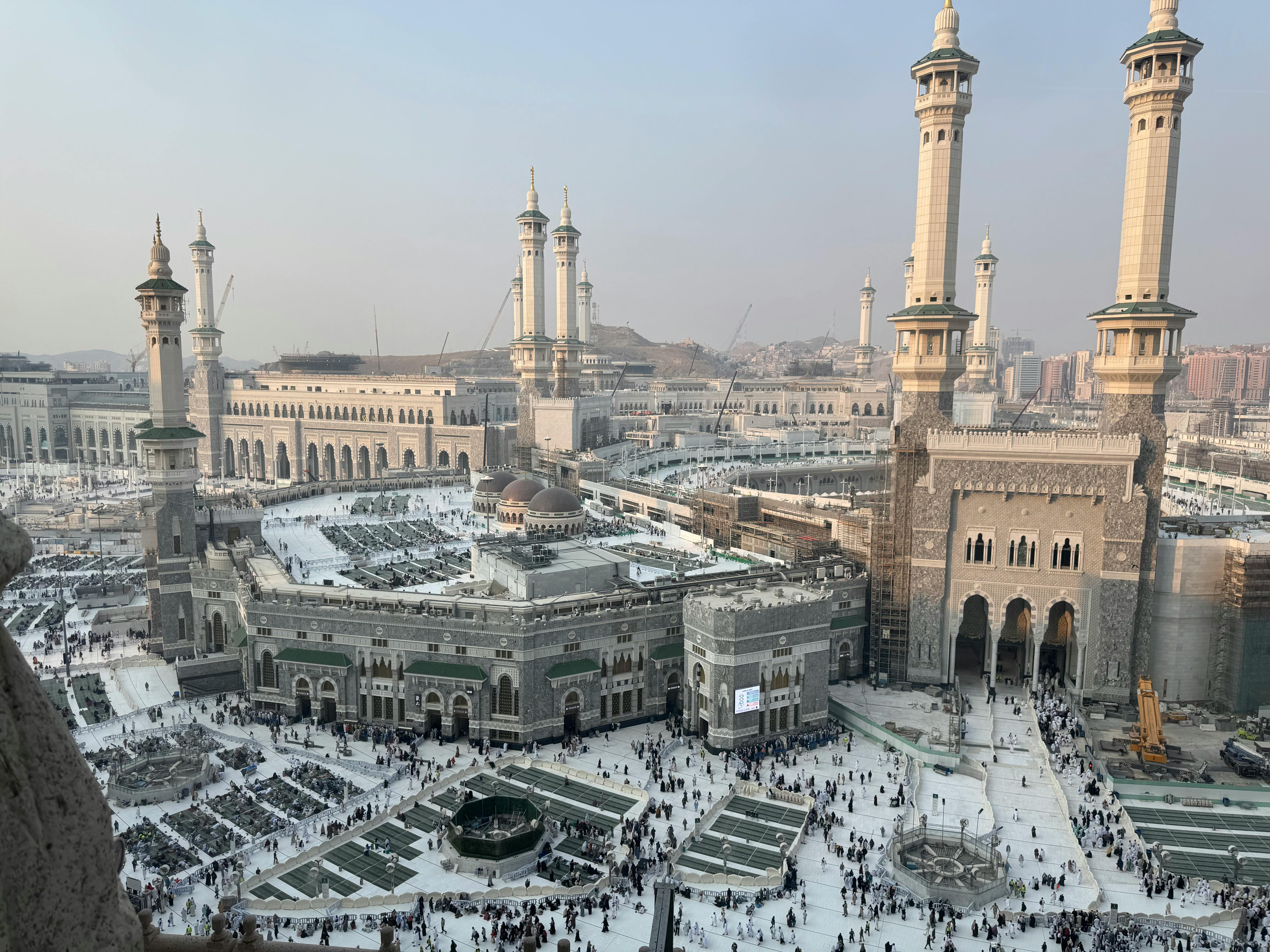
Breathtaking aerial view of Masjid al-Haram and the Kaaba in Mecca, Saudi Arabia.
City Guide · Makkah

Makkah Travel Guide: Where to Stay, Eat, and Worship in the Holy City

A practical guide to Islam's holiest city for pilgrims performing Hajj and Umrah, from the Grand Mosque to the mountains of revelation.

Last updated July 15, 202616 min read
Quick answer

Makkah, in western Saudi Arabia, is Islam's holiest city and is open only to Muslims. The single unmissable experience is prayer and tawaf at Masjid al-Haram around the Kaaba; nearby sites include Jabal al-Nour (Cave of Hira), Jabal Thawr, and the Hajj sites of Mina and Arafat. Stay as close to the Grand Mosque as your budget allows, ideally in the Ajyad or Clock Tower area within walking distance of the Haram, and expect simple, international, and fast-food dining rather than a restaurant scene.

Makkah is the spiritual heart of Islam and the direction toward which more than a billion Muslims turn in prayer five times a day. At its center stands Masjid al-Haram, the Grand Mosque, which encircles the Kaaba, the cube-shaped structure Muslims believe was rebuilt by the Prophet Ibrahim and his son Ismail. Every year the city draws millions of pilgrims for Umrah, and during the month of Dhul Hijjah it swells with the great gathering of Hajj.

Important to know before planning: entry to Makkah is restricted to Muslims. Highways into the city have checkpoints, and the surrounding sacred precinct (the Haram boundary) is marked for pilgrims only. This guide is written for Muslim travelers arriving for Umrah or Hajj, or for worship and reflection outside the pilgrimage seasons.

Beyond the mosque, Makkah is a city of dramatic hills and historic sites tied to the life of the Prophet Muhammad, peace be upon him: the Cave of Hira on Jabal al-Nour, the Cave of Thawr, and the plains of Mina and Arafat. Modern towers now rise over the old valley, and the giant Abraj Al Bait complex, crowned by the Makkah Clock, looms directly above the Grand Mosque.

Best time to visit

The two Umrah-friendly windows most pilgrims prefer are the cooler months of roughly November to February, when daytime highs are around 28-32C rather than the punishing summer heat that can top 45C. Ramadan is the most spiritually charged and crowded time for Umrah, with the Grand Mosque packed day and night and hotel prices at their highest, especially in the final ten nights. Hajj falls in the month of Dhul Hijjah (dates shift about 11 days earlier each year on the Gregorian calendar) and is by far the busiest and most demanding period. If you want a calmer visit with easier access to the mataf around the Kaaba, avoid Ramadan and Hajj and travel in a shoulder month.

Getting around

Most pilgrims fly into King Abdulaziz International Airport in Jeddah (JED), about 85km west, which has a dedicated Hajj Terminal; from there it is roughly a 60-90 minute drive to Makkah by taxi, pre-arranged transfer, or the Haramain High Speed Railway, which links Jeddah, King Abdulaziz Airport, Makkah, and Madinah. Madinah's airport (MED) is the other common entry point. Within Makkah, most worship happens on foot, and hotels in the central zone are within walking distance of the Grand Mosque. Use ride-hailing apps (Uber and Careem both operate) rather than hailing cars off the street, and note that streets around the Haram close to traffic and become extremely congested at prayer times and during Hajj.

Where to stay

Neighborhoods & hotels

Clock Tower / Abraj Al Bait (Ajyad)The cluster of towers directly facing the Grand Mosque, connected to the King Abdulaziz Gate. This is the most convenient and prestigious base, with the shortest walk to the mataf, but also the priciest; ideal for first-timers, elderly pilgrims, and anyone who wants the Kaaba minutes away.
Ajyad and MisfalahThe dense hotel districts just south and southwest of the Haram, packed with mid-range and budget hotels. A 5-15 minute walk to the mosque and full of shops, laundries, and cheap eateries, it suits pilgrims who want value without a long commute.
AziziyahA larger residential and hotel area east of the center, popular with Hajj groups and longer-stay pilgrims because it sits on the route toward Mina. Rooms and apartments are cheaper and roomier, but you will rely on shuttle buses or taxis to reach the Haram.
Jabal OmarThe modern development on the western side of the Grand Mosque, home to several international-brand hotels and a walkway toward the mosque. Good for travelers who want newer rooms and hotel amenities within a manageable walk.
Swissôtel Makkah
Swissôtel Makkahmidrange Google
4.7 · 30,221 reviews
Part of the Abraj Al Bait complex right beside the Grand Mosque, offering comfortable family-friendly rooms and easy covered access to the King Abdulaziz Gate. A reliable, well-located mid-range choice for pilgrims who prioritize proximity.
Hilton Makkah Convention Hotel
Hilton Makkah Convention Hotelmidrange Google
4.6 · 19,599 reviews
A large, dependable hotel on the western side near Jabal Omar, a short walk to the Haram with multiple dining outlets and a mall attached. Popular with families and groups for its consistent service and spacious rooms.
Al Kiswah Towers Hotel
Al Kiswah Towers Hotelbudget Google
3.9 · 18,698 reviews
A solid value option in the central hotel district, within walking distance of the Grand Mosque and close to shops and eateries. A practical base for pilgrims who want to spend more on their journey and less on the room.
Makkah Clock Royal Tower, A Fairmont Hotel
Makkah Clock Royal Tower, A Fairmont Hotelfamily friendly Google
4.7 · 118,902 reviews
Set inside the landmark Clock Tower directly above the Grand Mosque, with some of the closest access to the mataf and Kaaba views from higher floors. Spacious rooms and multiple restaurants make it a strong pick for families, though rates are premium.
Raffles Makkah Palace
Raffles Makkah Palaceluxury Google
4.7 · 7,285 reviews
The most iconic luxury address in the city, occupying the top of the Clock Tower complex with expansive suites, butler service, and direct connection to the Grand Mosque concourse. The splurge choice for pilgrims who want comfort and the shortest possible walk to prayer.

Skip the research, get a day-by-day Makkah plan

Tell us your dates and pace; we'll build the itinerary around these picks.

Generate itinerary
Top experiences

Sacred Sites You Cannot Miss

The reason pilgrims travel from every corner of the world. Approach each with reverence and follow your group's guidance and crowd-control directions.

Masjid al-Haram (The Grand Mosque)
Masjid al-Haram (The Grand Mosque) Google
4.9 · 520,714 reviews · City center
Opening hours
  • Monday: Open 24 hours
  • Tuesday: Open 24 hours
  • Wednesday: Open 24 hours
  • Thursday: Open 24 hours
  • Friday: Open 24 hours
  • Saturday: Open 24 hours
  • Sunday: Open 24 hours
The largest mosque in the world and the center of the Muslim world, surrounding the Kaaba. Here pilgrims perform tawaf (circling the Kaaba seven times) and sa'i (walking between Safa and Marwa), and drink from the Zamzam well. It is open 24 hours; go outside peak prayer times if you want space in the mataf, and use the upper floors or rooftop when the ground level is full.
Jabal al-Nour (Cave of Hira)
Jabal al-Nour (Cave of Hira) Google
4.8 · 7,263 reviews · Northeast Makkah
Opening hours
  • Monday: Open 24 hours
  • Tuesday: Open 24 hours
  • Wednesday: Open 24 hours
  • Thursday: Open 24 hours
  • Friday: Open 24 hours
  • Saturday: Open 24 hours
  • Sunday: Open 24 hours
The mountain northeast of the Grand Mosque where the Prophet Muhammad, peace be upon him, received the first revelation of the Quran in the Cave of Hira. The climb to the top takes roughly 1-2 hours on a steep, uneven path, so bring water and go early in the morning to avoid the heat. Many pilgrims visit simply to reflect at the base even if they do not summit.
Jabal Thawr (Cave of Thawr)
Jabal Thawr (Cave of Thawr) Google
4.8 · 5,391 reviews · South Makkah
The mountain south of the city where the Prophet and Abu Bakr sheltered during the migration to Madinah. The ascent is longer and more demanding than Hira, taking around 1.5-2 hours, and is best attempted by fit pilgrims early in the day. A meaningful stop for those retracing the Hijrah story.
Mina, Arafat, and Muzdalifah
Mina, Arafat, and Muzdalifah Google
4.8 · 331 reviews · East of Makkah
Opening hours
  • Monday: Open 24 hours
  • Tuesday: Open 24 hours
  • Wednesday: Open 24 hours
  • Thursday: Open 24 hours
  • Friday: Open 24 hours
  • Saturday: Open 24 hours
  • Sunday: Open 24 hours
The three Hajj stations east of Makkah: Mina, the tent city famous for its white fireproof tents; Mount Arafat with the Jabal al-Rahmah (Mount of Mercy), where pilgrims stand in prayer on the ninth of Dhul Hijjah; and Muzdalifah, where pilgrims gather pebbles and spend the night under open sky. Outside Hajj they are quiet and can be visited by car in a half-day tour.
Jannat al-Mualla
Jannat al-Mualla Google
4.7 · 1,420 reviews · Al Mualla
Opening hours
  • Monday: 8:00 AM - 10:00 PM
  • Tuesday: 8:00 AM - 10:00 PM
  • Wednesday: 8:00 AM - 10:00 PM
  • Thursday: 8:00 AM - 10:00 PM
  • Friday: 8:00 AM - 10:00 PM
  • Saturday: 8:00 AM - 10:00 PM
  • Sunday: 8:00 AM - 10:00 PM
The historic cemetery north of the Grand Mosque where members of the Prophet's family are buried, including his first wife Khadijah, may Allah be pleased with her. A place for quiet reflection and dua; dress modestly and follow posted etiquette.
Top experiences

Museums and Cultural Sites

For deeper context on the city's history and the story of revelation, a few well-presented cultural stops sit close to the holy sites.

Hira Cultural District (Revelation Gallery)
Northeast Makkah
A modern complex at the foot of Jabal al-Nour that tells the story of the first revelation and the life of the Prophet through immersive galleries and exhibits. It also has cafes, gardens, and a museum dedicated to the Quran. A cool, accessible way to understand Hira's significance without the full climb; check current opening hours as it typically closes around prayer times.
Exhibition of the Two Holy Mosques (Al-Haramain Museum)
Um Al Jood
A museum displaying original artifacts from the history of the Grand Mosque and the Prophet's Mosque, including old doors of the Kaaba, sections of the kiswah (the black cloth covering), and historic pillars and staircases. It offers a rare close look at pieces most pilgrims only see from afar. Located in the Um Al Jood area; entry is typically free or low-cost.
Makkah Museum (Al Zahir Palace)
Al Zahir
The city's heritage museum, housed in a former royal palace, covering the archaeology, history, and Islamic heritage of the Makkah region. A calm, air-conditioned stop that helps place your pilgrimage in a longer historical story. Confirm hours locally as they can vary.
Eat & drink

Coffee and Qahwa

Saudi coffee culture runs on cardamom-spiced qahwa and modern specialty chains. Around the Haram you will find familiar names alongside traditional coffee served with dates.

Barn's Cafe
Barn's Cafe Google
4.3 · 329 reviews · Central Makkah
Opening hours
  • Monday: Open 24 hours
  • Tuesday: Open 24 hours
  • Wednesday: Open 24 hours
  • Thursday: Open 24 hours
  • Friday: Open 24 hours
  • Saturday: Open 24 hours
  • Sunday: Open 24 hours
A ubiquitous Saudi coffee chain with several branches around the central district and inside malls near the Haram. Reliable for espresso drinks, Saudi qahwa, and pastries at modest prices, roughly 12-20 SAR for a coffee. A convenient caffeine stop between prayers.
Dr. Cafe Coffee
Dr. Cafe Coffee Google
4.2 · 485 reviews · Abraj Al Bait
Opening hours
  • Monday: 8:00 AM - 12:00 AM
  • Tuesday: 8:00 AM - 12:00 AM
  • Wednesday: 8:00 AM - 12:00 AM
  • Thursday: 8:00 AM - 12:00 AM
  • Friday: 8:00 AM - 12:00 AM
  • Saturday: 8:00 AM - 12:00 AM
  • Sunday: 8:00 AM - 12:00 AM
A Saudi-founded specialty chain popular for smooth lattes and mochas, with outlets in the Clock Tower complex and surrounding shopping levels. Comfortable seating and consistent quality make it a good spot to rest. Expect around 15-22 SAR for espresso drinks.
Half Million
Half Million Google
4.4 · 4,353 reviews · Central Makkah
Opening hours
  • Monday: Open 24 hours
  • Tuesday: Open 24 hours
  • Wednesday: Open 24 hours
  • Thursday: Open 24 hours
  • Friday: Open 24 hours
  • Saturday: Open 24 hours
  • Sunday: Open 24 hours
A trendier upscale coffee brand known for its clean design and quality single-origin brews, with a presence in Makkah's malls and towers. A step up for pilgrims who care about a proper flat white or pour-over. Drinks run roughly 18-28 SAR.
Eat & drink

Breakfast and Morning Bites

Mornings in Makkah mean foul (stewed fava beans), shakshuka, fresh flatbread, and sweet tea, often eaten quickly before or after Fajr prayers.

Hotel breakfast buffets (Clock Tower and Jabal Omar hotels)
Hotel breakfast buffets (Clock Tower and Jabal Omar hotels) Google
4.7 · 67,303 reviews · Abraj Al Bait / Jabal Omar
Opening hours
  • Monday: Open 24 hours
  • Tuesday: Open 24 hours
  • Wednesday: Open 24 hours
  • Thursday: Open 24 hours
  • Friday: Open 24 hours
  • Saturday: Open 24 hours
  • Sunday: Open 24 hours
The large hotels around the Haram, including the Fairmont, Swissotel, and Hilton, run extensive international breakfast buffets with Arabic, South Asian, and Western options. The easiest choice for early risers and mixed groups. Buffets typically run 90-150 SAR per person if you are not on a meal plan.
Local foul and tameez shops (Misfalah)
Local foul and tameez shops (Misfalah) Google
4.4 · 1,135 reviews · Misfalah
Opening hours
  • Monday: 7:00 AM - 11:30 PM
  • Tuesday: 7:00 AM - 11:30 PM
  • Wednesday: 7:00 AM - 11:30 PM
  • Thursday: 7:00 AM - 11:30 PM
  • Friday: 7:00 AM - 11:30 PM
  • Saturday: 7:00 AM - 11:30 PM
  • Sunday: 7:00 AM - 11:30 PM
The small eateries in the Misfalah and Ajyad backstreets serve traditional foul, shakshuka, and fresh Afghan-style tameez bread for just a few riyals. Point-and-order, cash-friendly, and authentically local. A plate of foul with bread costs around 5-12 SAR.
Eat & drink

Where to Eat

Makkah's dining reflects its global pilgrims: South Asian, Turkish, Egyptian, Levantine, and Saudi kitchens sit side by side, plus the legendary local fried chicken.

Albaik
Albaik Google
4.4 · 43,925 reviews · Central Makkah
Opening hours
  • Monday: 9:00 AM - 2:00 AM
  • Tuesday: 9:00 AM - 2:00 AM
  • Wednesday: 9:00 AM - 2:00 AM
  • Thursday: 9:00 AM - 2:00 AM
  • Friday: 9:00 AM - 2:00 AM
  • Saturday: 9:00 AM - 2:00 AM
  • Sunday: 9:00 AM - 2:00 AM
The cult Saudi fast-food chain that pilgrims plan meals around, famous for crispy broasted chicken and garlic sauce. Branches near the Haram get long queues, especially after prayers, so go off-peak. A chicken meal costs roughly 15-25 SAR and is a rite of passage in the Hejaz.
Al Baik alternatives: Al Romansiah
Aziziyah
A popular Saudi restaurant chain serving generous platters of kabsa (spiced rice with chicken or lamb), grills, and mandi in a clean, family-friendly setting. Great for sharing after a long day of worship, with mains around 25-45 SAR. Look for branches in the wider central area and Aziziyah.
The Kitchen Table and international restaurants (Clock Tower food court)
The Kitchen Table and international restaurants (Clock Tower food court) Google
4.7 · 118,902 reviews · Abraj Al Bait
The Abraj Al Bait mall and hotel towers hold a large food court and sit-down restaurants spanning Lebanese, Indian, Turkish, and Western cuisines. Convenient, air-conditioned, and open long hours for pilgrims on tight schedules. Meals range from about 25 SAR at the food court to 80 SAR-plus in hotel restaurants.
Aydi Zamzam and South Asian eateries (Misfalah)
Aydi Zamzam and South Asian eateries (Misfalah) Google
4.7 · 16 reviews · Misfalah / Ajyad
Opening hours
  • Monday: Open 24 hours
  • Tuesday: Open 24 hours
  • Wednesday: Open 24 hours
  • Thursday: Open 24 hours
  • Friday: Open 24 hours
  • Saturday: Open 24 hours
  • Sunday: Open 24 hours
The neighborhoods around the Haram are full of Pakistani, Indian, Bangladeshi, and Indonesian restaurants serving biryani, karahi, and rice-and-curry plates that comfort pilgrims far from home. Portions are large and prices low, often 15-30 SAR for a full meal. Follow the crowds to the busiest spots.
Top experiences

Markets and Shopping

From modern malls beneath the towers to old-style bazaars for prayer beads, dates, and gifts, shopping in Makkah is easy and centered on the Haram.

Abraj Al Bait Mall (Clock Tower)
Abraj Al Bait
A large multi-level mall in the Clock Tower complex with international brands, perfumes, electronics, and dining, directly connected to the Grand Mosque. The most convenient place to shop between prayers, though prices skew high. Open late to match pilgrim schedules.
Souq Al Hijaz and local bazaars
Central Makkah
The traditional shopping lanes near the Haram sell prayer mats, tasbih (prayer beads), attar (perfume oils), abayas, dates, and Zamzam-branded souvenirs. Bargaining is expected and prices are far lower than the malls. Good for gifts to bring home.
Ajyad Street shops
Ajyad
The retail stretch through Ajyad is lined with luggage sellers, dry-goods stores, dates and honey shops, and pharmacies catering to pilgrims. Useful for stocking up on essentials, extra Zamzam containers, and travel gear. Everyday prices with room to haggle at smaller stalls.
Beyond the city

Day Trips from Makkah

When you have time beyond worship, three destinations within easy reach round out a Hejaz journey. Non-Muslims cannot enter Makkah or Madinah, but Jeddah and Taif are open to all.

Madinah
Al Madinah
The Prophet's city, home to Masjid an-Nabawi (the Prophet's Mosque) and his resting place, is the natural companion to a Makkah pilgrimage. It sits about 450km north, reached in roughly 2 hours by the Haramain High Speed Railway. Many pilgrims combine both cities in one trip; book train tickets ahead in busy seasons.
Taif
Taif
A cool mountain city about 90km southeast of Makkah, famous for its rose farms, fruit orchards, and escarpment views reached by the winding Al Hada road and a cable car. Summer temperatures are far milder than the lowlands, making it a refreshing half or full-day escape. Great for families wanting green scenery and fresh air.
Jeddah
Jeddah
The Red Sea gateway city about 85km west, with the UNESCO-listed Al-Balad old town, coral-stone merchant houses, the towering King Fahd Fountain, and a lively corniche. An hour or so by car or high-speed rail, it pairs a historic bazaar with modern waterfront dining. A good stop before or after your flight.
Good to know

Before you visit

Entry restrictionsMakkah is open only to Muslims. There are checkpoints on the roads into the city, and you should carry documentation showing your pilgrimage visa or status. Plan your visit around the Umrah or Hajj visa system via the official Nusuk platform or an approved agent.
Visas and NusukMost international pilgrims enter on an Umrah or Hajj visa, and Saudi Arabia's eVisa and tourist visa holders can also perform Umrah where eligible. Use the official Nusuk app to book Umrah permits, Rawdah reservations in Madinah, and time slots during busy periods.
Dress and ihramFor Umrah and Hajj, men wear the two-piece white ihram and women wear modest clothing without face covering during the rites. Around the city, everyone should dress modestly; women typically wear an abaya and carry a scarf, though rules have relaxed somewhat.
Health and heatSummer heat is extreme and crowds are dense, so carry water, use an umbrella for shade, and pace yourself. Meningitis vaccination is required for Hajj and Umrah visas, and Saudi authorities announce specific health requirements each season, so check current rules before travel.
MoneyThe currency is the Saudi riyal (SAR). Cards are widely accepted in hotels, malls, and larger restaurants, but keep cash for small eateries, bazaars, and street vendors. ATMs are plentiful around the Haram.
Getting around and crowdsExpect major congestion and road closures near the Grand Mosque at prayer times, and far more during Ramadan and Hajj. Use ride-hailing apps, allow extra time, and follow crowd-control staff and one-way pedestrian routes inside and around the mosque.
ConnectivityBuy a local SIM (stc, Mobily, or Zain) at the airport or in the city for reliable data, or use an eSIM arranged before arrival. Good connectivity helps with Nusuk permits, ride-hailing, and staying in touch with your group in crowds.
Before you go

Plan-ahead checklist

Secure your Umrah or Hajj visa and book Umrah permits and time slots through the official Nusuk app before traveling. book 1-3 months ahead, more for Hajj
Reserve hotels near the Haram early, as central rooms in Ajyad and the Clock Tower sell out and surge in price during Ramadan and Hajj. book 3-6 months ahead for peak seasons
Get the required meningitis (ACWY) vaccination and check the season's specific health entry requirements for Saudi Arabia. at least 10 days before travel
Book Haramain High Speed Railway tickets between Jeddah, Makkah, and Madinah in advance during busy periods. book 2-4 weeks ahead in peak season
Pack ihram garments, comfortable sandals, an unscented toiletries kit, and a foldable prayer mat and umbrella for sun and crowds.

Few journeys carry the meaning of a trip to Makkah, where the rhythm of the day bends around the call to prayer and the sight of the Kaaba stays with pilgrims for a lifetime. Plan your visas and hotels early, travel light in body and heart, and give yourself time to simply sit in the Grand Mosque and reflect. May your pilgrimage be accepted and your journey safe.

Frequently asked questions

Can non-Muslims visit Makkah?
No. Entry to Makkah is legally restricted to Muslims, and there are checkpoints on the roads into the city. Non-Muslims can, however, visit nearby Jeddah and Taif, which are open to all travelers.
How many days do you need in Makkah?
A focused Umrah can be completed in 2-3 days, but most pilgrims stay 4-7 days to pray comfortably at the Grand Mosque, visit the historic mountains and sites, and rest. Many combine Makkah with several days in Madinah for a week or longer overall.
Where should I stay in Makkah?
Stay as close to Masjid al-Haram as your budget allows. The Clock Tower (Abraj Al Bait) and Jabal Omar hotels offer the shortest walk to the Kaaba, while Ajyad and Misfalah have cheaper hotels within a 5-15 minute walk, and Aziziyah offers more space and value farther out.
What is the best time to perform Umrah in Makkah?
For milder weather and manageable crowds, visit between November and February. Ramadan is the most rewarding but also the most crowded and expensive time, while Hajj season in Dhul Hijjah is the busiest of all and requires a specific Hajj visa.
How do you get from Jeddah airport to Makkah?
It is about 85km, roughly a 60-90 minute drive. You can take a pre-booked transfer, taxi, or ride-hailing car, or use the Haramain High Speed Railway from the airport station to Makkah, which is fast and comfortable.
Is Makkah expensive?
Costs vary widely. Hotels near the Grand Mosque, especially during Ramadan and Hajj, are the biggest expense and can be very pricey, but food is affordable, with hearty local meals for 15-35 SAR and famous chicken from Albaik around 15-25 SAR.

Top-Rated Places to Eat, See & Stay

Plan with MagicTrips

Build your own Makkah trip

Tell us how many days, your budget, and what you're into. We'll turn it into a custom, day-by-day Makkah itinerary.

Ready to book your stay?

Hotels
Homes

Traveling somewhere else?

Generate a custom itinerary