
Lucerne Travel Guide: Where to Eat, Stay & Explore
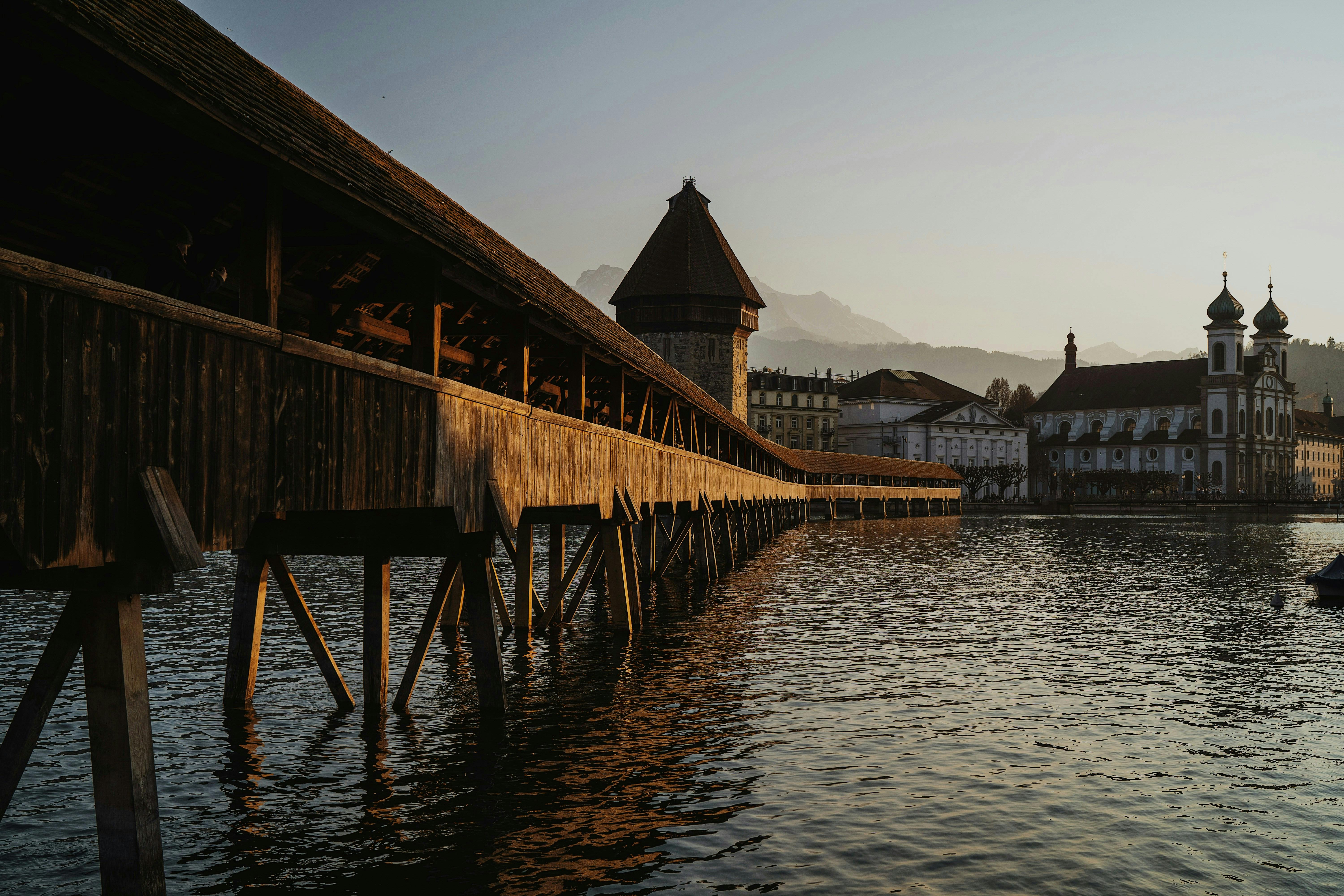
Lucerne sits at the western tip of a fjord-like lake, ringed by mountains and crossed by the wooden Chapel Bridge that has become Switzerland's most photographed landmark. It is compact enough to walk in an afternoon yet deep enough to reward several days, with a painted Old Town, a ring of medieval watchtowers, and a lakefront that turns gold at sunset.
The city has long been a launchpad for the Alps. Mark Twain rode the cogwheel railway up Mount Rigi here, and Queen Victoria toured the peaks above town. Today the same mountains, Pilatus, Titlis, and Rigi, are an hour or less away by boat, train, and cable car, which makes Lucerne the rare base where you can have a city breakfast and stand on a glacier by lunch.
What makes it special is the mix: cobbled lanes and frescoed facades on one side, paddle steamers and Alpine summits on the other, all knit together by a lake so clear it looks retouched. It is walkable, wildly scenic, and easy to fall for.
Best Time to Visit
Late May through September is prime time, with warm days, swimmable lake spots, and clear mountain views (July and August are busiest and priciest). June and September are the sweet spot: long days, lighter crowds, and reliable cable car operations. Autumn brings golden light and fewer tourists, while winter is quiet and atmospheric, with Christmas markets in December and easy access to snow up top. The Lucerne Festival fills concert halls with world-class classical music in summer, and the riotous Fasnacht carnival explodes through the streets in late winter (February or March).
Getting There & Around
Most travelers fly into Zurich Airport and take the direct train to Lucerne, a scenic ride of about an hour with no transfers needed. Lucerne's train station sits right on the lake at the edge of the Old Town, so you can walk to most hotels. The center is best explored on foot, and it is largely flat and pedestrian-friendly; for the lake and nearby villages, use the efficient boats, buses, and trains. A Swiss Travel Pass or regional pass can pay off quickly given how much you will ride. Skip renting a car: parking is expensive and the Old Town is closed to most traffic.
Where to Stay


Best Coffee Shops
Swiss coffee culture leans toward careful espresso and unhurried sitting. These are the spots locals lean on.


Where to Eat Breakfast & Brunch

Best Restaurants for Dinner
From wood-paneled taverns to lakeside fine dining, Lucerne eats well. Reserve ahead in summer.


Top Things to Do in Lucerne
The core sights cluster around the lake and Old Town and can be walked in a day, but each rewards a closer look.


On the Water & in the Air
The lake is the soul of Lucerne. Get out on it, or above it.


Mountain Day Trips Worth Taking
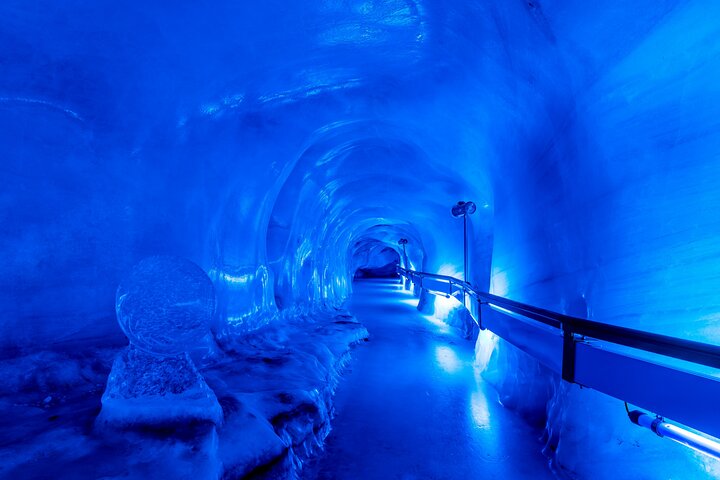
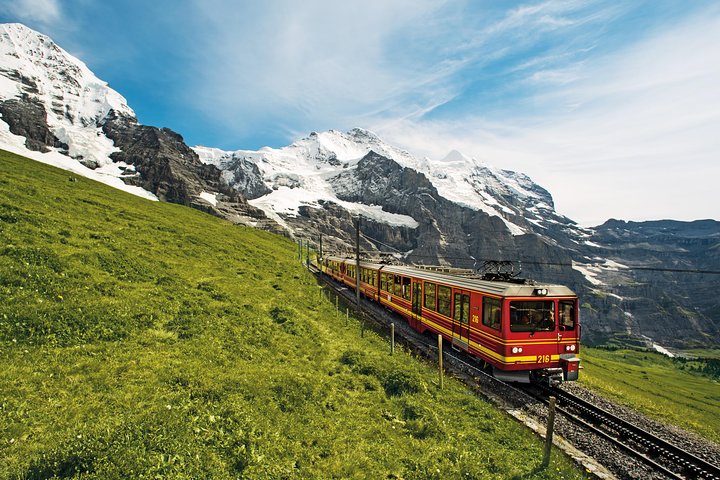
Lucerne's greatest luxury is how fast you can reach the high Alps. These summits and ranges are all easy day trips.




Where to Drink
Nightlife is low-key and convivial, centered on riverside terraces and a few characterful bars.


Things to Know
Before You Go
Lucerne packs an outsized amount of beauty into a small, walkable footprint: medieval bridges, a luminous lake, and some of the most accessible high Alps in the world. Spend your mornings on cobblestones and your afternoons on a summit, and you will understand why travelers have been falling for this town for two centuries. Start planning, and let the mountains do the rest.