
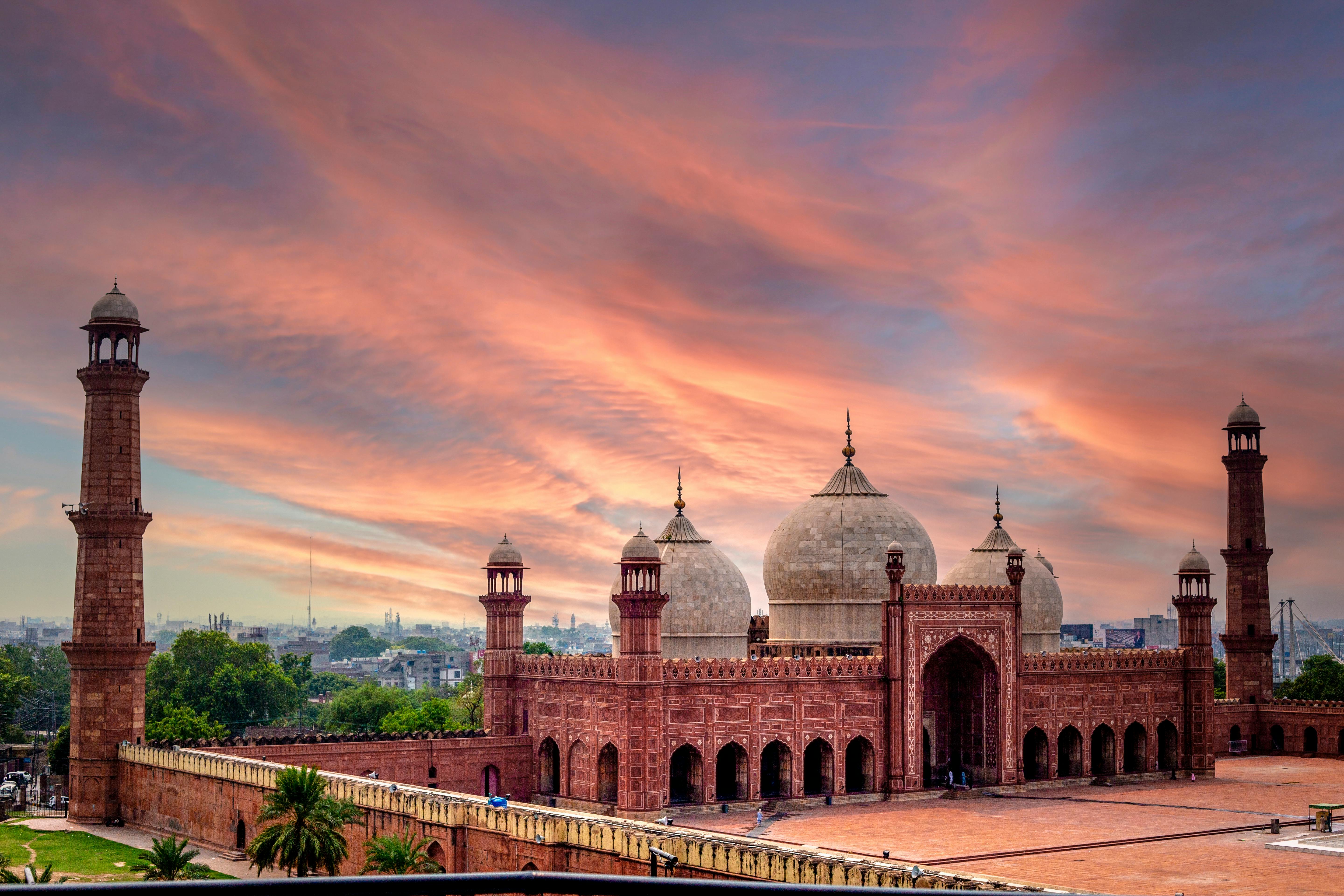
A stunning sunset casting warm hues over the iconic Badshahi Mosque in Lahore, Pakistan.
Comparison

Lahore vs Islamabad: Which Pakistani City Should You Visit?

One is Pakistan's beating cultural heart; the other is its calm, green capital. Here's how to choose.

Last updated July 16, 20266 min read
Quick verdict

Choose Lahore for history, food, and full-throttle cultural immersion; choose Islamabad for clean air, calm, safety, and easy access to the mountains.

Only about 380 km apart, Lahore and Islamabad feel like different countries. Lahore is Pakistan's cultural and culinary capital, a dense, ancient, gloriously chaotic Mughal city where every alley smells of grilled meat and every wall hides a shrine or a story. Islamabad, purpose-built in the 1960s, is calm, leafy, and orderly, laid out in tidy sectors against the green wall of the Margalla Hills.

This is really a choice between energy and ease. If you crave centuries of layered history, street food, and a city that never stops performing, Lahore is one of South Asia's great urban experiences. If you want clean air, safe walks, mountains at your doorstep, and a gentler introduction to Pakistan, Islamabad delivers.

Most travelers with time do both, since a fast motorway and cheap flights link them. But if you have to pick one, the deciding factors are clear, and they come down to what kind of traveler you are.

The cultural heart
Lahore
History · food · chaos · soul
The green capital
Islamabad
Calm · green · modern · orderly
Head to head

Lahore vs Islamabad

Vibe & first impressions
Loud, dense, and endlessly alive, Lahore hits all your senses at once: rickshaw horns, mosque calls, sizzling tawas, and the crumbling grandeur of the Walled City. It rewards the curious and overwhelms the timid.
Islamabad feels almost un-Pakistani in its calm: wide boulevards, roundabouts, gated sectors, and green space everywhere. It's clean, quiet, and easy, but some find it sterile and lacking a street-level soul.
History & sights
Lahore is the clear winner for monuments. The UNESCO-listed Lahore Fort and Badshahi Mosque, the Wazir Khan Mosque, Shalimar Gardens, and the Walled City deliver Mughal splendor on a scale nowhere else in Pakistan matches.
Islamabad's big landmark is the vast, modernist Faisal Mosque beneath the Margalla Hills, plus Pakistan Monument and museums. Nearby Taxila's ancient Gandhara ruins are a strong day trip, but the city itself is short on historic depth.
Food & nightlife
This is Lahore's crown. Old-city food streets like Gawalmandi and Fort Road, legendary spots for nihari, paye, and charga, and rooftop dining overlooking Badshahi Mosque make it Pakistan's undisputed food capital. Nightlife means late-night eating, not bars.
Islamabad eats well but tamely: polished restaurants in F-6/F-7 and Kohsar Market, good cafes, and cleaner, calmer settings. The flavor and theater of Lahore's street food just isn't here, though it's easier on sensitive stomachs.
Nature & outdoors
Flat, urban, and short on green escapes. Lahore's outdoors means gardens like Shalimar or the Racecourse Park, not real nature. Air quality is a genuine problem, especially the winter smog from November to January.
Islamabad's headline advantage. The Margalla Hills rise right at the city edge with hiking trails (Trail 3, Trail 5) leading to Monal viewpoints, plus Rawal Lake and Daman-e-Koh. Air is far cleaner than Lahore's.
Cost
Generally cheaper for food, transport, and budget stays, and you get more genuine local color for your money. Superb meals cost very little, and rickshaws are dirt cheap.
A bit pricier overall, with more upscale hotels and polished restaurants pushing costs up. Still affordable by international standards, but you pay a small premium for the calm and cleanliness.
Getting there & around
Lahore's Allama Iqbal International Airport has wide domestic and international links. Getting around means rickshaws, ride apps (Careem/inDrive), and the modern Orange Line metro and Metrobus, though traffic is heavy and chaotic.
Islamabad International Airport is Pakistan's newest and largely serves the capital region. The city is spread out and car-dependent, but roads are orderly and ride apps work smoothly; the Metrobus links it to Rawalpindi.
Safety & ease for visitors
Broadly safe for tourists but intense: navigating crowds, traffic, and hustle takes energy, and the winter smog is a real health nuisance. Rewarding for confident travelers.
Widely considered Pakistan's easiest, safest-feeling, and most relaxed city, with a strong security presence and a gentler pace. A good soft landing for first-timers or nervous travelers.
Day trips
Options are limited nearby; the Wagah border ceremony at sunset is the classic outing, and the historic city of Multan or the hill town of Murree are longer hauls.
Excellent base for trips: Taxila's ancient ruins, the Murree hills, and gateway access toward the northern areas (Naran, Hunza, Skardu) make it the natural launch pad for mountain Pakistan.

Lahore is best for

travelers hungry for Mughal history, legendary street food, and full-immersion cultural energy who don't mind the chaos.

Islamabad is best for

first-timers, families, and nature lovers who want clean air, calm, safety, and easy access to the Margalla Hills and the north.

The verdict
First trip to Pakistan? Fly into Lahore for the culture, unwind in Islamabad for the calm.

Lahore is the essential Pakistani experience: no other city rivals its history, food, and living energy, and it should headline any cultural trip. Islamabad wins on air, ease, mountains, and safety, making it the better base if you're heading north or want a gentler pace. With cheap flights and a fast motorway between them, the smartest move is to do both, and only pick one if your trip is truly short.

Whether you choose the roar of Lahore's old city or the quiet of Islamabad's green hills, Pakistan rewards the traveler who plans well. Map your days, book those cheap internal flights, and consider giving both cities the time they deserve.

Frequently asked questions

Is Lahore or Islamabad cheaper to visit?
Lahore is generally cheaper, especially for food, rickshaws, and budget accommodation, and it offers more local character for the money. Islamabad carries a small premium thanks to its upscale hotels and polished restaurants.
Which city is safer for tourists, Lahore or Islamabad?
Both are broadly safe for visitors, but Islamabad feels the calmest and most orderly, with a strong security presence and less street chaos. Lahore is also safe but more intense to navigate, and its winter smog is a genuine health concern.
Can you visit both Lahore and Islamabad in one trip?
Yes, and it's the recommended approach. The two cities are about 380 km apart, linked by a fast motorway (roughly 4 to 5 hours by car) and short, cheap domestic flights, so combining them is easy.
Which city has better food, Lahore or Islamabad?
Lahore is Pakistan's undisputed food capital, famous for nihari, paye, charga, and its old-city food streets like Gawalmandi and Fort Road. Islamabad has good, cleaner restaurants but nowhere near the same flavor or street-food culture.
Which is better for accessing northern Pakistan?
Islamabad is the natural gateway to the mountains, with road and air links toward Murree, Naran, Hunza, and Skardu. Lahore is much farther from the northern areas and less practical as a launch point.
Plan with MagicTrips

Build your own trip

Tell us how many days, your budget, and what you're into, and we'll build you a custom, day-by-day itinerary.

Ready to book your stay?

Hotels
Homes

Traveling somewhere else?

Generate a custom itinerary