
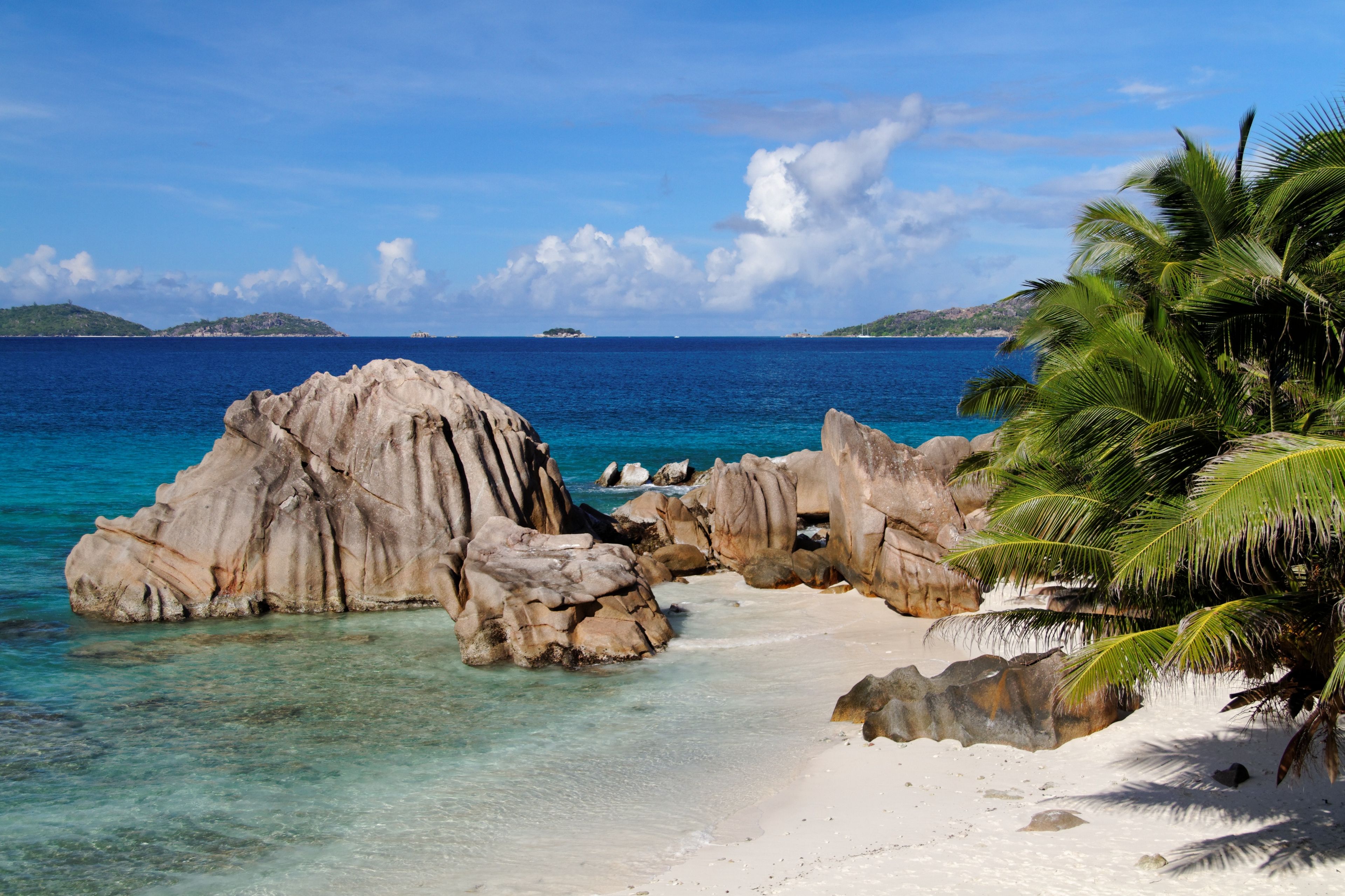
La Digue is the Seychelles at its slowest and most beautiful. The island measures barely five square miles, has almost no cars, and runs on bicycles, ox carts, and bare feet. Granite boulders the color of toasted bread tumble into impossibly clear water, palms lean over flour-white sand, and the whole place moves at a pace that resets your nervous system within hours of arrival.
The island's headliner is Anse Source d'Argent, a string of sheltered coves framed by sculpted boulders that has graced more postcards and shampoo ads than almost any beach on the planet. But La Digue rewards those who keep pedaling: wild surf beaches on the east coast, a coconut-and-vanilla plantation at the heart of the island, and a giant tortoise or two ambling across your path.
Most visitors come over from neighboring Praslin for a day, snap their photos, and leave. Stay two or three nights and you get La Digue's real gift: empty mornings on the sand, fresh grilled fish at sunset, and the rare modern luxury of having almost nowhere you need to be.
La Digue is a year-round tropical destination, hovering around 27-31°C (80-88°F) with warm seas. The two best windows are April-May and October-November, the calm shoulder seasons between the trade winds when the sea is glassy and snorkeling is at its best. The southeast trades (May to September) bring breezier, cooler, drier weather and bigger surf on east-coast beaches, while the northwest monsoon (December to March) is hotter, more humid, and wetter with short heavy downpours. Time a visit around the Festival Kreol in late October for music, food, and culture across the islands.
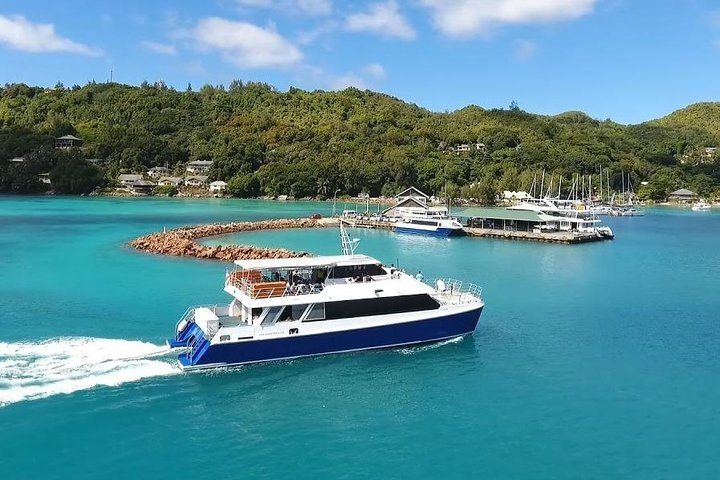
There is no airport on La Digue. You fly into Seychelles International Airport on Mahe, then reach the island by a combination of fast ferries: Cat Cocos from Mahe to Praslin, and the short Cat Rose hop from Praslin to La Digue (about 15 minutes). Book ferry legs in advance, especially in high season. Once on the island, the bicycle is king: rent one at La Passe for a few euros a day and you can reach almost everywhere in under 20 minutes. A handful of electric buggies and ox carts handle luggage and those who prefer not to pedal, but you genuinely do not need a car here.
Neighborhoods & hotels


Skip the research, get a day-by-day La Digue plan
Tell us your dates and pace; we'll build the itinerary around these picks.
Top Things to Do
La Digue's joys are mostly natural and free, but a couple of guided experiences are worth booking ahead.


Best Coffee & Casual Bites
Coffee culture is laid-back here; these spots do good espresso, fresh juice, and pastries to fuel a day of pedaling.


Where to Eat Breakfast
Most guesthouses include breakfast, but for a sit-down morning meal these deliver tropical fruit and strong coffee.

Where to Eat Dinner
La Digue eats well: grilled fish straight off the boat, Creole curries, octopus, and breadfruit chips. Reserve ahead in high season as kitchens are small.


Day Trips & Island Hops
La Digue makes a perfect base for exploring the inner islands; the ferries are quick and frequent.

Special Experiences
For couples marking a milestone, La Digue's beaches make an unforgettable backdrop.

Before you visit
Plan-ahead checklist
La Digue is the kind of place that recalibrates what you want from a holiday: no traffic, no rush, just warm water, granite boulders, and the click of bicycle gears down a sandy lane. Give it a few unhurried days and you will understand why so many travelers leave already plotting their return. Pack light, book your ferries, and let the island set the pace.
Top-Rated Places to Eat, See & Stay
Explore La Digue
Build your own La Digue trip
Tell us how many days, your budget, and what you're into. We'll turn it into a custom, day-by-day La Digue itinerary.