
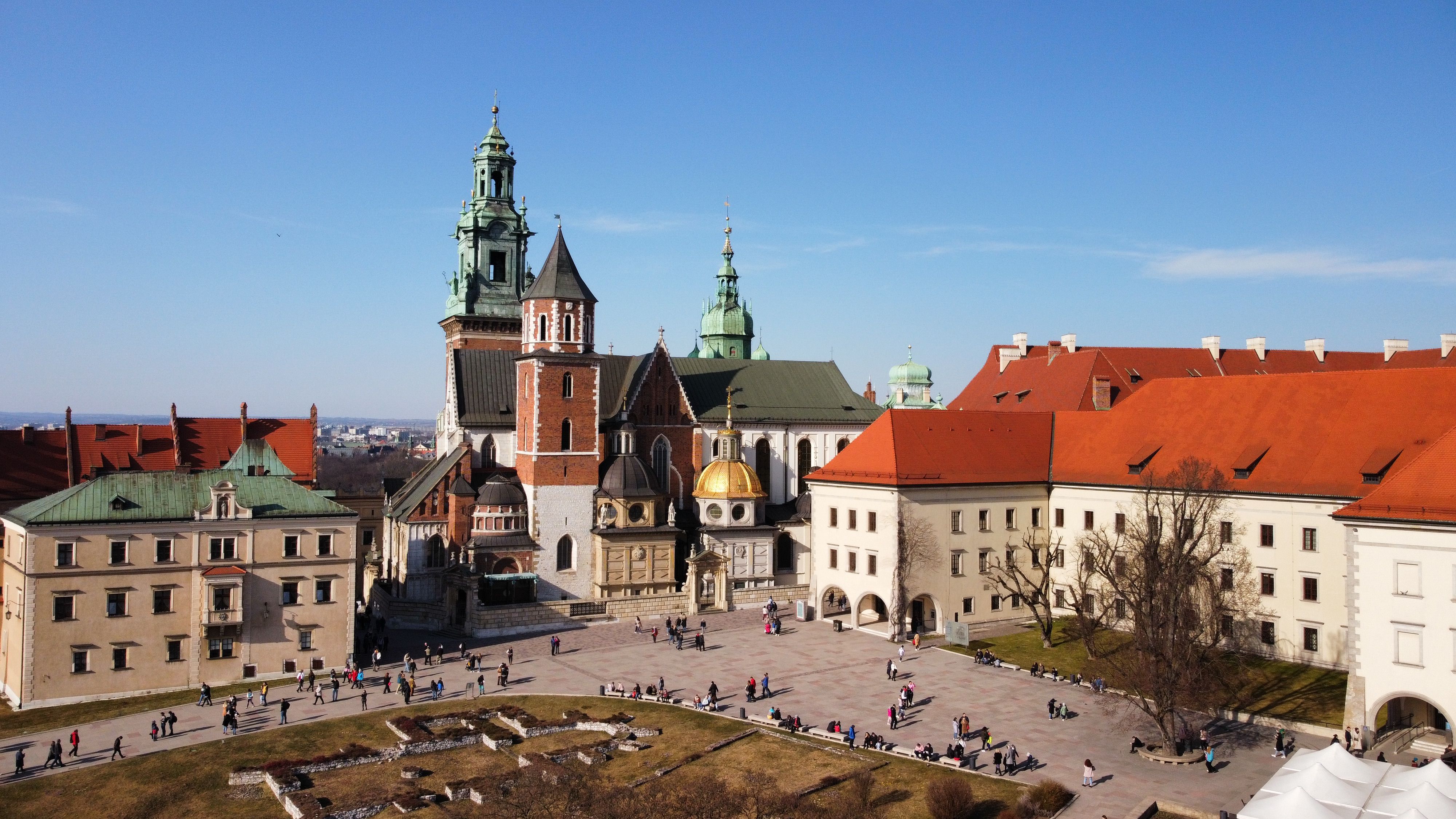
A stunning daytime view of Wawel Cathedral and courtyard in Kraków, Poland.
Comparison

Kraków vs Warsaw: Which Polish City Should You Visit?

One is a medieval showpiece you can wander in a weekend; the other is a rebuilt capital with more edge and depth. Here is how to choose.

Last updated July 5, 20266 min read
Quick verdict

Choose Kraków for a compact, atmospheric weekend of medieval streets, easy charm, and proximity to Auschwitz and the salt mines; choose Warsaw for deeper history, stronger museums, better dining and nightlife, and a modern capital that feels lived-in.

Poland's two headline cities pull travelers in different directions. Kraków is the one on postcards: a largely intact medieval core, Europe's biggest market square, and a royal castle on a hill above the Vistula. It survived World War II with its old town intact, and it feels it, compact, atmospheric, and effortlessly romantic.

Warsaw is the harder city to love at first glance but the one that rewards curiosity. Flattened in the war and painstakingly rebuilt, it mixes a reconstructed Old Town with brutalist relics, glassy skyscrapers, world-class museums, and a restless creative energy. It is bigger, busier, and more clearly a working capital than a sightseeing set piece.

The good news: they are barely two-and-a-half hours apart by fast train, so this is rarely an either-or for longer trips. But if you only have a weekend, the character gap is real, and the right pick depends on what you want from Poland.

The historic showpiece
Kraków
Medieval · walkable · atmospheric
The capital
Warsaw
Rebuilt · modern · substantial
Head to head

Kraków vs Warsaw

Vibe & first impressions
Kraków hits immediately: the Rynek Główny, the Cloth Hall, horse carriages, and St. Mary's Basilica form a picture-perfect core you can cross on foot in minutes. It is beautiful, but in peak season it can feel like a very pretty open-air museum.
Warsaw is a slow burn. The rebuilt Old Town charms, but the real character is in districts like Praga, the skyscraper cluster around Rondo Daszyńskiego, and leafy Łazienki Park. It feels like a real city getting on with its life rather than performing for visitors.
Things to do & sights
Wawel Castle and Cathedral, the Rynek and its underground museum, St. Mary's Basilica with the Veit Stoss altarpiece, and the old Jewish quarter of Kazimierz anchor a dense, walkable roster. Schindler's Factory museum in Podgórze is superb.
Warsaw's museums outclass Kraków's: the immersive Warsaw Rising Museum, the moving POLIN Museum of the History of Polish Jews, the Copernicus Science Centre, and the Chopin Museum. Add the Palace of Culture, Łazienki Park, and the reconstructed Royal Castle.
Food & nightlife
Kraków eats well and cheaply, from milk-bar pierogi to zapiekanki on Plac Nowy in Kazimierz, which is also the nightlife heart, a warren of characterful bars and clubs. It is fun, social, and geared to visitors.
Warsaw is Poland's genuine dining capital, with the country's Michelin-starred kitchens, ambitious modern-Polish restaurants, and buzzy food halls like Hala Koszyki and Elektrownia Powiśle. Nightlife spreads across Nowy Świat, Powiśle, and gritty-cool Praga.
Cost
Slightly cheaper on the whole, especially lodging near the center, and easy to eat and drink for very little. A comfortable mid-range day runs roughly 250-400 PLN (about 60-95 EUR) per person.
A touch pricier as the capital, particularly hotels and top restaurants, though milk bars and food halls keep budgets in check. Expect similar-to-slightly-higher daily costs than Kraków for equivalent comfort.
Day trips
Kraków is unmatched here: Auschwitz-Birkenau is about 90 minutes away, the Wieliczka Salt Mine roughly 30 minutes, and the Tatra Mountains and Zakopane within a two-hour drive. This alone justifies a longer stay.
Warsaw's day trips are lower-key: the palace at Wilanów, Chopin's birthplace in Żelazowa Wola, or the medieval-castle town of Płock. Solid, but nothing with the pull of Auschwitz or the mountains.
When to go
Late spring and early autumn are ideal; summer is lovely but crowded, and the square teems. Winter is cold (often near or below freezing) but the Christmas market on the Rynek is one of Europe's best.
Similar seasons, with fewer tourist crowds so shoulder months feel calmer. Summer brings free Chopin concerts in Łazienki Park on Sundays; winter is grey and cold but museum-friendly.
Getting there & around
Kraków's John Paul II Airport has wide European connections. The center is small and best walked; trams and buses cover the rest, and you rarely need them.
Warsaw Chopin and Modlin airports offer more routes, including long-haul, making it the better arrival point from afar. The city is bigger, but an efficient metro, trams, and buses make it easy; fast trains link the two cities in about 2.5 hours.

Kraków is best for

first-timers and weekenders who want a compact, atmospheric medieval city with unbeatable day trips to Auschwitz, the salt mines, and the Tatras.

Warsaw is best for

travelers who want world-class museums, the best dining and nightlife in Poland, and a real modern capital with more depth than gloss.

The verdict
Short trip? Pick Kraków. Curious traveler with time? Warsaw rewards you, and doing both is easy.

For a single weekend and a classic Polish postcard, Kraków wins on charm, walkability, and day trips. But Warsaw has the stronger museums, better food, and a grittier, more layered story, so history buffs and repeat visitors should not skip it. With a fast 2.5-hour train between them, the smartest move on a week-long trip is to see both.

Whether you fall for Kraków's medieval streets or Warsaw's rebuilt resilience, both are quick to reach and easy to pair, so start mapping your route and let the train do the rest.

Frequently asked questions

Is Kraków or Warsaw cheaper?
Kraków is generally slightly cheaper, especially for central accommodation, though both cities are affordable by Western European standards and you can eat very well for little in either. Warsaw's top restaurants and hotels push its ceiling higher.
Which is better for a first trip to Poland?
Kraków is the usual first-timer's pick thanks to its intact medieval old town, compact walkability, and proximity to Auschwitz-Birkenau and the Wieliczka Salt Mine. Warsaw suits travelers more interested in modern history and museums.
Can you visit both Kraków and Warsaw in one trip?
Yes, easily. Frequent express trains connect the two cities in about 2.5 hours, so many travelers split a week between them or use one as a base for day trips.
Which city has better food and nightlife?
Warsaw is Poland's dining capital, with the country's Michelin-starred restaurants and the best food halls, while its nightlife spreads across several distinct districts. Kraków's scene is more concentrated and visitor-friendly, centered on Kazimierz.
How many days do you need in each city?
Two to three days covers Kraków's core comfortably, plus a day for Auschwitz or the salt mines. Warsaw's museums reward two to three days as well, so a combined trip of five to seven days is ideal.
Plan with MagicTrips

Build your own trip

Tell us how many days, your budget, and what you're into, and we'll build you a custom, day-by-day itinerary.

Ready to book your stay?

Hotels
Homes

Traveling somewhere else?

Generate a custom itinerary