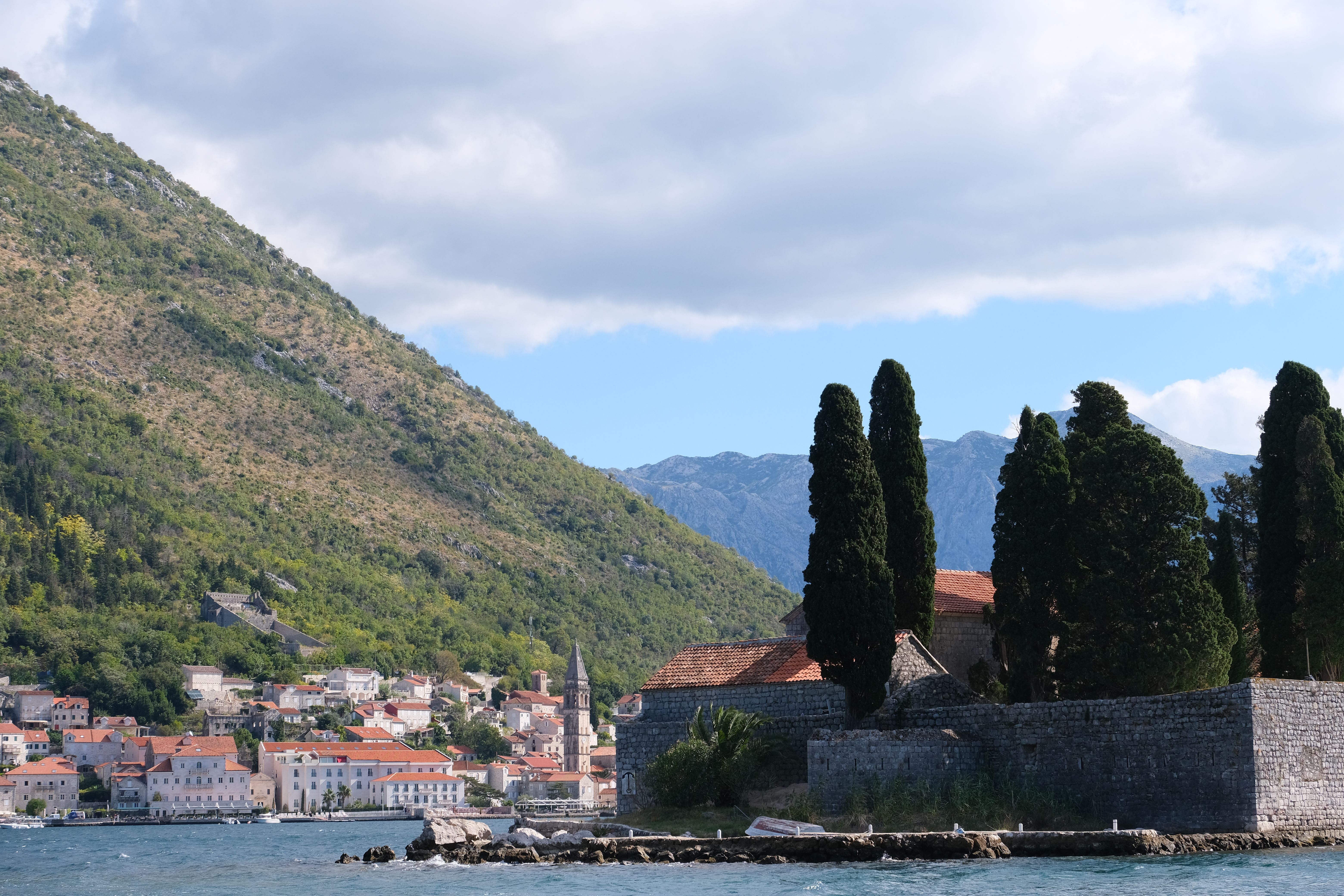
Vibe & first impressions
Kotor stuns on arrival: a walled medieval town pressed against a sheer mountain wall, with the bay glowing below. Inside the walls it is a labyrinth of squares, cats, and Venetian churches; the mood is atmospheric and slightly hushed, electric when cruise crowds land and calm by night.
Budva feels younger, brighter, and more commercial. Its compact old town (Stari Grad) is genuinely pretty with marble lanes and the Citadela, but it is wrapped by modern hotels, beach promenades, and a buzzing, sometimes brash holiday energy.
Things to do
The signature experience is hiking the city walls up to San Giovanni (St John's) Fortress for a heart-thumping view over the bay; go early or at dusk. Add the Maritime Museum, St Tryphon Cathedral, and boat trips on the bay to Our Lady of the Rocks near Perast.
Budva is about beach time, the Citadela and old-town churches, and the Mogren beach walk past the Dancing Girl statue. It also makes an easy launch pad for Sveti Stefan, the iconic islet-resort just down the coast that you can photograph from the road.
Beaches
This is Kotor's weak spot. The bay water is calm but swimming spots are small, pebbly, and unremarkable; people swim more for a dip than a proper beach day. For real beaches you travel out toward the open sea.
Budva wins decisively. The town beach, Mogren I and II, and a string of coves stretch along the Budva Riviera, plus famous spots like the Sveti Stefan beach and Jaz and Becici nearby. Expect sand-and-pebble mixes, sunbeds, and beach bars.
Food & nightlife
Kotor leans toward atmospheric konobas serving Bay of Kotor mussels, fresh fish, and Njegusi prosciutto, often in tucked-away courtyards. Nightlife exists (a few bars and the odd club) but it is low-key and winds down relatively early.
Budva is Montenegro's nightlife capital, from seafront cocktail bars to big summer clubs like Top Hill on the hill above town. Dining ranges from excellent seafood to tourist-trap pizza; the scene is louder, later, and more party-driven.
Cost
Roughly similar to Budva and not the bargain it once was, especially in the walled town where cruise traffic props up prices. Accommodation inside the walls is pricey and can be noisy; staying just outside is cheaper.
Comparable overall, with a wide spread: budget guesthouses and apartments inland versus premium beachfront and the ultra-luxury Aman Sveti Stefan nearby. Nightlife and beach clubs are where budgets quietly evaporate.
When to go
May, June, September, and early October are ideal: warm, walkable, and the wall hike is bearable. July and August bring heat and heavy cruise-day crowds that clog the narrow lanes by midday.
Peak July and August are when Budva fully comes alive (and gets packed and pricey); June and September give you warm sea with thinner crowds. Out of season it quiets down considerably.
Getting there & around
Tivat Airport is about 15-20 minutes away; Dubrovnik (Croatia) and Podgorica are within roughly two hours. Kotor's old town is car-free and walkable, but driving the bay road in summer can be slow and parking tight.
Budva is around 20 minutes from Tivat Airport and well connected by frequent buses along the coast, including to Kotor. The town itself is walkable, and it is the most convenient hub for exploring the southern Riviera.
Day trips
Superb base for the bay: Perast and the island churches, the old capital Cetinje, and the serpentine drive up to Lovcen National Park and Njegos's mausoleum. Budva itself is an easy half-day trip.
Well placed for the southern coast: Sveti Stefan, the beaches of the Riviera, the walled town of Bar, and Skadar Lake. Kotor and Perast are an easy excursion north.
Crowds
Intense but concentrated: when cruise ships dock, the walled town gets shoulder-to-shoulder, then empties dramatically in the evening once day-trippers leave.
Crowded in a different way, driven by summer holidaymakers and nightlife rather than cruises; the beaches and promenade stay busy from morning well into the night in peak season.