
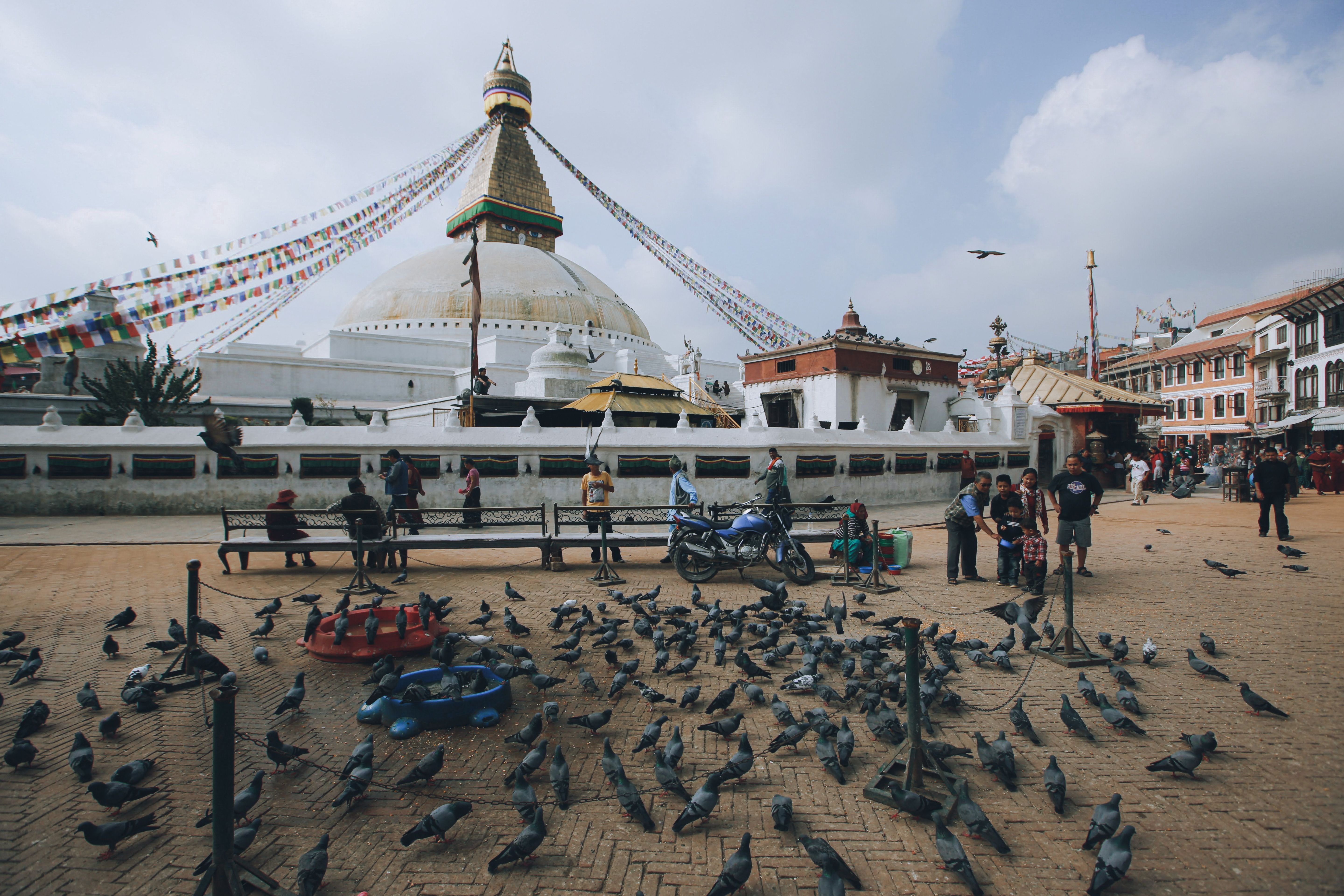
Visitors and pigeons gather at the iconic Boudhanath Stupa in Kathmandu, Nepal.
Comparison

Kathmandu vs Pokhara: Which Nepal City Should You Base In?

Nepal's chaotic cultural capital versus its laid-back lakeside gateway to the Himalayas, decoded for your trip.

Last updated July 15, 20266 min read
Quick verdict

Choose Kathmandu for temples, history, and Nepal's cultural intensity; choose Pokhara for lake views, mountain scenery, and a relaxed base for Annapurna trekking and adventure sports.

Almost every Nepal trip touches both of these cities, but they pull in opposite directions. Kathmandu is dense, ancient, and overwhelming in the best and worst senses: a sprawl of temples, prayer wheels, dust, and horns where centuries of Hindu and Buddhist history are crammed into a single hazy valley. Pokhara, six to seven hours west by road, is Nepal exhaling, a resort town strung along a calm lake with the white wall of the Annapurnas floating above it.

The two are only about 200 km apart, yet they feel like different countries. Kathmandu is where you land, sort permits, eat well, and absorb the cultural weight of the place. Pokhara is where you start most treks, paraglide, and slow down with a coffee facing the water. Deciding how to split your time depends on whether you came for temples and texture or mountains and calm.

The good news: you rarely have to choose one over the other. The honest question for most travelers is how many nights to give each, and which one deserves the bulk of your trip.

The capital
Kathmandu
Temples · chaos · deep history
The lakeside escape
Pokhara
Lake · mountains · slow days
Head to head

Kathmandu vs Pokhara

Vibe & first impressions
Loud, chaotic, and layered. The old core around Thamel, Durbar Square, and the UNESCO temple complexes hits you with incense, traffic, and crumbling brick beauty all at once. It rewards curiosity but can exhaust you fast, especially with the dust and congestion.
Immediately calmer. Lakeside (the tourist strip along Phewa Lake) is walkable, green, and low-rise, with cafes facing the water and paragliders drifting overhead. It feels like a place built for lingering rather than surviving.
Things to do
This is Nepal's cultural heavyweight: Boudhanath and Swayambhunath (the Monkey Temple) stupas, Pashupatinath's riverside cremation ghats, and the durbar squares of Kathmandu, Patan, and Bhaktapur. Days fill easily with temples, museums, and old-city wandering.
More about scenery and activity than sights. Boat on Phewa Lake to the Tal Barahi temple, hike or drive up to Sarangkot for sunrise over the Annapurnas, visit the World Peace Pagoda, Davis Falls, and the Gupteshwor cave. Paragliding and ziplining are the marquee draws.
Trekking & adventure
The logistical hub: you arrange permits (TIMS and area cards), buy gear in Thamel, and fly out to Lukla for the Everest region. But the city itself is not a trailhead, and mountain views from the valley are limited and often hazy.
The launchpad for the Annapurna region, including Ghorepani/Poon Hill, Annapurna Base Camp, and Mardi Himal, most of which start within a couple of hours' drive. It is also Nepal's adventure-sports capital for paragliding, ultralight flights, and rafting.
Food & nightlife
The best and most varied dining in Nepal: excellent Newari food, momos, Tibetan spots, and international restaurants in Thamel and Jhamsikhel. Nightlife is livelier, with live-music bars and rooftop spots.
Lakeside is full of relaxed cafes, lake-view restaurants, and bars with live acoustic sets. Quality is good and the setting beats Kathmandu, but the range and edge are a notch below the capital.
Cost
Slightly cheaper for everyday food and local transport, and the best value on gear and trekking logistics. Budget guesthouses run roughly USD 12-25 a night, mid-range hotels USD 40-90.
Comparable overall, with lakeside accommodation spanning cheap trekker lodges to lake-view boutique hotels. You may pay a small premium for a room with a Phewa Lake or mountain view, but meals and beer stay affordable.
When to go
October-November and March-April are the sweet spots: clearer air, mild days, and festivals like Dashain and Tihar in autumn. Winter is cold and hazy; the monsoon (June-September) brings heavy rain and murky skies.
Same seasonal logic, and clear autumn and spring mornings deliver the best Annapurna reflections on the lake. Pokhara sits lower and warmer than Kathmandu, so winter days are more pleasant, though monsoon here is very wet.
Getting there & around
Home to Tribhuvan International Airport, Nepal's main gateway, so nearly everyone arrives here. Getting around means taxis, ride apps, and a lot of walking through congested lanes; traffic is genuinely slow.
Reached from Kathmandu by a 6-8 hour drive (tourist bus or private car) or a roughly 25-30 minute domestic flight. Once there, the compact lakeside area is easy on foot or by short taxi and scooter hires.
Day trips
Superb: Bhaktapur and Patan are essentially open-air museums, and Nagarkot offers a Himalayan sunrise viewpoint within an hour or two. Chitwan National Park is reachable for a jungle add-on.
Fewer classic day trips, but Sarangkot sunrise, Begnas Lake, and short foothill hikes fill the gaps. It also works as the natural staging point before longer treks west.
Crowds & pace
Intense and crowded, especially around Thamel and the major temples. It is stimulating but you feel the density constantly.
Touristy along the lakefront but far more relaxed, with space to breathe and slow mornings by the water. Easier on travelers who want downtime.

Kathmandu is best for

culture-focused travelers who want temples, history, and Nepal's full sensory intensity, plus the logistics hub for treks and flights.

Pokhara is best for

travelers who want mountain views, lake calm, and a relaxed base for Annapurna trekking and adventure sports.

The verdict
First trip to Nepal? Land in Kathmandu, then unwind in Pokhara.

Give Kathmandu two to three days for its temples, old cities, and trekking logistics, then head to Pokhara to slow down and, if you're trekking, to launch into the Annapurnas. If you only care about mountains, lakes, and calm, skip straight through Kathmandu; if you're a history and culture traveler, the capital deserves the bulk of your time. For most people, doing both is the right answer.

Sort out how many nights each city gets, book that quick flight or bus between them, and you'll have the best of both: Nepal's cultural heart and its Himalayan calm.

Frequently asked questions

Is Kathmandu or Pokhara cheaper?
They are broadly similar, with Kathmandu slightly cheaper for local food, transport, and trekking gear, while Pokhara charges a small premium for lake-view or mountain-view rooms. Budget travelers can get by on similar daily costs in both.
How do you get from Kathmandu to Pokhara?
By road it is roughly 200 km and takes 6-8 hours by tourist bus or private car, depending on traffic and road conditions. A domestic flight covers it in about 25-30 minutes and is worth it if your time is tight.
Which is better for trekking?
Pokhara is the better base for the Annapurna region, including Poon Hill, Annapurna Base Camp, and Mardi Himal, with trailheads only a short drive away. Kathmandu is where you arrange permits and fly out to Lukla for Everest-region treks.
Can you visit both Kathmandu and Pokhara in one trip?
Yes, and most travelers do. A common plan is two to three days in Kathmandu followed by two or more nights in Pokhara, connected by a short flight or a half-day bus ride.
Which has better mountain views?
Pokhara wins clearly, with the Annapurna range visible above Phewa Lake and dawn panoramas from Sarangkot. Kathmandu's valley views are limited and often hazy, so for mountains, head west.
Plan with MagicTrips

Build your own trip

Tell us how many days, your budget, and what you're into, and we'll build you a custom, day-by-day itinerary.

Ready to book your stay?

Hotels
Homes

Traveling somewhere else?

Generate a custom itinerary