
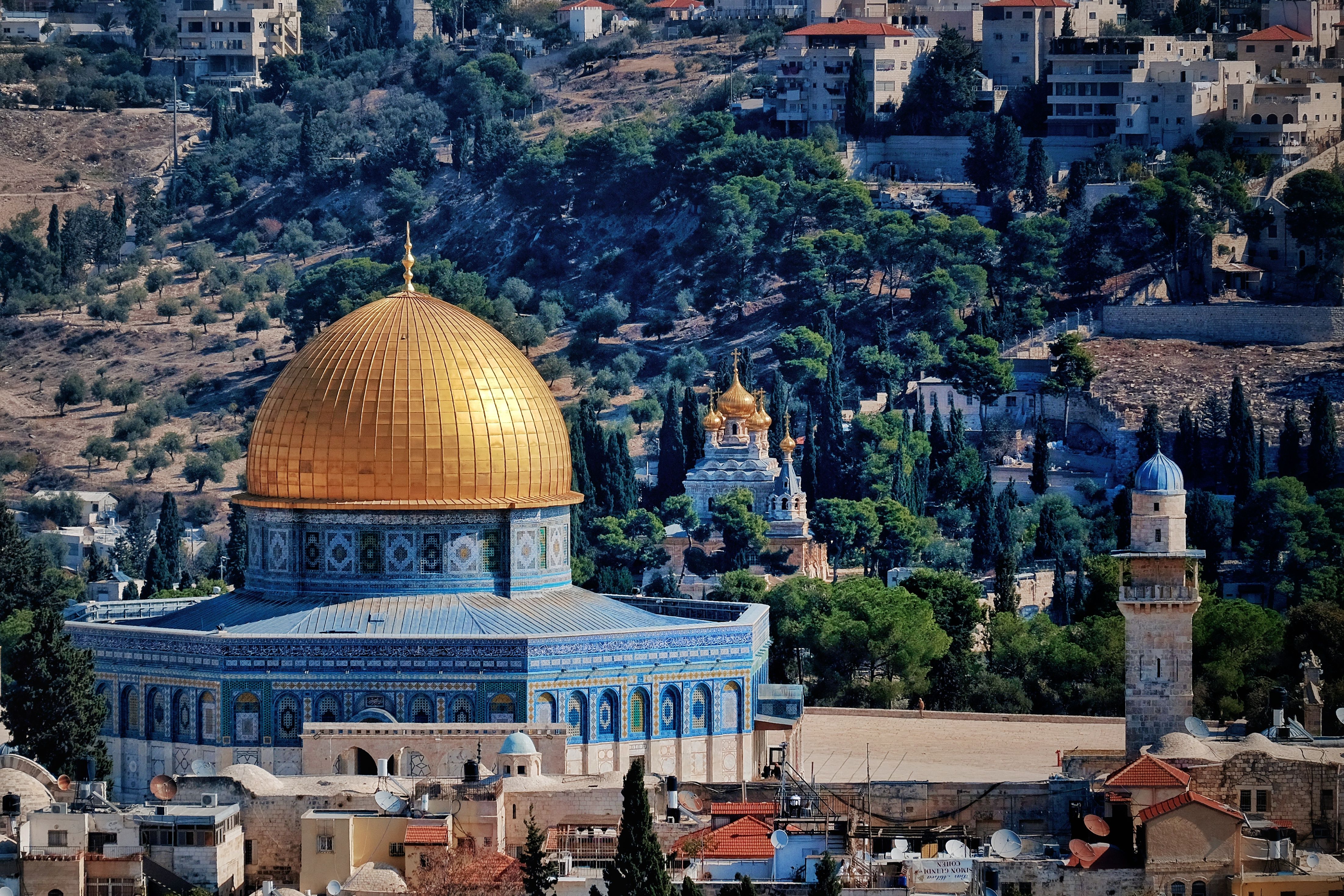
Beautiful aerial view of the Dome of the Rock, a significant Islamic landmark in Jerusalem.
Comparison

Jerusalem vs Tel Aviv: Which Israeli City Should You Visit?

One city holds 3,000 years of sacred history; the other never stops partying by the sea. Here's how to choose.

Last updated July 9, 20266 min read
Quick verdict

Choose Jerusalem for religious history, ancient sites, and cultural depth; choose Tel Aviv for beaches, food, nightlife, and a relaxed modern Mediterranean escape.

Israel packs two utterly different cities into a country the size of New Jersey, and they sit barely an hour apart by road. Jerusalem is ancient, layered, and heavy with meaning: a walled Old City sacred to Judaism, Christianity, and Islam, where the stones themselves feel weighted. Tel Aviv, founded in 1909 on the Mediterranean sand dunes, is its polar opposite: secular, hedonistic, tech-driven, and built around beaches, cafes, and a nightlife that runs until dawn.

The two cities are not rivals so much as complements, and many travelers see both. But if your time or energy is limited, the choice really comes down to what kind of trip you want: profound and contemplative, or sunny and social. One will move you; the other will relax you.

This guide breaks down the honest differences, from what there is to actually do to how much you'll spend, how the atmosphere shifts on Shabbat, and whether you can reasonably do both in one visit.

The holy city
Jerusalem
History · faith · gravity
The coastal one
Tel Aviv
Beaches · nightlife · modern buzz
Head to head

Jerusalem vs Tel Aviv

Vibe & first impressions
Solemn, dense, and historic. The walled Old City with its Western Wall, Church of the Holy Sepulchre, and Dome of the Rock sits at the heart of a modern city that grows quiet and reverent, especially on Shabbat when much of it shuts down from Friday sunset to Saturday night.
Fast, secular, and playful. Palm-lined boulevards, Bauhaus architecture in the White City, and a beachfront promenade give it a distinctly Mediterranean, come-as-you-are energy. Shabbat is far more relaxed here, with many restaurants and beaches staying open.
Things to do
This is a sightseeing city: the Western Wall, Via Dolorosa, Temple Mount, Mount of Olives, Yad Vashem Holocaust memorial, the Israel Museum with the Dead Sea Scrolls, and endless walks through the four quarters of the Old City. History and religion are the main event.
The pleasures are lower-key: sun on the beach, the buzzing Carmel Market, strolling old Jaffa's port and flea market, the museums (Tel Aviv Museum of Art, ANU Museum of the Jewish People), and simply cafe-hopping. It's about living well, not ticking sights.
Beaches
Landlocked and roughly 800 meters above sea level, Jerusalem has no beach at all. The nearest coast is the Mediterranean at Tel Aviv or the mineral-rich Dead Sea about 90 minutes east.
The whole point. Miles of clean, wide Mediterranean sand run the length of the city, from Gordon and Frishman beaches to the surf breaks near Jaffa. Warm water from late spring through autumn makes it a genuine beach destination.
Food & nightlife
Excellent food, especially hummus, Middle Eastern mezze, and the Machane Yehuda market, which transforms into a lively bar scene at night. But overall nightlife is limited and much of the city sleeps early, particularly on Shabbat.
One of the best food and nightlife scenes in the Middle East: world-class hummus, Yemenite and Levantine cooking, inventive chef restaurants, and a nightlife that genuinely goes until sunrise across Rothschild Boulevard, Florentin, and the port.
Cost
Slightly cheaper than Tel Aviv on average, with more budget guesthouses and hostels aimed at pilgrims. Still not a cheap destination overall; Israel is expensive by regional standards.
Consistently among the pricier cities in the world for hotels, dining, and drinks. Expect to pay a premium for beachfront rooms and restaurant meals; budget travelers should plan carefully.
When to go
Spring (March-May) and autumn (September-November) are ideal, with mild days. Summers are hot but dry, and winters can be genuinely cold with occasional rain and rare snow given the elevation.
Long, hot, humid summers make July and August sticky but great for the beach and sea swimming. Spring and autumn are the sweet spot; winters are mild but can bring rain.
Getting there & around
Ben Gurion Airport is roughly 45-60 minutes away, connected by a fast train to Jerusalem's Yitzhak Navon station. In town, a light rail and buses help, though the Old City is best explored on foot.
Just 20-25 minutes from Ben Gurion Airport. The two cities are linked by frequent trains (about 35 minutes) and buses, making a day trip between them very easy. Central Tel Aviv is flat, compact, and great for walking or cycling.
Day trips
A superb base for the Dead Sea and Masada, Bethlehem, the Judean Desert, and Ein Gedi, all within an easy drive. Better positioned for history-and-nature excursions.
Good for the coast: Caesarea's Roman ruins, the Bahai Gardens in Haifa, and Old Jaffa on your doorstep. The Dead Sea and Jerusalem are also doable as day trips.

Jerusalem is best for

travelers drawn to religious history, ancient sites, and a profound, culturally immersive experience.

Tel Aviv is best for

travelers who want beaches, great food, nightlife, and a relaxed, modern Mediterranean city break.

The verdict
First trip to Israel? Do both, but let your trip's purpose pick your base.

Jerusalem and Tel Aviv are only about 35 minutes apart by train, so most first-timers should see both rather than choose. If you're moved by history, faith, and archaeology, weight your days toward Jerusalem; if you want sun, food, and nightlife, lean into Tel Aviv. A classic split is two to three days in each, using Tel Aviv for arrival and beach time and Jerusalem for the Old City and desert day trips.

Whether you're chasing sacred history or Mediterranean sunsets, Israel makes it easy to have both within an hour of each other. Map out your days, decide where to base yourself, and start planning.

Frequently asked questions

Is Jerusalem or Tel Aviv cheaper?
Jerusalem is generally a bit cheaper, especially for accommodation, with more budget-friendly guesthouses and hostels. Tel Aviv is one of the world's more expensive cities for hotels, restaurants, and drinks.
Can you visit both Jerusalem and Tel Aviv in one trip?
Yes, easily. The two cities are linked by frequent trains that take about 35 minutes, so you can base yourself in one and day-trip to the other, or split your stay between them.
Which is better for families, Jerusalem or Tel Aviv?
Tel Aviv is generally easier with kids thanks to its beaches, parks, and relaxed pace, while Jerusalem is more educational and history-focused. Families often enjoy combining the beach time of Tel Aviv with a couple of sightseeing days in Jerusalem.
Does everything close on Shabbat in Jerusalem and Tel Aviv?
In Jerusalem, most shops, restaurants, and public transit shut down from Friday sunset to Saturday night. Tel Aviv is far more relaxed, with many restaurants, cafes, and beaches remaining open, though some transit is reduced.
Which city has better food, Jerusalem or Tel Aviv?
Both are excellent, but Tel Aviv has the broader and more innovative dining and nightlife scene, from chef restaurants to late-night bars. Jerusalem shines for traditional Middle Eastern food and the lively Machane Yehuda market.
Plan with MagicTrips

Build your own trip

Tell us how many days, your budget, and what you're into, and we'll build you a custom, day-by-day itinerary.

Ready to book your stay?

Hotels
Homes

Traveling somewhere else?

Generate a custom itinerary