Vibe & first impressions
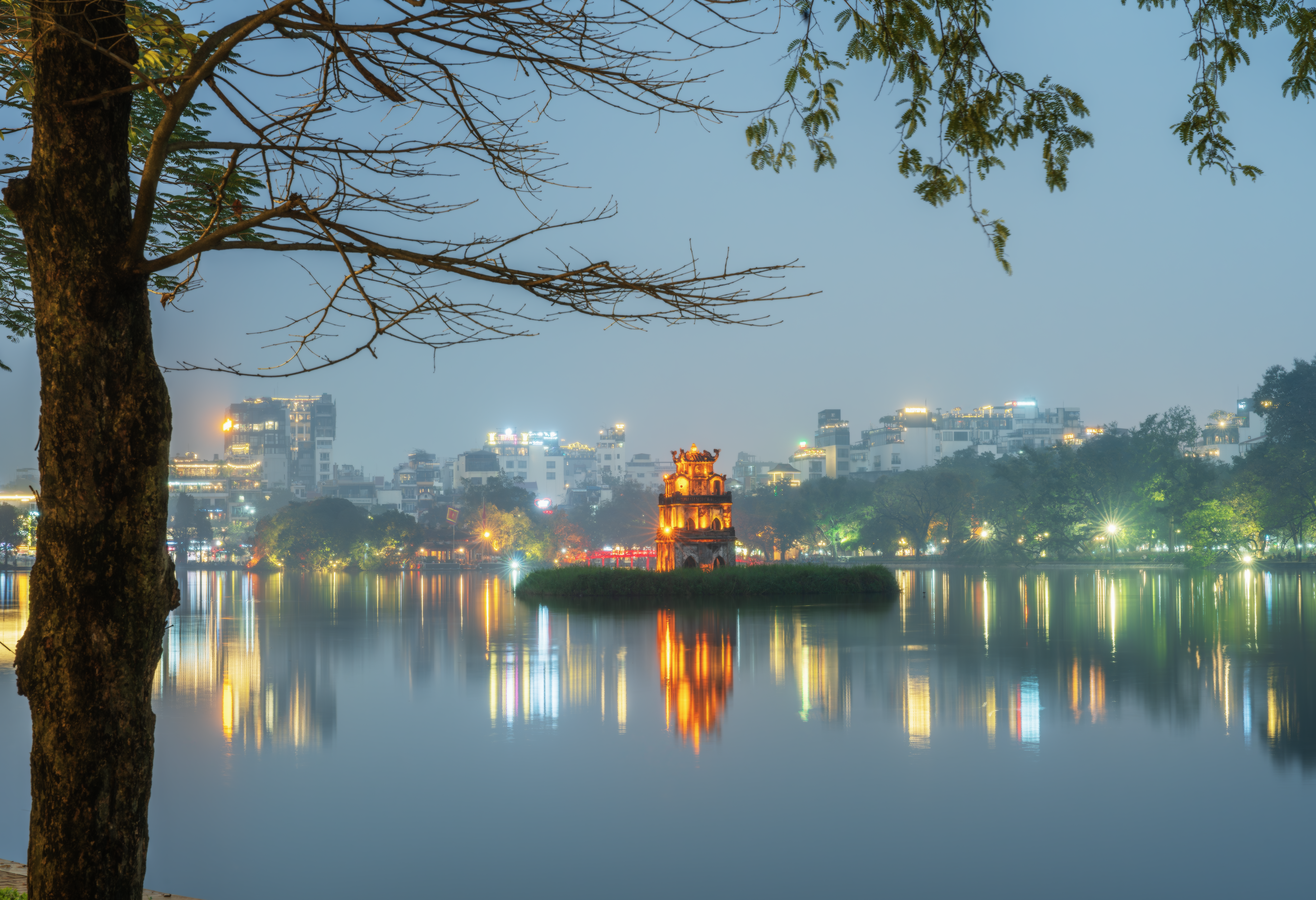
Hanoi feels older, denser, and more atmospheric. The Old Quarter's 36 streets still cluster by trade, the French Quarter has stately colonial facades, and life orbits Hoan Kiem Lake, where locals do tai chi at dawn. It can feel chaotic but the underlying pace is slower and more traditional.
Ho Chi Minh City is brasher, hotter, and more forward-looking. District 1 bristles with skyscrapers like the Bitexco and Landmark 81 towers, rooftop bars glow above the traffic, and the energy is unapologetically commercial. It feels like a city sprinting toward the future.
Things to do & sights
Hanoi is rich in history and culture: the Ho Chi Minh Mausoleum, the Temple of Literature (Vietnam's first university), the Imperial Citadel of Thang Long, and the moving Vietnamese Women's Museum. An evening water puppet show at Thang Long theater is a classic, and the lakeside Ngoc Son Temple is a short stroll from the Old Quarter.
Saigon leans into 20th-century history and modern leisure. The War Remnants Museum is sobering and essential, the Independence (Reunification) Palace is frozen in 1975, and Notre-Dame Cathedral and the Central Post Office anchor the colonial core. Beyond that it's rooftop bars, malls, and spas rather than ancient temples.
Food & nightlife
Hanoi is the home of pho, bun cha (Obama famously ate it here), cha ca grilled fish, and egg coffee invented at Cafe Giang. Flavors are subtler and more herb-forward. Nightlife centers on Bia Hoi corner and the buzzing weekend walking street around Hoan Kiem, but the city winds down comparatively early.
Saigon is the country's dining and drinking capital. Southern dishes run sweeter and bolder: com tam, banh mi, hu tieu, and a deep bench of regional migrant cuisines. Nightlife is genuinely late, from craft-beer alleys and speakeasies in District 1 to rooftop bars and the backpacker chaos of Bui Vien Street.
Cost
Hanoi is slightly cheaper across the board: street meals, beer, and budget rooms tend to cost a touch less, and bia hoi draft beer is among the cheapest in the world. Strong value for budget and mid-range travelers.
Ho Chi Minh City is marginally pricier, especially for cocktails, rooftop venues, and upscale dining, reflecting its business-hub status. Still very affordable by global standards, but your nightlife budget stretches less far than in Hanoi.
When to go & weather
Hanoi has four real seasons. The sweet spots are autumn (October to November) and spring (March to April), when it's mild and dry. Winter (December to February) can be genuinely chilly and grey, and summer is hot and humid with heavy rain.
Ho Chi Minh City is tropical and warm year-round, hovering around 30C. There's no cold season, just a dry season (roughly December to April) and a wet season (May to November) with short, intense afternoon downpours. December to March is the most comfortable window.
Getting there & around
Noi Bai International Airport sits about 45 minutes north of the center. The compact Old Quarter and lake area are walkable, and a small metro line plus Grab bikes and taxis cover the rest. Traffic is dense but the historic core is genuinely strollable.
Tan Son Nhat Airport is closer to the center but notoriously congested. The city is more sprawling and hotter for walking, though Grab and a growing metro (Line 1 to the eastern districts) help. Expect to motorbike or ride more than you walk.
Day trips & beyond
Hanoi is the gateway to northern Vietnam's headline scenery: Halong Bay and Lan Ha Bay cruises, the rice terraces of Sapa, the karst landscapes of Ninh Binh (Trang An, Tam Coc), and the Ha Giang loop. This is a major reason many travelers base here.
Saigon's day trips are flatter but fascinating: the Cu Chi Tunnels, the floating markets and waterways of the Mekong Delta (My Tho, Can Tho, Ben Tre), and the Cao Dai Holy See at Tay Ninh. Beach lovers can fly easily to Phu Quoc.
Crowds & feel
Tourism concentrates tightly in the Old Quarter and around Hoan Kiem, which can feel crammed, but step a few blocks out and you find quiet temples and local cafes. The overall mood is more reflective.
Saigon spreads its energy across districts, so it rarely feels touristy in a concentrated way except along Bui Vien. The buzz is constant and the city feels more cosmopolitan and international.