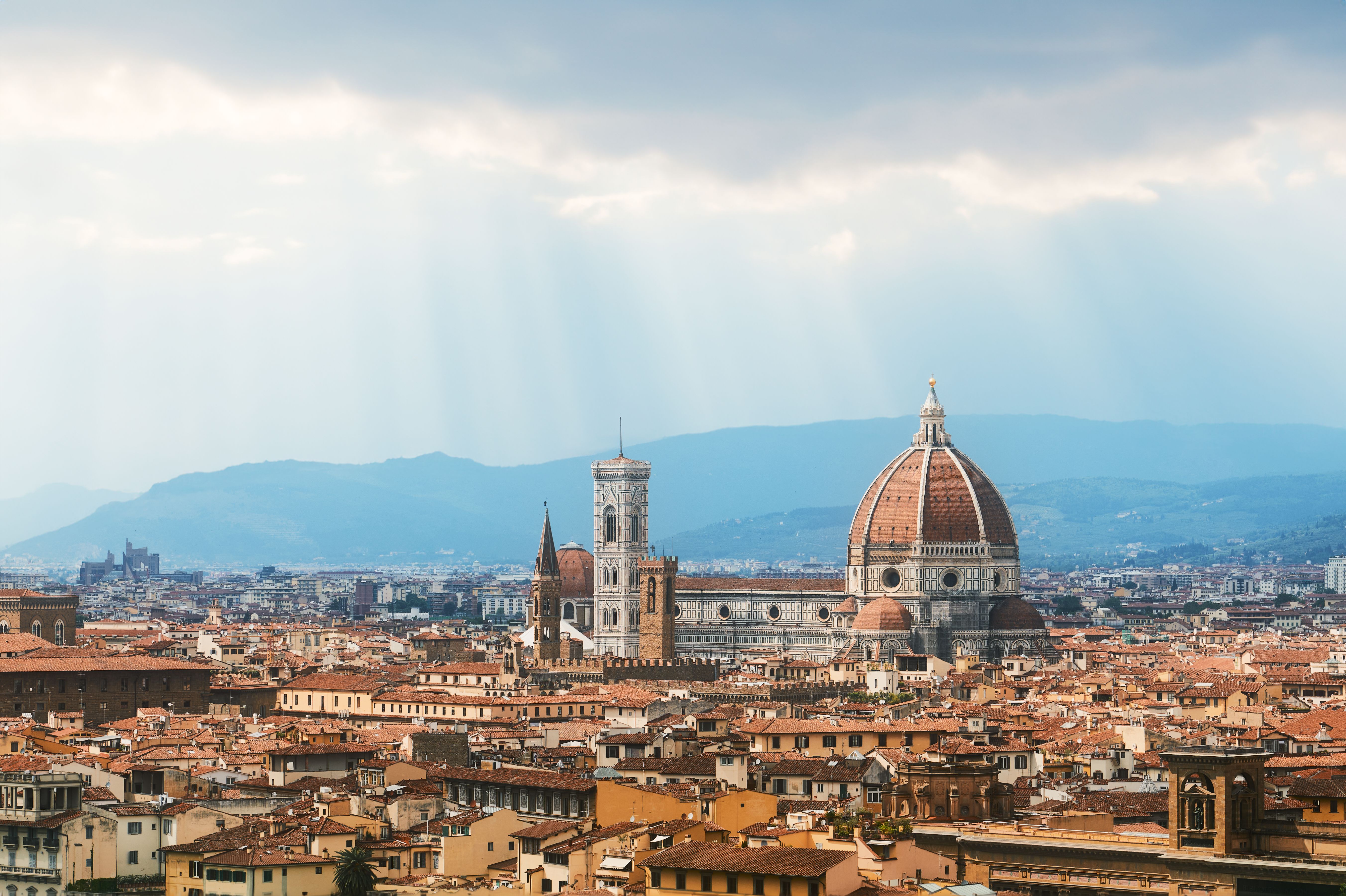
Vibe & first impressions
Florence feels grounded and human-scaled: warm stone facades, the terracotta dome of the Duomo dominating every skyline view, and a confident, lived-in energy. You can walk the historic center end to end in 25 minutes, and it functions as a real working city with students, artisans, and aperitivo culture.
Venice is pure theater. Stepping out near the Grand Canal or into Piazza San Marco for the first time is genuinely startling, a city with no cars, only water, footbridges, and echoing alleys. It can feel like a film set, magical at sunrise and after dark, more crowded and disorienting in the midday rush.
Things to do & art
Florence is the heavyweight champion of Renaissance art. The Uffizi (Botticelli's Birth of Venus, Leonardo, Caravaggio), the Accademia's original David, the Bargello sculpture collection, and Brunelleschi's climbable dome are world-class. Add the Pitti Palace, Boboli Gardens, and the Oltrarno's artisan workshops and you have days of substance.
Venice's masterpiece is the city itself, best 'seen' by wandering and getting lost. Highlights include the Basilica di San Marco with its gold mosaics, the Doge's Palace, the Gallerie dell'Accademia, the Peggy Guggenheim Collection, and island trips to glassblowing Murano and colorful Burano. It rewards atmosphere over checklist sightseeing.
Food & dining
Florence is hearty Tuscan country cooking: bistecca alla fiorentina, ribollita, pappa al pomodoro, lampredotto sandwiches from street stalls, and excellent Chianti within easy reach. The Mercato Centrale and Sant'Ambrogio market are superb, and value is genuinely good if you avoid the Duomo tourist traps.
Venice is all about the sea: cicchetti (Venetian tapas) eaten standing at a bacaro with an ombra of wine, sarde in saor, risotto al nero di seppia, and fresh fish from the Rialto market. Quality varies wildly and prices skew high, so seek out backstreet bacari away from San Marco for the real thing.
Getting there & around
Florence has its own airport plus easy fast-train links (Santa Maria Novella station is central). Once there, it is overwhelmingly a walking city with mostly flat, compact streets; you rarely need transport at all.
Venice is reached via Marco Polo airport or the Santa Lucia train station right on the Grand Canal. Inside, you walk and ride vaporetto water buses (a single ticket is pricey, so consider a day pass); there are countless bridges with steps, which makes luggage and accessibility a real consideration.
Cost
Florence is the better value of the two. Hotels, sit-down meals, and casual eats are more reasonable, and a lot of the pleasure (walking, piazzas, churches) is cheap or free. Major museums like the Uffizi and Accademia warrant advance timed tickets.
Venice is expensive and knows it. Accommodation commands a premium, restaurants near San Marco can be eye-watering, and vaporetto fares add up. Note the daytripper access fee that applies on many peak days in 2026, so check current rules if you are not staying overnight.
Crowds & when to go
Florence's crowds cluster tightly around the Duomo, Uffizi, and Ponte Vecchio, but you can escape them fast by crossing into the Oltrarno or climbing to Piazzale Michelangelo. Shoulder seasons (April-May, late September-October) are ideal; summer is hot and busy.
Venice can feel overwhelmed at midday when cruise and day crowds peak around San Marco and Rialto, yet it empties beautifully at dawn and at night, and in the quieter sestieri like Cannaregio or Castello. Aim for spring or autumn; winter brings atmospheric fog and Carnival, while summer is hot, humid, and packed.
Day trips
Florence is a brilliant base for Tuscany: Siena, San Gimignano, Pisa, Lucca, and Chianti wine country are all easy by train or tour. This makes it ideal for travelers who want to pair the city with rolling countryside.
Venice's day trips lean watery and varied: the lagoon islands of Murano, Burano, and Torcello, plus Verona and Padua a short train ride away. The lagoon excursions are a genuine highlight rather than filler.