
Cappadocia Travel Guide: Where to Stay, Eat & Float Above the Fairy Chimneys
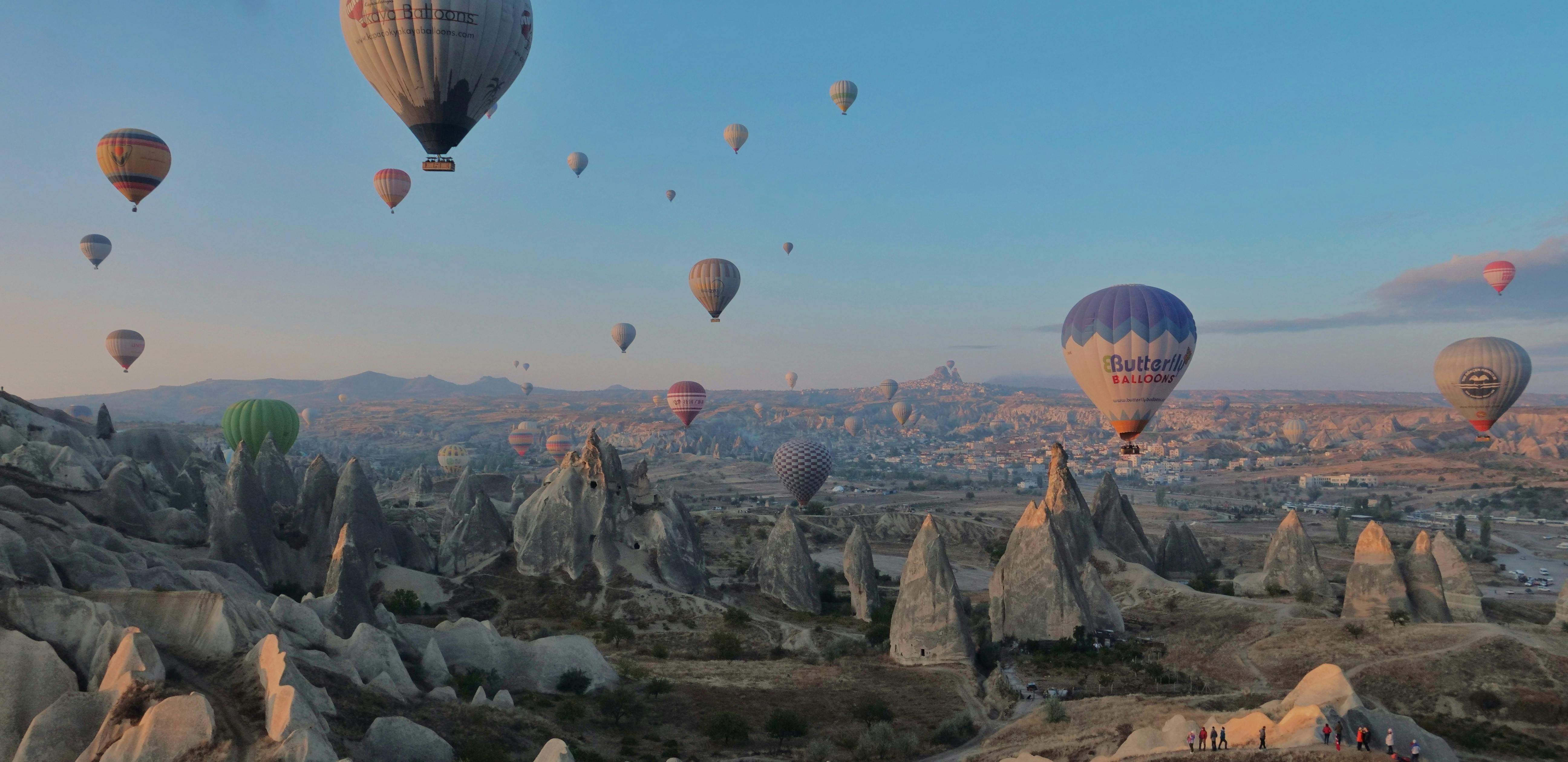
Cappadocia looks like nowhere else on earth. Millions of years of volcanic ash, hardened into soft tuff and then carved by wind and water, left a landscape of tapering rock cones, ridged valleys, and undulating canyons that locals call fairy chimneys. People have been tunneling into this stone for thousands of years, hollowing out homes, churches, and entire underground cities that could shelter tens of thousands.
This is a region rather than a single town, anchored by Goreme, Uchisar, Urgup, and Avanos in the central Turkish province of Nevsehir. Byzantine monks painted frescoes inside rock-cut chapels here; Hittites and early Christians dug refuges deep below the surface. Today you can sleep in a cave suite, hike valleys named for roses and pigeons, and watch the sky fill with hundreds of balloons at dawn.
The headline experience, of course, is floating over those valleys at sunrise in a hot air balloon. But Cappadocia rewards slow exploration: pottery workshops in Avanos, panoramic sunsets from Uchisar Castle, and long lunches of slow-cooked testi kebab cracked open at the table. It is one of those rare places that lives up to the photographs and then some.
Best Time to Visit
Spring (April to June) and autumn (September to October) are the sweet spots: mild days, cool nights, blooming or golden valleys, and the most reliable balloon-flying weather. Summer is hot and busy but still beautiful, while winter brings the magical possibility of fairy chimneys dusted with snow (just pack seriously warm layers and expect more weather-related flight cancellations). Balloons fly year-round when conditions allow, but morning winds in mid-summer and storms in deep winter can ground them, so build in buffer days.
Getting There & Around
Most travelers fly into one of two regional airports, Nevsehir Kapadokya (NAV) or Kayseri Erkilet (ASR), both with frequent connections from Istanbul. Many hotels arrange shuttle transfers, which is the easiest way in from either airport (roughly 45 minutes to 1.5 hours). Once you are based in a central village like Goreme or Uchisar, much is walkable, and the valleys connect by hiking trails. To reach underground cities and farther valleys, join a small-group Red or Green tour, hire a private car and guide, or rent a car for full flexibility. Local minibuses (dolmus) link the main villages cheaply but run on loose schedules.
Where to Stay


Top Things to Do
From sunrise in the sky to refuges deep underground, these are the experiences worth building your trip around.


Landmarks & Sights Not to Miss
The carved churches, castles, and valleys that make Cappadocia a UNESCO World Heritage region.


Best Coffee & Tea Stops
Where to fuel up between valley hikes, from Turkish coffee to flat whites.


Where to Eat Breakfast
Turkish breakfast is a feast of cheeses, olives, eggs, honey, and warm bread, ideally eaten with a valley view.


Where to Eat Dinner
Cappadocian cooking leans on slow-cooked stews, lamb, and the theatrical testi kebab sealed and cracked open at the table.


Bars & Evening Atmosphere
Nightlife here is mellow: rooftop wine, cave bars, and the occasional folk show rather than clubs.

Markets & Shopping
Cappadocia is known for pottery, hand-woven carpets, and onyx, plus local wine.
Day Trips Worth Taking
Cappadocia's wonders are spread out, and a few day excursions round out a visit.


Things to Know
Before You Go
Few places deliver on their dreamlike reputation the way Cappadocia does, where you can wake before dawn, rise silently above a thousand fairy chimneys, and end the day cracking open a clay kebab in a cave carved centuries ago. Whether you come for the balloons, the hikes, or the history buried beneath your feet, this corner of Anatolia rewards every traveler who makes the journey. Start with your hotel and that sunrise flight, and the rest of the trip will fall into place.