
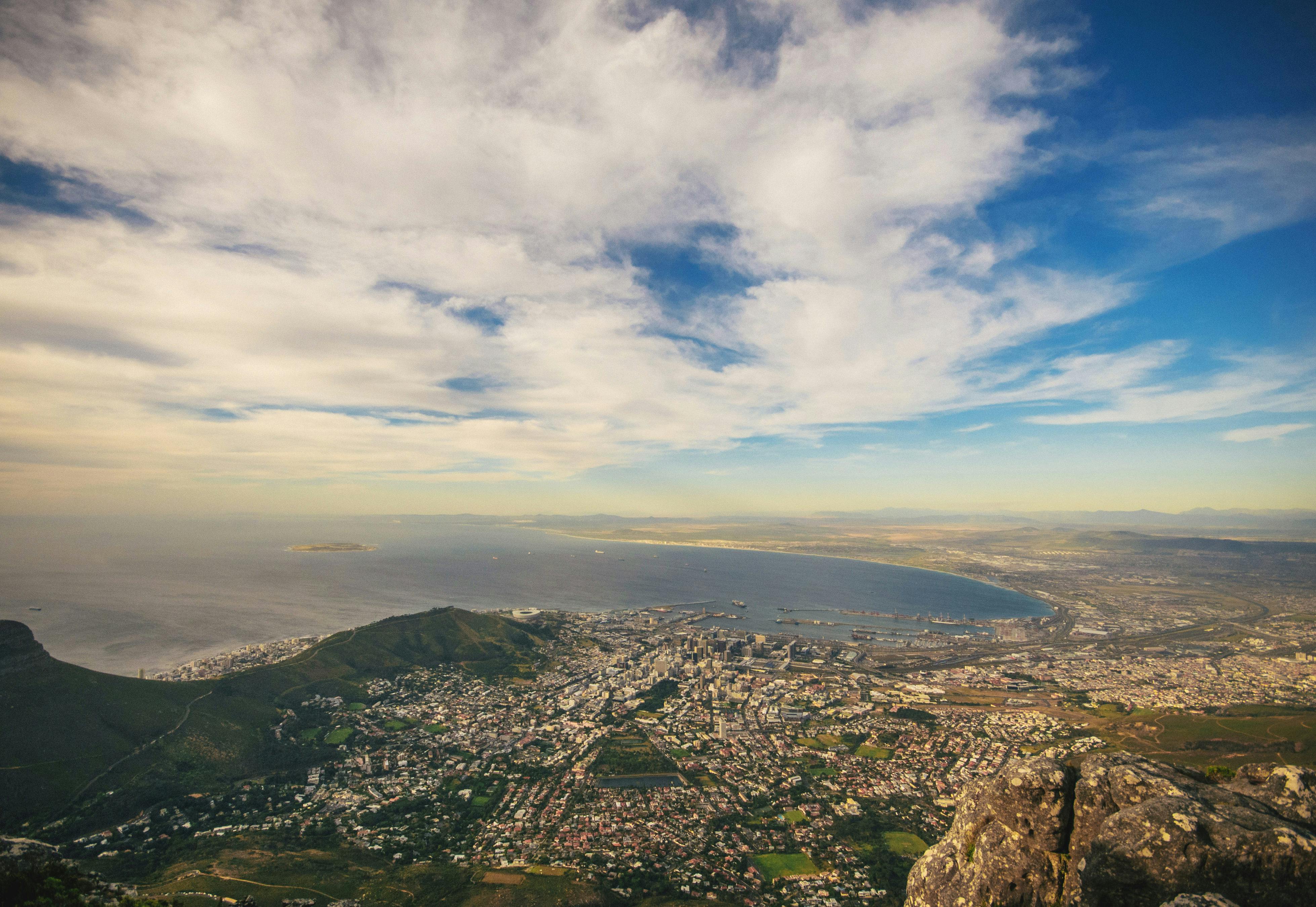
Stunning aerial view of Cape Town with the coastline, mountains, and blue sky.
Comparison

Cape Town vs Johannesburg: Which South African City Should You Visit?

One is a postcard of mountains and ocean; the other is the restless heartbeat of the country. Here is how to choose.

Last updated July 9, 20266 min read
Quick verdict

Choose Cape Town for mountains, beaches, wine, and jaw-dropping scenery; choose Johannesburg for history, culture, nightlife, and easy access to the Kruger and safari country.

South Africa's two biggest cities feel like they belong to different countries. Cape Town is defined by geography: Table Mountain rising over the city bowl, penguins on the beach, vineyards half an hour from downtown, and the cold Atlantic crashing against the Cape Peninsula. Johannesburg is defined by people and momentum: a landlocked highveld metropolis built on gold, home to the country's biggest economy, richest live music and food scene, and the historical weight of apartheid and its unmaking.

For most first-time visitors, Cape Town is the obvious holiday: staggeringly beautiful, walkable in parts, and packed with outdoor bucket-list moments. Johannesburg rewards the curious traveler who wants to understand South Africa rather than just photograph it, and it is the natural launchpad for the Kruger and safari country. Many trips include both, and they complement each other beautifully.

The honest truth is that these cities answer different questions. If you want scenery, beaches, and wine, one wins easily. If you want history, culture, nightlife, and a safari springboard, the other does. Here is how they stack up on the factors that actually decide it.

The scenic coastal one
Cape Town
Mountain · ocean · wine · slower pace
The urban powerhouse
Johannesburg
Culture · history · energy · gateway
Head to head

Cape Town vs Johannesburg

Vibe & first impressions
Cape Town feels like a resort town wearing a city's clothes: relaxed, outdoorsy, and impossibly photogenic, with Table Mountain visible from almost everywhere. The pace is slower and the focus is on nature, cafes, and sundowners over the Atlantic.
Johannesburg is fast, sprawling, and unpretentious, a city of neighborhoods rather than a single center. It has grit and swagger, world-class creativity, and a lived-in authenticity that Cape Town's postcard perfection sometimes lacks.
Things to do
The hits are outdoors: the Table Mountain cableway, Cape Point, Boulders Beach penguins, Kirstenbosch gardens, the Cape Winelands, and a Robben Island ferry from the V&A Waterfront. It is a scenery-first city where the landscape is the main attraction.
Joburg is about history and culture: the outstanding Apartheid Museum, Constitution Hill, and Soweto (Vilakazi Street, the Hector Pieterson Memorial), plus the Cradle of Humankind fossil sites nearby and a thriving arts scene in Maboneng and Braamfontein.
Food & nightlife
Cape Town leans upscale and scenic: seafood, farm-to-table restaurants, and celebrated wine estates in Constantia and Stellenbosch. Nightlife centers on Bree Street, Kloof Street, and the Waterfront, and tends to wind down earlier.
Johannesburg has arguably the country's most exciting and diverse food and music scene, from shisa nyama (township barbecue) in Soweto to sophisticated dining in Parkhurst and Rosebank. Nightlife is bigger, later, and more genuinely local.
Beaches & the outdoors
This is Cape Town's knockout advantage: Camps Bay, Clifton, and Muizenberg beaches, hiking Lion's Head and Table Mountain, and the whole Cape Peninsula drive. The Atlantic water is bracingly cold, but the settings are world-class.
Johannesburg is landlocked at around 1,750m altitude, so there are no beaches and limited natural drama in the city itself. Green suburbs, parks, and the Walter Sisulu Botanical Garden are pleasant, but you come here for culture, not coastline.
Safaris & day trips
Cape Town's day trips are about wine and coast: Stellenbosch and Franschhoek, the Cape Point drive, Hermanus for whale watching in season, and the start of the Garden Route. Big-five safaris require a flight or a long drive to the Eastern Cape.
Johannesburg is South Africa's safari gateway: it is the main hub for flights and drives to the Kruger National Park and its private reserves (Sabi Sand), plus the Pilanesberg and Madikwe within a few hours. If a safari is your priority, Joburg wins.
Cost
Cape Town is the pricier city for tourists, especially in peak summer (December to February) when Atlantic Seaboard hotels and popular restaurants command premium rates. It is still excellent value by European or North American standards.
Johannesburg is generally cheaper for accommodation and eating out, with strong value dining and hotels. It sees fewer leisure tourists, so demand-driven price spikes are smaller.
Safety & getting around
Cape Town has walkable pockets (the City Bowl, Waterfront, Sea Point promenade) and the MyCiTi bus network, though a car helps enormously for the Peninsula and Winelands. Normal urban precautions apply, especially after dark.
Johannesburg is very spread out and car-dependent; ride-hailing (Uber, Bolt) is the practical way to move between neighborhoods. It has a tougher safety reputation, so stick to established areas, avoid walking with valuables, and use guides for Soweto and the CBD.
When to go
Cape Town has a Mediterranean climate: warm, dry summers (December to March, often 25-30C) are peak beach and wine season, while winters (June to August) are cooler and wetter but great for whales and lower prices.
Johannesburg's highveld gives warm summers with dramatic afternoon thunderstorms (October to March) and crisp, dry, sunny winters (May to August) that are ideal for pairing with a safari, when wildlife gathers at waterholes.
Getting there
Cape Town International handles many long-haul and regional flights, though some intercontinental routes still connect via Johannesburg. It is roughly a 2-hour domestic flight from Joburg.
OR Tambo in Johannesburg is South Africa's busiest airport and the main international gateway, with the widest choice of long-haul flights and onward connections to safari airstrips and the rest of the continent.

Cape Town is best for

first-time visitors who want mountains, beaches, wine country, and postcard scenery in one relaxed, outdoors-focused holiday.

Johannesburg is best for

culturally curious travelers who want history, nightlife, and authentic city energy, plus the easiest launchpad to Kruger and safari country.

The verdict
First trip to South Africa? Lead with Cape Town, but give Johannesburg a couple of days too.

If you only have time for one and you want a classic, scenic holiday, Cape Town is the easy pick for its beauty, beaches, and wine. But Johannesburg is the country's cultural and historical heart and the natural gateway to the Kruger, so the ideal trip pairs both: a couple of days in Joburg (Apartheid Museum and Soweto) plus a safari, then Cape Town and the Winelands to finish.

Whether you fall for Cape Town's mountains and sea or Joburg's history and energy, the smartest move is often to combine them into one unforgettable South African trip. Start planning your route and how many days to give each.

Frequently asked questions

Is Cape Town or Johannesburg cheaper?
Johannesburg is generally cheaper for hotels and dining, while Cape Town commands premium prices in peak summer (December to February). Both are excellent value compared with Europe or North America.
Which is safer, Cape Town or Johannesburg?
Both require normal urban precautions, but Johannesburg has a tougher safety reputation and is more car-dependent, so use ride-hailing and stick to established areas. Cape Town has more walkable tourist zones like the Waterfront and Sea Point, though caution after dark still applies.
Which city is better for a safari?
Johannesburg is the clear winner as a safari base, serving as the main gateway to the Kruger National Park, Sabi Sand, Pilanesberg, and Madikwe. From Cape Town a big-five safari usually requires a flight or a long drive to the Eastern Cape.
Can you visit both Cape Town and Johannesburg in one trip?
Yes, and many travelers do. The two cities are about a 2-hour domestic flight apart, so a common itinerary is a few days in Johannesburg with a safari, then Cape Town and the Winelands.
Which has better food and nightlife?
Johannesburg arguably has the more diverse and authentic food and music scene, with everything from Soweto shisa nyama to upscale Parkhurst dining and later nights. Cape Town leans more scenic and upscale, with celebrated wine estates and waterfront restaurants.
Plan with MagicTrips

Build your own trip

Tell us how many days, your budget, and what you're into, and we'll build you a custom, day-by-day itinerary.

Ready to book your stay?

Hotels
Homes

Traveling somewhere else?

Generate a custom itinerary