
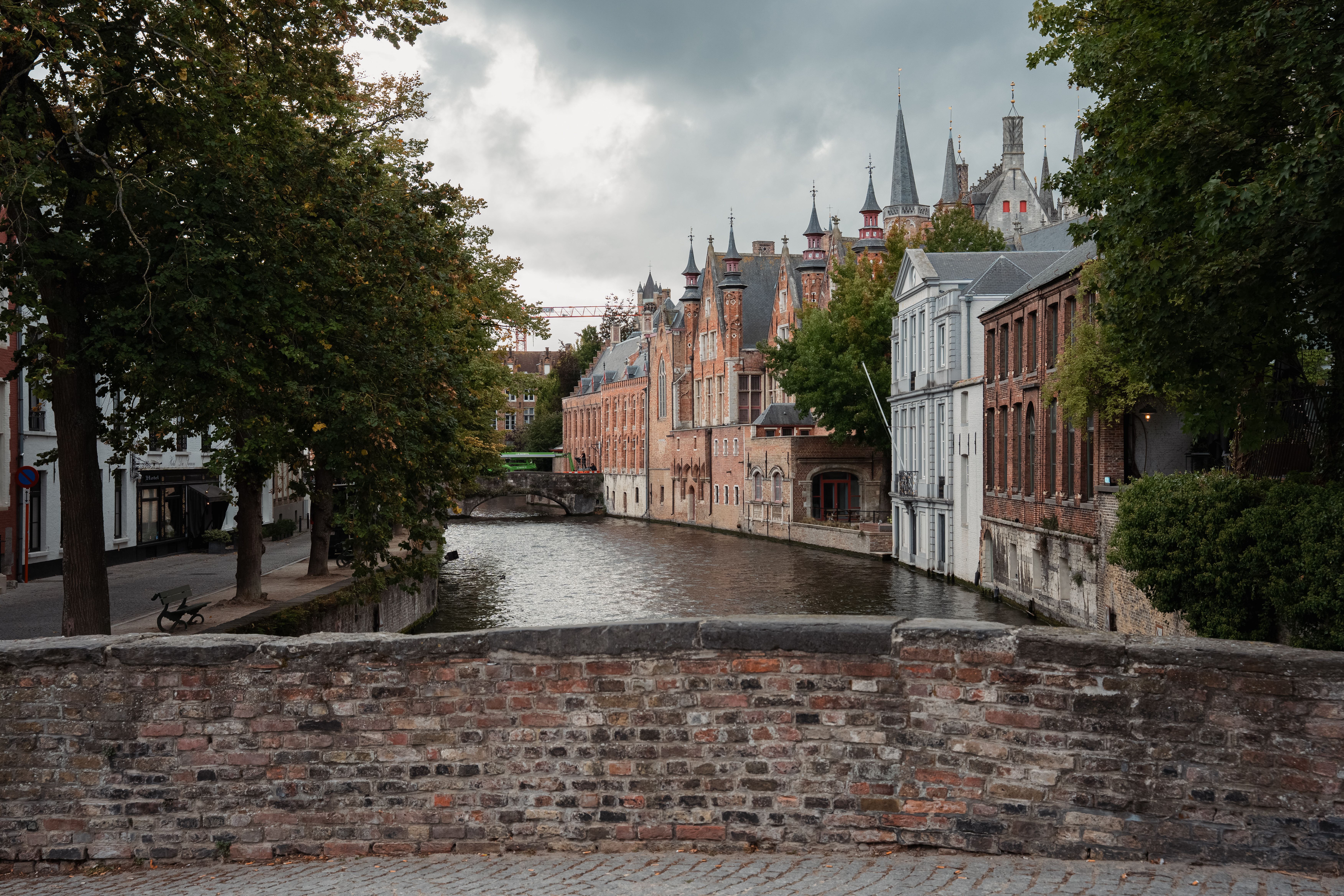
Beautiful view of Bruges canal with historic buildings and overcast sky, perfect for travel inspiration.
Comparison

Brussels vs Bruges: Which Belgian City Should You Visit?

One is a buzzing, cosmopolitan capital; the other is a medieval postcard come to life. Here's how to choose.

Last updated July 16, 20266 min read
Quick verdict

Choose Brussels for museums, food, nightlife, and cosmopolitan city energy; choose Bruges for canals, medieval charm, and a slower, more romantic escape.

Belgium packs an unusual amount of contrast into a small country, and nowhere is that clearer than the gap between its capital and its most-photographed town. Brussels is a layered, multilingual metropolis of EU institutions, Art Nouveau facades, world-class museums, and a scruffy, surprising energy. Bruges is its opposite: a compact, canal-laced medieval center so well preserved it can feel like an open-air film set.

The good news is that they sit barely an hour apart by direct train, so this is rarely an either/or for people with time. But if you're choosing a base, or you only have a day or two, the two cities reward very different travelers. One is for urban explorers who love food, culture, and a bit of grit; the other is for anyone chasing romance, calm, and postcard beauty.

This comparison breaks down the factors that actually decide it: the vibe, what there is to do, food and beer, cost, crowds, day trips, and how to get around, so you can pick with confidence (or simply do both).

The capital
Brussels
Cosmopolitan · food · culture
The medieval gem
Bruges
Canals · cobbles · fairytale calm
Head to head

Brussels vs Bruges

Vibe & first impressions
Brussels is a real, working capital: grand and grungy in turns, trilingual, and full of contrasts, from the gilded Grand-Place to graffiti-splashed side streets and buzzing squares like Place Sainte-Catherine. It feels lived-in and cosmopolitan rather than curated.
Bruges is astonishingly pretty and compact, a UNESCO-listed medieval core of brick gabled houses, humpback bridges, and quiet canals. It can feel like a fairytale, and by day it can also feel like a very crowded one.
Things to do
Brussels is museum-rich: the Magritte Museum, the Royal Museums of Fine Arts, the striking Atomium, the Musical Instruments Museum, plus Art Nouveau icons by Victor Horta and the comic-strip murals honoring Tintin. Days fill easily.
Bruges is more about atmosphere than must-see museums, though the Groeningemuseum, the Belfry climb (366 steps), the Basilica of the Holy Blood, and a canal boat ride are the highlights. The main attraction is simply wandering the lanes.
Food, beer & chocolate
Brussels has the deeper, more varied food scene: everything from Congolese and Moroccan neighborhoods to Michelin dining, plus classic moules-frites, and legendary beer cafes like Delirium and A la Mort Subite. Sablon is chocolate central.
Bruges punches above its size for such a small place: cozy brasseries, the De Halve Maan brewery (home of Brugse Zot) with its rooftop tour, standout chocolate shops, and famously good frites from the stands on the Markt.
Crowds
Brussels is a big city, so tourist crowds concentrate around the Grand-Place and Manneken Pis but dissipate quickly elsewhere; you can always find breathing room. It rarely feels overrun.
Bruges' tiny center gets swamped midday, especially in summer and on cruise-ship day-trip days. The trick is staying overnight: at dawn and after dusk, the crowds vanish and the town becomes magical.
Cost
As a capital, Brussels has a wider price range, from cheap ethnic eateries and student bars to high-end dining, and generally more mid-range hotel choice and value. Public transport is cheap and useful.
Bruges skews touristy in the center, so restaurants and hotels around the Markt carry a premium. It's still affordable overall, and walking everywhere means you spend nothing on transport.
When to go
Brussels works year-round; spring and early autumn are mild (roughly 15-20C), and the winter Christmas market and Winter Wonders light show are a genuine draw. Summers are pleasant but can be humid.
Bruges is loveliest in shoulder season (April-May, September-October) when crowds thin. Winter brings a fairytale Christmas market on the Markt; midsummer is beautiful but very busy.
Getting there & around
Brussels is the transport hub: Brussels Airport and multiple Eurostar/Thalys high-speed links to London, Paris, and Amsterdam. In the city, a metro, trams, and buses cover everything.
Bruges has no metro but needs none: the historic core is entirely walkable in 20 minutes end to end. Direct trains from Brussels take about an hour, and the station is a 15-minute walk from the center.
Day trips
Brussels is a superb base: Bruges, Ghent, Antwerp, and Leuven are all under an hour by train, and Paris, Amsterdam, and London are reachable on day trips by high-speed rail.
Bruges pairs easily with Ghent (30 minutes) and the North Sea coast at Ostend or Blankenberge (15-20 minutes), plus the WWI battlefields around Ypres. It's a quieter, more regional base.

Brussels is best for

travelers who want museums, varied food, nightlife, and cosmopolitan city energy, plus a central hub for day trips across Belgium and beyond.

Bruges is best for

couples and romantics chasing canals, medieval charm, and a slow, scenic escape, especially those willing to stay overnight to beat the day-trip crowds.

The verdict
Short on time? Base in Brussels; for romance, sleep in Bruges.

For a first Belgian trip, Brussels makes the smarter base thanks to its transport links, food, and culture, with Bruges an easy hour-long day trip. But if your priority is atmosphere and calm, spend at least one night in Bruges so you can enjoy the empty, floodlit lanes after the daytrippers leave. Ideally, do both: they're close, complementary, and easy to combine.

Whether you want the buzz of a capital or the hush of a medieval postcard, Belgium makes it easy to have both, so map your days and let the trains do the rest.

Frequently asked questions

Is Brussels or Bruges cheaper?
Brussels generally offers better value and a wider price range, with cheaper eateries, more mid-range hotels, and inexpensive public transport. Bruges' central restaurants and hotels carry a tourist premium, though walking everywhere saves on transit.
Can you visit both Brussels and Bruges in one trip?
Yes, easily. Direct trains connect them in about an hour, so many travelers base in Brussels and take Bruges as a day trip, or split their nights between the two.
Which is better for families, Brussels or Bruges?
Both work well. Brussels offers more variety with the Atomium, museums, and comic-strip culture, while Bruges appeals to families who enjoy canal boat rides, the Belfry climb, and easy walkability without traffic.
Is Bruges worth staying overnight or just a day trip?
An overnight stay transforms Bruges: once the day-trippers and cruise crowds leave, the medieval center becomes peaceful and beautifully lit. If you only see it midday you get the crowds without the magic.
Which has better beer and chocolate?
Both are excellent, as this is Belgium. Brussels has a deeper, more varied beer-cafe scene and the Sablon chocolate district, while Bruges offers the charming De Halve Maan brewery and top-tier chocolate shops in a smaller package.
Plan with MagicTrips

Build your own trip

Tell us how many days, your budget, and what you're into, and we'll build you a custom, day-by-day itinerary.

Ready to book your stay?

Hotels
Homes

Traveling somewhere else?

Generate a custom itinerary