
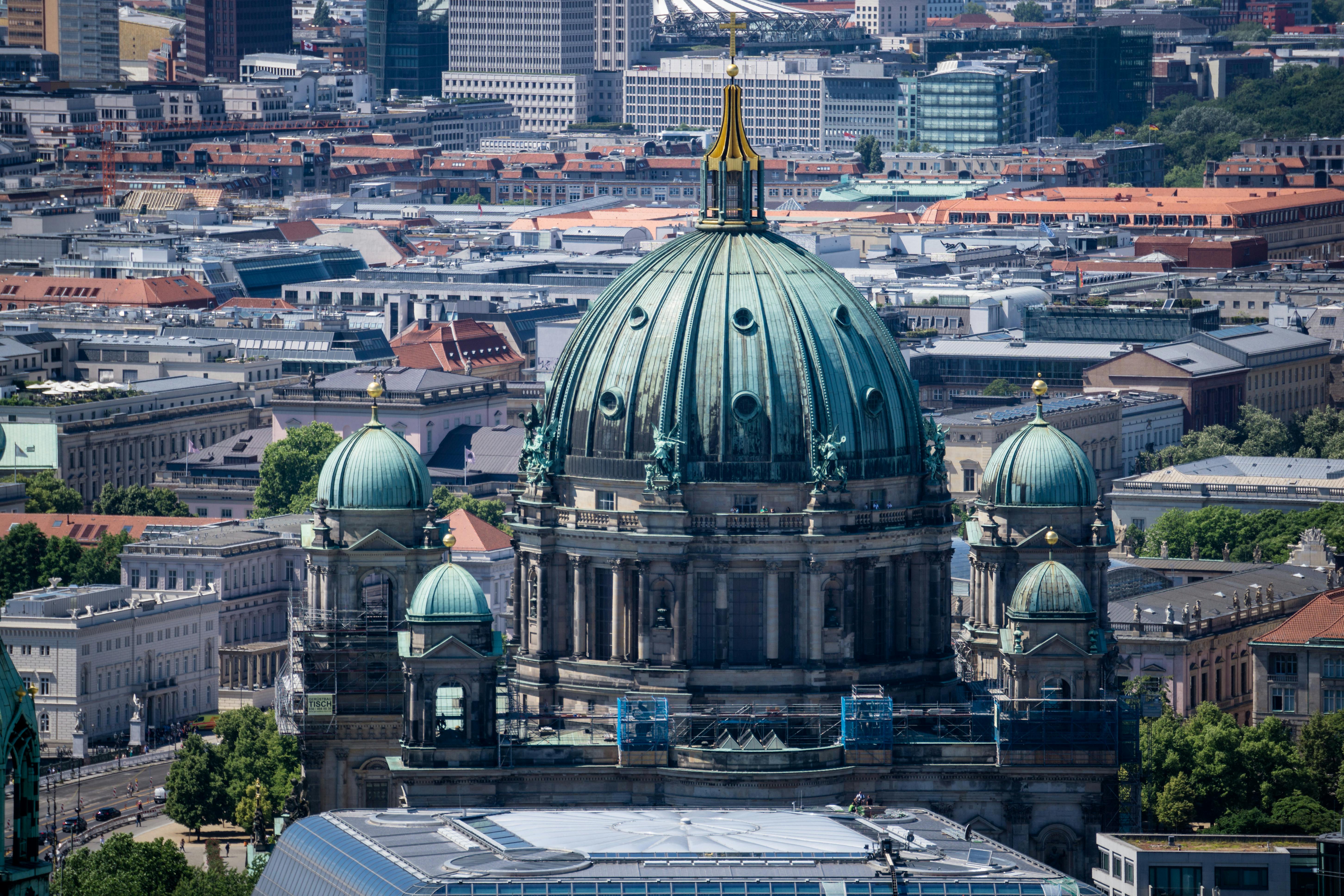
Stunning aerial photograph of Berlin Cathedral, highlighting its copper domes against the cityscape.
Comparison

Berlin vs Munich: Which German City Should You Visit?

Edgy, sprawling capital or polished Bavarian classic? Here's how to pick the right German city for your trip.

Last updated June 30, 20265 min read
Quick verdict

Choose Berlin for history, art, nightlife, and value; choose Munich for Bavarian tradition, beer gardens, day trips to castles and the Alps, and a cleaner, easier pace.

Germany's two best-known cities pull in opposite directions. Berlin is the sprawling, restless capital, a place built on layers of difficult history and reinvented constantly by artists, clubbers, and newcomers. Munich is its polished counterweight: orderly, prosperous, and proudly Bavarian, with the Alps an hour south and beer gardens shaded by chestnut trees.

Choosing between them is really a choice between two moods. One trip rewards you with raw 20th-century history, cheap eats, and a nightlife scene with few global equals. The other gives you fairytale castles within reach, Renaissance and Baroque grandeur, and a cleaner, more relaxed pace that families and first-timers tend to love.

Both are easy to reach, well connected by fast trains (the ICE links them in around four hours), and walkable in their cores. Here is how they actually stack up on the things that decide a trip.

The capital
Berlin
History · grit · nightlife
The Bavarian one
Munich
Beer · Alps · tradition
Head to head

Berlin vs Munich

Vibe & first impressions
Big, gritty, and gloriously unfinished. Berlin feels spread out and a little chaotic, with graffiti, vast green spaces, and neighborhoods that each have their own personality, from edgy Kreuzberg to leafy Prenzlauer Berg. It rewards curiosity over postcard perfection.
Compact, tidy, and visibly affluent. Munich looks the part of a storybook European city, with the Marienplatz glockenspiel, Baroque churches, and the leafy Englischer Garten. It feels safe, manicured, and easy to get your bearings in.
History & museums
Unmatched for 20th-century history: the Brandenburg Gate, Reichstag, Berlin Wall Memorial, East Side Gallery, Holocaust Memorial, and the Topography of Terror. Museum Island holds five world-class collections including the Pergamon (partly closed for long-term renovation, so check ahead).
Strong on art and Bavarian heritage rather than recent history. The Kunstareal museum quarter (Alte and Neue Pinakothek, Pinakothek der Moderne) is excellent, the Residenz palace is opulent, and the Deutsches Museum is one of the world's great science museums.
Food & beer
The most international food scene in Germany: Turkish doner (it was popularized here), Vietnamese, Middle Eastern, and a deep vegan and street-food culture. Currywurst is the local classic. Beer is everywhere but not the main event.
Bavarian tradition done seriously: weisswurst with sweet mustard, pretzels, roast pork, and dumplings, washed down in historic beer halls like the Hofbräuhaus or sprawling beer gardens. The six big Munich breweries dominate, and beer culture is central to daily life.
Nightlife
World-famous and in a league of its own. Techno temples like Berghain, plus countless clubs, dive bars, and bars open until dawn (and beyond). Nightlife is woven into the city's identity and runs all weekend.
Respectable but tame by comparison. You'll find good bars, beer gardens, and a few clubs around Kultfabrik/Werksviertel, but Munich shuts down earlier and leans social-drinking over late-night clubbing.
Day trips
Flatter surroundings, but Potsdam's Sanssouci palaces are a quick S-Bahn ride, and Sachsenhausen concentration camp memorial is close. The Baltic coast and Dresden are reachable but further.
Exceptional. Neuschwanstein castle, the Alps and Garmisch-Partenkirchen, Lake Starnberg, Salzburg (Austria), and Dachau memorial are all easy day trips, most under two hours. This is Munich's biggest advantage.
Cost
Noticeably cheaper than Munich and one of the better-value capitals in Western Europe. Food, drinks, and (relatively) accommodation stretch further, though prices have risen in recent years.
Germany's most expensive major city. Hotels, restaurants, and beer all cost more, and accommodation spikes hard during Oktoberfest and major trade fairs.
When to go
Late spring to early autumn (May to September) for long days and outdoor life; summers are warm (mid-20s C) but rarely sweltering. Winters are gray and cold, though the Christmas markets are atmospheric.
Best from May to October, with Oktoberfest running roughly mid-September to early October (book far ahead). The Alpine foreland gets cold, snowy winters, which are great if you want skiing within reach and festive markets.
Getting there & around
Served by Berlin Brandenburg (BER) airport with broad connections. The U-Bahn, S-Bahn, trams, and buses are extensive, and the city is bike-friendly, though distances between sights are large.
Munich Airport (MUC) is a major hub with an excellent S-Bahn link to the center. The compact transit network and walkable core make Munich easier to cover quickly than sprawling Berlin.

Berlin is best for

travelers who want layered history, contemporary art, legendary nightlife, diverse food, and a creative, edgy capital at a lower price.

Munich is best for

first-timers, families, and beer-and-mountains lovers who want classic Bavarian charm, easy day trips to castles and the Alps, and a cleaner, calmer pace.

The verdict
First time in Germany? Munich is easier; Berlin is deeper.

If you want fairytale Bavaria, beer gardens, and quick escapes to castles and the Alps, Munich delivers a smoother, more classically scenic trip. If you're drawn to modern history, museums, nightlife, and a bigger, grittier, better-value city, Berlin wins. Most travelers with time should do both: they're four hours apart by train and feel like two different countries.

Match the city to the trip you actually want, then start blocking out neighborhoods, day trips, and a beer hall or two. Either way, Germany's fast trains make it easy to add the other later.

Frequently asked questions

Is Berlin or Munich cheaper?
Berlin is clearly cheaper. Food, drinks, and accommodation generally cost less than in Munich, which is Germany's most expensive major city, especially during Oktoberfest and trade fairs.
Which is better for families, Berlin or Munich?
Munich tends to suit families better thanks to its compact, walkable center, safe feel, the Englischer Garten, the Deutsches Museum, and easy day trips to castles and lakes. Berlin works too but is larger and edgier.
Can you visit both Berlin and Munich in one trip?
Yes. The ICE high-speed train connects them in around four hours, and there are frequent flights, so combining both on a week-plus trip is very doable.
Which city has better nightlife?
Berlin, by a wide margin. It's a global nightlife capital with legendary techno clubs and bars open all weekend, while Munich's scene is more about beer gardens and earlier nights.
Which is better for first-time visitors to Germany?
Munich is often the easier introduction with its classic looks, beer halls, and Alpine day trips, but Berlin offers more depth in history, art, and food. Your choice depends on whether you want postcard Bavaria or a bigger, edgier capital.
Plan with MagicTrips

Build your own trip

Tell us how many days, your budget, and what you're into, and we'll build you a custom, day-by-day itinerary.

Ready to book your stay?

Hotels
Homes

Traveling somewhere else?

Generate a custom itinerary