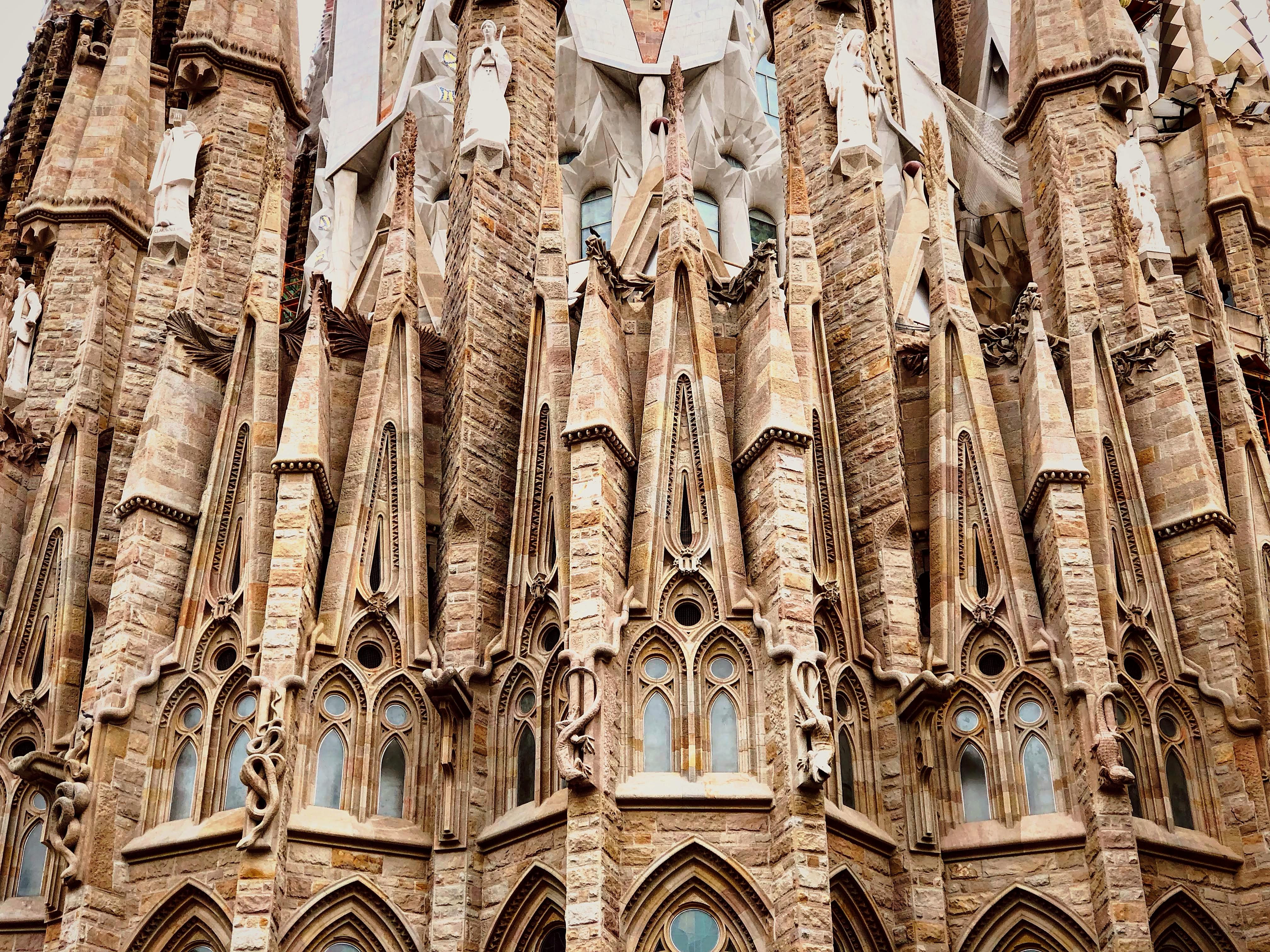
Vibe & first impressions
Barcelona hits you with scale and spectacle: the Eixample's grid of Modernist facades, the medieval tangle of the Gothic Quarter, La Rambla's human river, and the Mediterranean glinting at the foot of it all. It is cosmopolitan, creative and relentlessly busy.
Cartagena feels like a secret. You arrive at a working naval harbour ringed by hills and walk straight into a pedestrianised old town where a 2,000-year-old Roman theatre sits beside elegant Modernist buildings. It is calm, walkable and overwhelmingly local.
Things to do
This is Barcelona's home turf: Sagrada Familia, Park Guell, Casa Batllo and La Pedrera, the Picasso Museum, the Gothic Quarter and Santa Maria del Mar, plus Montjuic's museums and gardens. You could spend a week and not run out.
Cartagena is smaller but punches hard for its size: the superb Roman Theatre and its museum, the Castillo de la Concepcion reached by panoramic lift, the ARQUA national underwater archaeology museum, the Naval Museum, and Calle Mayor's Modernist parade. Two days covers the city comfortably.
Beaches
Barceloneta and the Port Olimpic beaches are right in town, lively and convenient but crowded, narrow and not the prettiest water you will find in Spain. Great for a swim between sightseeing, less so for a beach holiday.
Cartagena's coastline is its quiet trump card. Within 20 to 40 minutes you reach the wild, undeveloped coves of Calblanque, the diving mecca of Cabo de Palos, and the warm shallow lagoon of the Mar Menor at La Manga. The water and the space win easily.
Food & nightlife
Barcelona is a culinary heavyweight: Catalan classics, Basque-style pintxos bars, the Boqueria market, world-renowned fine dining, and nightlife that runs until dawn in the Gothic Quarter, El Born and beyond. Variety is unmatched.
Cartagena's scene is smaller but genuine and good value: tapas and michirones (a local broad-bean stew), fresh fish, and the famous marinera (a doughnut-shaped breadstick topped with Russian salad and an anchovy). Nightlife is lively along the marina in summer but mellow by big-city standards.
Cost
Barcelona is among Spain's most expensive cities. Hotels, popular restaurants and the major attraction tickets all carry a premium, and the city now charges one of Europe's higher tourist taxes.
Cartagena is markedly cheaper across the board: hotels, meals and attractions cost a fraction of Barcelona prices, and many sights are inexpensive or free. Your money stretches dramatically further here.
When to go
Spring (May to June) and September are ideal, with warm weather and slightly thinner crowds; July and August are hot, packed and pricey. Barcelona is a true year-round city break.
Cartagena shines from late spring through early autumn for beach weather. Time it for the dramatic Semana Santa processions, the La Mar de Musicas world-music festival in July, or the spectacular Carthaginians and Romans street festival in late September.
Getting there & around
Barcelona's El Prat is a major international hub with direct flights worldwide, plus high-speed AVE rail links across Spain. The metro, buses and walkability make getting around effortless.
Cartagena has no major international airport of its own; most visitors fly into Murcia's Corvera airport (about 40 minutes away) or Alicante (around 90 minutes) and drive or take a train or bus. The city itself is small and best explored on foot, but a car helps for the beaches.
Day trips
From Barcelona you can reach Montserrat's mountain monastery, the beaches and Dali connections of the Costa Brava, Girona, Tarragona's Roman ruins, and even the wine country of Penedes, mostly by train.
Cartagena pairs well with Murcia city, the Mar Menor resorts of La Manga, the Roman-era spa town of Archena, and Alicante. The surrounding Costa Calida is built for slow coastal exploring by car.
Crowds
Barcelona is one of Europe's most heavily visited cities, and overtourism is a real issue: expect queues, timed tickets, packed sights and busy streets, especially in peak summer. Book major attractions well in advance.
Cartagena sees mostly Spanish visitors and cruise-ship day-trippers who clear out by evening. Even at its Roman Theatre you rarely feel hemmed in, and authentic, uncrowded streets are the norm.