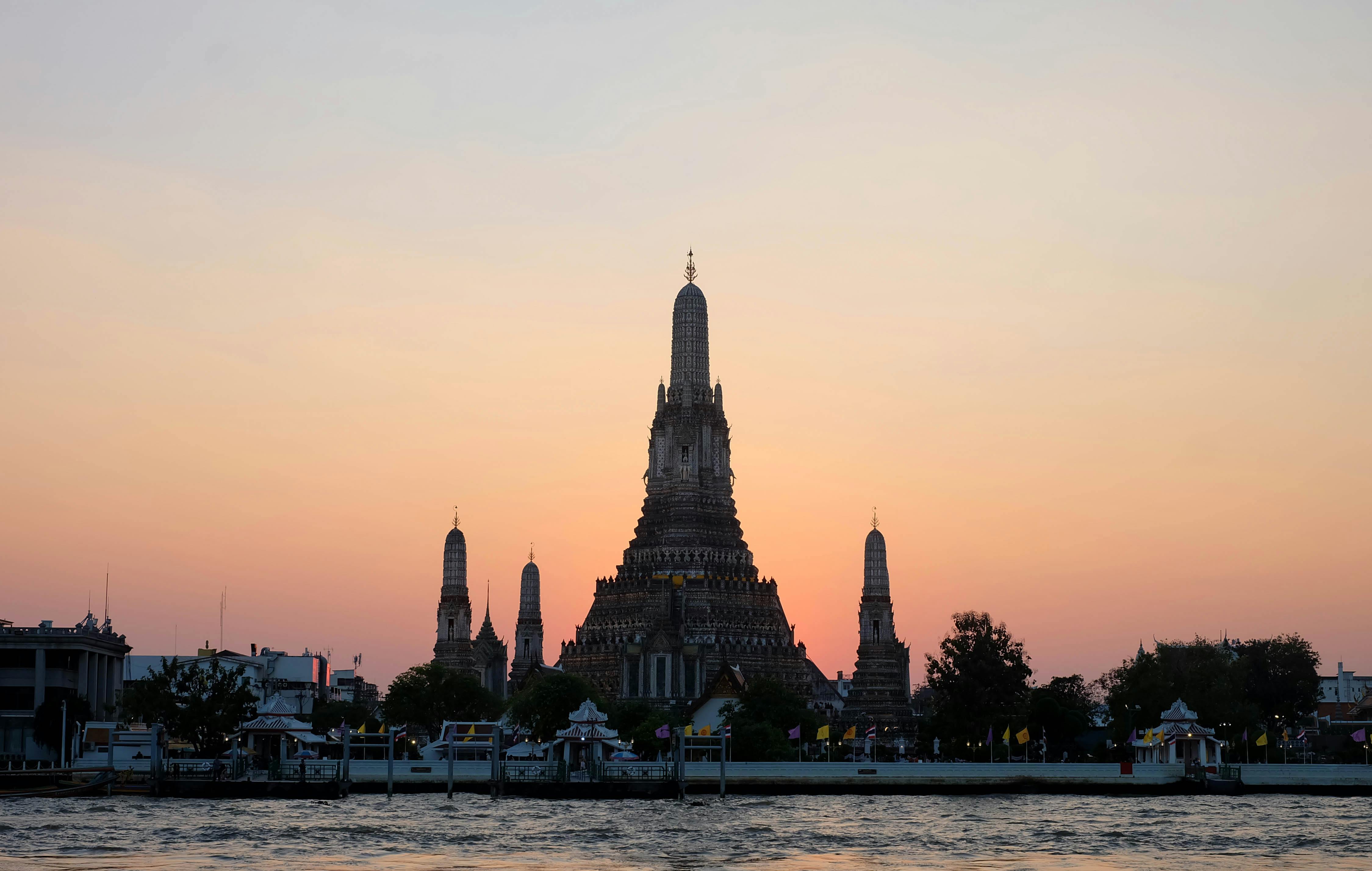
Vibe & first impressions
Loud, hot, dense, and thrilling. Bangkok hits you with traffic, street-food smoke, and gleaming malls within the first hour, with Sukhumvit's skytrain corridor, the riverside around Wat Arun and the Grand Palace, and the backpacker chaos of Khao San Road all pulling in different directions.
Calmer, leafier, and more human-scaled. The square old city inside the moat is walkable in an afternoon, dotted with whitewashed wats and laid-back cafes, and the surrounding hills are always close. It feels like a creative small town more than a metropolis.
Things to do
Endless: the Grand Palace and Wat Pho's reclining Buddha, Wat Arun across the river, Jim Thompson House, Chatuchak Weekend Market, canal tours through Thonburi, and world-class malls like ICONSIAM. You could stay a week and not run out.
Temple-rich and nature-adjacent. Wander Wat Chedi Luang and Wat Phra Singh in the old city, climb (or drive) to Doi Suthep for the view, visit an ethical elephant sanctuary, take a Thai cooking class, or day-trip to Doi Inthanon, Thailand's highest peak.
Food & street eats
Arguably the world's best street-food city, from Michelin-listed Jay Fai to the stalls of Chinatown's Yaowarat. Boat noodles, mango sticky rice, and an unmatched range of regional and international restaurants at every price point.
Distinctly northern and excellent in its own right: khao soi (curry noodles), sai ua sausage, and nam prik at the Sunday Walking Street and markets like Chang Phuak. Smaller in scope than Bangkok but cheaper, with a standout cafe and brunch culture.
Nightlife
The clear winner for going out: rooftop bars like Sky Bar and Octave, the clubs of Sukh' Soi 11 and Thonglor, riverside venues, and the raucous strips of Khao San and the red-light areas. It runs late and loud.
Mellower and more low-key. Expect live-music bars around Nimmanhaemin, craft-beer spots, jazz at The North Gate, and night markets rather than mega-clubs. Great for relaxed evenings, not big nights out.
Cost
Still affordable by global standards but Thailand's priciest city for hotels, cocktails, and taxis. Easy to splurge on rooftop bars and malls, easy to save on street food.
Noticeably cheaper across the board: guesthouses, food, massages, and coworking spaces all cost less, which is why it is a magnet for long-stay digital nomads.
Getting there & around
Thailand's main international gateway via Suvarnabhumi and Don Muang airports. In the city, the BTS Skytrain and MRT metro plus river boats let you skip the famous traffic; outside their reach, Grab and taxis fill in.
Reached by a 70-minute flight or a scenic overnight train/bus from Bangkok. The compact center is walkable, with Grab, songthaews (red shared trucks), and rented scooters covering the rest. No mass transit, but you rarely need it.
When to go
Best November to February when it is drier and slightly cooler; March to May is brutally hot and the monsoon runs roughly June to October. The city is a year-round indoor-friendly destination thanks to its malls.
Cool season (November to February) is glorious, peaking with the Yi Peng and Loy Krathong lantern festivals in November. Crucially, avoid roughly February to April, when agricultural burning causes serious smoke haze and poor air quality.
Day trips
Ayutthaya's ancient temples, the floating markets at Damnoen Saduak and Amphawa, the Maeklong railway market, and even Kanchanaburi's River Kwai are all within reach for a day or overnight.
Strong on nature and culture: Doi Inthanon National Park, the Mae Sa valley, Chiang Rai's White Temple and Blue Temple, hill-tribe villages, and Pai (a winding three hours north) for a longer escape.